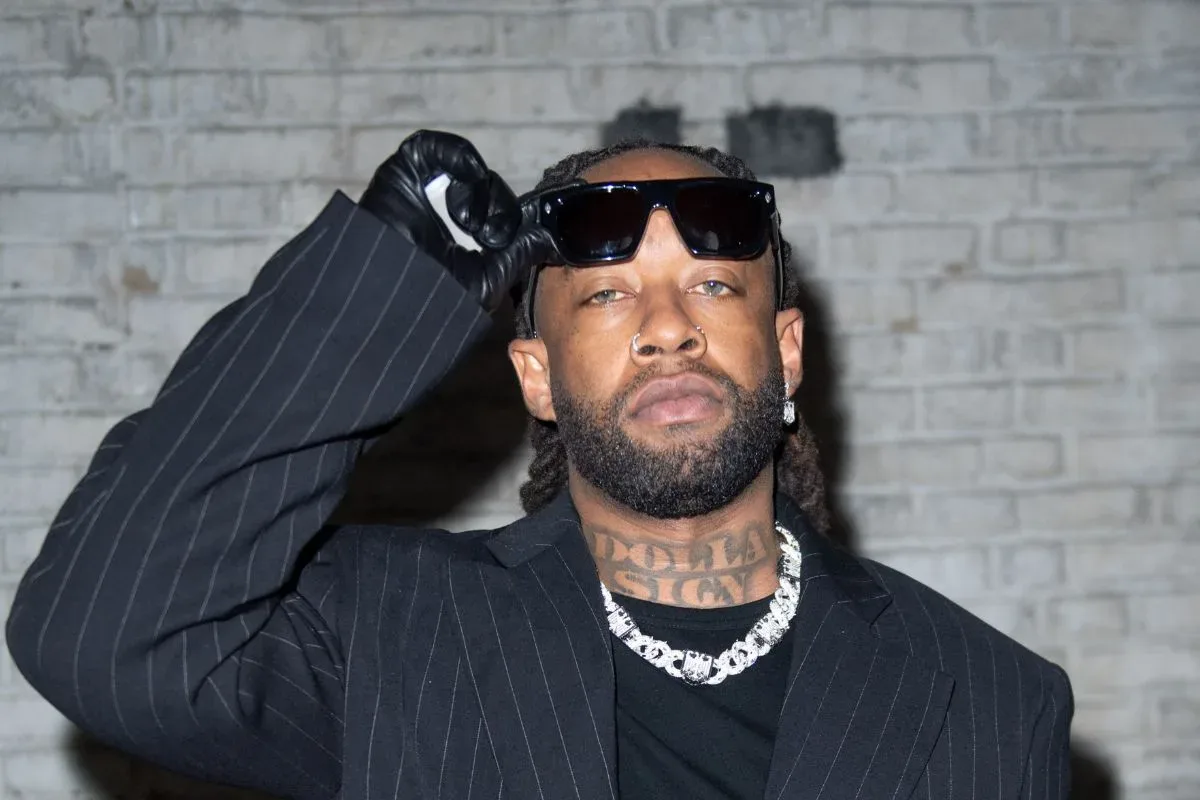
Ty Dolla $ign has spoken candidly about the emotion attached to performing “Cinderella,” his collaboration with Mac Miller. The singer has been using the track to close sets on Bryson Tiller’s The Neo Trapsoul Tour, and says recent performances have left him crying onstage even as audiences cheer.
For Ty, the reaction is not about a stage effect or a sentimental add-on to a setlist. It is tied to the loss of a close friend and creative partner. He described the feeling as something that has hit him during the last four or five performances, saying that Mac Miller was “one of my good boys.”
“Cinderella” is a particularly weighty song to revisit because it was built as an expansive collaboration rather than a brief guest spot. Running for roughly eight minutes, it appeared on Miller’s 2016 album The Divine Feminine, a project centered on love and intimacy. Ty Dolla $ign’s presence gives the record room to move between Miller’s verses and a recurring, melodic hook, making the song feel designed to linger rather than rush toward radio brevity.
A song whose scale was preserved
The length of “Cinderella” matters to its legacy. In pop and rap release planning, a radio edit is a shorter version of a song prepared to better fit broadcast programming. DJ Dahi, a producer on the track, has said the team considered trimming Ty’s hook for radio but ultimately chose to leave it intact. He also said it was Miller’s favorite song on the album.
That decision preserved the collaboration’s full shape. Instead of treating the hook as a functional transition to be reduced for time, the release allows Ty and Miller’s parts to breathe. For listeners, that has helped make the song an enduring document of their chemistry; for Ty, it means performing it now involves returning to a sizable shared space rather than dropping in for a quick reference.
The song was initially released in September 2016 with The Divine Feminine. A video followed in April 2017. Director Bo Mirhosseni later recalled that Miller stepped in when the production budget ran out, paying to ensure the video could be completed. That detail adds another layer to the track’s history: Miller was not only the artist at its center, but an active supporter of carrying the visual project over the finish line.
Grief returning in public performances
Ty has connected his current experience on tour to earlier public tributes. He said his daughter first saw him cry at the October 31, 2018 benefit concert for Miller at Los Angeles’ Greek Theatre, held weeks after Miller died at age 26.
The event was a gathering of artists and friends who addressed both Miller’s music and the relationships around it. Chance the Rapper spoke about the opportunities and friendships Miller had fostered. SZA credited him with helping her career. Travis Scott ended his own performance with an appeal for people to tell their friends that they love them.
Related coverage includes Ty Dolla $ign Says “Cinderella” Performances Still Bring Him to Tears.
Ty’s memory of crying there illustrates a difficult reality of memorial performances: a song can remain part of an artist’s catalogue, but it stops being emotionally neutral for the people who made it. The crowd hears a favorite collaboration. The collaborator may be reliving friendship, absence and prior moments of collective mourning at the same time.
His description also reframes the applause he is receiving at the end of recent shows. A cheering audience can be an expression of affection for the song and respect for Miller, but it does not necessarily make a performer’s grief easier to carry. In this case, Ty’s account suggests the opposite: the shared response has accompanied, rather than erased, the emotional force of singing it.
The Tiny Desk connection
“Cinderella” had already become a vehicle for remembrance before these tour dates. In 2019, Ty recorded a Tiny Desk concert. After the taping, producer Bobby Carter pointed out that Miller had performed behind the same desk almost a year earlier. Ty and his band then spoke briefly before playing “Cinderella.”
The resulting performance had direct musical continuity with Miller’s own session. Bassist Thundercat and guitarist Justus West, both of whom had played in Miller’s Tiny Desk set, joined Ty for the tribute. It was released on August 8, 2019, the first anniversary of Miller’s Tiny Desk performance.
That continuity is significant because a tribute does not need to reproduce an absent artist’s work to honor them. Here, the same physical setting, the same song and two returning musicians established a thread between the performances. The arrangement could not make the loss disappear, but it made the collaboration’s wider circle visible: singer, musicians, producer, crew and friends all had a connection to the song.
Ty has said the grief returned at that session as well. Taken together with the Greek Theatre benefit and his current tour performances, “Cinderella” has become a recurring point where private loss meets a public musical ritual.
Why collaboration can outlive its original moment
Mac Miller and Ty Dolla $ign made “Cinderella” within the context of an album about romance, but its meaning has changed as it has been revisited. That is not a revision of what the song originally was; it is a consequence of performance. Recorded music fixes a version of a collaboration in time, while live performance can gather new emotional associations with every return.
For fans, this is why a closing song can mean more than a final, high-energy selection. An encore or closer often provides the last emotional impression of a show. Choosing “Cinderella” gives Ty’s set a vulnerable ending and directs attention toward Miller’s continuing presence in the work they made together.
It also demonstrates why preserving a full-length collaborative track can matter years later. A shorter version may have served a different commercial purpose, but the released eight-minute form created room for the relationship between both artists to be heard. Now, that same breadth leaves room for grief, memory and audience recognition when Ty sings it live.
Ty’s openness does not turn those performances into something easily packaged or resolved. Instead, it acknowledges the human cost behind a song that has continued to resonate. The tears are part of the performance because the friendship is part of “Cinderella.”
For more on another artist reflecting on work, ambition and status within hip-hop, read Fat Joe’s comments on feeling “middle class” beside hip-hop billionaires.