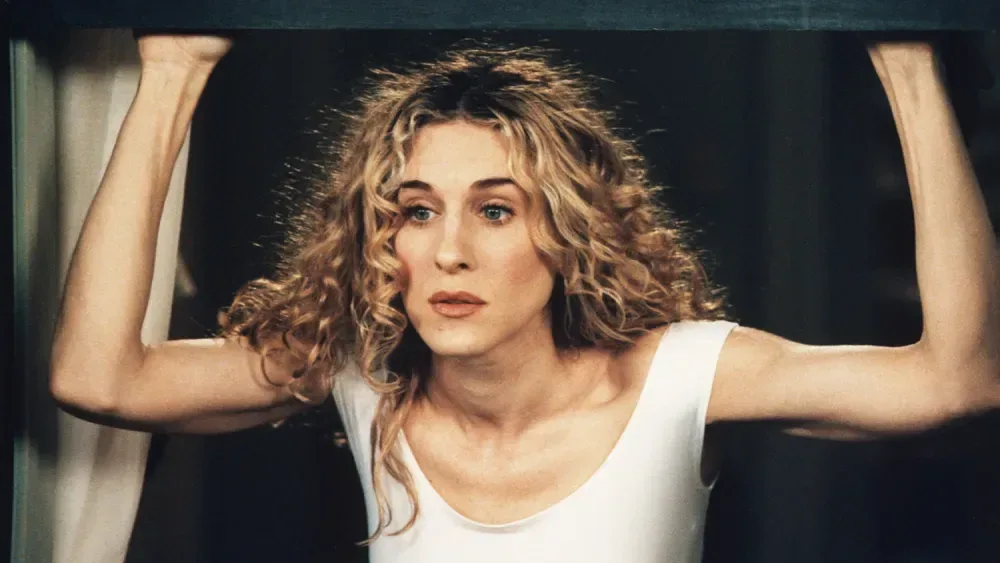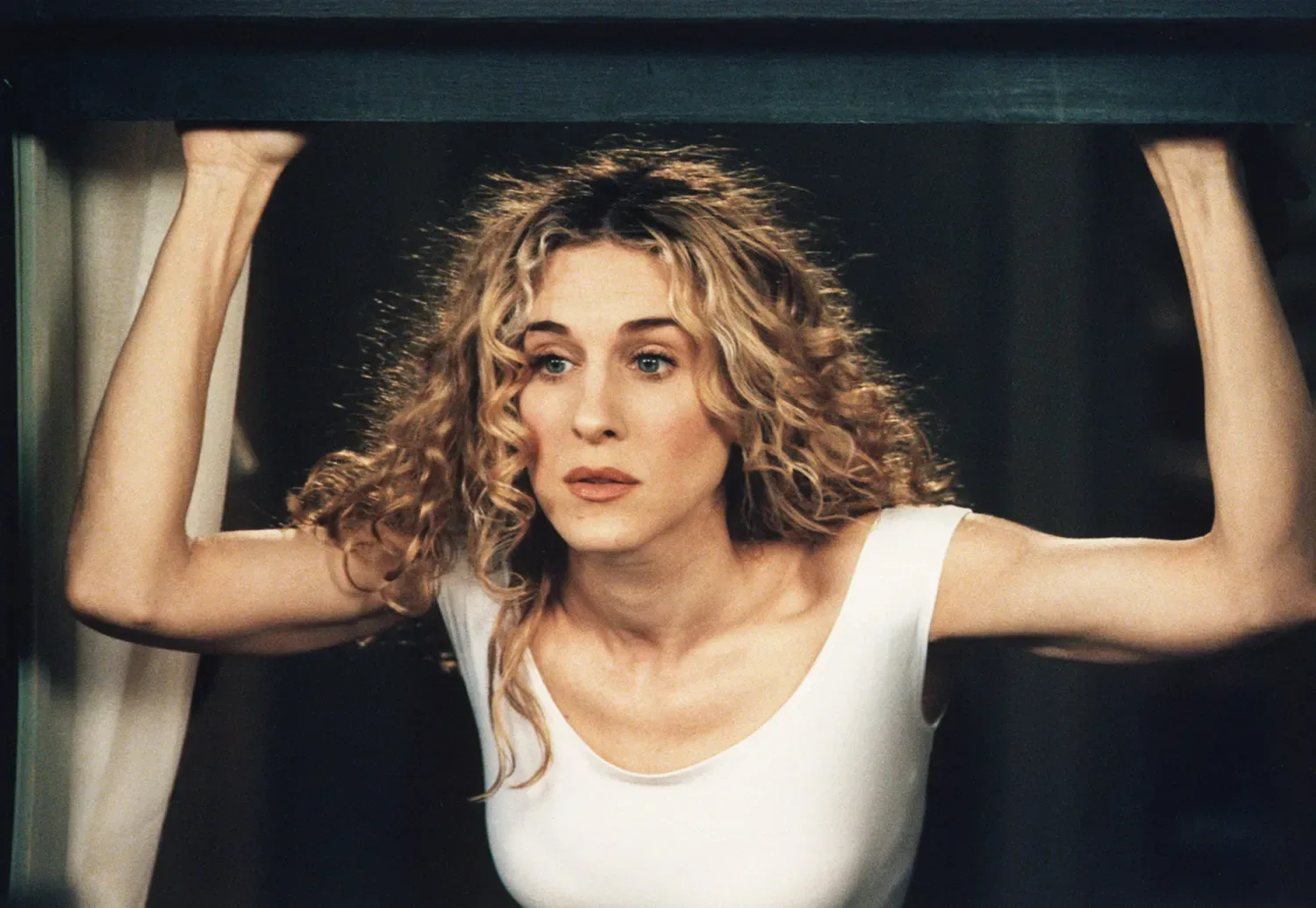
Sarah Jessica Parker has one of television’s most recognizable costume collections in her care, but she does not treat it as a personal wardrobe. The actor says she still has the clothing worn by Carrie Bradshaw across Sex and the City, yet has never worn any of it in her own life.
“It’s an archive,” Parker said of the collection. That wording matters. An archive is not simply a pile of saved outfits, nor necessarily a display intended for public viewing. It is a body of material kept because of its connection to a work, a period, or a creative legacy. In this case, the clothes are inseparable from Carrie: a fictional character whose style became a major part of how audiences understood the series.
Parker’s distinction is also unusually clear for an actor discussing screen-used clothing. She has the items, but possession does not erase their original role. To her, putting them on now would turn an everyday outing into something closer to wearing a costume.
“There’s a huge separation between myself and Carrie Bradshaw,” Parker said, explaining that the wardrobe does not fit her life away from the character.
For more context, explore Before Programmable GPUs, Retro Consoles Drew Games One Hard Limit at a Time.
She compared the idea to walking around in the costume of Sarah Sanderson, her character from Hocus Pocus. The comparison gets at the difference between an actor and a role: even when the same person wore the garment on camera, the garment can retain a powerful association with the character it was made to serve.
Why “archive” is the key word
In collecting terms, an archive is usually defined by context as much as by the objects within it. A single dress can be fashion. Once connected to a production, a character and a long-running cultural conversation, it can become a record of costume design and performance.
Parker’s comments do not identify individual pieces, describe their storage, or establish plans for an exhibition, sale, donation, or future use. Those details should not be assumed. What she has confirmed is more modest and, in its own way, more meaningful: the clothing has been retained, and she does not consider it personal apparel.
That separation preserves an important boundary for screen-used memorabilia. A garment may have been worn by an actor, but its lasting identity can be tied to the fictional person on screen. Carrie Bradshaw’s outfits were not merely clothes selected for Parker to wear between takes; they were part of a character’s visual language. Their value as artifacts is closely connected to that purpose.
It also explains why “I own it” and “I wear it” are entirely different statements. A person can preserve a work-related object without wanting to reactivate its role in public. For Parker, wearing a piece again would not feel like revisiting an old favorite from her closet. It would mean stepping back into an already completed performance.
Costume, fashion and character are not interchangeable
Costumes can influence fashion while still remaining costumes. Carrie Bradshaw’s wardrobe helped make clothing a central part of the viewing experience, with individual looks becoming memorable alongside storylines and relationships. But broad cultural influence does not make every original garment suited to casual reuse.
That distinction can be easy to overlook because television costumes often look wearable. Unlike armor, creature suits, or period regalia, contemporary fashion-based costumes may resemble things someone might wear on the street. Yet their function on a production is much more specific: the color, silhouette, accessories and timing are chosen to communicate something about a character and a scene.
Parker’s reluctance to wear Carrie’s actual clothes underscores that point. These pieces have already been seen in the setting for which they were selected. Wearing them outside that setting could make the character feel present in a way that is uncomfortable or simply irrelevant to her day-to-day identity.
For fans and memorabilia collectors, this is a useful reminder that the appeal of screen-used fashion is not only material. The garment’s meaning comes from association: who wore it in the story, how it appeared on screen, and what it represents within the wider history of a show. A designer label alone does not create that exact connection; neither does ownership by itself.
Parker’s archive-focused approach frames the collection around preservation rather than personal style, even though the two can seem inseparable from a distance.
A 27-year relationship with Carrie Bradshaw
Parker first played Carrie Bradshaw in HBO’s Sex and the City, which ran from 1998 to 2004. She later returned for two films and again for the spinoff And Just Like That…, which ran from 2021 to 2025. That timeline makes the wardrobe archive more than a snapshot from one production period. It is connected to a character Parker returned to over decades.
When the spinoff ended, Parker described Carrie as having dominated her “professional heartbeat” for 27 years. She wrote that she had loved the character deeply, while also recognizing the varied reactions audiences had to her: people rooted for Carrie, felt frustrated by her, and at times condemned her. That mix is part of why a character’s physical artifacts can carry emotional weight. They are linked not just to a performer’s work but to years of audience response.
Parker called the completed chapter a source of “sentimental and profound gratitude.” She also described And Just Like That… as a joy and an adventure, crediting the large group of talent involved in making it. Her farewell was not a suggestion that the work should be discarded. Instead, her comments about the wardrobe suggest a deliberate way of keeping it: preserved as part of the character’s history, rather than absorbed into her private closet.
What this means for television memorabilia
The term screen-used is often applied to a costume, prop, or other object that appeared in a production. It is a useful description, but it does not automatically answer every question a collector might have. The strongest understanding of an object comes from its specific connection to the production: its role, its history, and the documentation that accompanies it.
Parker has not presented her archive as a consumer marketplace, and there is no indication here that the Carrie Bradshaw wardrobe is for sale. Her comments are instead a case for respecting the difference between memorabilia and merchandise. Some objects are held back because their significance rests in being preserved intact, not parceled out as fashion items or repurposed for another use.
That approach also avoids collapsing the actor into the character. Parker has played Carrie across the original series, films and spinoff, but she plainly rejects the notion that the two should be treated as the same person. The clothing’s ability to evoke Carrie is exactly why it does not feel applicable to Parker’s own life.
There is a practical lesson in that for anyone interested in television artifacts. The story around an item is not an optional extra. It is often the item’s central feature. A costume worn in an iconic role can be more than fabric and construction; it is evidence of a particular performance, creative decision and moment on screen. Preserving that context is what turns a wardrobe into an archive.
Not a comeback wardrobe
With And Just Like That… finished, Parker has said the Carrie Bradshaw chapter is complete. Her preservation of the wardrobe should not be read as evidence of another return, a new production, or a planned public showing. None of those things were indicated.
What is clear is simpler: the clothing remains, but it has been assigned a different status. It is no longer active costume work, and it is not Parker’s everyday fashion. It is an archive connected to a character who shaped a substantial part of her professional life.
That may be the most fitting fate for a wardrobe so closely identified with its wearer on screen. Rather than pretending the clothes are detached from Carrie Bradshaw, Parker is preserving the association—and declining to turn it into a personal outfit.