The Emmy Awards paused for a country-music tribute to Dolly Parton, with Reba McEntire performing Parton’s “Appalachian Memories” in an orchestral arrangement. The performance brought together an awards-show stage, a deeply personal song from Parton’s catalog and a connection to the 1983 Emmys, where Parton had performed the same song herself.
Sally Field introduced the segment. Field and Parton shared the screen in the 1989 film Steel Magnolias, and Field’s remarks framed the tribute around a friendship as well as the immense public legacy Parton built across music, film and philanthropy. Field was also at this year’s Emmys as a nominee for lead actress in a limited or anthology series or movie for Netflix’s Remarkably Bright Creatures.
For an event devoted to television achievement, the decision to spotlight Parton made sense beyond the obvious reach of her songs. Her work traveled constantly between media: records and live performance, movies, television appearances, writing, theme-park entertainment and literacy advocacy. The Emmys tribute centered that range without trying to turn it into a career checklist. It let one song carry the moment.
‘Appalachian Memories’ returns to the Emmy stage
“Appalachian Memories” was written and recorded by Parton for Burlap & Satin, her 25th solo studio album, released in 1983. It is not the immediately expected choice from a catalog that includes “Jolene” and “I Will Always Love You.” That is precisely what made it suitable for a memorial setting: the song points back to the Smoky Mountains and Appalachian upbringing that remained central to Parton’s identity throughout her career.
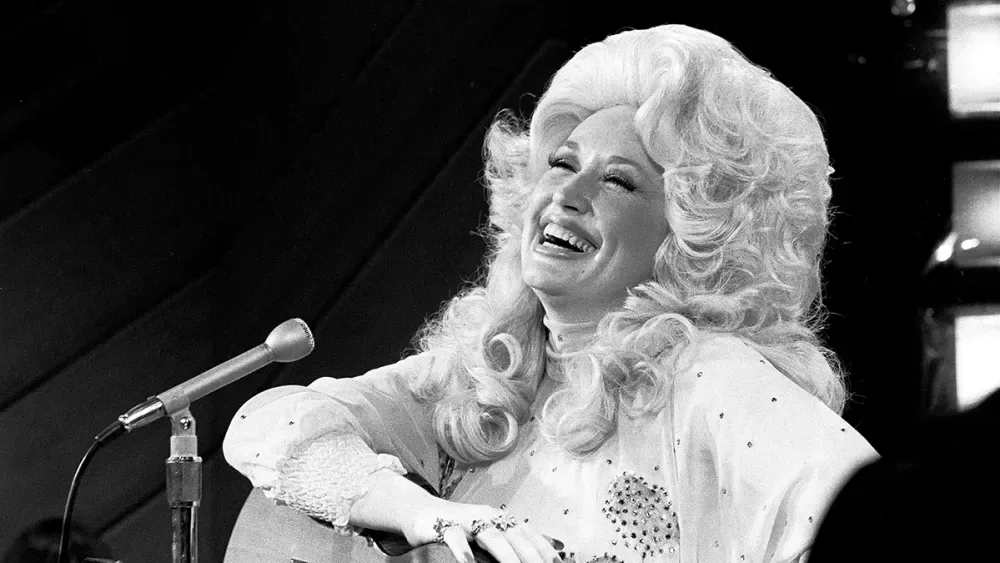
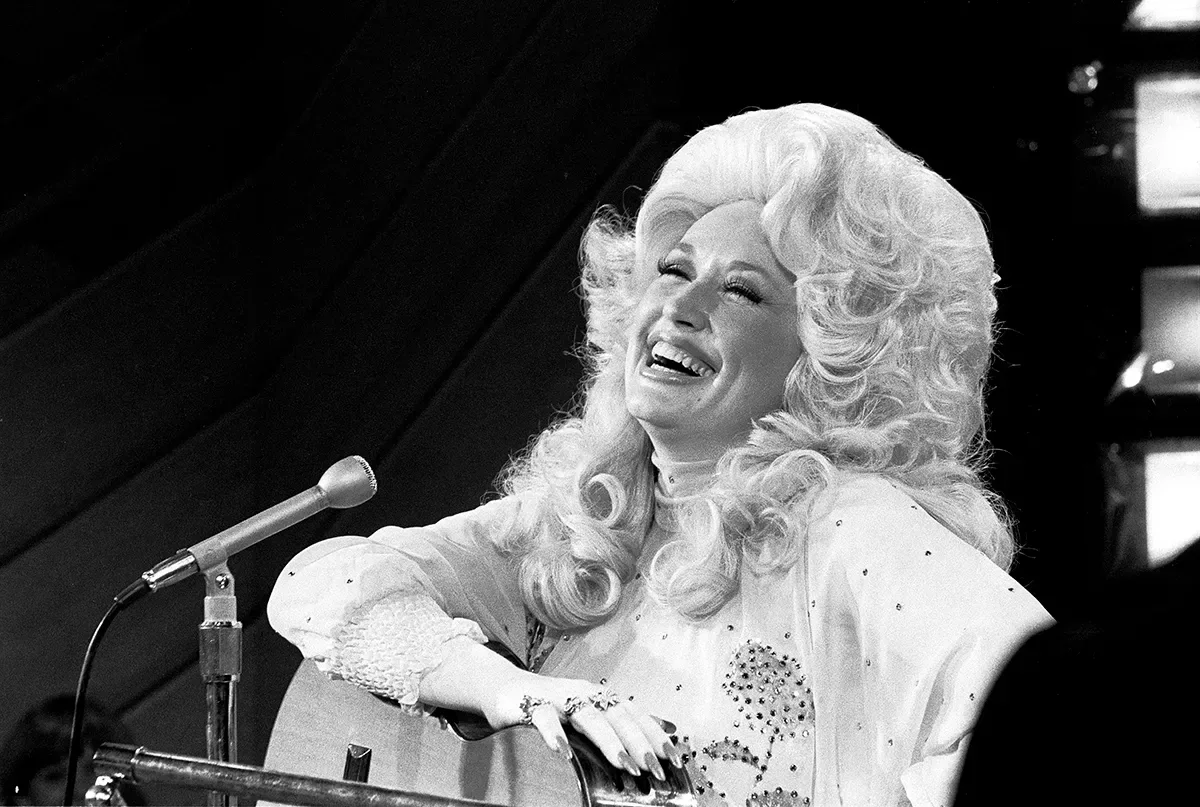
Before McEntire’s performance, the broadcast showed archival footage from Parton’s 1983 Emmy appearance. In the clip, Parton explained that she grew up in the Smoky Mountains of Appalachia and described the song as especially meaningful to her. She also delivered the sort of wry, slightly mischievous line that came to define her public manner, joking that she would prefer not to hear from anyone who disliked it.
That vintage introduction established more than a historical echo. It allowed Parton’s own voice and sense of humor to open a performance of a song with which she had a direct Emmy history. McEntire then took the stage for the orchestral rendition, giving the ceremony an intergenerational country-music link while retaining the focus on Parton’s writing.
The choice of McEntire also avoided the feeling of a generic all-star montage. She is a fellow country performer with her own expansive career in music and entertainment, which gave the tribute a clear musical throughline. The occasion was not about competing with the original recording; it was about bringing a song tied so closely to Parton’s origins back into a national television setting.
Sally Field remembers a friend and collaborator
Field’s introduction drew from the bond the two performers formed around Steel Magnolias. She said that physical distance had never changed her affection for Parton and recalled adoring her from their first meeting. Field also described Parton as generous, modest, sharply funny and unafraid of bawdy humor.
Related coverage includes Reba McEntire Performs Dolly Parton’s ‘Appalachian Memories’ in Emmy Tribute.
Her remarks emphasized the scale of Parton’s impact outside celebrity. Field called attention to her humanitarian work in Tennessee and across the United States, portraying her not simply as a famous entertainer but as someone whose initiatives changed lives. She closed by offering a direct blessing to Parton and saying that love for her would endure.
It was a fitting perspective from someone who knew Parton as a colleague rather than only as a cultural symbol. Steel Magnolias remains one of the most recognizable entries in Parton’s filmography, alongside 9 to 5 and The Best Little Whorehouse in Texas. Field’s presence gave the tribute a link to that acting legacy, while McEntire supplied the musical one.
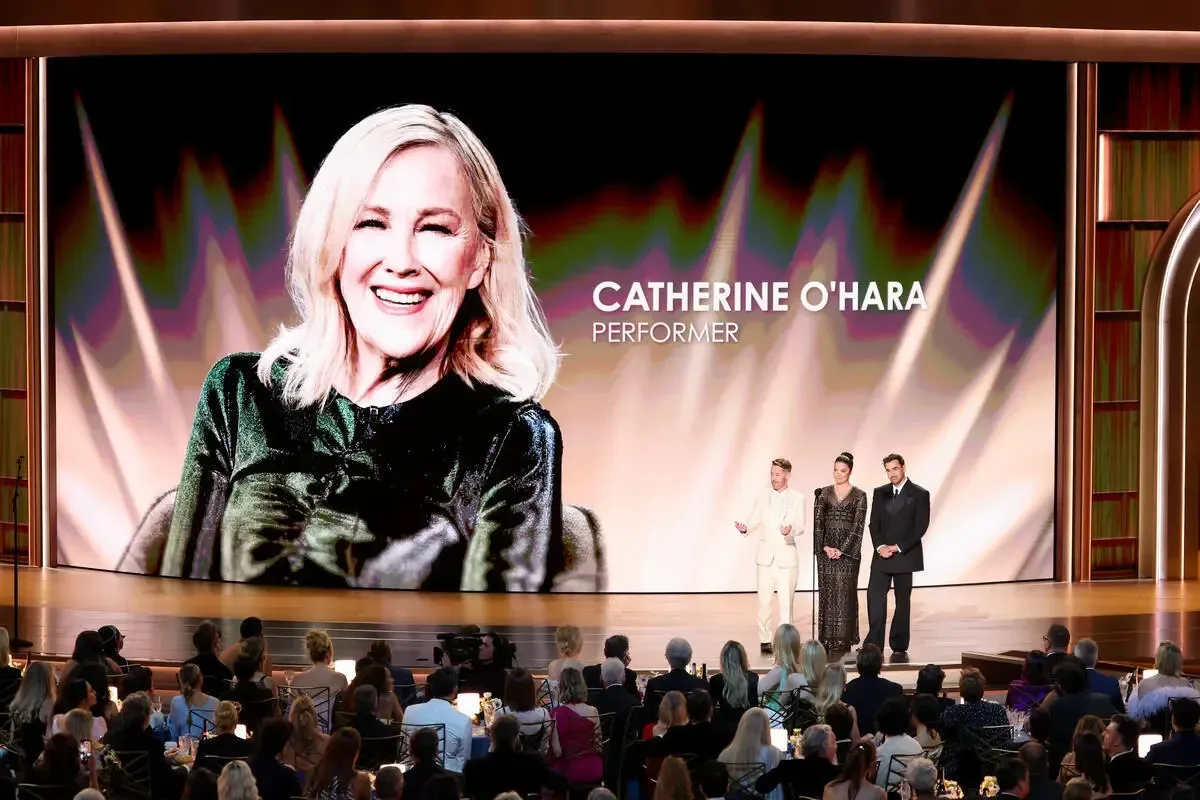
The wider Emmy program has also been considering television legacies in other ways, including the ceremony’s remembrance of Catherine O’Hara, which brought together Macaulay Culkin, Annie Murphy and Dan Levy. That Emmy memorial moment similarly demonstrated how a ceremony can connect audiences with the people and work that remain part of television history.
A career larger than its biggest hits
Parton died in Nashville on Aug. 25 at age 80, following a brief battle with cancer. Her sister Stella later said that Parton had kept the diagnosis from fans and even some relatives because she did not want their final memories of her to be overwhelmed by worry or sadness.
Parton had alluded publicly to health difficulties without disclosing the full circumstances. One week before her death, she appeared in a video promoting a new roller coaster at Dollywood after canceling an in-person event because of dizziness and dehydration. She had also previously postponed a Las Vegas residency for health reasons, and the rescheduled dates were later canceled as well.
Those details lend additional weight to the Emmy salute, but the segment’s structure chiefly honored a body of work that was already enormous. Parton earned 11 Grammys during her career. She entered the Country Music Hall of Fame, the Nashville Songwriters Hall of Fame and the Songwriters Hall of Fame. In 2022, she was inducted into the Rock & Roll Hall of Fame, then released Rockstar the following year.
Her recognition extended to major American cultural honors, including the National Medal of Arts and Kennedy Center Honors. Yet accolades only tell part of the story. Parton’s songwriting was unusually durable because the songs could change shape while retaining their emotional core. “I Will Always Love You,” for example, became one of the defining songs in multiple versions; “Jolene” has remained a standard for performers and listeners across generations.
“Appalachian Memories” occupies a quieter position in that body of work, which made its use at the Emmys notable. Rather than reducing Parton to a few universally recognized titles, the tribute selected a song tied to place, memory and the 1983 album that introduced it. Its return to the Emmys also underscored how archival television can preserve a performer’s own explanation of a song decades later.
The humanitarian work behind the tribute’s emotion
Field’s emphasis on Parton’s humanitarian record was especially significant because it is inseparable from the public understanding of her career. In 1995, Parton founded the Imagination Library, a program that provides free books to children under 5. The organization announced last year that it had distributed more than 300 million books since its creation.
That figure gives tangible scale to an idea that began with literacy and early childhood access. The Imagination Library is not an accessory to Parton’s musical fame; it is one of the principal reasons her influence reaches families who may never have attended a concert, bought an album or seen one of her films.
Dollywood, too, represents a different facet of that legacy. It is a destination attached to her home region rather than a detached celebrity brand, and it has long reinforced the Appalachian connection reflected in “Appalachian Memories.” The song’s placement in the Emmy tribute therefore joined several parts of Parton’s story at once: the region she came from, the songwriter she was, the television history she made and the service that broadened her impact.
Why the Emmy moment mattered
Memorial performances can become overly broad, particularly when they attempt to summarize a life as wide-ranging as Parton’s in a few minutes. This one had a more focused design. Field spoke from the perspective of friendship and shared work. The archival clip let Parton introduce the emotional ground of the song. McEntire performed a composition Parton both wrote and previously brought to the Emmy stage.
That sequence honored authorship as much as stardom. It remembered Parton not only as the performer associated with a famous image and famous songs, but as the writer whose perspective made those songs last. An orchestral performance can enlarge a number for an awards-show room, but the key material was still the voice behind the lyric: a child of the Smoky Mountains looking back at home.
At the Emmys, that memory became a bridge between 1983 and the present. It also made room for the full scale of Parton’s legacy: country icon, screen presence, songwriter, humorist, philanthropist and a figure whose Appalachian roots were never treated as a chapter she had outgrown.