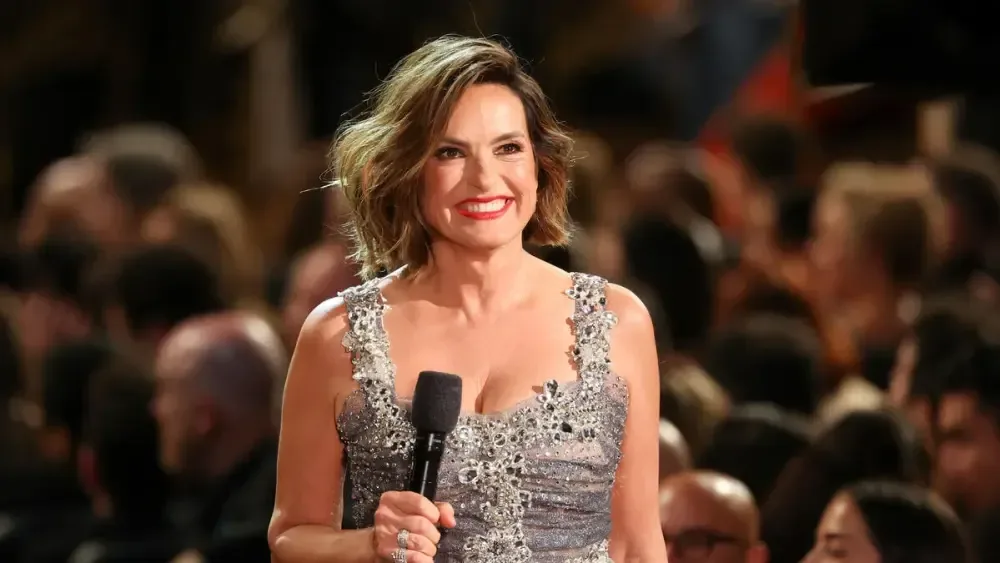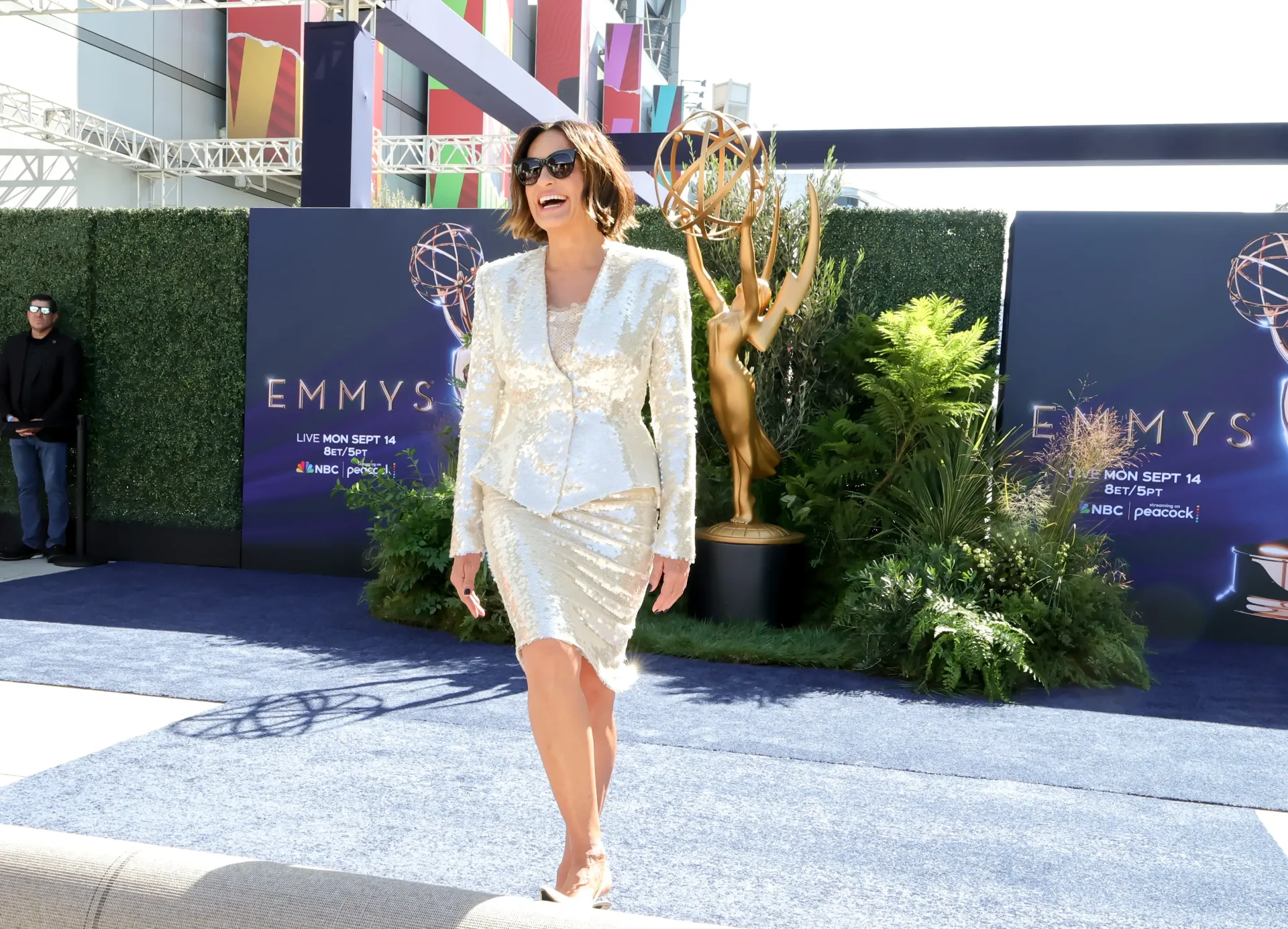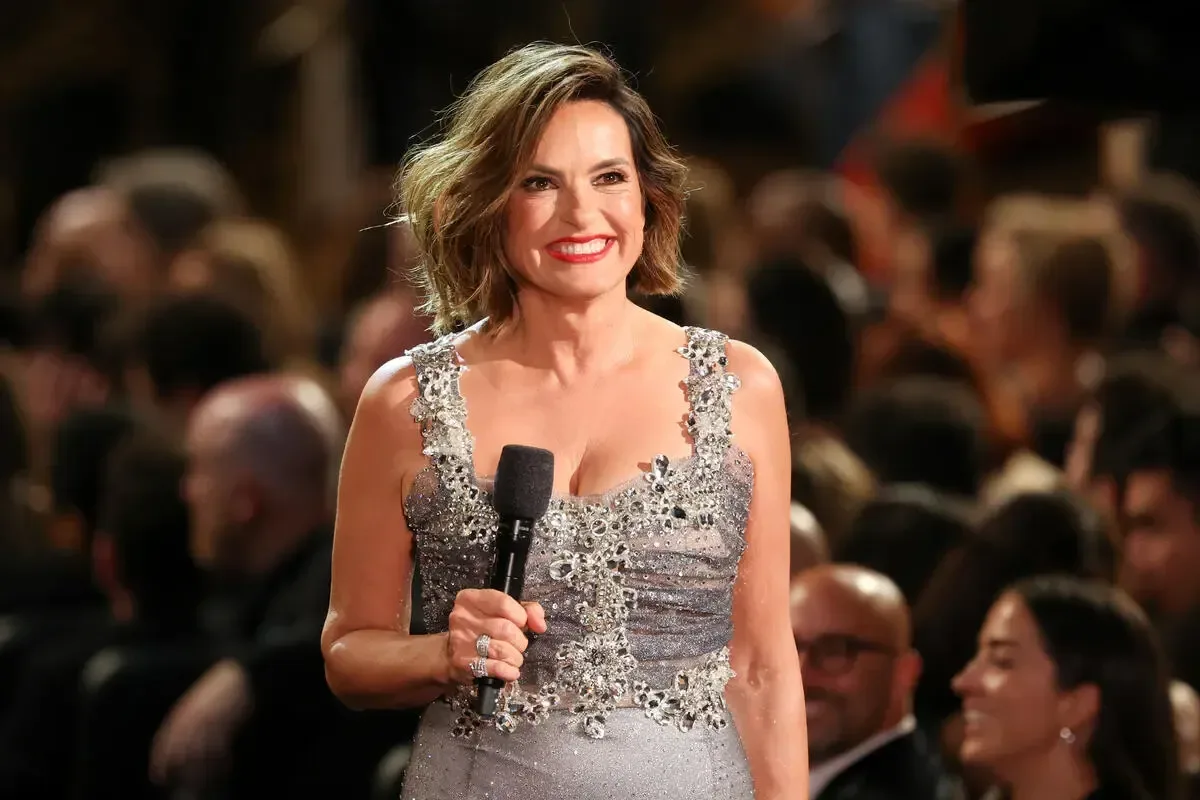
The 78th Emmy Awards found an unusually effective answer to the perennial awards-show question: what does a broadcast need its host to do? Mariska Hargitay’s answer was not to stand apart from the room with detached commentary, nor to treat acceptance speeches as obstacles between the audience and the end credits. Instead, the Law & Order: Special Victims Unit star approached the job like someone who genuinely wanted to celebrate television, its artists and its capacity to make a packed auditorium feel like a community.
That sounds simple, but it matters. Awards telecasts often confuse speed with impatience, especially when a show tries to prove it is hipper than the traditions it is presenting. Hargitay’s performance was energetic without becoming dismissive. She sang, changed costumes, handled big pop-culture references and made room for her fellow performers. The result was an enthusiastic ceremony that remained notably efficient, finishing a few minutes ahead of schedule.
It was a sharp contrast with an approach that has sometimes made award winners seem as though they need to apologize for taking a moment at an awards show. The Emmys had previously experimented with a host outside the standard late-night mold, but a running clock that scolded honorees for lingering had created the impression that the celebration itself was a nuisance. Hargitay understood the opposite principle: the honorees are the point. Her job was to give the night shape, lift and humor without making the audience feel that its gratitude or excitement had to be rationed.
A host willing to play the part
Hargitay had plenty of material to draw on. She is a durable television institution through SVU, but her public identity also stretches through Broadway, filmmaking with My Mom Jayne, and a highly visible devotion to the New York Knicks. That broad familiarity made her feel right for a ceremony honoring a medium whose stars now move fluidly among television, film, theater and streaming.
Crucially, the hosting persona was not all solemn praise for the alleged magic of storytelling. A speech that initially appeared to be moving in that inspirational direction pivoted into a parody of Nicole Kidman’s famous AMC pre-roll spot. Kidman herself appeared to puncture the setup, while Hargitay jokingly cast her as a “movie lady,” an especially knowing label given Kidman’s extensive recent television work. The gag had the right mix of sincerity and mischief: television is important, yes, but television can also recognize when it is being ceremonious about itself.
The production also leaned into spectacle. Hargitay made numerous wardrobe changes and participated in multiple musical sequences. Taylor Swift appeared in a prerecorded bit, though the extended spoof of conspiracy-minded Swift fandom did not entirely earn its length. Still, that is the sort of excess an otherwise fast, controlled broadcast can withstand. When the host is visibly game, an uneven segment feels less like dead air and more like a swing that did not quite clear the wall.
The streamlined awards strategy actually worked
The biggest structural reason the show had room for performances and commemorations was the decision to move several prizes to the earlier awards event, including limited-series supporting actor and actress. Linda Cardellini and David Harbour, winners for DTF St. Louis, still surfaced during the main ceremony as presenters. The arrangement was certain to spark debate because awards bodies are understandably sensitive about which crafts and categories receive the largest live audience.
There is a recent cautionary history here. An attempt to remove various Oscar categories from the central telecast was widely considered a misstep, with the time saved failing to outweigh the feeling that important work had been sidelined. The Emmys’ version did not erase that concern. But the main broadcast demonstrated why organizers keep looking for a workable solution: it made space without seeming frantic. The show was not merely shorter. It used its available minutes with more confidence.
Some of that confidence came from knowing when not to over-explain a foregone conclusion. John Mulaney was allowed to spend several minutes doing what John Mulaney does before presenting drama lead actor. In another context, that could have seemed indulgent. Here, it fit, in part because Noah Wyle’s repeat win for The Pitt was the anticipated destination. Rather than pretending every envelope had to be treated as a mystery-box twist, the broadcast let a talented comic entertain the room and then honored an expected, worthy winner.
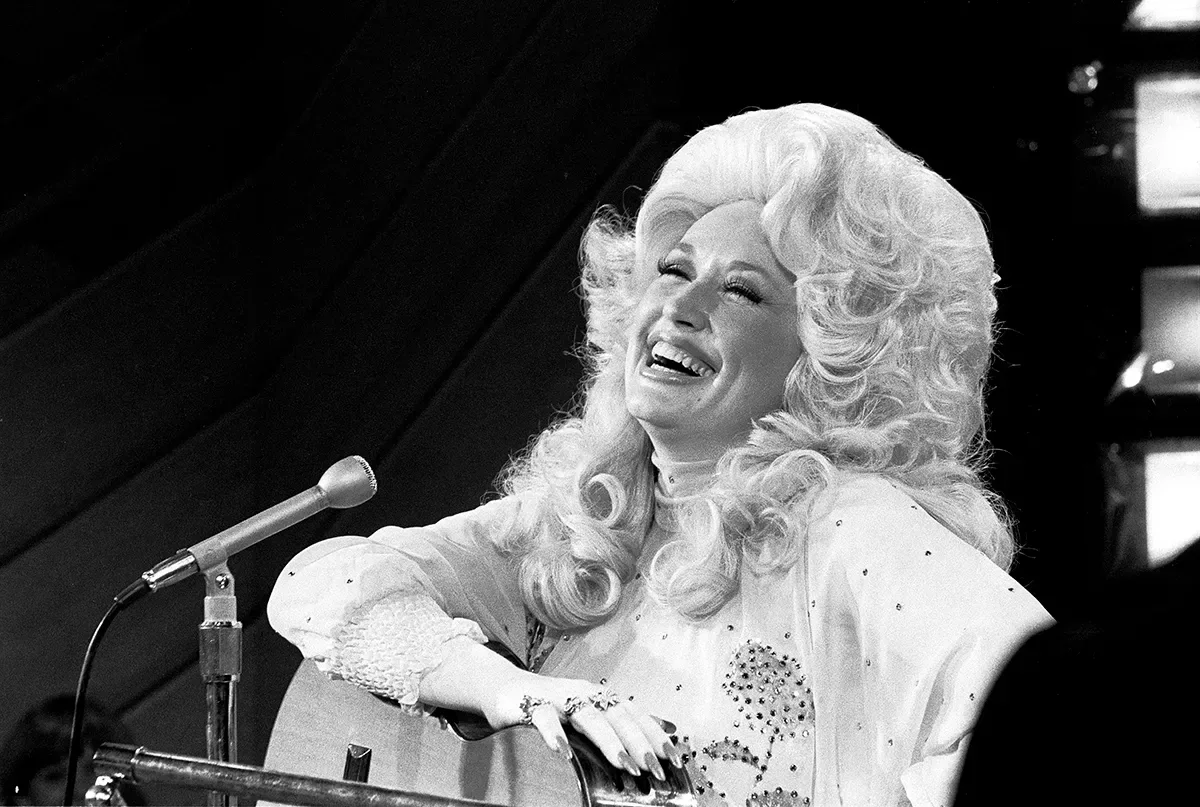
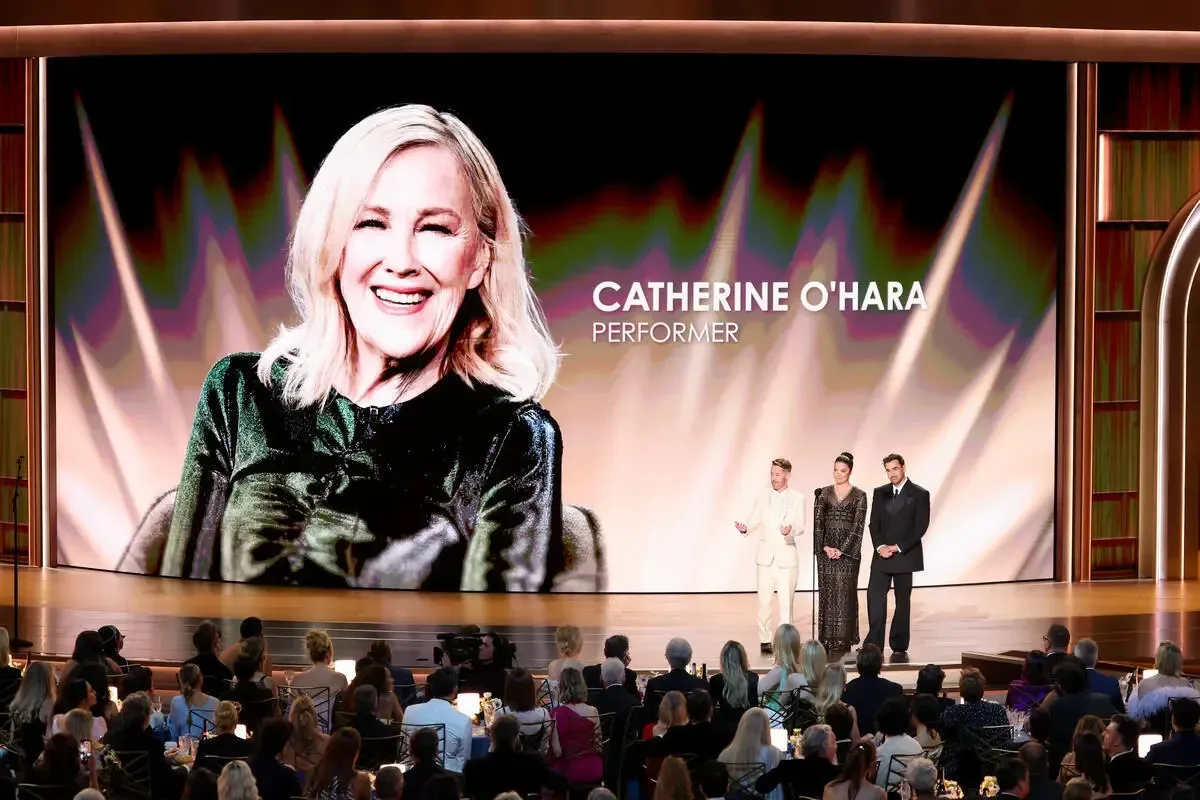
Not every musical number had the same necessity. Hargitay and Andrew Rannells turned Supertramp’s “Goodbye Stranger” into a song about series finales, a premise with enough television-nerd appeal to justify itself but not enough urgency to be essential. It did not derail the night, though. Better were the portions that used extra time to acknowledge television history and artistic loss. Reba McEntire’s tribute to Dolly Parton brought real warmth; readers can find more on McEntire’s Emmy tribute to Parton. Extended remembrances for Catherine O’Hara and Rob Reiner also gave the ceremony emotional texture rather than treating its legacy elements as obligations to speed through.
Winners, sweeps and a few welcome curveballs
Modern Emmys can sometimes take on the rhythm of a coronation. Once a series gains momentum, voters often reward it across the board, and a ceremony can begin to feel like the same acceptance-speech podium has been handed from one member of a single creative family to another. The 2026 results included that familiar sweep energy, especially around Widow’s Bay, but this was one of the occasions where the affection was easy to understand.
The horror-comedy emerged as a powerful favorite despite being an original property rather than an adaptation with built-in recognition. Its reach even seemed to extend beyond its own categories. Matthew Rhys collected two acting awards, one for Widow’s Bay and another for Netflix’s The Beast in Me. That pair of wins made him one of the evening’s clearest individual success stories, while also illustrating how awards momentum can create a feeling that every project touched by a favored performer has become newly visible.
Widow’s Bay creator Katie Dippold supplied a standout speech by refusing the usual modesty script and openly delighting in the trophy. It is difficult to ask for a more fitting awards-show moment: an artist wins, recognizes that the object in her hands is extraordinary, and lets the room share the fun. It also supported Hargitay’s larger tone. A broadcast built around appreciation works best when winners do not have to pretend an Emmy is just another item on a shelf.
Drama brought a more distributed set of honors. Allison Janney won for The Diplomat, Tom Pelphrey was recognized for Task, and Saul Metzstein took directing honors for Slow Horses. Those outcomes gave the ceremony something a sweep-heavy show needs: surprise. Surprises should not be the only measure of awards quality, and they certainly are not automatically correct merely because they disrupt predictions. Yet they remind viewers that the voting body can still make choices outside the assumed script.
That distinction was particularly visible in the acting race where Sally Field’s win for Remarkably Bright Creatures came at the expense of Sarah Pidgeon’s portrayal of Carolyn Bessette in Love Story. Field is an immensely respected performer, but a surprising result can still prompt real disagreement. The healthiest version of an awards night does not require every voter preference to be universally endorsed. It needs enough variety and enough credible excellence that the arguments afterward are about performances, not whether the broadcast respected the people it invited to celebrate.
Why Hargitay’s success matters beyond one ceremony
The success of Hargitay’s hosting turn is also a useful reminder that awards shows need not rely exclusively on the same late-night-comedy pipeline. That talent pool has become less dependable as the late-night landscape changes, a reality made more conspicuous by the cancellation of The Late Show and Stephen Colbert’s public defense of the format’s value. The host of a major awards telecast does not necessarily need to be a nightly monologue specialist. A seasoned television figure with comic timing, authority, curiosity and affection for the medium can serve the event just as well.
Hargitay did more than competently manage a difficult live assignment. She offered a model: be prepared, be playful, acknowledge the silliness, protect the sentiment and let television’s people feel that the ceremony belongs to them. For a 78th Emmys that had musical detours, big wins, contested decisions and space for remembrance, that model proved sturdy enough to hold the whole show together.