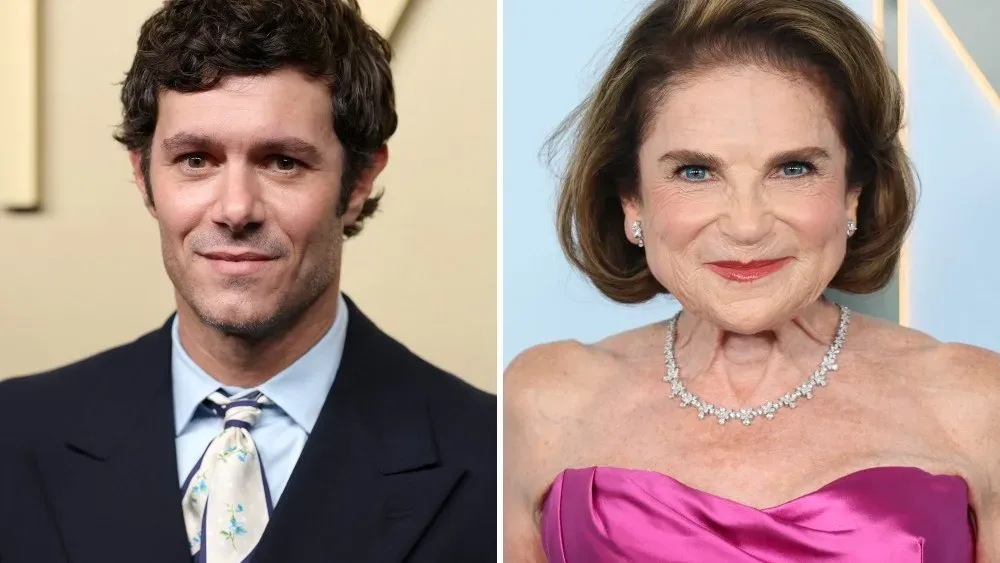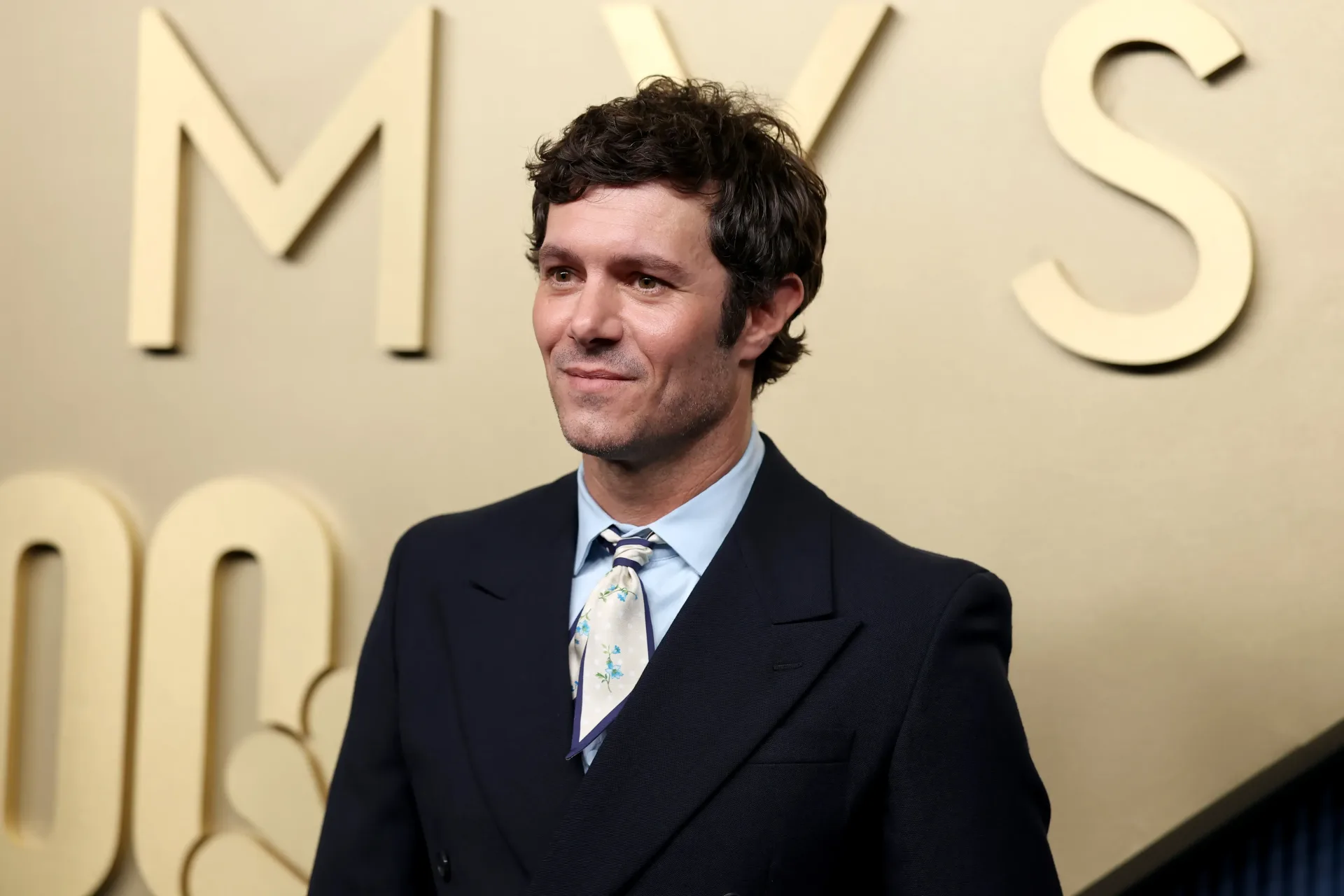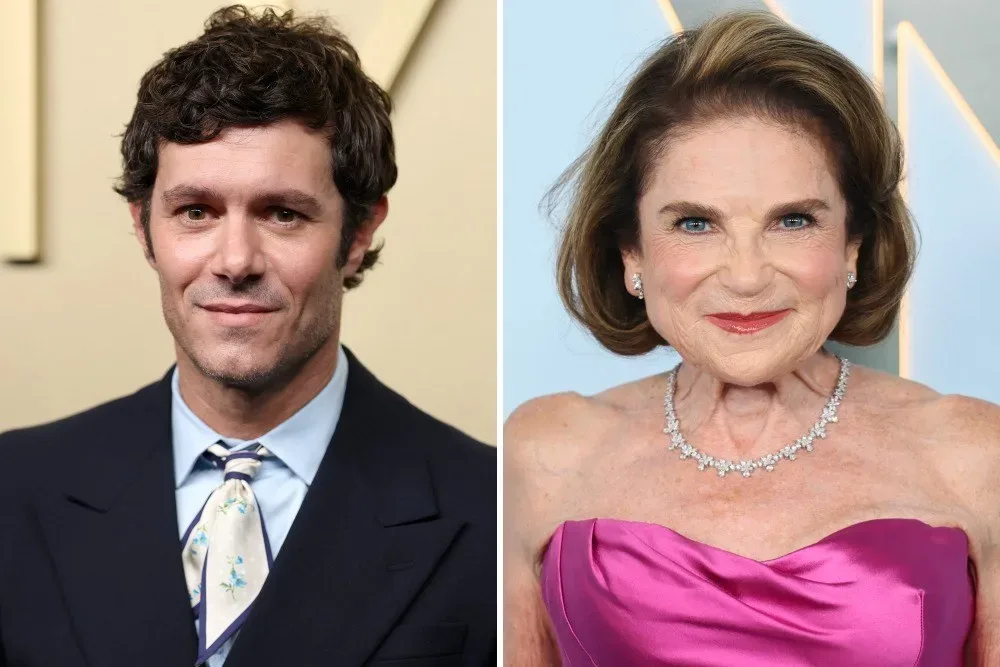
Nobody Wants This actor Tovah Feldshuh has responded publicly to comments from co-star Adam Brody about the Israel-Gaza war, laying out a sharply different view while emphasizing kindness toward colleagues on the Netflix series.
Brody, who plays Rabbi Noah Roklov, recently said he believes the conflict is a genocide and voiced support for a free Palestine. Feldshuh, who plays Noah’s mother Bina Roklov, rejected that characterization in unequivocal terms and defended the importance of Israel’s continued existence.
The exchange does not appear to have become a workplace feud. Feldshuh said that, both in character and as herself, her responsibility is to care for and treat people kindly at work. Series creator Erin Foster had already said she disagrees with Brody’s stance, but described the production environment as one where people can debate difficult matters without agreement being a prerequisite for respect.
What Adam Brody said
Brody had not previously made a public statement on the issue, though he said it was a frequent subject in his private life. When he did address it, he identified himself as supporting a free Palestine and said he regarded the situation as a genocide. He also said the scale of death and suffering had brought the matter to what he viewed as a breaking point.
Those words are Brody’s own assessment of the war and its consequences. “Genocide” is not merely a broad expression of disapproval or sorrow: it is a legal and political term with a specific meaning, generally used to describe acts committed with intent to destroy, in whole or in part, a national, ethnic, racial, or religious group. In ordinary public discussion, people may deploy the word to convey the gravity of mass civilian harm. Its legal application, however, remains highly contested and carries implications that go well beyond a general condemnation of violence.
That distinction helps explain why Brody’s statement generated such a forceful response. Even where people share concern for Palestinian civilians or anguish at civilian deaths, they can fundamentally disagree about the language used to describe the conflict, the parties responsible and the political path forward.
Feldshuh rejects Brody’s characterization
Feldshuh said accusing Jewish people of genocide was “wild,” arguing that it reverses the roles of victim and perpetrator. She added that such claims take on particular significance within the Jewish community when they come from Jewish people themselves.
She also argued that the continued existence of the state of Israel is important to the democratic and free world, and said the relationship between Israel and the United States matters in both directions. Feldshuh further described the current moment through what she called a “horseshoe effect,” connecting socialism and antisemitism.
The “horseshoe theory” is the idea that political positions at opposite extremes can resemble each other more than either resembles the political center. It is a controversial framework rather than an agreed description of political life. Feldshuh invoked it to express her belief that antisemitism can emerge in political spaces that may otherwise see themselves as far apart.
Her comments illustrate why debates around Israel and Palestine are so difficult to reduce to a single binary. Terms such as antisemitism, Zionism, anti-Zionism, occupation, genocide and ceasefire can have widely understood dictionary or legal meanings, but they also carry distinct historical, emotional and political weight for the people using and hearing them. Disagreement over a term can therefore reflect much deeper disagreement about history, security, statehood, civilian protection and accountability.
Erin Foster says disagreement can coexist with respect
Foster took a notably different angle when discussing Brody’s comments earlier this month. She said she disagrees with him, while also making clear that the disagreement itself was acceptable.
She compared the show’s work environment to family dinner tables where people debate, discuss and reach different conclusions. That description does not minimize the seriousness of the subject. Instead, it frames a professional reality that many casts, crews and audiences are confronting: colleagues may have genuine affection and mutual respect while holding irreconcilable beliefs about an issue with enormous human stakes.
For a series whose central family includes a rabbi and his relatives, the public discussion is especially conspicuous. Feldshuh’s Bina is Brody’s Noah’s mother on screen, meaning their real-world political disagreement is being read through an existing fictional mother-and-son relationship. But the available comments point to a clearer line than the show’s family dynamic might suggest: their roles are fictional, while the cast members’ political views are personal and distinct.
The practical point for audiences
Celebrity political remarks often prompt an expectation that everyone attached to a project must supply a unified response. Foster and Feldshuh’s comments push against that expectation in different ways. Foster explicitly accepts internal disagreement; Feldshuh sets out why she considers Brody’s language harmful and unacceptable. Neither position requires the cast to pretend that the divide does not exist.
That is an important distinction. A workplace can remain civil without producing consensus, and civility should not be confused with an absence of conviction. Feldshuh has not softened her objection to Brody’s characterization. Foster has not hidden her own disagreement. Brody’s statement was also direct. The common thread in the available comments is not political unity, but an effort—at least within the workplace—to avoid treating disagreement as an automatic reason to deny others dignity.
There is also a broader entertainment-industry context. Actors, musicians, creators and studios increasingly face pressure to make public declarations on major political events, while audiences scrutinize what they say, what they decline to say and whom they continue to work with. That scrutiny can affect public conversation around a project even when the work itself is unrelated to the political dispute. Similar tensions have surfaced across music and entertainment, including disputes over the political use of artists’ work, such as Neil Young’s dispute over campaign use of “Rockin’ in the Free World”.
In this case, there is no indication in the remarks provided that Nobody Wants This has changed its cast, production or story because of the disagreement. The news is instead about public statements from people associated with the show—and the divergent ways they are choosing to articulate, manage and live with a profound political divide.
Why the language matters beyond the cast
Brody’s appeal for a free Palestine and Feldshuh’s defense of Israel are not interchangeable political slogans, even though they are often forced into simplified social-media arguments. Support for Palestinian freedom can encompass arguments for self-determination, civil rights, statehood, safety and an end to military control. Support for Israel’s existence can encompass arguments about Jewish self-determination, national security, history and protection against antisemitism. People may hold elements of both beliefs, while others view the underlying political goals as incompatible.
The source material does not establish a fuller exchange between Brody and Feldshuh, nor does it say they have discussed their positions privately. It would therefore be wrong to infer a personal confrontation from their public comments alone. What is clear is that Feldshuh strongly objects to Brody’s use of the term genocide, while Foster has stated her own disagreement in language focused on maintaining a functional and respectful set.
For viewers, the responsible reading is to keep those facts separate from speculation. The actors play relatives in a comedy series; they are not their characters, and their real-world politics are not a plotline. Their statements do show, however, how a conflict discussed globally is also reaching ordinary workplaces, creative partnerships and public-facing communities—where the pressure to be clear can collide with the reality that colleagues do not always agree.