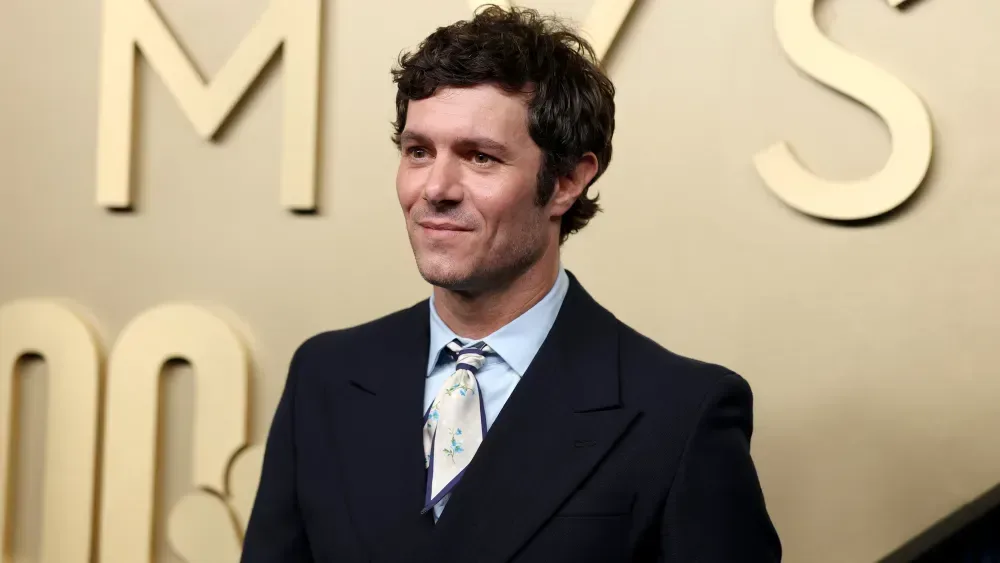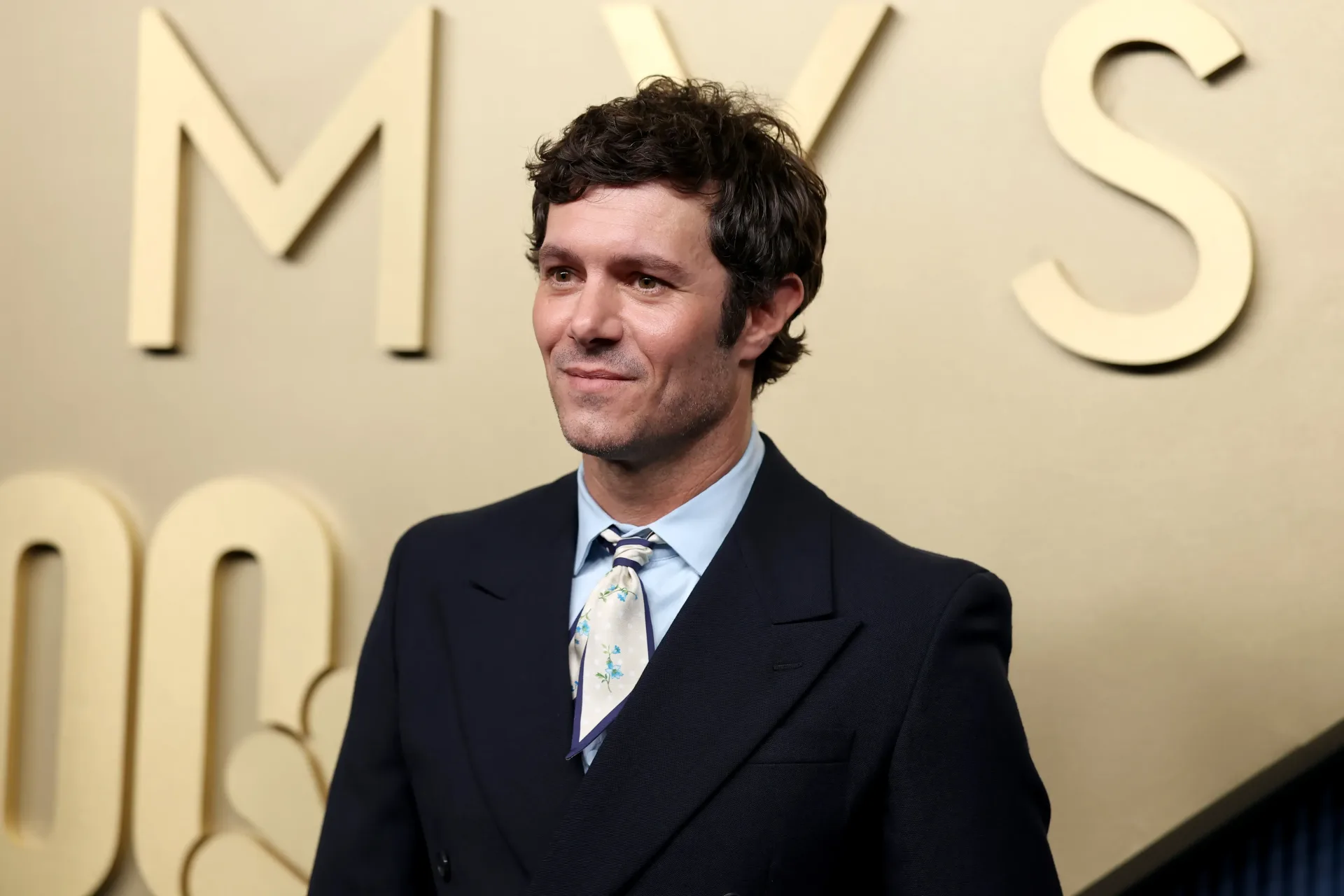
Adam Brody has explained why viewers generally do not hear his political views during the red-carpet stops and promotional interviews surrounding his acting work. In a recent political interview, the actor said the basic reason is straightforward: those appearances are overwhelmingly focused on the project being promoted.
Brody nevertheless made his own position on Israel and Gaza unambiguous. He said, “Put me down as thinking it’s a genocide” and called for “a free Palestine.” He said it was awful that the situation had required so much death and misery to reach what he described as a possible breaking point.
The remarks matter in part because Brody framed them not as a sudden change of heart, but as views that simply have not typically been the subject of the questions directed at him in public. He said the issue comes up frequently in private even though he had not previously spoken publicly about it.
Promotional interviews set their own agenda
Brody’s explanation draws attention to a basic feature of entertainment publicity: a press appearance is usually organized around a specific film, series, performance, or release. That focus can make political subjects seem absent even when a performer holds deeply felt views.
He said he answers the questions he is asked and estimated that 99% of the questions he receives concern the show. He also noted that he does not wear a pin that might actively invite a political question, while expressing admiration for people who do choose that route. In this context, a pin is not merely an accessory; it is a visible symbol intended to communicate support for a cause and potentially signal that the wearer is willing to discuss it.
That distinction is important. Brody did not say he had been unwilling to answer political questions. Instead, he said he had not ducked them. His account separates being asked in a promotional setting from having a position, a gap that can easily disappear when public figures are judged only by the issues that surface on a carpet or in a cast interview.
There is also no suggestion in his comments that every actor must turn every appearance into a political platform. His point was narrower: the routine structure of publicity tends to steer conversation toward the work at hand. When the subject was directly raised in a political interview, he gave a direct response.
What Brody said about staying offline
Brody also discussed his decision not to use social media. He said remaining off those platforms has been the healthiest choice for him, even while acknowledging that people are doing useful work on X. He specifically said he would not use a platform associated with Elon Musk.
His comments outline a personal boundary rather than a rejection of all online advocacy. Brody recognized that others use the platform constructively, but said it is not for him and that he feels no guilt about opting out.
That stance helps explain why his public profile may look different from that of entertainers who use social accounts to post statements, signal-boost campaigns, respond immediately to current events, or communicate directly with fans. Social media can turn a public figure’s account into a continuing public channel. Choosing not to have one means interviews and appearances carry more of the burden when that person wants, or is asked, to speak publicly.
It also means silence on a feed cannot be used as a measure in Brody’s case: there is no Brody-run social account from which to expect a post. He said the Israel-Gaza issue is discussed often in his private life, while his current comments provide a public account of where he stands.
His comments arrive alongside a new season of Nobody Wants This
Brody plays Rabbi Noah Roklov in the Netflix romantic-comedy series Nobody Wants This, which began its first season in 2024. The show’s third season is due to arrive on Netflix on October 22.
The upcoming season picks up after Noah and Joanne, played by Kristen Bell, recommit to one another at the end of the previous season. The pair are moving into a home and entering a phase of their relationship characterized by a new set of shared firsts.
The season’s official description also puts several supporting characters into changing circumstances. Sasha, played by Timothy Simons, and Esther, played by Jackie Tohn, return to dating. Morgan, played by Justine Lupe, advances professionally toward becoming an almost-media sensation, while the description says Sasha and Morgan continue to circle feelings neither has admitted.
Erin Foster created the series and executive produces. Jenni Konner and Bruce Eric Kaplan are also executive producers and serve as showrunners. A showrunner is the senior creative leader responsible for guiding a television series’ overall production and storytelling, often coordinating the writing process and major creative decisions.
Brody’s role as a rabbi is central to the premise of Nobody Wants This, but his remarks about Israel and Gaza were made as his own political statements, not as comments in character or as part of the series’ storyline. Keeping that boundary clear is useful whenever an actor’s fictional role has cultural or religious resonance: the performer’s views and the character’s narrative are separate things.
A clearer public record, without a new publicity persona
Brody’s remarks create a clear public record of his position while resisting the assumption that public engagement must always take the form of constant posting or symbolic visibility. He said he admires people who use visible symbols, but described a different pattern for himself: he responds to questions, and those questions have generally been about his work.
The exchange also illustrates how much context can be lost when celebrity political speech is reduced to whether someone has posted, worn a symbol, or volunteered a statement during a project campaign. Those choices can be meaningful, but they are not the only ways a person may address an issue. Brody’s public statement came in a setting where the topic was explicitly on the table, and he chose language that left little doubt about his view.
For entertainment audiences, the practical takeaway is not that promotional coverage and political commentary have become the same thing. It is that they serve different purposes. Cast interviews help audiences understand a new season, its characters, and the people making it. A political interview can make room for a performer to address events beyond the screen. Brody’s comments showed what happens when the latter setting produces a question that the former usually does not.
His work will soon return to the center of the promotional cycle with Nobody Wants This Season 3, while his remarks have made his personal stance on Palestine, social media, and public advocacy part of the broader conversation around him. For a related look at how Hollywood stories can interrogate the industry’s idea of success, read our coverage of Misty Green and its view of Hollywood achievement.