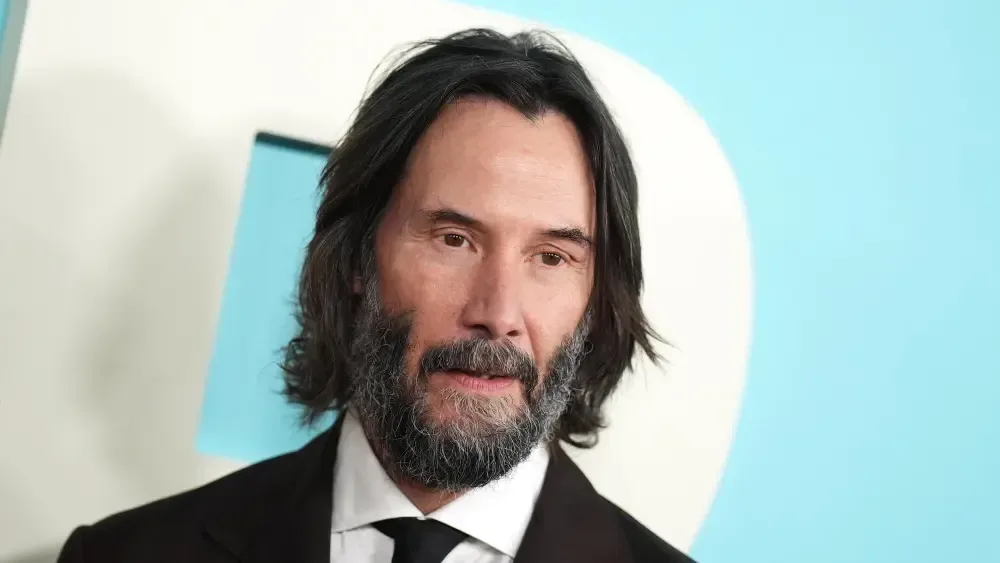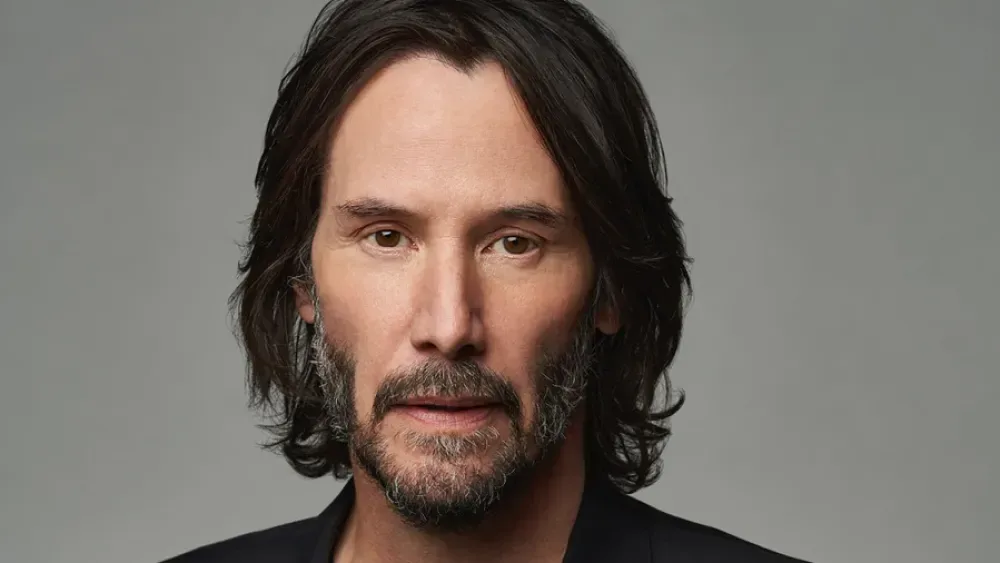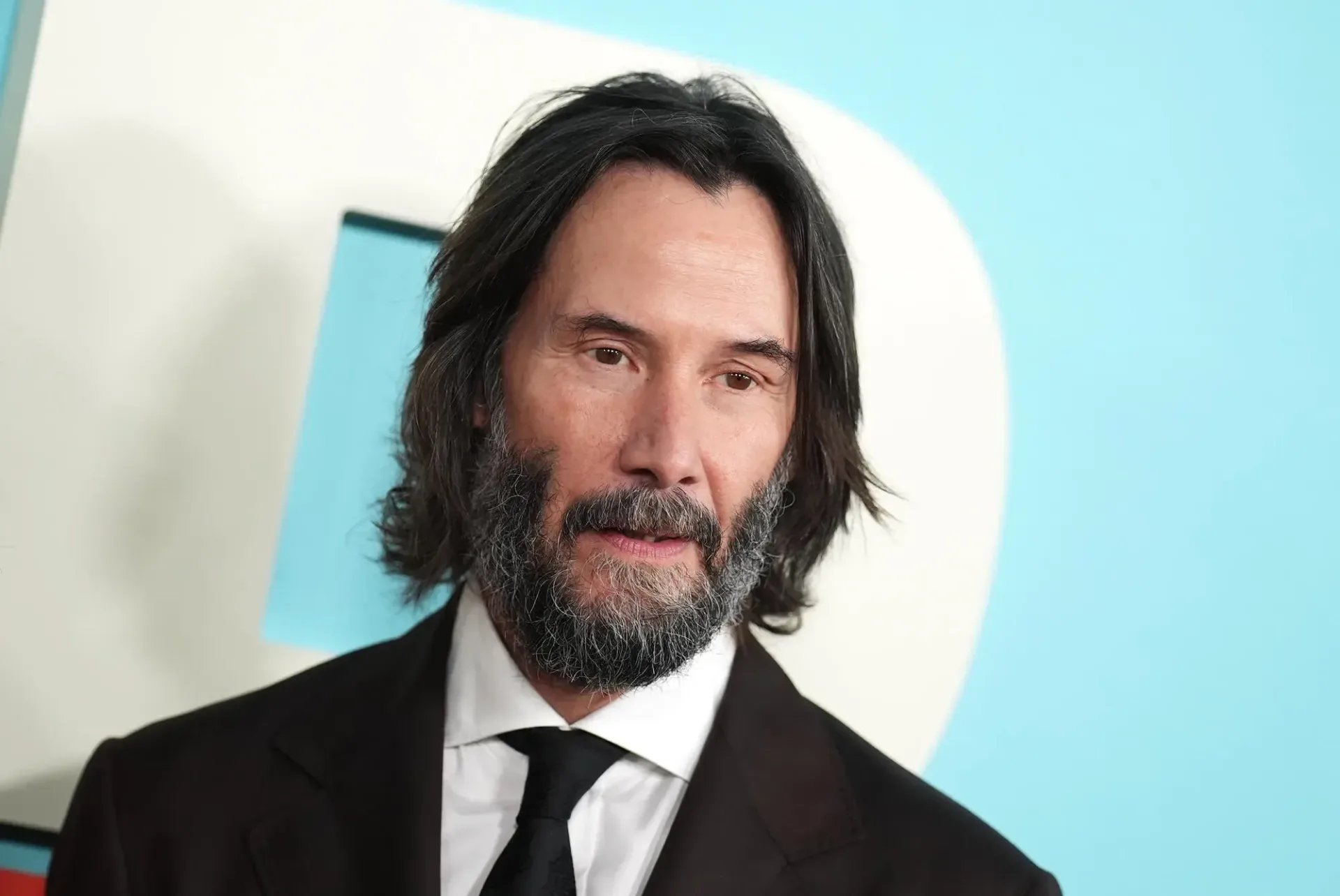
Keanu Reeves is set to star in Maelstrom, a Netflix action movie that places a Federal Marshal, a witness seeking protection and a hurricane on the same very bad evening. The project had previously been set to feature Alan Ritchson, who has left the film for reasons that have not been disclosed.
Jaume Collet-Serra will direct. The filmmaker’s recent work includes Carry-On, and the premise of Maelstrom gives him a sharply contained action setup: a Federal Marshal is assigned to protect the fiancée of an arms dealer. She is entering witness protection and preparing to testify against him. Then a hurricane arrives, cuts the characters off from outside communication and blocks any hope of quick reinforcements. The marshal and witness must contend with armed men sent by the dealer while the storm makes the surrounding world an additional, unavoidable threat.
That is the essential news, but the project also has an unusually long road behind it. Maelstrom began as a spec script sold to Warner Bros. in 1993 and is now being revived as the first project in producer Jeff Robinov’s new Netflix deal. With Reeves now attached, it is positioned around a performer whose modern screen identity has been shaped by precisely the kind of pressured, physical action role the premise suggests.
A one-night action story with two forms of pressure
The film’s premise is economical in a useful way. The Federal Marshal has a duty: keep a key witness alive long enough for testimony to happen. The witness’s connection to the arms dealer creates the immediate human danger. His men are apparently coming for her, and their objective is clear enough to power a thriller even without a wider plot outline.
The hurricane is more than background weather. It has a stated narrative job. It prevents communication with the outside world and stops reinforcements from reaching the pair. In action-thriller terms, that is an isolation device: it removes the easy solution of calling for help, makes escape harder and forces the central characters to rely on their own decisions. The natural disaster also supplies a second category of risk that does not answer to either the marshal or the criminals.
That distinction matters. An armed pursuit can be confronted, outmaneuvered or delayed. A storm changes conditions indiscriminately. By putting the criminal threat and the hurricane together, Maelstrom has the framework for conflict on two tracks: protecting the witness from people who mean to harm her, and surviving a setting that is becoming less stable by the hour.
The story unfolding over a single evening further concentrates the stakes. Rather than following a long investigation, the film is built around the period when an already dangerous protection assignment turns into an emergency. That compact time frame can make every loss of contact, route or shelter feel consequential. It also means the film’s action will likely depend heavily on geography: where the marshal and witness can go, what the storm has made inaccessible, and how their pursuers can still reach them.
What witness protection means in this setup
Witness protection, as used in the supplied story description, is the effort to safeguard someone whose testimony puts them at serious risk. Here, the fiancée is not simply a bystander caught near a crime; her planned testimony against the arms dealer provides the reason she is being guarded and the reason she is targeted. The Federal Marshal’s role makes him responsible for the immediate protective mission.
That setup naturally creates a relationship-based tension. He is tasked with preserving her safety, while she is directly connected to the person whose associates are attacking them. The available details do not say how much she knows, whether she is a willing participant beyond her intention to testify, or how the two characters initially relate to one another. Those are questions for the finished film rather than facts to assume. What is established is that they must work together when the normal support structure fails.
Reeves takes over a role previously linked to Ritchson
Reeves’ casting follows Ritchson’s departure. No explanation for the change has been provided, so it would be premature to attach it to scheduling, creative differences or any other common reason actors leave projects. The confirmed point is simply that Reeves is now set to lead Maelstrom.
His involvement gives the movie an actor strongly associated with action franchises, especially The Matrix and John Wick. Those series have cemented Reeves as a recognizable action lead across distinct styles: The Matrix is science-fiction action, while John Wick is built around an underworld assassin. Maelstrom, based on its stated premise, appears to be a more grounded siege thriller centered on a marshal, a witness and a weather-battered location.
That does not tell audiences exactly how the film will play. A casting announcement is not a trailer, and no information has been provided about the film’s supporting cast, production timing, release date or rating. Still, Reeves’ history in large-scale action makes the role a notable fit on the broadest level: the character is positioned as a protector under sustained pressure, with survival and tactical decisions apparently central to the night.
Reeves’ current slate also extends beyond this project. He made his Broadway debut in Waiting for Godot alongside his Bill & Ted co-star Alex Winter. He is also in talks to lead James Wan’s next film, The Gangster, The Cop, The Devil, for Paramount, and is expected to reprise the voice role of Shadow in Sonic the Hedgehog 4, scheduled for 2027. Talks for another project are not the same as a confirmed role, but the list illustrates the range of formats around Reeves’ work: live-action action films, stage performance and voice acting.
A 1993 spec script returns in a new streaming era
Maelstrom was originally sold as a spec script in 1993. A spec script is a screenplay written without a prior studio commission, then offered to buyers as a completed or near-completed concept. The project was sold to Warner Bros. by Jeff Robinov, who was working as an agent at the time.
At the time of that sale, the project was described in shorthand as Die Hard in a hurricane. Such comparisons are a quick way of communicating a premise rather than a guarantee of story details or tone. In this case, the description tracks with the information now available: an action story with a limited group of characters, an external force narrowing their options and a hostile group pressing the attack. The storm is the obvious element that separates its setup from a conventional enclosed-building siege.
The script reportedly sold for roughly $225,000 to $625,000 in 1993, an amount described as approximately $500,000 to $1.4 million after inflation over 33 years. Those figures are part of the project’s history, not a current production budget, and no budget for the Netflix version has been disclosed.
Robinov’s connection is significant because Maelstrom is the first project under his new agreement with Netflix. He later became president of Warner Bros. Pictures and oversaw franchises including The Dark Knight trilogy and The Hangover. The revival therefore reunites him with a property he first handled decades earlier, now in a different phase of the industry and with a streaming platform behind it.
The screenplay is being polished, not built from scratch
Mark Bianculli is polishing the Maelstrom screenplay from a first draft by the late Gregory Fitzpatrick. In film development, a polish generally means refining an existing draft rather than originating the underlying project from nothing. The exact scope of Bianculli’s work has not been detailed, so it is not possible to say which characters, scenes or structural elements may have changed across drafts.
The distinction nevertheless helps explain how a long-gestating premise can return with a new lead and director. The core concept has endured: one dangerous night, one protected witness, attackers with a clear motive and a hurricane that prevents outside rescue. Script work can update or sharpen how those components function for the new production without changing the basic engine.
Collet-Serra’s role as director is equally central. Direction will determine how the film balances the man-made threat with the environmental one: whether the hurricane is chiefly a source of atmosphere and logistical obstacles, or whether it receives equal weight as an active force in the action. The available information confirms the ingredients, but not the scale of the storm sequences, the setting’s specifics or the visual approach.
What remains unknown
There is no announced release date for Maelstrom, no production-start date, and no confirmed supporting cast in the information available. Netflix has not outlined whether the movie will receive a theatrical component, and nothing has been stated about where the story is set. Details about the arms dealer, the fiancée’s testimony and the precise nature of the marshal’s operation likewise remain under wraps.
Those gaps are worth keeping separate from the hook that has been announced. The confirmed film is an action thriller led by Reeves, directed by Collet-Serra and centered on a marshal trying to protect an arms dealer’s fiancée through an isolating hurricane. Everything beyond that—including the practical specifics of the siege and how the two leads escape it—remains part of the movie still to be revealed.
For viewers tracking the wider relationship between games and screen projects, the continued push toward high-concept adaptations and action filmmaking has its own complications; the ongoing challenge of translating a richly defined game world to film is a different problem from Maelstrom’s original-screenplay revival. Here, the appeal is more direct: a proven action star, a simple high-stakes premise and a storm that ensures nobody gets an easy exit.