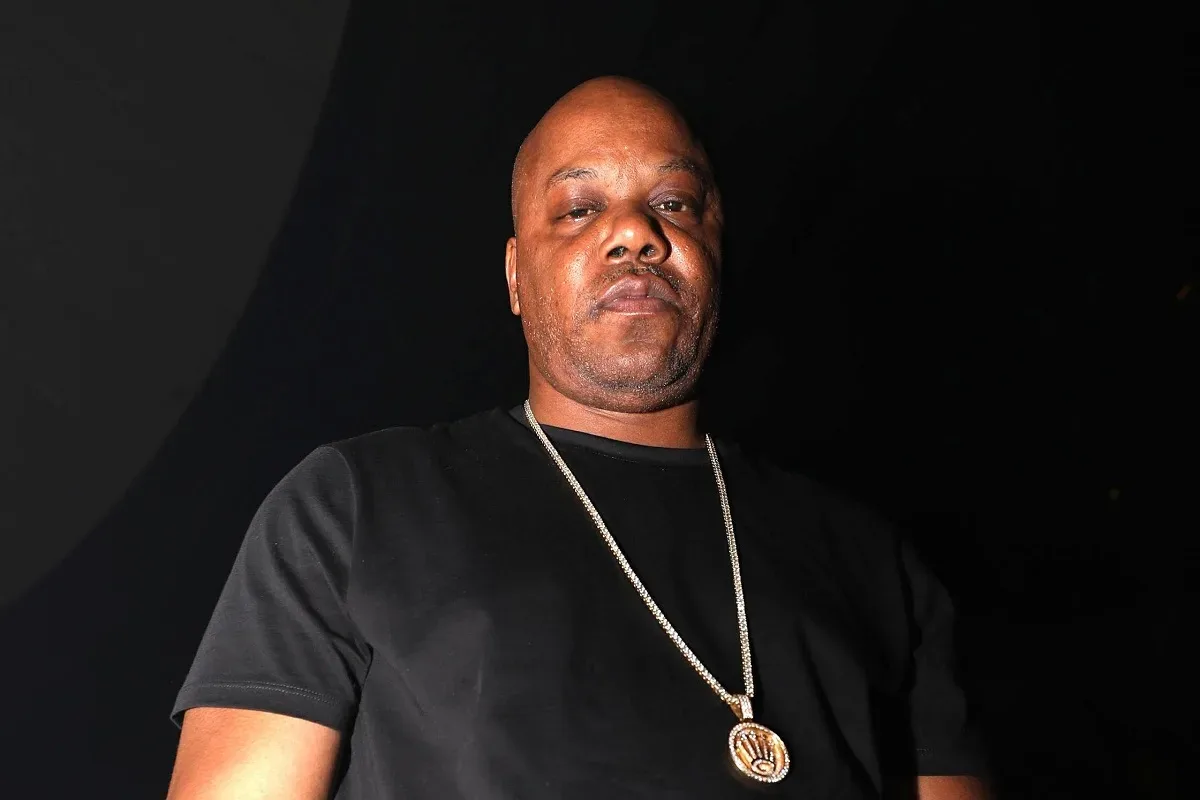
Too $hort says he declined a politically connected appearance because he believed taking the stage would communicate support for Donald Trump, whether or not anyone from Trump’s own circle made the request.
Speaking on Flagrant and Funny with Cari Champion and Jemele Hill, the Oakland rapper said the invitation came through a Trump supporter rather than directly from the president’s team. That distinction did not change how Too $hort assessed the offer. In his view, the surrounding political context meant an appearance could be understood as an endorsement.
“I don’t want to align myself with that because it’s just something that I wasn’t supporting,” Too $hort said.
He did not identify the person who contacted him, name the event, or provide further details about its format. As a result, the available account establishes Too $hort’s reasoning for saying no, but not the precise nature of the proposed appearance or who else may have been involved.
An appearance can carry a message beyond the performance
Too $hort’s comments center on a practical reality of celebrity politics: public participation has meaning separate from a performer’s stated intent. A musician may see an appearance as work, a chance to reach fans, or simply an invitation. Audiences, campaign figures, and online observers can instead interpret the same image as an endorsement.
An endorsement is public backing for a candidate, party, political movement, or policy position. It can be explicit, such as a direct statement urging people to vote for someone. It can also be inferred from circumstances: who invited the artist, what event they appeared at, how promotional material presents them, and whether the event’s political purpose is obvious.
That inferred meaning is what Too $hort appeared determined to avoid. He said he considered the invitation political despite the lack of a direct call from Trump’s circle. The point was not merely who placed the call; it was what standing on that stage would likely signal.
For public figures, that distinction can be difficult to unwind after the fact. Photos, flyers, short clips, and social posts can travel separately from the fuller explanation of why an artist attended. Too $hort’s account suggests he made the decision before that ambiguity could arise, rather than attempting to clarify his position afterward.
Why he separates registration drives from candidate support
Too $hort contrasted the declined invitation with voter-registration concerts he has performed through Democratic organizers. He described those shows as free for the public, with voter registration included as part of entry, while attendees were not instructed which candidate to support.
That is an important distinction in his explanation. Voter registration is the process that allows eligible people to participate in elections. A registration-focused event is aimed at expanding participation. Candidate advocacy, by contrast, asks people to direct that participation toward a particular political outcome.
Too $hort’s description presents the registration shows as civic-engagement events rather than instructions to vote for a designated person. That does not make the setting nonpolitical in the broad sense; voter participation is plainly connected to politics. But he drew a boundary between encouraging people to be able to vote and lending his presence to an event that could be treated as support for a candidate or political figure.
He recalled a Milwaukee appearance where he was offered twice his usual fee. Even with that financial incentive, his comments framed the central question as the message attached to the appearance, not simply the size of a paycheck. He did not characterize the Trump-linked request as a million-dollar proposition.
The discussion later raised a hypothetical: whether two appearances for $1 million might change the calculation. Too $hort said he had not actually encountered that choice. That answer matters because it keeps the record narrow. There is no disclosed seven-figure offer to accept or decline, only a conversation about a hypothetical amount.
The difference between a hypothetical and a reported offer
Celebrity-political stories can become distorted when hypothetical questions become headlines. Here, the distinction is straightforward. Too $hort said he turned down a Trump-linked appearance because he did not want to be aligned with something he did not support. Separately, he was asked about a hypothetical $1 million for two appearances and said he had never faced it.
Those are not interchangeable claims. The interview does not establish that the declined invitation involved $1 million, nor does it show that Too $hort was offered any particular sum for it. It does show that he was thinking about the reputational and political interpretation of accepting it.
That focus is consistent with the way artists must weigh visibility at politically branded events. Compensation is measurable; public association is less so. Once an appearance is promoted or recorded, the performer’s name can become part of a larger political message, including a message the performer may not have intended to make.
A position Too $hort has defended before
This was not the first time Too $hort has addressed claims connecting him to Trump. In 2020, he publicly objected after a documentary grouped him with Trump supporters. He also said then that he had turned down another effort that would have taken him to Washington to meet with the president.
That earlier response provides useful context for the new remarks. The recent interview was not presented as a reversal or a newly discovered political affiliation. Instead, Too $hort again rejected an association he felt did not reflect his own position.
There is a broader lesson in how these situations develop. A public figure’s political image is shaped not only by voting guidance or formal endorsements, but by the networks around an invitation, the branding of a venue, and the public story built around attendance. Too $hort’s stated approach is to separate his involvement in registration efforts from appearances that could make him a symbolic validator of Trump.
His comments also illustrate why the phrase “just performing” may not settle a political question. At a conventional concert, audiences may reasonably view an artist as appearing for the music. At an explicitly political gathering, the same performance can be presented as evidence of alignment. The performer may disagree with that reading, but the setting gives it force.
Kamala Harris, shared circles, and a light aside
The political-invitation conversation followed a question involving former Vice President Kamala Harris. Too $hort said they move in some of the same circles, while disputing the suggestion that the two had previously run into each other.
When asked about Harris being a listener, he answered with a joke, saying he would have guessed she was more of an MC Hammer fan. The exchange was lighter than the discussion around political appearances, but it underscored the same larger topic: how entertainers and politicians can be publicly linked through culture, geography, personal networks, or assumptions that may exceed the actual relationship.
Music and public life frequently overlap without amounting to a formal alliance. A politician enjoying an artist’s catalog is not the same as the artist campaigning for that politician. Likewise, knowing people in similar circles is not the same as having a documented personal encounter. Too $hort pushed back on those assumptions while explaining a clearer boundary in the Trump-linked case.
What the comments establish—and what they do not
Too $hort’s remarks establish his own stated reason for declining the invitation: he believed it would be read as alignment with Trump, and he said that was not something he supported. They also establish the distinction he draws between non-directive voter-registration concerts and an appearance whose political symbolism concerned him.
They do not identify the event, the organizer, the compensation proposed, or the full terms of the request. They also do not establish that Trump or his team contacted him directly. Too $hort specifically said the approach came from a supporter rather than someone in the president’s circle.
For fans tracking the intersection of hip-hop, celebrity, and politics, that specificity is more useful than a simplified headline. Too $hort is not describing an abstract objection to every form of civic participation. He is describing a line he believes separates increasing access to voting from being publicly used—or publicly perceived—as support for a political figure he does not back.
The comments arrive in a music culture where public association can move quickly and endure. Recent coverage of major rap milestones, including the Diamond certification for Meek Mill and Drake’s “Going Bad”, is a reminder of how large an audience prominent artists can reach. That visibility can make a single stage appearance consequential well beyond the room where it happens.
Too $hort’s answer was ultimately simple: the invitation’s political meaning outweighed the value of accepting it. By declining, he sought to avoid a public association he believed would say something he did not want his presence to say.