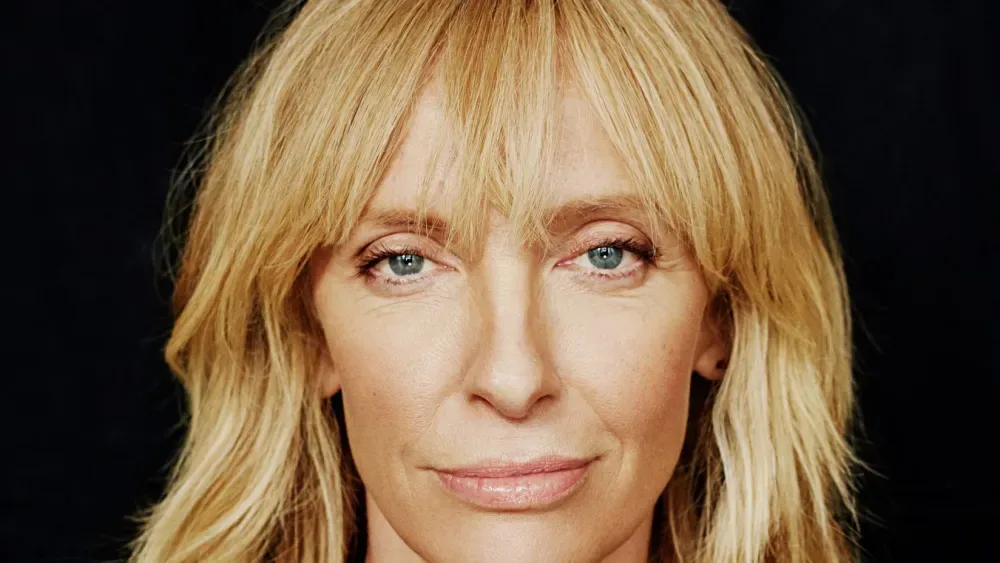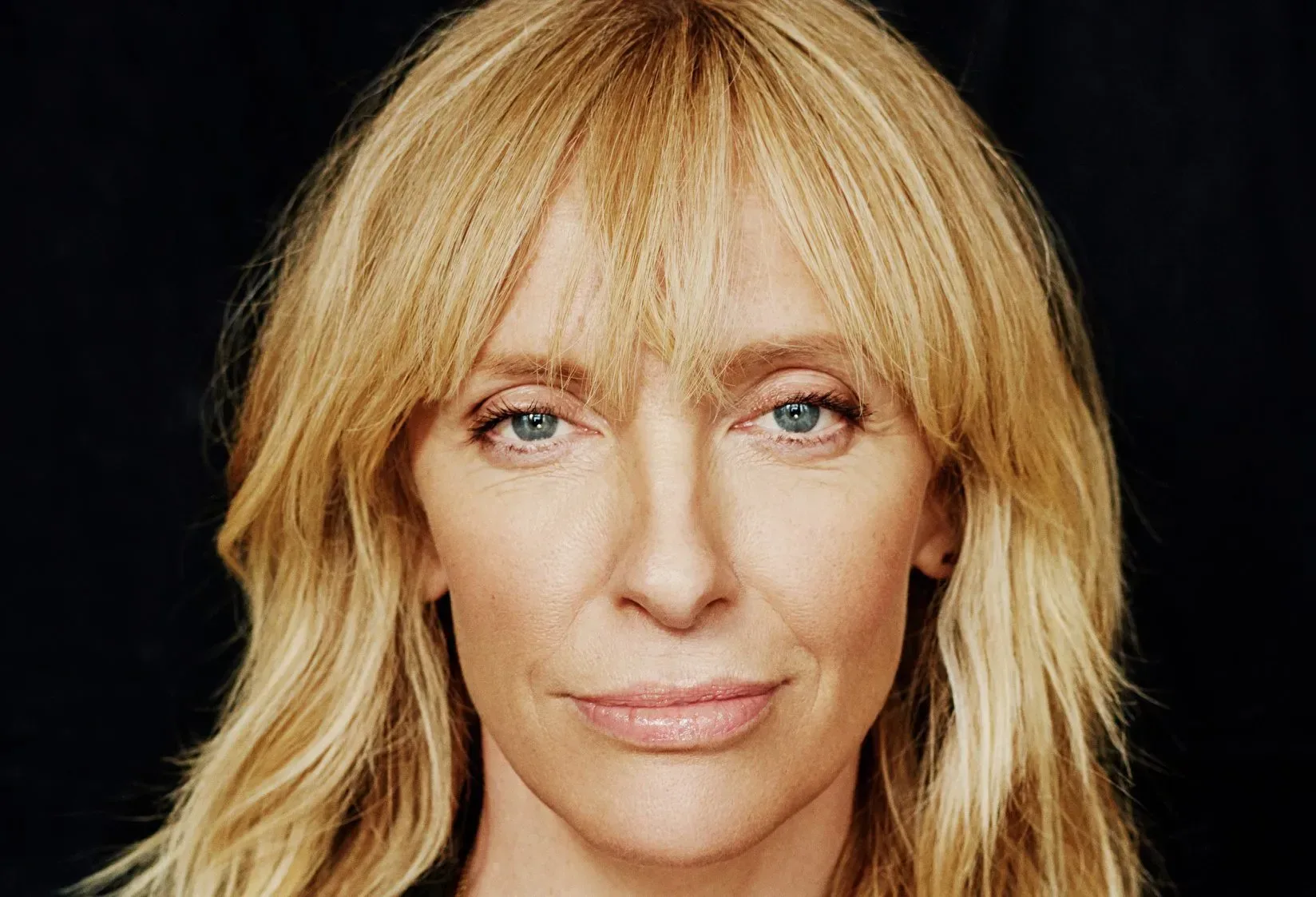
Toni Collette is set to lead Lenni, an Apple TV dramedy adapted from the Norwegian series Pernille. The project is now in production in Sydney, Australia, and places Collette in the role of Lenni: a divorced mother of two who works in child welfare while trying to keep pace with a family life described as continually, and hilariously, chaotic.
The central setup gives the series two pressures running at once. Lenni spends her professional life advocating for other people’s families, but a new case with especially high stakes brings that work into collision with her own relationships. That is the foundation for the show’s “dramedy” label: a format that combines comedic character material with serious emotional or social stakes, rather than treating one tone as separate from the other.
A family story built around a demanding job
Child welfare work is not merely background detail in Lenni. The stated premise makes Lenni’s profession the engine of the season’s main story, while her life as a parent provides a parallel source of complication. The series is therefore positioned to examine a familiar but potent television tension: someone expected to be composed, resourceful and compassionate at work facing disorder and uncertainty at home.
That setup also explains why the new case matters beyond a conventional case-of-the-week structure. The available description points to one season-spanning case whose consequences increasingly overlap with Lenni’s personal life. Exactly how that collision unfolds, who Lenni’s children are, and the roles played by the supporting cast have not been detailed.
Calling the show a dramedy should not be mistaken for a guarantee that the material will treat child welfare lightly. It instead signals a tonal range in which domestic mishaps and sharp humor can sit alongside difficult professional decisions. The balance between those elements will be one of the key creative questions for the adaptation.
Collette leads an international ensemble
Collette will star while also serving as an executive producer. Her television work includes leading United States of Tara, for which she won an Emmy, as well as appearances in The Staircase, Pieces of Her and Unbelievable. She has received five Emmy nominations overall. Her screen career also includes an Academy Award nomination for The Sixth Sense, alongside films including Hereditary, Little Miss Sunshine, The Hours and About a Boy.
Her dual role matters because an executive producer is generally involved in the high-level creative and production stewardship of a series, though the precise responsibilities vary project to project. Here, Collette’s position means she is attached not only as the performer at the center of the story but as part of the project’s producing team.
The cast also includes Ciarán Hinds, Dan Wyllie, Josh McKenzie, Celeste Barber, Genevieve Hegney, Arka Das and Wayne Blair. No character assignments have been announced for those actors. The group brings together performers known for work across television, film and Australian comedy, but viewers will need to wait for additional details to understand how each fits into Lenni’s family, workplace or the new case at the story’s center.
What an adaptation means for ‘Lenni’
Lenni is based on Pernille, created by Henriette Steenstrup. In television, an adaptation is not simply a rebroadcast of an existing show with a different cast. It is a new production that uses the earlier series as its source material while being written and made for a different setting, cast and audience. The supplied details do not specify which storylines or characters from Pernille will carry over, nor do they describe changes made for the Australian version.
Sarah Scheller is adapting the Norwegian original and executive producing. Scheller’s credits include The Letdown and Strife. Dearbhla Walsh, whose previous work includes Bad Sisters and Margos Got Money Troubles, will direct and executive produce. Steenstrup remains attached as an executive producer, joined by Bård Fjulsrud and Tanya Badendyck.
This arrangement gives the series continuity with its Norwegian foundation while placing its adaptation and direction in the hands of a new creative team. That can be particularly consequential for a show whose premise depends on tone. The humor of a stressed household, the emotional weight of care work and the pace of the central case all need to feel coherent in the new version, even if the adaptation reshapes the original material.
Sydney production and the teams behind the series
Production is underway in Sydney. Made Up Stories and Keshet International are producing, with Bruna Papandrea, Steve Hutensky, Katie Amos, Avi Nir and Keren Shahar also executive producing. The original Pernille was produced by Monster for Viaplay.
The series is supported by the New South Wales Government through Screen NSW’s Made in NSW Fund. While the announcement does not outline how that support will be used, the involvement establishes the production as a Sydney-based project backed through a local screen-production funding program.
For audiences, the immediate practical takeaway is straightforward: Lenni has entered production, has a named lead and ensemble, and has its principal creative and producing personnel in place. There is no release date, episode count, trailer, character breakdown or further plot information in the details currently available. Those absences are worth keeping in mind, especially because early casting announcements can create an impression of a fully defined series long before its on-screen shape is public.
Why the project fits the current adaptation conversation
Adaptations remain a major route for television projects because an existing premise can offer a tested dramatic framework without requiring the new version to be creatively identical. In Lenni’s case, the durable hook is easy to see from the announced logline: a parent responsible for difficult family situations in public has little control over the comic upheaval in private. It is a premise that naturally supports both episodic conflict and longer character arcs.
It also arrives amid a broader entertainment landscape where recognizable properties and performers frequently travel between formats and audiences. On the gaming-adjacent side of pop culture, for example, Sonic’s appearance in the Angry Birds 3 trailer is another example of familiar characters being deployed across entertainment brands. Lenni is a very different kind of project, but its move from a Norwegian series to an Apple TV production similarly reflects how established concepts can be reinterpreted for a new production context.
For now, the clearest reason to watch Lenni is its combination of a character-driven premise, Collette’s central performance and a creative team with defined adaptation and directing roles. The project’s larger details remain intentionally sparse: its eventual tone, the nature of Lenni’s pivotal case, and the specific dynamics of the ensemble have yet to be revealed. What is confirmed is that the cameras are rolling in Sydney on a new version of Pernille, with a child welfare worker’s professional responsibility and home life set on a collision course.