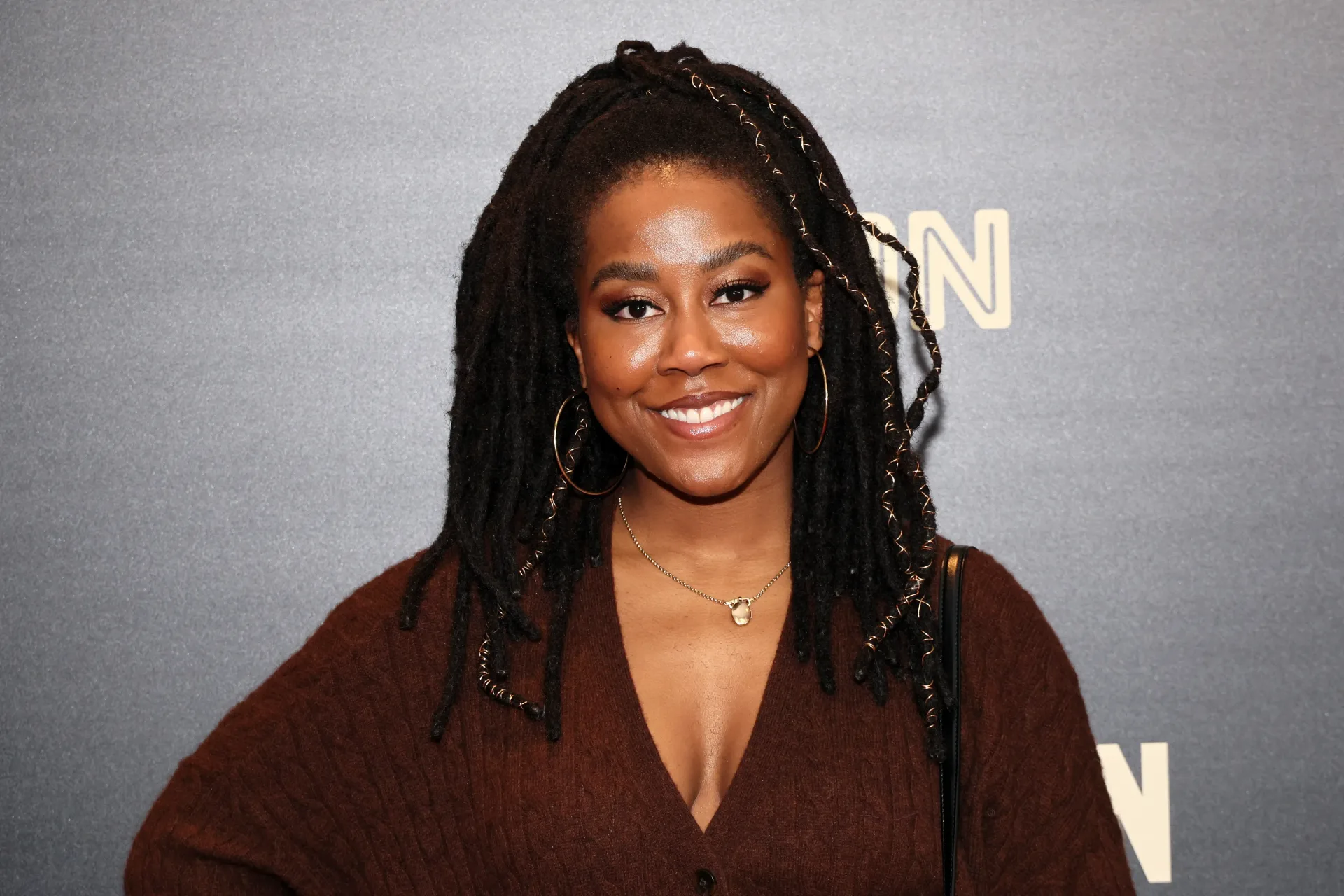
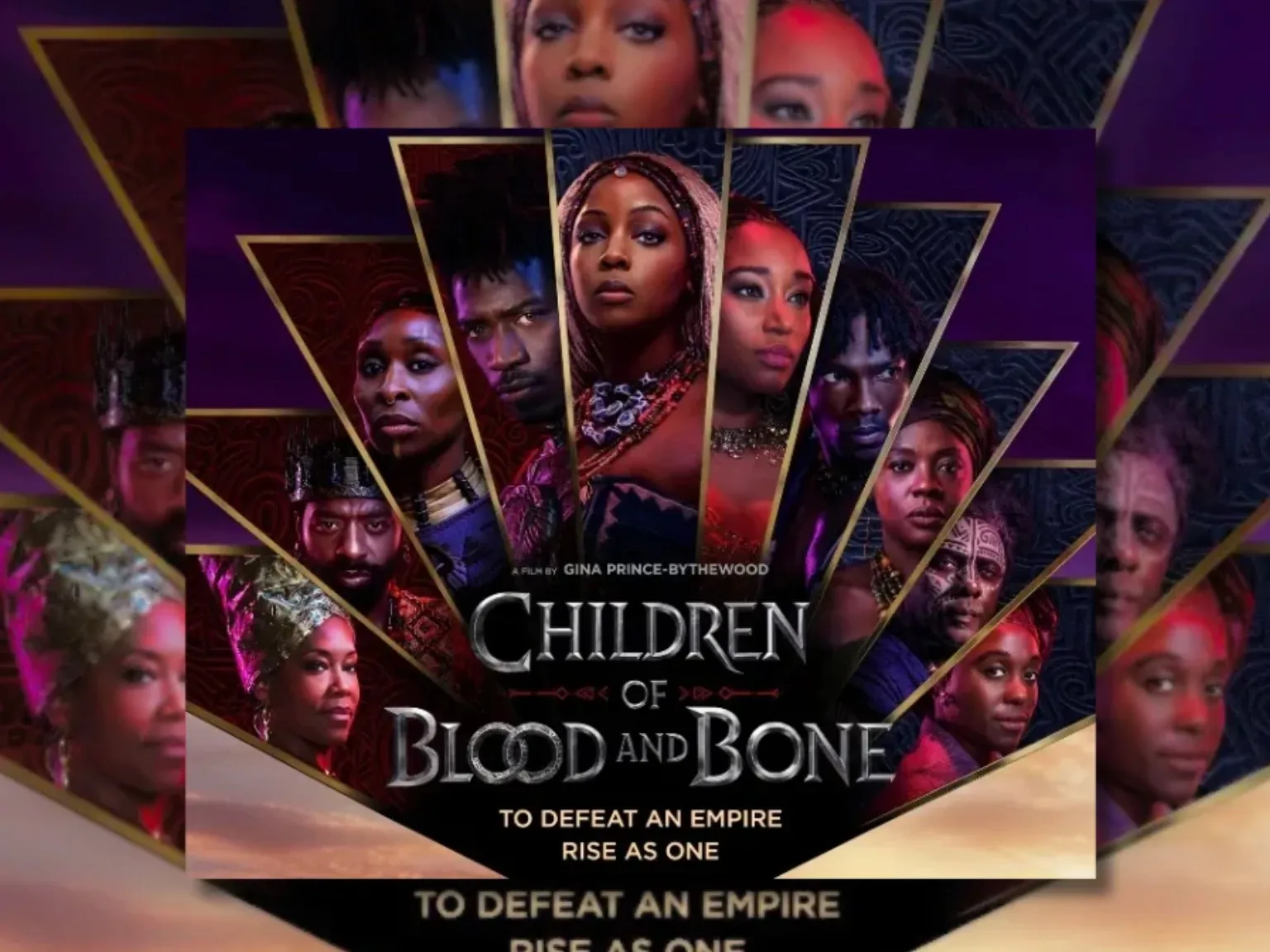
Tomi Adeyemi is once again publicly celebrating Children of Blood and Bone, sharing a new trailer for the film and putting its intended audience at the center of the conversation. Her message looks beyond the usual adaptation talking points—casting, spectacle and franchise potential—and instead stresses what she hopes children will take from a trip to Orïsha: a sense of beauty, agency and belonging.
The film adapts Adeyemi’s 2018 young-adult fantasy novel, which follows Zélie on a mission to bring magic back to the kingdom of Orïsha. Amandla Stenberg, Damson Idris, Cynthia Erivo, Idris Elba and Viola Davis are among the ensemble. Yet Adeyemi’s latest post makes clear that the project’s emotional stakes, for her, are bigger than a recognisable cast list.
She described the series’ path from a personal spark to a large-scale screen production as something that still feels improbable. Adeyemi traced that initial inspiration to seeing ceramic tiles connected to the Orisha in a small Brazilian gift shop. That encounter eventually became a fictional world, a novel and now a movie approaching its world premiere.
A return to the story’s core purpose
The post represents a notable shift in public tone. Adeyemi had previously said she was distancing herself from the film adaptation, but her new message does not revisit that decision or explain the circumstances behind it. It also does not say whether any earlier concerns were addressed. Those unanswered questions matter, and it would be wrong to fill the gaps with assumptions.
What is clear is narrower but meaningful: Adeyemi chose to use this moment to endorse the story’s underlying ambition. She wrote about wanting audiences to feel “empowered and beautiful and celebrated,” with particular emphasis on children who may not have seen themselves presented this way in fantasy film.
That distinction changes the lens through which to read the trailer launch. It is not simply a promotional beat for an anticipated release. It is also an author articulating the hoped-for value of the world she created. In Adeyemi’s framing, Orïsha is meant to be a place where young people can regard themselves as magical and invincible—not because they have earned the right to exist in the story, but because their worth was never in question.
Why the characters named in the message matter
Adeyemi specifically invoked Zélie, Amari, Tzain and Inan. Naming them matters because it keeps the focus on characters rather than an abstract claim about representation. Their presence is tied to the author’s stated goal of reaching children who have been absent from this kind of cinematic fantasy or have rarely been allowed to occupy its center.
In practical terms, a fantasy world can offer more than escapism. It can give its audience a language for courage, family, grief, conflict and hope through heightened, impossible circumstances. Magic is the genre device here: an extraordinary force around which the story’s quest is built. But Adeyemi’s comments point to a more grounded effect. She wants young viewers to encounter characters whose power and value feel inherent.
That does not mean fantasy’s importance depends on a lesson delivered from a podium. Stories often work because viewers become attached to a person, a place or a moment first. A child may remember a character’s determination, an image from a trailer or the simple experience of seeing a hero who resembles them. Adeyemi’s post recognizes that childhood stories can leave that kind of lasting imprint.
The idea also fits a broader discussion around who gets to be visibly central in major genre worlds. The issue is not limited to one film or one medium. For a gaming-side view of the adjacent conversation about trust, opportunity and representation, see this look at Black game developers’ experiences after corporate diversity pledges. The circumstances are different, but both discussions concern the distance between broad promises and meaningful inclusion.
From a novel to a visual fantasy world
Adaptation is the process of translating a story from one medium into another. In this case, a young-adult novel is becoming a film. That process necessarily changes how audiences meet the world: prose can spend time inside a character’s perspective and imagination, while a movie must communicate through performance, production design, sound, editing and images on screen.
The trailer’s arrival signals the visual side of that translation, but it cannot settle every question about the finished movie. A trailer is designed to introduce atmosphere, characters and stakes in a concentrated form. It is not a complete account of the final narrative, nor does it reveal how every character arc or thematic idea will play across the whole film. For now, the most grounded expectations are the ones supported by the established premise: Zélie’s attempt to restore magic to Orïsha and a cast that includes the performers named above.
Adeyemi’s comments add another useful measure for the adaptation: not merely whether the film recreates plot points, but whether it carries forward the emotional promise she associates with the book. That is a difficult standard to quantify. It will not be answered by a celebrity lineup alone, or by whether individual images from the trailer look grand. It rests on whether the finished film makes its young audience feel welcomed into its world.
Credit beyond the marquee names
While the cast is prominent, Adeyemi also thanked people working in front of and behind the camera. That is an important reminder of how collective a film adaptation is. Performers are the most visible part of a movie’s public identity, but the result is shaped by many contributors. Adeyemi characterized that work as an effort to honor the people the film is trying to reach.
Her gratitude extended beyond production as well. She acknowledged relatives, mentors, readers and others who encouraged her over roughly a decade, including people who attended her tour for The Siren. The detail makes the moment feel less like a sudden arrival than the visible stage of a much longer process: an initial creative idea, years of support, a bestselling novel and a major film adaptation nearing its premiere.
That history is especially relevant to the way Adeyemi called the project an impossible dream. The phrase is not a production update and does not promise a particular outcome for the movie. Instead, it describes scale: a private spark turned into a public world intended for a new generation. Her post’s central concern is that the young people who find that world will feel recognized inside it.
What remains unknown
There are firm limits to what Adeyemi’s new post establishes. It does not provide new details about the separation she previously announced. It does not identify what led her to distance herself, whether her role in the adaptation changed or whether any issues connected to that earlier stance were resolved. It also does not offer a detailed release plan beyond situating the project near its world premiere.
Those distinctions are worth preserving amid excitement around a trailer. Renewed praise for a film’s intended impact is not the same as a full public explanation of every part of its production history. Adeyemi did not present one, and the available information should not be stretched into one.
Still, the message offers a clear statement of what she wants Children of Blood and Bone to mean. She has returned to the characters and to the children she hopes will embrace them. The new trailer introduces another stage in the journey to the screen; Adeyemi’s words explain why that journey matters to her in the first place.