In 2020, major game companies made public statements supporting Black communities and announced donations to civil-rights organizations and related initiatives. Six years on, Black developers, nonprofit leaders and consultants describe a far harsher accounting: some of that money created real short-term opportunities, but the commitments often proved temporary, while layoffs, closures, harassment and a political retreat from diversity work have made an already difficult industry feel more precarious.
The central distinction is between a statement of support and a durable change in who gets hired, promoted, funded and retained. For people making games, the latter is what determines whether a career is sustainable. Donations can help organizations route immediate assistance to creators. They do not, by themselves, guarantee a stable job, protect a worker from a layoff, make high-cost industry networking accessible, or give marginalized creators authority over the stories and games they make.
What 2020’s promises did — and did not — change
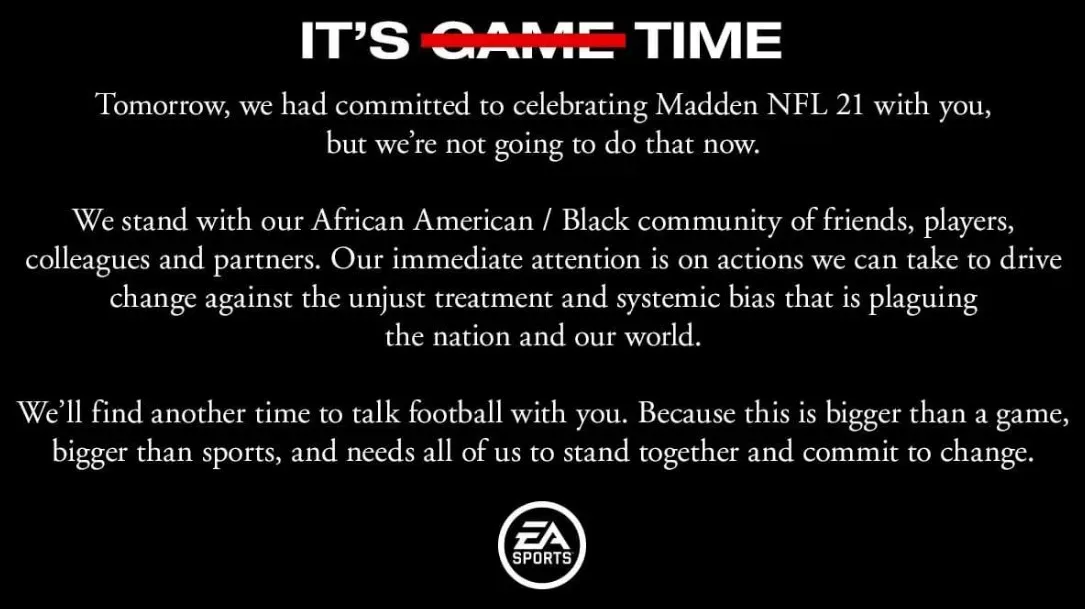
Several publishers made concrete public pledges during the 2020 racial-justice protests. Ubisoft said it would donate $100,000 to the NAACP and Black Lives Matter; Square Enix said it would contribute $250,000 to Black Lives Matter and other charities. EA also published a page promising $1 million for groups including the Equal Justice Initiative and the NAACP Legal Defense and Educational Fund. That EA page is no longer available, and the reason for its removal is not known.
Jarory De Jesus, a former EA and Respawn narrative designer, sees the disappearance of explicit corporate messaging as part of a broader political shift away from diversity, equity and inclusion initiatives. He argues that a company calling itself “neutral” on inclusion is not necessarily neutral in effect. That view matters because public language can signal what kinds of internal proposals, employee-resource groups and creative decisions are likely to receive institutional backing.
De Jesus contrasted that uncertainty with his experience at Scopely in 2020, when employees were told the company had set aside $1 million to support staff who encountered legal trouble while protesting. He also recalls more supportive work around Respawn’s DEI board while the Apex Legends team developed Catalyst, a trans character. Those examples do not erase the broader retreat, but they illustrate why broad declarations should not be treated as the whole story: company policies, team cultures and individual leaders can produce sharply different conditions.
DEI is shorthand for diversity, equity and inclusion. Diversity concerns who is present; equity concerns whether people have fair access to opportunity and support; inclusion concerns whether they can meaningfully participate once they arrive. A studio can make progress on visible representation in a game’s cast without achieving equity in hiring, promotion, job security or decision-making power behind the scenes.
Funding is useful, but it is not structural security
Catt Small, executive director of Game Devs of Color, Inc., described the tension nonprofits faced when corporate money arrived. Funding could be passed along to people who needed it, making it materially meaningful. Yet the attention appeared linked to a specific cultural moment rather than an enduring commitment from institutions that often make decisions in short business cycles.
For Small, the most important practical obstacle for marginalized creators is access to capital: the money needed to develop a project, sustain a team or turn an idea into a finished release. Mentorship, professional relationships and portfolio feedback have value, but they cannot replace money when the barrier is the cost of making a game or living through development.
Related coverage includes Six Years After 2020, Black Game Developers Describe an Industry of Broken Promises.
Justin Woodward of Black Voices in Gaming similarly identifies funding as the organization’s core mission, whether through grants or connections with partners, publishers and investors. He previously led Humble Bundle’s Black Game Developer Fund, which distributed $1 million annually to Black game makers. He also points to Black Voices in Gaming’s showcase and the emergence of initiatives such as Dames 4 Games as evidence that community-led infrastructure continues to create routes into the business.
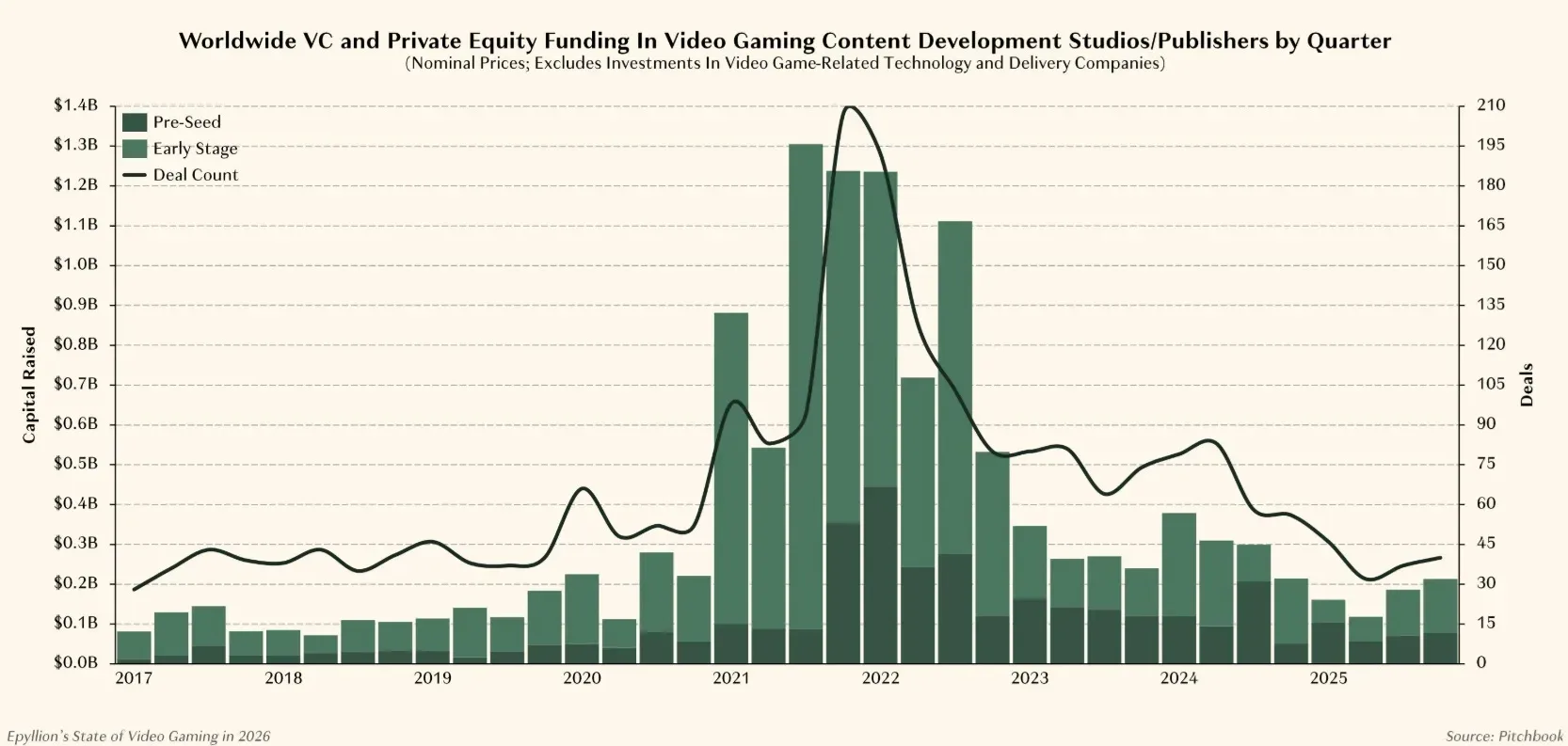
But these programs operate in a tougher funding environment. Woodward cites job losses, reduced game investment and a venture-capital focus that has shifted toward technology and AI. He characterizes the pattern bluntly: when equity is not a core business priority, support can be treated as transactional and turned off when public incentives change.
Layoffs turn inclusion into a retention problem
For many developers, the defining change since 2020 is not only a decline in public corporate solidarity; it is the scale of industry instability. Studio closures and layoffs have reshaped the market, and the effects go beyond the immediate loss of a job. De Jesus notes that when companies lose community leaders and experienced cultural connectors, remaining teams can become more homogeneous and less organically supportive.
That loss is particularly important in an industry where professional networks, shipped credits and referrals can determine the next opportunity. A canceled project may leave experienced workers with little public evidence of their work. One anonymous developer cited the possibility of spending years in games without shipping a title, while peers can accumulate canceled projects instead of credits. In a field that often treats released work as a career passport, that is a serious structural disadvantage.
Adanna Nedd’s Black Game Dev Survey had a relatively small participant pool, so its findings should not be read as a complete census of the industry. Still, its layoff figure is revealing: 66.1% of respondents said they had been directly affected by layoffs or knew someone who had. The statistic captures how instability spreads through professional communities even when an individual keeps their own position.
Kat Barkwell, a former EA programmer who worked on Anthem and 2025’s Skate., described a workplace reality in which job insecurity makes it harder to speak up. She also described how having her first Black manager during remote work changed the advice she received. Rather than assuming quiet, competent work would automatically be recognized, that manager explained that she needed to communicate her accomplishments because others might misread her silence. It is a small but powerful illustration of how mentorship informed by lived experience can affect a career.
Barkwell later left AAA development in search of a healthier work environment and more peace of mind. Her account challenges an easy corporate assumption: representation cannot be measured only by recruitment. Retention matters. So do day-to-day management, psychological safety and whether workers can contribute without constantly managing stereotypes about how they are perceived.
The representation numbers show slow movement, not a finished job
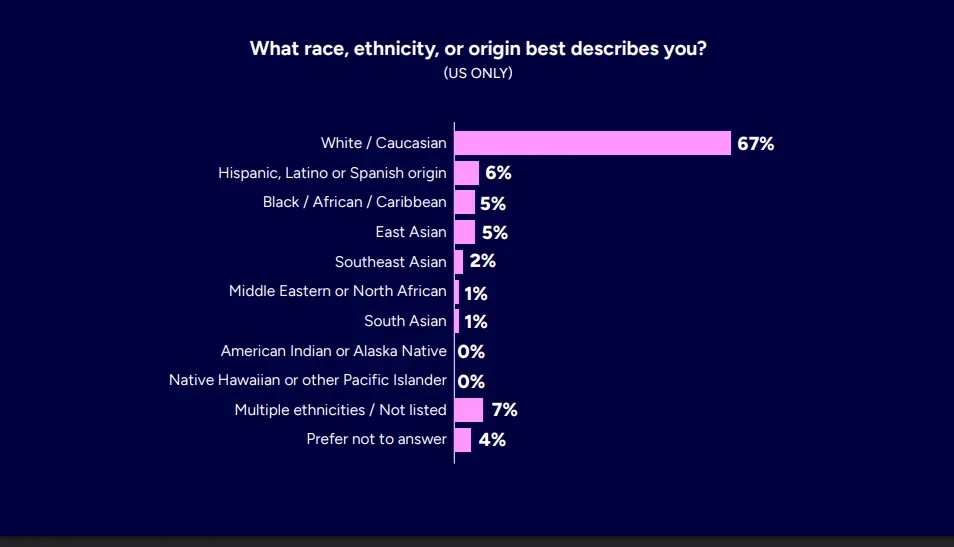
Data cited from the 2026 GDC State of the Industry report puts some scale around these concerns. Respondents were reported as 67% white and 64% men, while Black developers accounted for 5% of the total. Thirty percent identified as queer, and most workers were between 25 and 44 years old.
Self-reported surveys have limitations: they depend on who responds, and they are not a complete count of every person employed in games. Yet they remain useful for tracking broad patterns. Tanya DePass, founder of I Need Diverse Games, noted that the reported Black share has risen only two percentage points over roughly 12 years of her advocacy work, from 3% to 5%.
Networking can compound those gaps. Major events may offer valuable industry access, but tickets, air travel and hotels can place participation beyond the reach of many working-class developers. When networking is essential to finding work but expensive to enter, the industry’s informal hiring culture can reinforce the advantages already held by people with money, time and existing connections.
DePass’s broader point is that Black workers should be understood as creative talent, not as a resource companies bring forward for a campaign or a diversity image. That distinction asks a different set of questions: Who gets to lead? Who can build a long career? Who receives funding to make original work? And who is still present after a company’s public-facing moment has passed?
Online backlash can make companies quieter
The reversal has also played out in public discourse around games. Kim Belair, co-founder and CEO of narrative consultancy Sweet Baby Inc., argues that portfolio reviews and individual support are worthwhile but inadequate if the underlying industry continues to devalue marginalized applicants. Her firm’s experience also demonstrates the risk of becoming a target when diversity and storytelling become flashpoints in online culture.
Sweet Baby faced significant harassment from people objecting to what they characterized as diverse identities being forced into games. Belair’s concern is broader than one firm: when studios decline to explain or defend their own creative choices, the silence can leave marginalized developers exposed while granting an outsized voice to reactionary campaigns.
Her work with Sony Santa Monica on God of War Ragnarök is an example of a more constructive response. After racist online objections to the character Angrboda, the studio sought discussion about the intersection of art, politics and character creation. The useful question is not simply whether a game includes a Black character, but who has agency in the storytelling, whose cultural knowledge is respected and whether studios can stand behind their work when hostility arrives.
The same issue is visible in the ambitions of studios such as Brass Lion Entertainment, where Evan Narcisse is a senior writer on the in-development Wu-Tang: Rise of the Deceiver. Narcisse has often been the only Black narrative designer on projects. He argues that games have only begun to explore what a Black game can be beyond stereotypes or surface-level casting, pointing to Nyamakop’s Relooted as a recent example of work that can engage culture more deeply.
Creative recognition remains part of the problem. Narcisse asks why games have not developed widely recognized Black creative figures with the staying power associated with prominent filmmakers. The question is not an argument for a single “auteur” model of development; games are collaborative. It is a challenge to an industry in which sustaining a visible, long-term creative career remains unusually difficult for Black professionals.
Why the business model is part of the story
Del Walker, a senior character artist, frames present-day instability as an economic issue as much as a representation issue. He points to rising costs of living and game production, especially around established development hubs, and argues that moving talent from one lower-cost city to another does not solve the underlying problem if growth eventually makes that new hub unaffordable too.
Walker also connects the recent contraction to the extraordinary pandemic-era boost in game spending. Companies expanded staffing, investment and merger activity during that period, then faced a much harder adjustment when those conditions did not continue at the same pace. The result, in his view, is an industry asking workers to carry the consequences of overexpansion.
There is a further hiring consequence: more roles now seek generalists who can cover several disciplines, while specialist careers can be harder to protect. A generalist is a worker with a wide range of skills; a specialist focuses deeply on one discipline. Both are valuable, but a market that continually demands more from fewer people can increase burnout and raise the barrier to entry.
Worker organization is one possible response raised by developers. A central union could provide more consistent protections across jobs, although building one across a fragmented international industry is difficult. The point is not that a union alone would solve every inequity. Rather, collective bargaining can give workers a vehicle to address pay, layoffs, credits, working conditions and grievance procedures instead of relying solely on a company’s changing goodwill.
What lasting accountability would look like
The testimony from developers does not support a simple story that nothing changed after 2020. Funding reached organizations. More people found work, referrals and contracts for a time. Employee groups and community organizations created support. New studios and smaller teams may yet emerge from the people pushed out of larger companies. The industry’s capacity for creative reinvention is real.
But it also does not support treating a corporate donation, a social-media statement or a diverse launch trailer as proof that the work is done. More meaningful measures would be long-term funding, transparent hiring and promotion practices, support for affordable access to industry networks, protection against harassment, consistent public defense of creative choices, and policies that help workers survive the cycles of layoffs and cancellation.
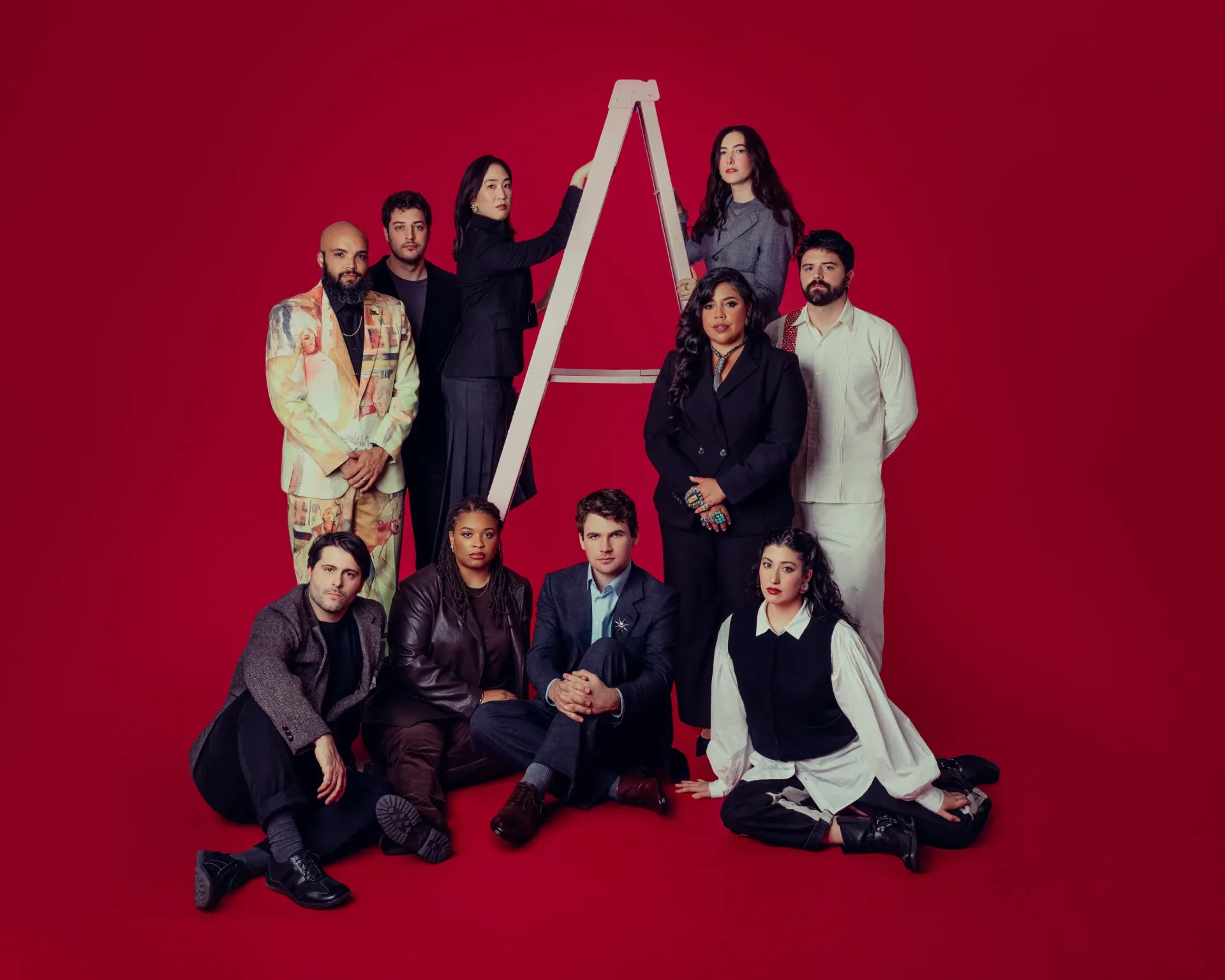
Those measures are practical because they address the material conditions developers repeatedly identify: money, opportunity, job stability, safety and decision-making power. They also offer a better way to assess an industry than by corporate messaging alone. For another perspective on how creative recognition can bring overlooked games talent into broader view, see Joking Joystick’s coverage of BAFTA’s 2026 Breakthrough U.S. cohort.
The enduring lesson is that games are made by people, and the conditions under which those people work shape what gets made, who gets to make it and who remains in the industry long enough to lead. Black developers and advocates are still building networks, studios, funds and stories despite low trust in the institutions around them. The real test for publishers and platform holders is whether their next commitments are designed to survive beyond the news cycle.