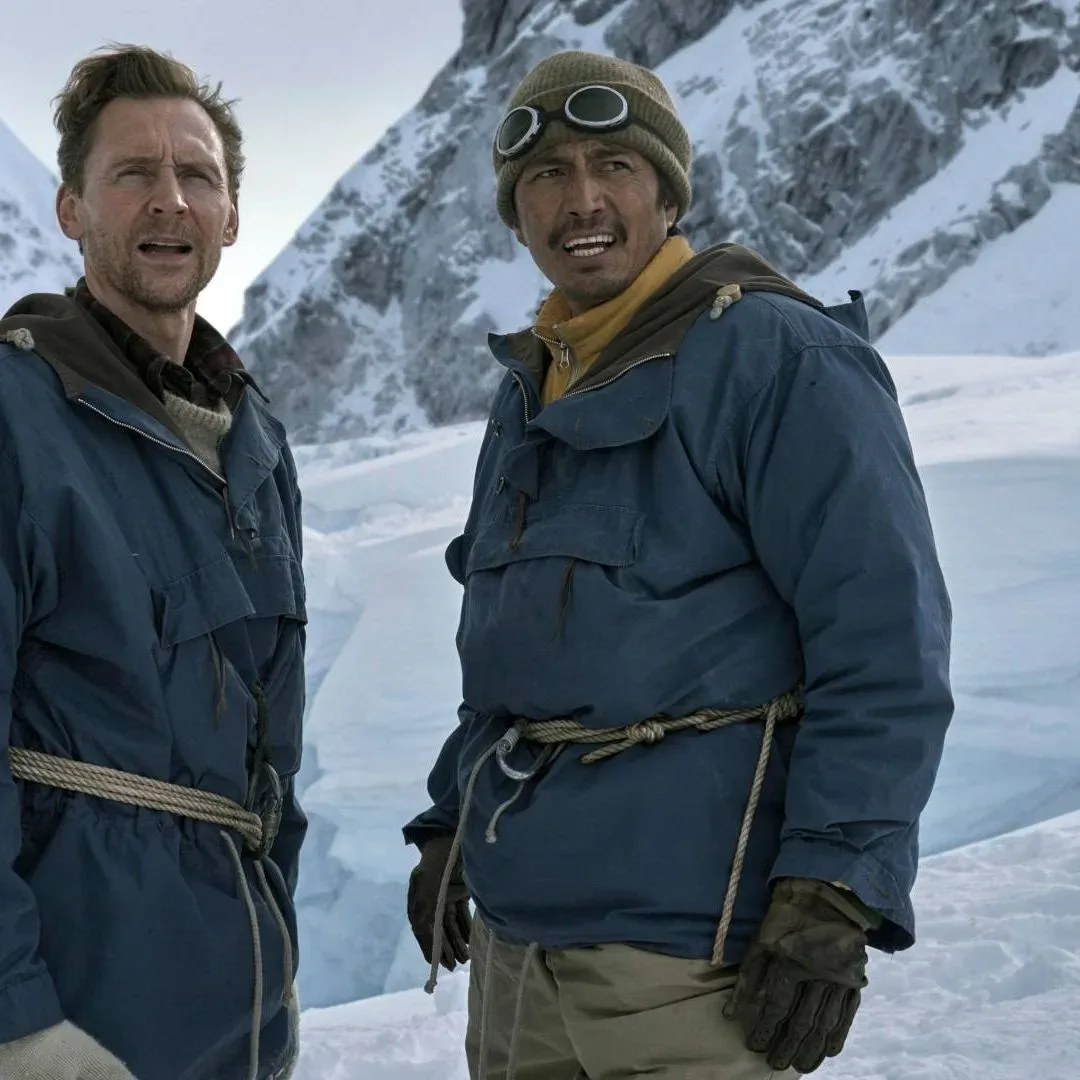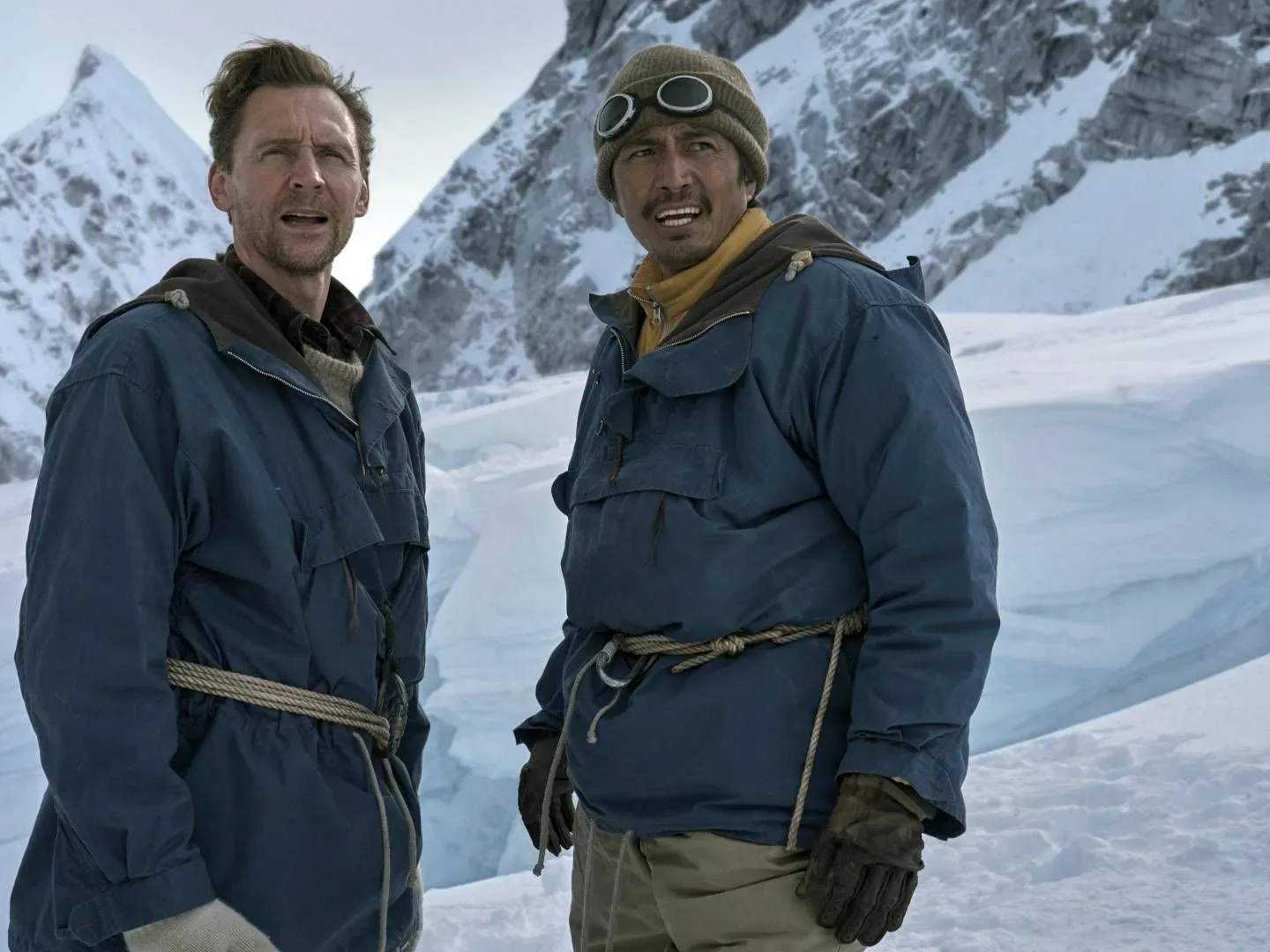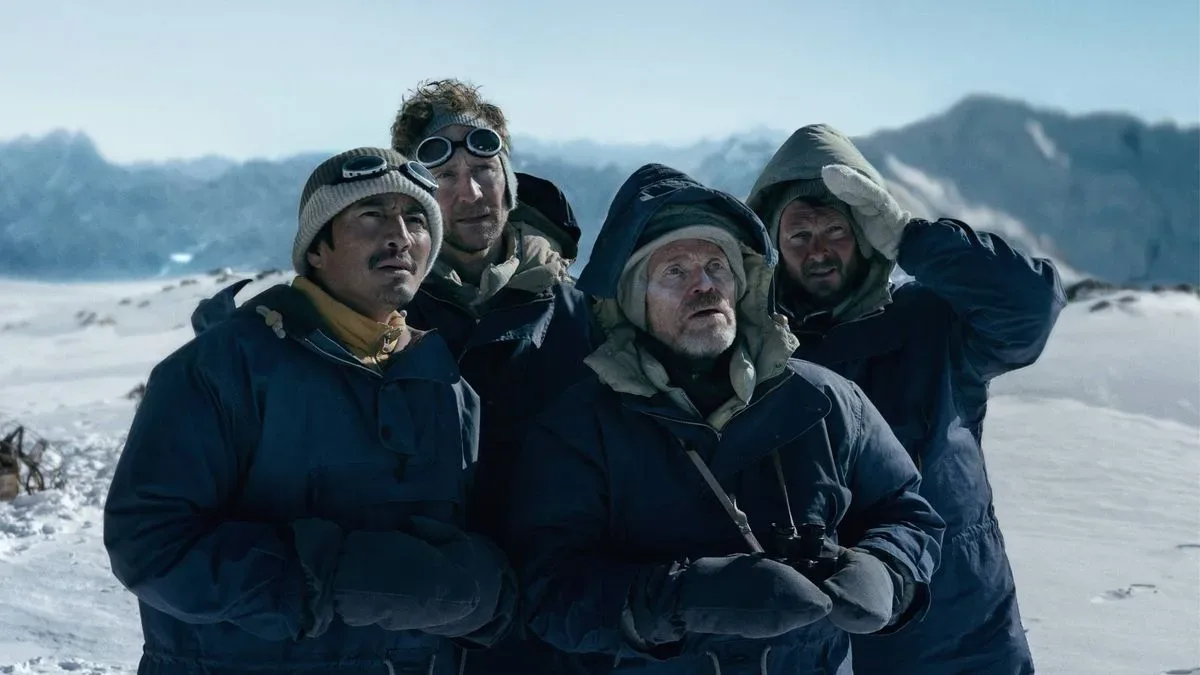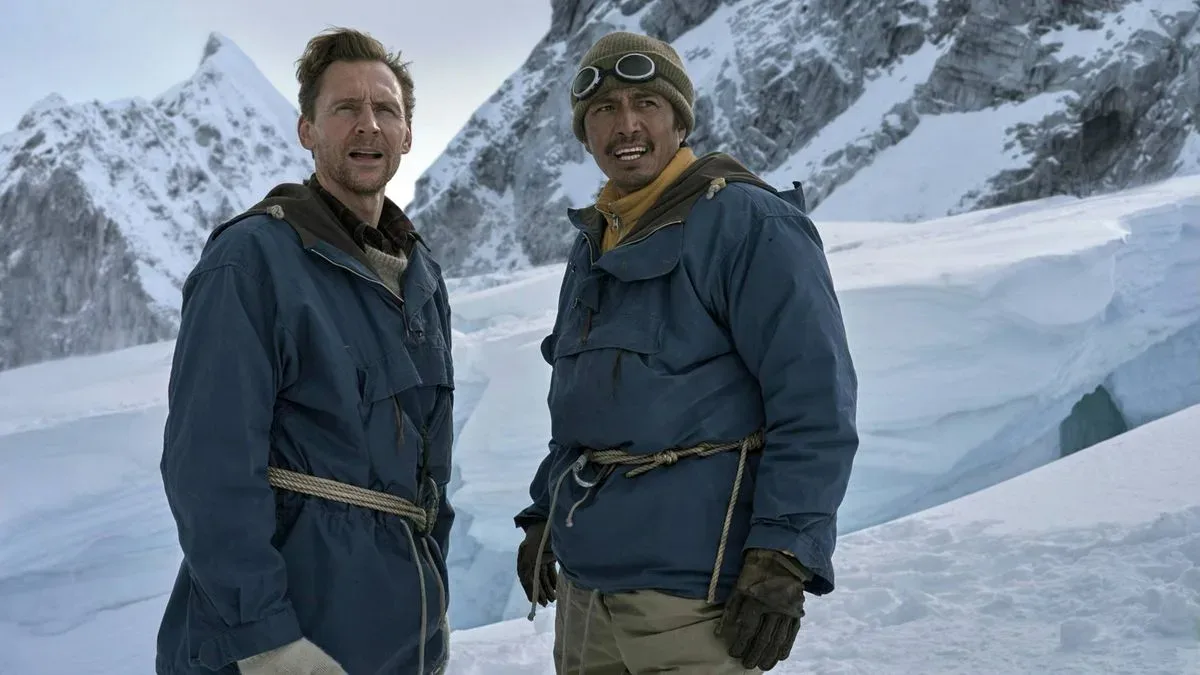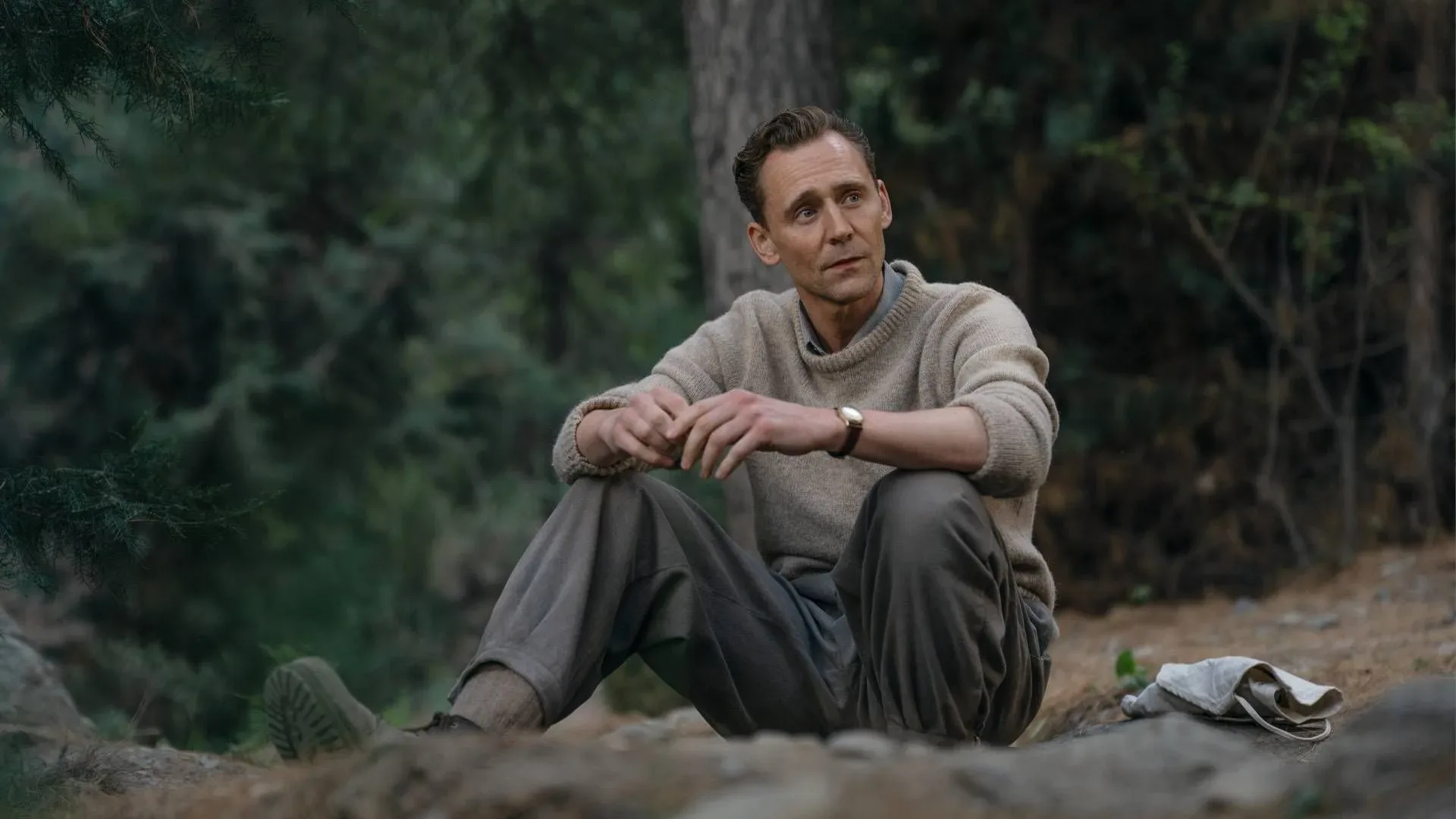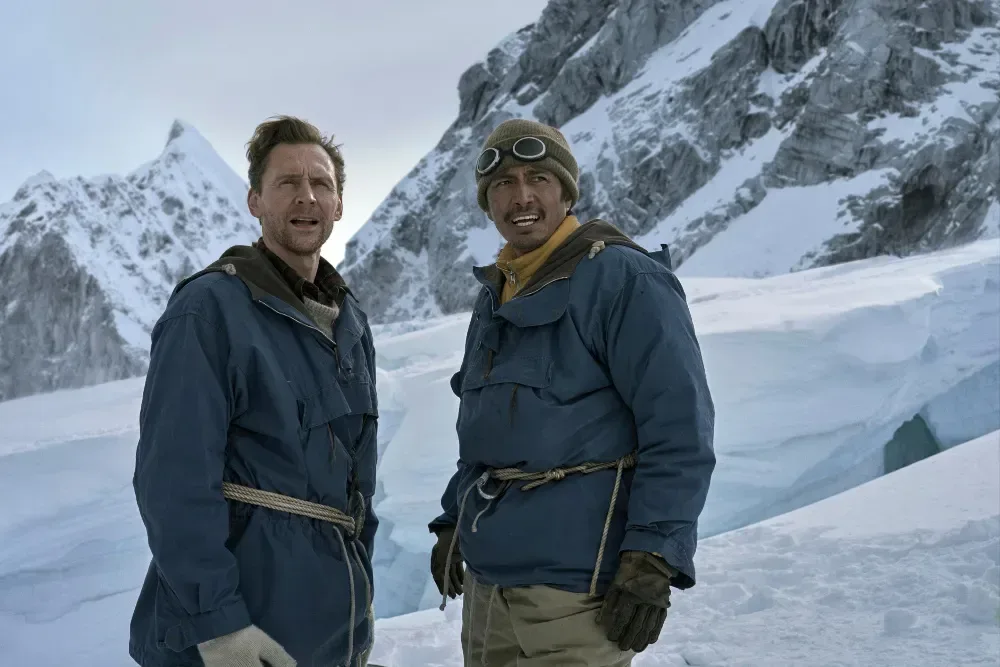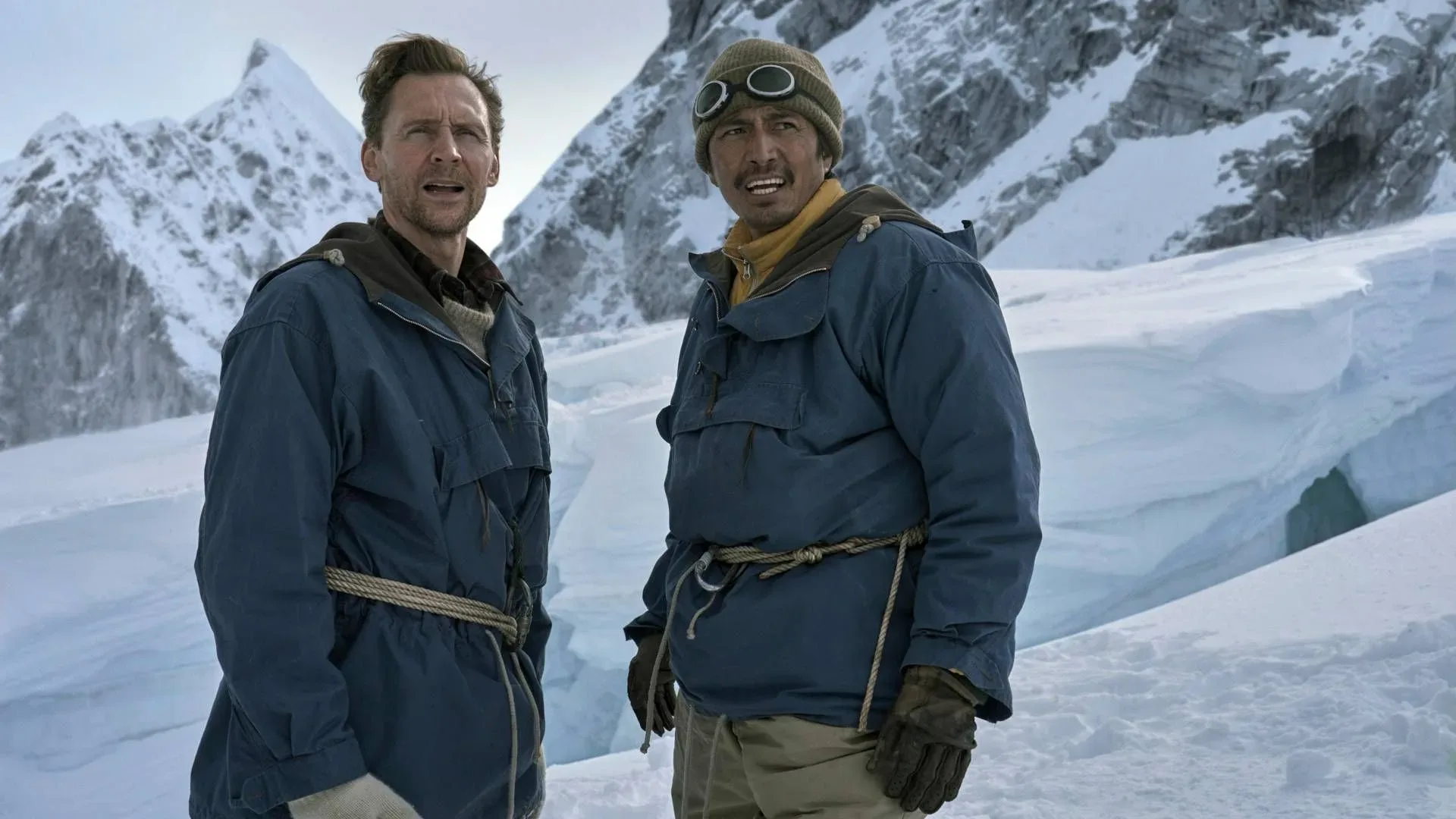
Tom Hiddleston has described making Tenzing as an overwhelmingly moving experience, with the actor pointing to both the historical focus of the Apple TV biopic and its demanding decision to film in real mountain environments. Hiddleston plays Edmund Hillary opposite Genden Phuntsok as Tenzing Norgay, the Nepalese-Indian mountaineer who reached the summit of Mount Everest with Hillary in 1953.
That event is widely familiar in broad outline. But Tenzing places its emphasis on Norgay, including his contribution to the successful ascent and his involvement in earlier Everest attempts. In doing so, the film aims to put a figure often treated as a supporting player in accounts of the expedition at the center of the narrative.
For Hiddleston, that choice was fundamental. He said the title itself establishes the movie’s intent: this is Tenzing Norgay’s story, rather than another retelling in which he is eclipsed by the better-known Western half of the climbing partnership.
“This film is about Tenzing Norgay, and it’s about putting Tenzing at the center of his own story,” Hiddleston said. “A man who is a part of history but has not been recognized for his contribution.”
A biopic built around Tenzing Norgay’s perspective
Calling a historical movie a “new perspective” can be a vague promise. Here, the supplied details are considerably more specific. Tenzing is concerned with the scale of the work performed by Sherpas in the climb, as well as Norgay’s repeated efforts before the successful 1953 expedition. That shifts the story away from the simple language of individual conquest and toward the people, knowledge and labor involved in reaching the world’s highest summit.
The film is directed by Jennifer Peedom and foregrounds Tenzing’s relationship with Chomolungma, the Tibetan name for Everest. Hiddleston described this outlook not as a wish to defeat or possess a mountain, but as a spiritual understanding of a goddess and mother. That distinction matters to the movie’s framing: the mountain is not merely an enormous obstacle designed for a climber to overcome.
In practical storytelling terms, this changes the emotional center of an Everest drama. A conventional expedition film can naturally prioritize the final push, endurance under pressure, and the question of who arrives at the summit. Tenzing, by contrast, has room to make the journey’s wider human and cultural meaning part of the story. The 1953 ascent remains a major historical event, but it is not presented as an achievement detached from Tenzing Norgay’s life and the Sherpa role within Himalayan climbing.
It also makes the title an unusually clear statement of authorship. Naming the film Tenzing signals whose experience provides its foundation. Hiddleston’s Hillary is still an important character—he was Norgay’s partner in the summit ascent—but the film’s stated purpose is not to retell Everest history exclusively through Hillary’s perspective.
What “filmed on location” means for Tenzing
The other defining part of Hiddleston’s account is the production’s use of real locations. The cast and crew filmed in Kathmandu, the Everest region and parts of New Zealand. Hiddleston said Peedom insisted on making the film away from soundstages, with no green screen or visual-effects substitute for the mountain settings.
Green screen refers to a filmmaking technique in which performers work in front of a colored backdrop, commonly green, that is replaced later with another environment. Visual effects, often shortened to VFX, are the broader tools used to create or alter imagery after filming. Both are familiar parts of large-scale screen production, particularly fantasy and superhero projects. Their absence here does not automatically make a film more authentic in every respect, but it does mean the production chose actual high-altitude landscapes, snow, ice and wind as part of the performers’ working environment.
Hiddleston said the promise was for real peaks, crevasses, ice falls and severe weather, and called the result the most unrepeatable and unforgettable adventure of his life. A crevasse is a deep crack in a glacier or ice sheet; an icefall is a steep, broken area of glacier ice. Those terms underline that the landscape was not being treated merely as a scenic backdrop.
“We were going to go to the Himalayas,” Hiddleston said, “and we were going to high mountains, real peaks, real crevasses, real ice falls, real snow, real wind, real ice.”
There is a straightforward reason that decision is meaningful for a film about Everest. Mountains affect scale, light, weather, movement and the physical relationship between people and terrain. Shooting on location can let those elements exist directly in the image rather than being assembled entirely later. It may also place performers in conditions that inform posture, pacing and interaction, even if the audience cannot know every detail of how an individual scene was made.
Hiddleston contrasted the work with productions such as Loki and the forthcoming Avengers: Doomsday, projects associated with a very different scale and method of filmmaking. The contrast should not be read as a dismissal of studio or effects-driven work. Instead, it describes a major change in process: Tenzing asked its production to meet mountainous terrain on location, rather than recreate it principally through stages and post-production imagery.
For viewers, that could be one of the film’s most immediate qualities. The story is about an ascent in conditions that are inherently unforgiving, and the location strategy is designed to keep the surroundings tangible. The stated aim is not just visual spectacle. It supports a movie interested in the mountain’s spiritual weight for Tenzing and in the physical realities surrounding the expedition.
Why the Sherpa focus is more than a casting detail
Tenzing is not simply a historical drama with an updated lead role. Its reported focus on Sherpa contributions addresses the structure of the Everest story itself. The supplied background notes that Norgay’s role in the 1953 ascent, and in prior attempts, has received less attention in other versions of events. By centering him, the film is positioned to reconsider which people have traditionally been granted narrative prominence.
That is especially important because the 1953 summit is often reduced to a clean, two-name milestone: Hillary and Norgay. The movie does not erase that partnership. Phuntsok plays Norgay while Hiddleston plays Hillary, and both climbers are identified as among the first to summit. But the film’s premise argues that the familiar shorthand is not enough to explain the undertaking or Norgay’s place in it.
The word “Sherpa” is significant in this context. The material describes the enormous work Sherpas played in the climb, rather than using the term as a generic synonym for a mountain guide. The movie’s intention, as outlined by Hiddleston, is to recognize that work and to restore Norgay’s agency in a story where his contribution has not always been given equal attention.
That perspective also links back to Chomolungma. A drama that treats Everest solely as a prize for outsiders can make the summit the only thing that matters. A drama shaped around Tenzing’s lifelong proximity to the mountain can instead emphasize reverence, attachment and the meaning a place holds beyond its status as a record-setting destination.
Hiddleston’s role in a story led by Phuntsok’s Tenzing
Hiddleston’s involvement gives the film a notable point of contrast with his recent superhero work, but the central creative point remains the pairing with Genden Phuntsok. Hiddleston has been explicit that it was the script’s focus on Norgay that moved him to join the project. That is a useful expectation-setter for audiences who recognize him first from Marvel roles: this is not a star vehicle built around Hillary as the default hero.
Instead, Hiddleston appears to see his role as part of a film with a different historical priority. Hillary’s presence is unavoidable in an account of the 1953 ascent, but Tenzing is structured around the man whose name is on the title. The distinction is simple, yet it is central to what the movie says it wants to achieve.
Readers interested in Hiddleston’s contrast between Marvel-era production secrecy and this location-driven experience can find more context in his comments on the very different demands of making Tenzing.
Tenzing is now playing in select theaters and streaming on Apple TV. Its combination of location filmmaking, a historically consequential expedition and an intentional shift toward Tenzing Norgay’s experience gives it a clear identity: not another attempt to make Everest seem bigger, but an effort to more fully recognize the people whose lives and labor shaped its best-known ascent.