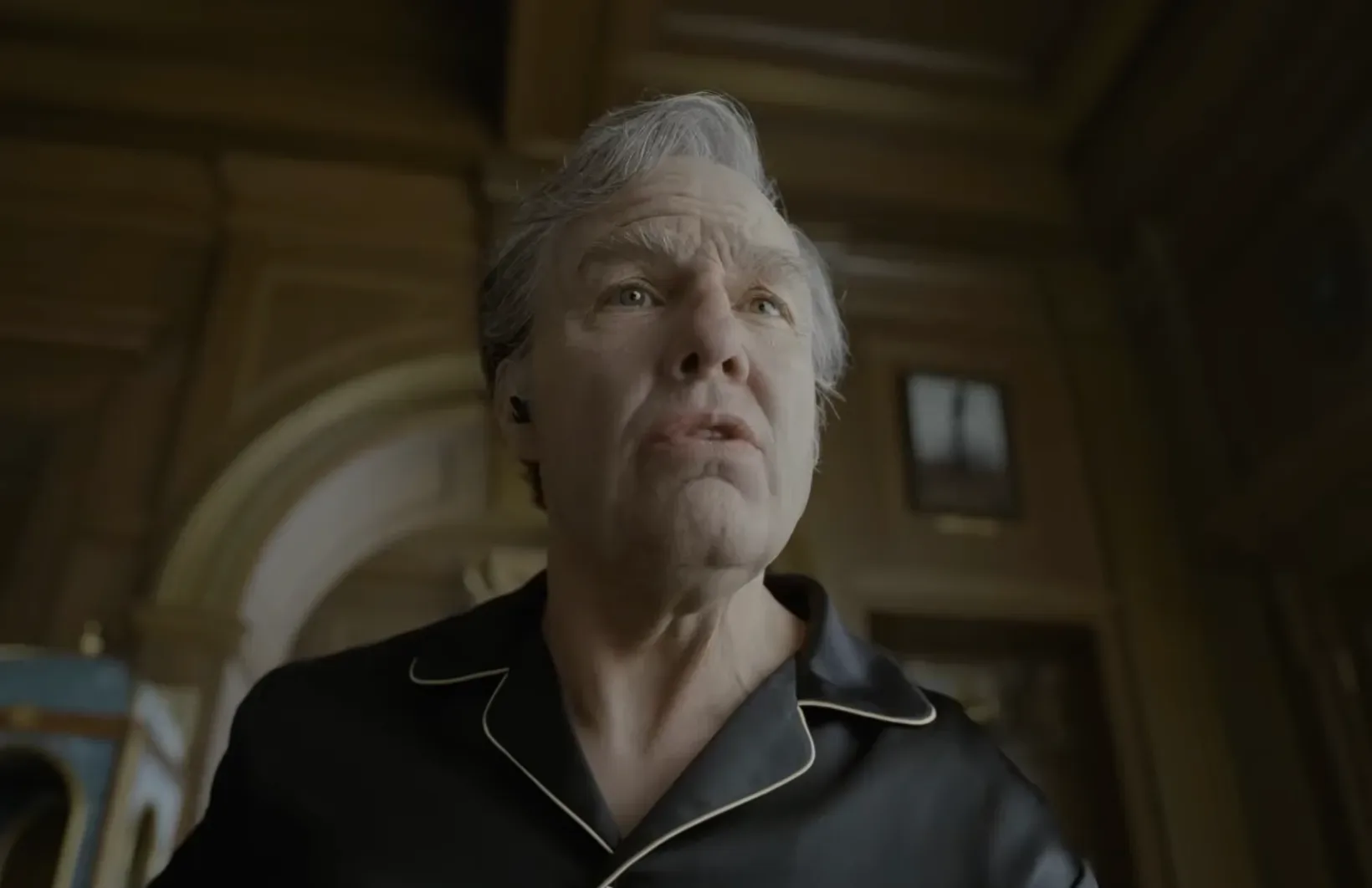
Warner Bros. is taking an unusually direct route with the early conversation around Digger, the Tom Cruise drama from director Alejandro G. Iñárritu. Rather than presenting a neat row of superlatives, a new campaign places sharply opposed reactions next to each other and invites potential ticket buyers to “decide for yourself.”
The central line is “Same film, different truth,” and the marketing makes that argument visually. One version puts “Masterpiece” alongside “Unpleasant.” Others flip between “Brilliant” and “Baffling,” then “Magnificent” and “Insufferable.” The words came from early online reactions shared after the social-media embargo lifted on Sept. 22.
It is a canny way to make disagreement part of the pitch. A conventional pull-quote ad tries to establish a consensus: this is the crowd-pleaser, the must-see event, the unanimous triumph. Digger is doing something closer to the opposite. The campaign acknowledges that the response is split, then presents that split as a reason to be curious rather than a reason to stay home.
What the campaign is actually selling
Digger stars Cruise as an oil tycoon whose drilling sets off a climate crisis. It is also Cruise’s first non-action-hero part in nearly a decade, an important detail in how the film is likely to be read before an audience sees a frame. Cruise is closely associated with large-scale action spectacle, so an absurdist, climate-centered role carries a different kind of expectation: not merely whether the movie is entertaining, but whether viewers connect with its tone, ideas and provocation.
That distinction matters because divided reactions are not all the same. A movie can divide viewers over pacing, humor, politics, structure, performance, style or sheer intensity. The supplied reactions do not establish one single reason for the disagreement. What they do establish is a sizable gap between people who found the movie exceptional and people who found it deeply frustrating.
The ad’s paired adjectives make no effort to erase that gap. Instead, it turns the collision into its message. “Masterpiece” and “Unpleasant” are not compatible recommendations, but they can both suggest a work that is attempting something forceful enough to produce a reaction. For an ambitious film, that can be more distinctive marketing than a vague claim that everyone will enjoy it.
Why timing around embargoes matters
The spot was posted an hour before the review embargo lifted. An embargo is a scheduled restriction that holds back published coverage until a specified time. Early viewers may have access to a film beforehand, but their full reviews cannot appear until the embargo ends. Social-media embargoes and review embargoes can be separate, which is why brief early reactions may arrive before longer criticism.
Here, that sequence gave the studio a window in which the first conversation was dominated by short-form reactions from influencers. The new ad used the contrast within that response before the broader body of professional reviews arrived. Once the review embargo lifted, critical notices proved noticeably more negative overall than the earlier wave of social posts.
That does not make the social reactions invalid, nor does it make the reviews the only useful guide for viewers. They are different forms of response. A short reaction often captures immediate feeling; a full review has room to explain what worked, what did not and why. The campaign’s “decide for yourself” language effectively asks audiences to treat neither group as the final authority.
The criticism gives the split real stakes
The critical reception is not just mildly mixed. One review described the movie as overly self-important and objected to the scale of its reported production cost, said to be above $125 million. Another called the experience torturous, sometimes deliberately and sometimes not. A further assessment labeled it a surreal misfire and assigned it a C+ grade.
At the time reflected in the available information, Digger stood at 52% among critics on Rotten Tomatoes. That figure is a snapshot of a review-aggregation site’s tally, not a measurement of how every viewer will respond. It does, however, reinforce the basic premise of the ad: there is no clean critical consensus for Warner Bros. to package as uncomplicated acclaim.
There is a practical implication in that 52% number, too. Review aggregators compress a range of opinions into a single headline percentage, which can be useful for quickly identifying whether notices are broadly positive or negative. But the number cannot explain the nature of the disagreement. A film might receive mixed results because many reviewers see promise in an uneven experiment, or because reactions are polarized between admiration and rejection. The individual descriptions of Digger suggest the latter is worth considering.
That is where the campaign’s language becomes more precise than it first appears. “Different truth” is not a claim that every opinion is equally persuasive. It is a claim about audience experience: the same film can land radically differently depending on what a viewer wants from Cruise, Iñárritu, climate satire or deliberately uncomfortable cinema.
A risky but coherent pitch for a non-action Cruise role
Marketing that foregrounds negativity has obvious risks. “Unpleasant” and “Insufferable” are words studios typically work hard to keep away from ticket ads. Repeating them can amplify the very doubts the campaign is trying to manage. A casual viewer may not see the intended invitation to make up their own mind; they may simply see confirmation that the film is difficult.
Yet avoiding the division entirely could be less credible. Online reactions are already public, and the later reviews are available. By acknowledging the range, the campaign seeks to control the frame around it. Instead of pretending that Digger has earned blanket enthusiasm, the studio is positioning it as an event whose volatility is part of its appeal.
That approach is especially understandable for a film built around a major star stepping outside a familiar lane. The selling point is not only Cruise’s presence, but the prospect of seeing him in a role unlike the action-hero performances that have defined his recent screen image. For viewers interested in that shift, disagreement may create more intrigue than a generic promise of quality.
Iñárritu’s involvement also signals that the film is being presented as a director-led project rather than simply a Cruise vehicle. The advertising’s willingness to spotlight polarizing language aligns with that identity. It suggests a movie aiming to be argued over, though audiences will need to determine whether that ambition translates into a compelling theatrical experience.
What audiences can take from the early response
The most useful reading of the campaign is neither “the criticism does not matter” nor “a split response settles the film’s value.” It is that Digger appears unlikely to be a neutral experience. People considering a ticket should expect a climate-crisis premise, an oil-tycoon protagonist, an unconventional Cruise performance and a tone that has provoked dramatically different reactions.
That expectation-setting may be more valuable than a standard barrage of praise. A viewer seeking a straightforward Cruise action showcase could be surprised by the premise and the response. A viewer who is interested in a riskier, more confrontational performance or a heavily stylized film may see the exact same early discourse as a reason to go.
The studio’s direct appeal to individual judgment also arrives in a busy entertainment calendar. Moviegoers weighing theatrical choices can keep an eye on other forthcoming releases, including another recently dated feature, but Digger is selling a more immediate proposition: come to the theater prepared to take a side.
Digger opens in theaters Oct. 2. Its ad campaign has made the stakes unusually plain before that date. The early praise is real, the negative reaction is real, and Warner Bros. is betting that viewers will find the clash more compelling than confusing.