Tom Cruise is not trying to talk anyone out of television or streaming. In a new interview tied to Digger, his forthcoming film with director Alejandro G. Iñárritu, the actor made room for cable, TV and Netflix while drawing a firm distinction between watching something at home and seeing it in a cinema.
For Cruise, the defining appeal of theatrical exhibition is collective viewing: a room full of people reacting to the same images, sounds and story at the same time. It is a straightforward position, but it also fits the public image he has spent years reinforcing through large-scale projects, practical physical work and an unusually visible enthusiasm for the process of making movies.
He also did not sidestep another part of that image. Cruise acknowledged that people call him intense, responding with the kind of self-awareness that suggests the label is not a surprise to him. “Trust me, the rumors are true,” he said, explaining that he is often first to arrive and wants to know what kind of experience collaborators want to create.
That combination—an insistence on preparation, an interest in learning, and a preference for a big shared presentation—helps explain why Cruise’s comments land as more than a familiar defense of cinemas. They are a concise statement of how he approaches a production: work out the plan, understand the tools, stay open to discovery, and take responsibility for the people involved.
Cruise separates streaming from the theatrical experience
Importantly, Cruise’s comments were not framed as an attack on smaller-screen entertainment. He said he had “nothing against cable or TV or Netflix,” adding that those parts of the industry create jobs. The distinction he made was experiential rather than dismissive.
“What I like about cinema is it is all of us coming together in a room and sharing an experience,” Cruise said.
That phrase gets at the particular value he assigns to a movie theater. A shared experience does not simply mean several people viewing the same title. It means a synchronized audience: laughter arrives together, a quiet scene creates a room-wide hush, and suspense becomes palpable because everyone is moving through the moment at once. Home viewing can be intimate and convenient, but Cruise’s point is that it is structurally different from an audience gathering around one presentation.
His position also leaves room for the reality that a story can be made and enjoyed through many formats. He did not argue that TV or streaming should not exist, nor did he suggest their workers or creative output are lesser. Instead, he spoke about what he personally values in cinema: the communal occasion built around a theatrical screening.
That distinction matters because discussions about movies and streaming can become falsely binary. A creator may appreciate the scale and access offered by multiple viewing options while still believing that theaters provide something unique. Cruise’s answer is best read in that narrower sense: a defense of the cinema as a specific kind of social and artistic event, not a demand that every other screen disappear.
The subject arrives as film production remains a major industry conversation. Questions around where movies are made, how work is supported, and what conditions allow ambitious productions to happen are connected to the broader future of theatrical filmmaking. For more on one policy-focused projection about U.S. production, see the analysis of a proposed federal film credit and its projected production impact.
“Understand the tools” is a useful clue to his process
One of Cruise’s most revealing remarks was less about theaters than about creative work itself. “Understand the tools, then go create what you want to create,” he said.
In this context, tools can be understood broadly. They include the obvious technical equipment and filmmaking methods, but also the practical knowledge that lets a performer and crew execute a scene safely and clearly. Scripts, planning, rehearsal, physical training and communication all function as tools in the wider production process.
Cruise paired that preparation-first philosophy with a willingness to risk looking foolish while acting. That matters because planning and openness are not opposites. A production can have a detailed blueprint while performers still test an idea, adjust an action or take an emotional risk in pursuit of a better result. Cruise described that balance directly: there are scripts and plans, but he also wants to remain open.
His statement about being “open” should not be mistaken for a claim that a film set runs without structure. He explicitly said the work comes with plans and scripts. The point is that a plan is a framework, not necessarily a cage. In creative collaboration, preparation gives people a common language; openness allows them to respond to what happens once the work begins.
That is particularly relevant to an actor whose reputation is closely tied to demanding physical filmmaking. Cruise’s recent work has included riding motorcycles off cliffs and extended underwater breath-holding. Those examples have helped turn his approach into a public shorthand: when a role calls for something difficult, he is associated with trying to understand the task in detail rather than treating the difficulty as someone else’s problem.
None of that means intensity is automatically a virtue in every circumstance. It can describe focus, drive and accountability, but it can also be received differently by different collaborators. Cruise’s comments are notable because he does not deny the perception or repackage it as effortless charm. He says, plainly, “I am intense,” then explains that the feeling comes from wanting to learn and understand what interests him.
Intensity, responsibility and collaboration
Cruise said he feels a level of responsibility “for everyone” on a production. That is a broad claim, and he did not spell out a management system or specific responsibilities. Still, it provides context for why he describes arriving early and asking colleagues what experience they want.
At its best, that question treats filmmaking as collaborative rather than purely individual. An actor can arrive with an interpretation, a director can arrive with a vision, and a crew can arrive with a plan for how to make a scene possible. But every department is helping determine what the finished experience feels like. Cruise’s language emphasizes alignment: understanding what the group is trying to create and bringing energy to that shared goal.
He also described a desire to “blast through the confusion” and build ability. Here, ability does not have to mean a stunt alone. It can mean developing fluency in any unfamiliar part of the work—physical movement, performance choices, technical terminology or the rhythms of a production. The principle is practical: confusion is not necessarily a stopping point; it can be the stage before someone acquires enough understanding to contribute with confidence.
This is likely why Cruise’s reputation has persisted beyond any one role. The public may associate him with Ethan Hunt in the Mission: Impossible films or with Maverick, but his own explanation is less character-specific. He speaks about a repeatable habit: arrive prepared, learn the work, accept the possibility of embarrassment, and keep moving through uncertainty.
There is a degree of humor in the way he describes it. Cruise said he has a good sense of humor about the “intense” reputation, even though people had been telling him that since he was a child. That acknowledgement gives the comments an unusually candid edge. Rather than insisting the public has misunderstood him, he accepts the premise and identifies the underlying impulse: deep interest leads him to want mastery.
What this could mean for Digger
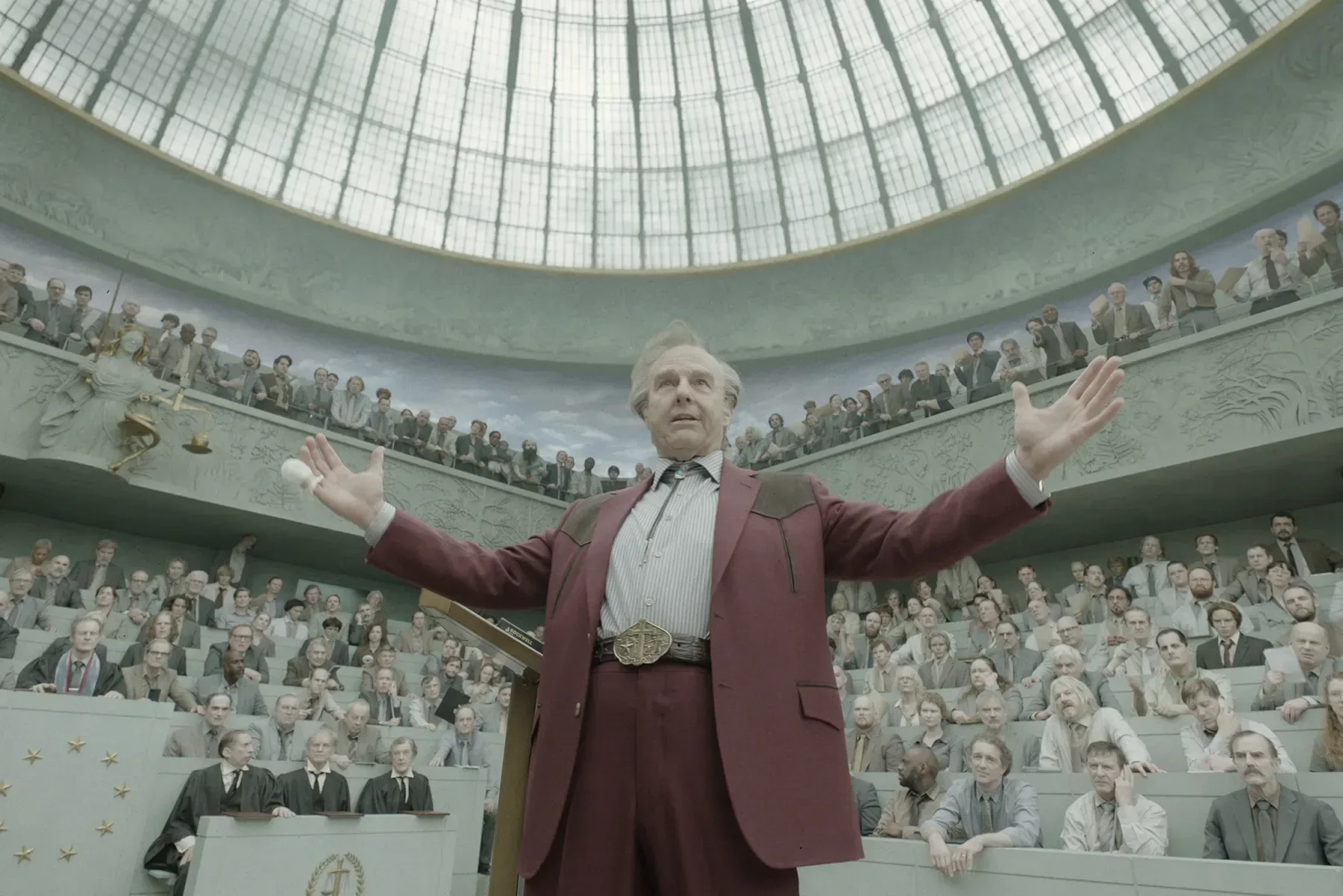
Cruise’s next project is Digger, directed by Alejandro G. Iñárritu and set to reach theaters on October 2. The film is described as featuring Cruise in prosthetics and as placing him at the center of an apocalyptic threat. Beyond those details, the available information here does not establish the film’s plot, characters, scale or the particular techniques used in its production.
That uncertainty makes it premature to attach Cruise’s discussion of training or physical demands to any particular Digger sequence. His past work demonstrates an interest in challenging production tasks, but it does not confirm what he has done for this film. The more reliable connection is thematic: a new collaboration with Iñárritu provides another setting for Cruise’s stated preference for careful planning, curiosity and creative openness.
Prosthetics, in simple terms, are physical appliances or alterations used to change an actor’s appearance. They may be used for age, injury, nonhuman features or other character transformations. The mention of prosthetics in Digger suggests a visible transformation, but it does not by itself reveal the nature of Cruise’s role or the extent of the effect.
The October 2 theatrical date is also consistent with the values Cruise articulated. He sees the cinema as a place where an audience assembles for one shared experience, and Digger is positioned to meet audiences in that format. That does not tell viewers what the movie will be; it does explain why the venue itself is part of the story Cruise wants to tell around it.
A movie-star argument for going to the movies
Cruise’s remarks are ultimately less a manifesto against streaming than a personal argument for intentional viewing. He is advocating for the moment when people make plans, enter a theater and give a film their attention alongside strangers. That is the communal ritual he believes remains difficult to duplicate elsewhere.
His self-description fills out the argument. The performer who says he will arrive early, study what he does not yet understand and work through confusion is also the one insisting that cinema remains worth gathering for. In both cases, the throughline is commitment: commit to the craft, commit to collaborators, and commit to the experience of seeing a movie together.
Whether audiences share that preference will always depend on their circumstances and habits. Cruise acknowledges the legitimacy of other formats. But he is clear about his own choice. For him, the big screen is not merely a larger display. It is a room, a crowd and a collective response—and he remains intensely invested in that difference.