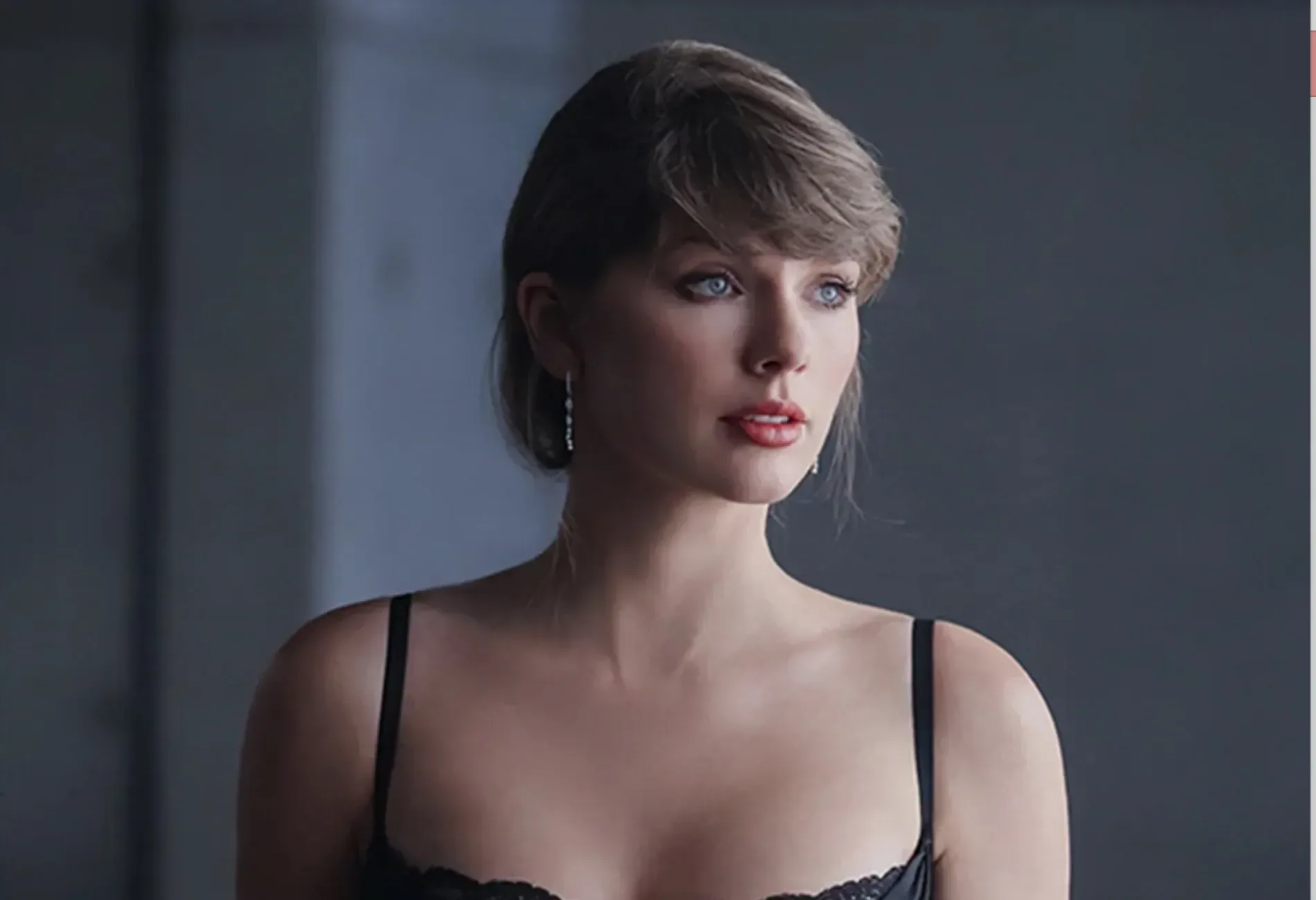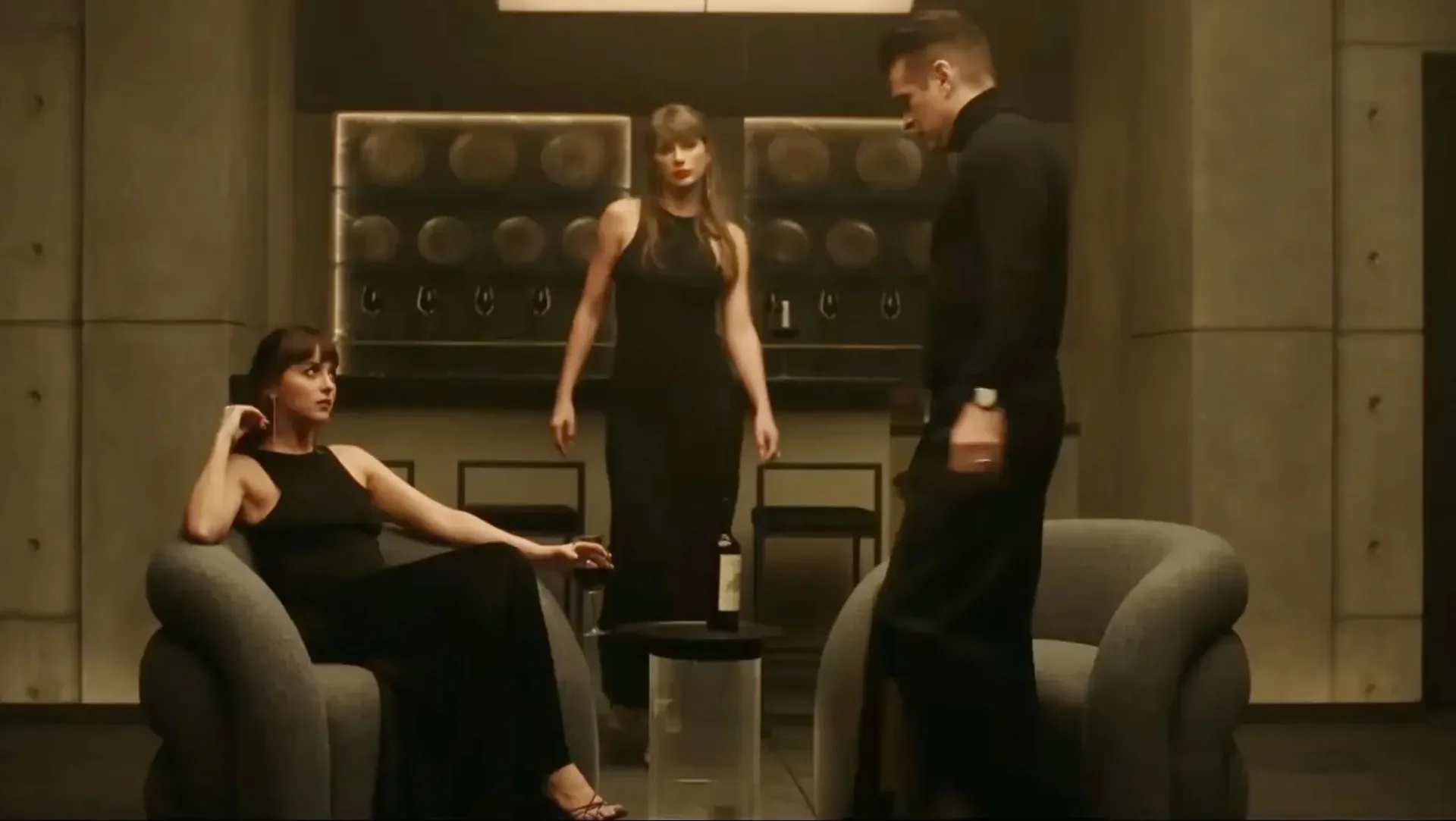
Todd Rundgren has aimed a blunt critique at Taylor Swift, calling the pop star “the apotheosis of mediocrity” and arguing that she may have “ruined music.” He made the remarks while answering a hypothetical question about which artist he would target if he produced an album designed to mock someone today.
The singer-songwriter and producer, known for “Hello It’s Me” and “I Saw the Light,” chose Swift without hesitation. But his criticism did not stop at her work. Rundgren connected her enormous profile to a broader theory: that video games drew boys’ spending away from music in the 1990s, pushing the business toward young female consumers and, eventually, toward female global stars.
That is a dramatic argument, and it is worth separating what Rundgren actually said from what the available information can demonstrate. A musician’s critical opinion can be forceful, funny or provocative without serving as proof of a complete economic history. Likewise, Swift’s reach is plainly substantial in the supplied record, but success does not itself prove that one artist damaged music, displaced every other kind of artist, or owes its existence to any single audience shift.
What Rundgren said about Swift
Rundgren’s central assessment was unambiguous. He described Swift as “the apotheosis of mediocrity,” then said there was an argument that she had “ruined music,” while also calling her success an understandable phenomenon.
The framing matters. He was asked to name a present-day target for a satirical production concept, rather than to provide a formal breakdown of the music market. Rundgren has an earlier connection to that kind of provocative setup: he produced Meat Loaf’s Bat Out of Hell in 1977 and had previously said he did not care whether it succeeded because he wanted to make fun of Bruce Springsteen.
That background does not make the new criticism meaningless, but it does establish that antagonism and exaggeration are part of the creative context around the question. Calling someone responsible for ruining an entire medium is much bigger than saying their songs are not to one’s taste. It turns an aesthetic disagreement into a claim about the health of popular music itself.
The video-game explanation is a claim, not a settled conclusion
Rundgren’s explanation centered on consumer spending. His argument was that boys stopped buying music in the 1990s because they began putting their money toward video games. In his telling, the industry responded by concentrating on young girls with disposable allowance money, rather than continuing to make music for the audience represented by acts such as Pearl Jam.
There are several ideas packed into that claim:
Related coverage includes Todd Rundgren Targets Taylor Swift in New Critique.
- Consumer substitution: money spent on one entertainment category is no longer available for another.
- Audience targeting: labels and marketers may pursue the groups they believe are most likely to buy or engage.
- Genre and gender change: a shift in the perceived core customer can affect which artists and styles receive the biggest promotional push.
These are useful concepts for discussing entertainment markets. They are not, on their own, evidence that games caused the rise of female pop artists, that boys collectively abandoned music purchases, or that labels chose one gender of artist over another because of a single spending pattern. The supplied material gives Rundgren’s reasoning, but it does not supply sales data, audience research, label strategy documents, or a comparison of music and game spending that would be needed to verify the chain of causation.
That distinction is especially important for a gaming audience. Video games are frequently used as a convenient explanation for every perceived cultural change, whether the topic is attention, spending, social life or music tastes. But an explanation requires more than two trends happening in the same broad period. Correlation means events or patterns appear alongside one another; causation means the evidence supports one as producing the other. Rundgren offered the latter. The facts supplied here only establish that he made the argument.
Swift’s measurable momentum complicates the “ruined music” line
Whatever Rundgren thinks of Swift’s artistic value, the supplied information portrays an artist with major contemporary audience demand. Her release The Life of a Showgirl: The Encore, a deluxe version tied to her 2025 album, is said to have set two Spotify records.
“Patient Zero,” a track from the release, became the most-streamed song by a female artist in a single day so far in 2026. Swift also had the most streams of any female artist in a day that year. At the 2026 MTV VMAs, she received the inaugural Artist-Director Award.
Those achievements do not settle the artistic debate. Streaming records measure listening volume during a particular window; they do not objectively grade songwriting, production, cultural value or originality. Awards represent recognition, not a universal verdict. Yet these data points do make one thing clear: Swift’s position cannot be reduced to an abstract industry theory about a passive, preselected market. Audiences are actively engaging with her releases at immense scale.
It is also a mistake to frame commercial popularity and criticism as mutually exclusive. A listener can find an artist’s work ordinary while millions of others find it meaningful, replayable or socially important. The reverse can be true for acclaimed artists with smaller audiences. Popular music has always contained that tension, and neither side is erased by a streaming record or an insult from another musician.
Why the gender framing deserves scrutiny
Rundgren described the present as “the era of the female artists.” On the narrowest reading, that is an observation about which performers occupy conspicuous positions in mainstream music. But his explanation risks treating women and girls as a single, easily managed market category, while treating male rock consumers as the benchmark from which the business supposedly departed.
The material provided does not support that hierarchy. It identifies Swift’s accomplishments and relays Rundgren’s opinion, but it provides no evidence that music made for female audiences is inherently less adventurous, less serious or less artistically valuable than music associated with male audiences. Nor does it show that the success of women necessarily comes at the expense of rock, male artists, or musical variety.
More importantly, “female artists” is far too broad a category to explain one performer’s career or an entire industry’s direction. It collapses distinct artists, listeners, genres and creative priorities into a demographic label. That may make for a sharp interview soundbite, but it makes for a weak critical framework.
What games really mean in this conversation
Games and music do compete for finite time and entertainment budgets. That basic idea is intuitive, and it is fair to discuss how game purchases, subscriptions and playtime fit into larger cultural habits. But competition is not the same as replacement. A player can spend deeply on games and remain devoted to music; music can be part of play through soundtracks, licensed tracks, artist collaborations and the everyday listening that surrounds gaming.
So the more productive question is not whether games “stole” boys from music. It is how people divide their money and attention across different forms of entertainment, and how creators adapt when those habits evolve. That question cannot be answered by assuming that one group stopped caring or another group became the sole target audience.
Rundgren’s remarks do, however, underline a familiar tension between generations of artists: every era argues over whether current chart leaders represent a decline, a reinvention, or simply a different set of listeners deciding what matters to them. The facts available here show Swift continuing to command extraordinary streams and institutional recognition, while a veteran musician voices deep contempt for what her prominence represents.
That conflict is real as criticism, but it should not be mistaken for a demonstrated account of music’s history. Video games may be a compelling part of the conversation about entertainment attention. They are not, based on this material, a proven explanation for Taylor Swift’s success or a credible scapegoat for the state of music. For more coverage where music and pop culture intersect, see our report on Remy Ma’s focus on her music.