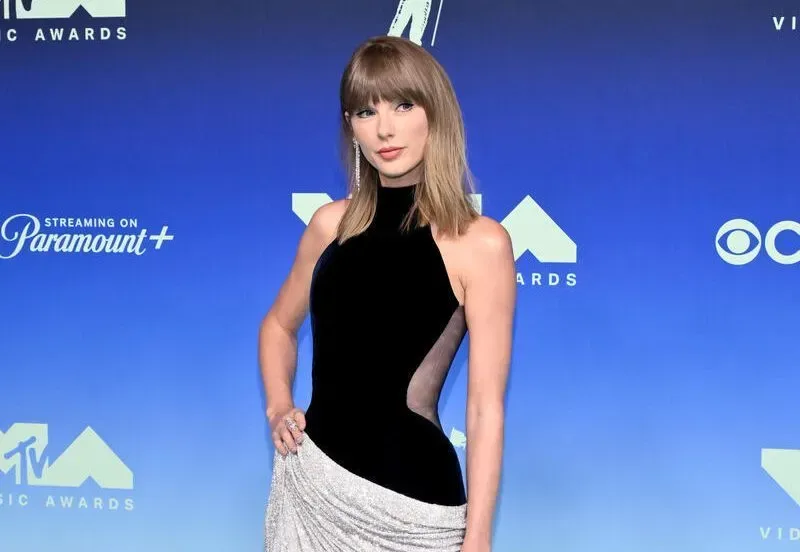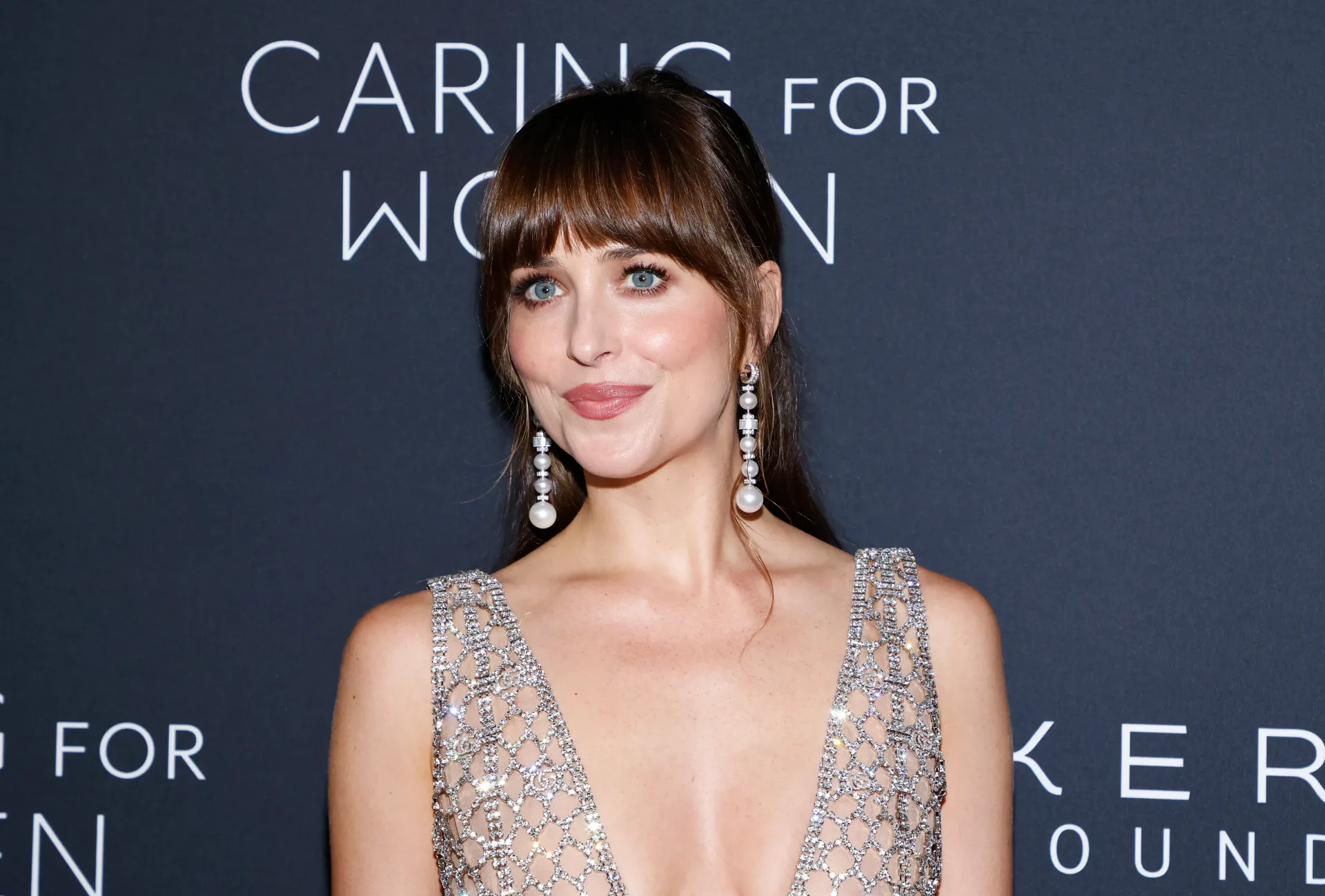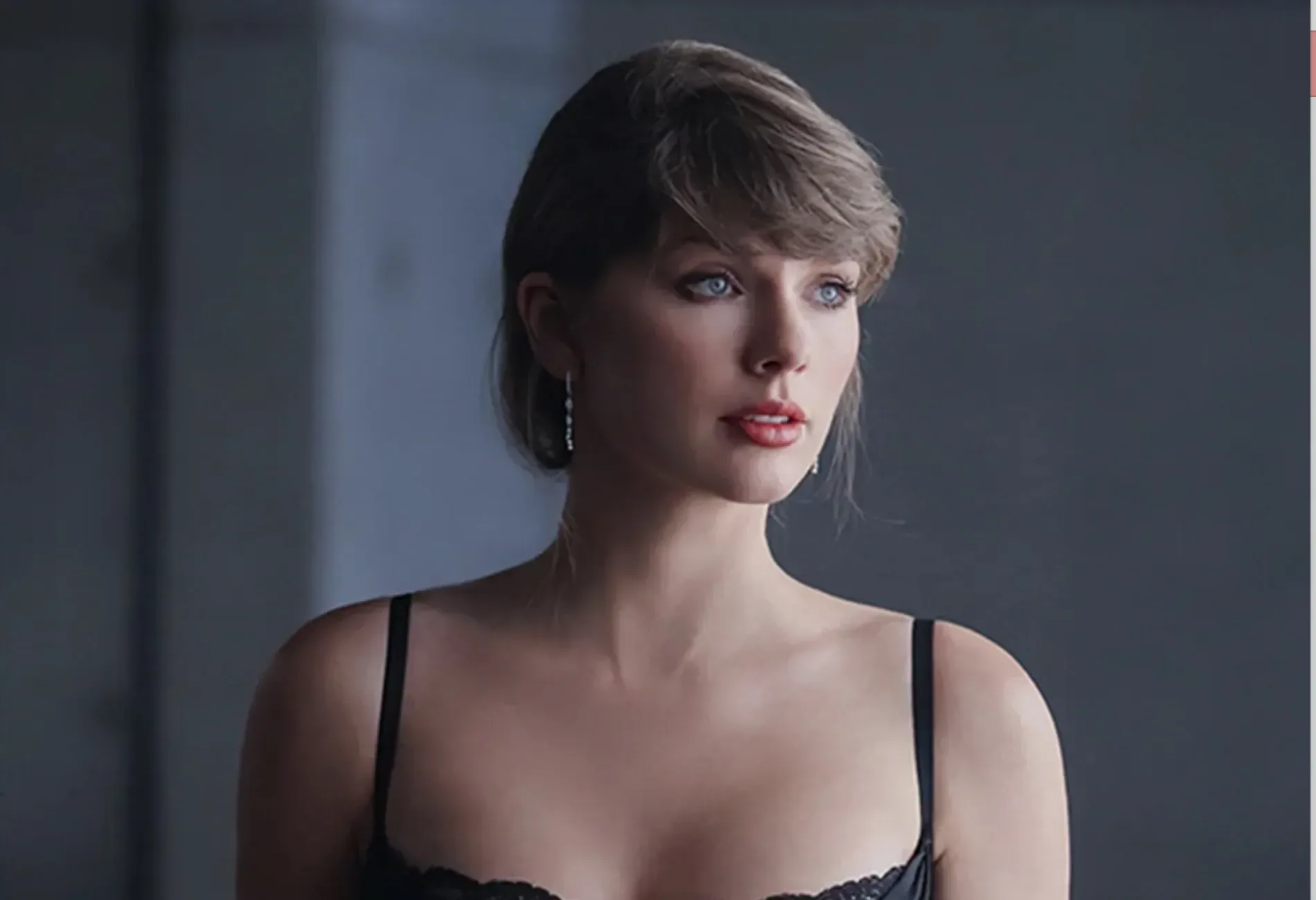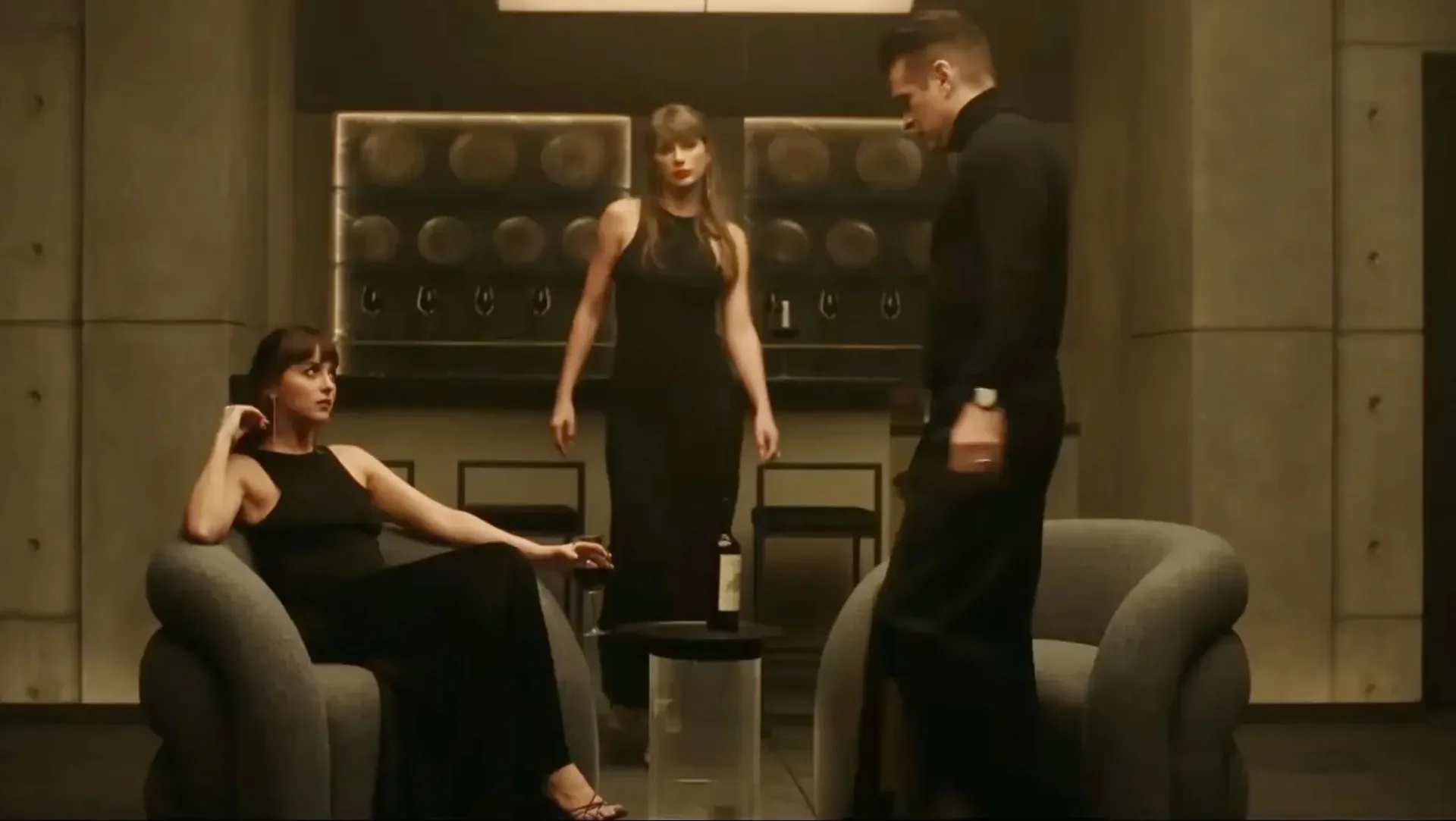
Taylor Swift’s “Patient Zero” is built around an unnervingly relatable premise: someone discovers that an ex’s new partner is experiencing the same troubling behavior they once did. For its music video, Swift has pushed that idea far beyond a straightforward breakup narrative. Premiered at the 2026 MTV Video Music Awards, the self-directed visual frames the song as a gothic ghost story and psychological thriller, with Dakota Johnson as the present-day partner, Colin Farrell as the man at the center of the pattern, and Swift as the former partner whose warning comes from a far more literal kind of past.
The premiere arrived during a major night for Swift at the VMAs. She received the inaugural Artist-Director Honor, then later returned to accept Video of the Year for “The Fate of Ophelia.” For a useful rundown of the ceremony’s setting and its major video categories, see our VMAs preview.
“Patient Zero” was released as a single on Friday and added to The Life of a Showgirl: The Encore, an expanded version of Swift’s 2025 album The Life of a Showgirl. The expanded release also includes “Cleveland!,” “Pink Clouding,” and “Babylon.” Yet the video’s story is designed to stand apart from an ordinary promotional clip. It gives its relationship triangle a mystery, a death, an inheritance and an ambiguous supernatural encounter—then deliberately declines to provide easy closure.
A warning passed from one woman to another
At the foundation of the song is a conversation rather than a confrontation. Swift said the idea emerged from hearing about a woman contacted by the new girlfriend of her ex, who wanted to know whether the former partner had endured similar experiences. Swift then considered how common that kind of outreach was among friends and wrote from the perspective of the ex receiving the call.
That matters because the title “Patient Zero” is a metaphor, not a literal medical claim. In common usage, the phrase evokes the perceived first identified case in an outbreak. The song repurposes it for a cycle of romantic harm: the speaker sees herself as the earliest known person in a repeated pattern, someone who has already gone through the confusion and recovery now facing another woman.
The video intensifies the metaphor by placing Swift’s character beyond the reach of a normal phone call. Johnson’s character is shown in a deteriorating relationship with Farrell’s character. At a banquet where he speaks, she sees him flirting with other women. The tension then moves to a car ride after the music drops away, where he appears to turn the argument back on her and questions her drinking. The scene evokes gaslighting, a term for manipulation that causes a person to question their own memory, judgment or perception. The visual does not need to diagnose the relationship in clinical terms to make the imbalance clear: her reaction to what she witnessed is treated as the problem, rather than his behavior.
Swift’s character functions as a kind of counselor to Johnson’s character, singing from the position of the ex who can foresee where the relationship is headed. But the film’s reveal changes the meaning of that guidance. Flashbacks show Swift’s character in the same relationship, reacting to similar betrayals. A newspaper headline says an heiress died of a mystery illness and that her husband inherited billions, with unanswered questions surrounding the death. By the time Johnson visits a cemetery and lays black roses at a grave bearing Swift’s image, the former girlfriend’s warning has become spectral counsel.
The video makes its central question more dangerous than the song’s
On the page, “Patient Zero” is a song about recognition, solidarity and hard-won experience. Its narrator has “been there,” healed, cursed and prayed, and offers to listen if the new partner wants to talk. The video keeps that emotional logic, but rearranges the stakes. It asks whether understanding the pattern is enough to escape it.
Related coverage includes Taylor Swift Unveils Gothic ‘Patient Zero’ Video at 2026 VMAs.
The answer is purposefully uncertain. Johnson’s character brings flowers to the grave, so she has uncovered at least part of the story. What remains unknown is whether she will leave, seek the truth more aggressively, or remain trapped in the same cold relationship. That ambiguity is crucial. A thriller ordinarily builds toward proof and resolution; this one gives the audience evidence but leaves its living character at a crossroads.
There is also an important distinction between what the film states and what it implies. The newspaper-style clue, the inheritance and the cemetery imagery invite viewers to suspect something sinister, but the video does not definitively explain the heiress’s death. Likewise, Swift’s character may be a ghost in the literal sense, or the presentation may externalize the way a former partner’s story continues to haunt a new relationship. Both readings fit the imagery.
That uncertainty helps the gothic approach work. Gothic storytelling frequently places dread inside wealthy or imposing domestic spaces, turns family and romance into sources of menace, and lets secrets from the past exert force on the present. Swift said she wanted to draw from gothic ghost stories, true crime and psychological thrillers. Those are adjacent genres, but each contributes something specific here:
- Gothic ghost story: a dead former partner, a grave, black roses and a house filled with emotional chill.
- True-crime influence: suspicious circumstances, an unexplained death and a spouse who benefits financially.
- Psychological thriller: a partner’s reality is challenged while the audience weighs what is seen, implied and concealed.
The house is especially central to Swift’s explanation of the visual. She described it as a metaphor for a relationship that has become cold and atrophied. “Atrophied” usually means weakened or diminished through disuse. Applied to the relationship, it suggests not a sudden collapse but something that has slowly lost warmth, care and vitality. The mansion-like setting therefore is not just a stage for wealth and mystery; it externalizes the emotional atmosphere Johnson’s character is living in.
A distinctly screen-focused collaboration
Swift directed the video and pointed to the work of cinematographer Emmanuel “Chivo” Lubezki, production designer Ethan Tobman and editor Chancler Haynes. Lubezki received the video’s sole onscreen end credit after its premiere, an unusually strong signal of the importance Swift places on the collaboration.
A cinematographer is responsible for translating a director’s visual plan into photographed images, including decisions about lighting, framing, lens choices and camera movement. Swift had never previously worked with Lubezki on one of her videos. She described the collaboration as dreamlike and said that observing his work taught her a great deal. Her pre-release behind-the-scenes clip also showed that the lighting and production design impressed her enough to rethink the scale of the launch; she joked that she began looking up when the VMAs were after seeing the completed environment.
Production design, meanwhile, is the creation of the physical visual world: sets, architecture, objects, surfaces, decoration and the overall environmental mood. Tobman’s work supports the core metaphor because the house has to feel emotionally inhospitable before the plot fully explains why. Editing is equally important to a premise involving present action, flashbacks and revelation. Haynes’s role is to shape how viewers move between Johnson’s suspicions, Swift’s earlier relationship and the final cemetery visit without prematurely resolving the mystery.
Farrell plays the role as a villain, in Swift’s own description, while Cara appears as the other woman. Johnson’s part carries the audience’s uncertainty: she is not merely receiving a warning from the past; she must decide how much to trust what she sees and what the dead woman’s story appears to reveal.
The VMAs premiere underscored Swift’s directing record
The premiere was also an occasion for Swift to discuss the scale of her video work. In her Artist-Director Honor remarks, she said she had participated in roughly 60 music videos over 20 years and had written and directed 18. She credited the people who worked with her across those productions and thanked fans for caring about the work being made.
The new award was presented as recognition for an artist accomplished on both sides of the camera. Its future is not yet defined: it is unclear whether the honor will become a recurring VMAs distinction or remain unique to Swift. Either way, “Patient Zero” makes the case for why the occasion focused on direction rather than simply star power. The visual is not an illustration of a lyric line by line. It uses the song’s perspective as an entry point, then develops its own characters, clues and genre language.
Swift’s later Video of the Year acceptance speech for “The Fate of Ophelia” reinforced that broader interest in technique. She explained that she wanted that video to feel like one continuous shot and had to learn how to hide edits. Those concealed transitions create the illusion of unbroken camera movement even when the footage is assembled from separate takes. She also thanked choreographer Mandy Moore, Tobman, Haynes and cinematographer Rodrigo Prieto, whom she credited with giving her confidence to direct videos independently.
She dedicated the “The Fate of Ophelia” award to Dolly Parton, praising Parton’s vivid songwriting and the way her storytelling can make listeners feel as if they are watching images. It was an apt connection on a night centered on the relationship between songcraft and visual narrative.
Where “Patient Zero” can be watched
Following the VMAs broadcast, “Patient Zero” was made available through Spotify Premium, Apple Music and Amazon Music. An alert indicated that the video would reach YouTube on Tuesday. The staggered availability follows a recent pattern in which Swift’s new videos have not appeared on YouTube’s free tier immediately at release.
The video was shot in March, months before its September 27 premiere. That long lead time gives context to its carefully coordinated launch: a 13-second teaser preceded the debut, then the full video arrived during a televised awards-show appearance built around Swift’s new artist-director recognition.
For viewers, the key to “Patient Zero” is not to expect a puzzle with a clean answer. Its most effective move is making an everyday warning—this happened to me too—feel like a message sent from a locked room in the past. The dead heiress may be a ghost, a memory, a warning, or all three. Johnson’s character has received the evidence. Whether she can turn that knowledge into an escape is the horror the video leaves behind.