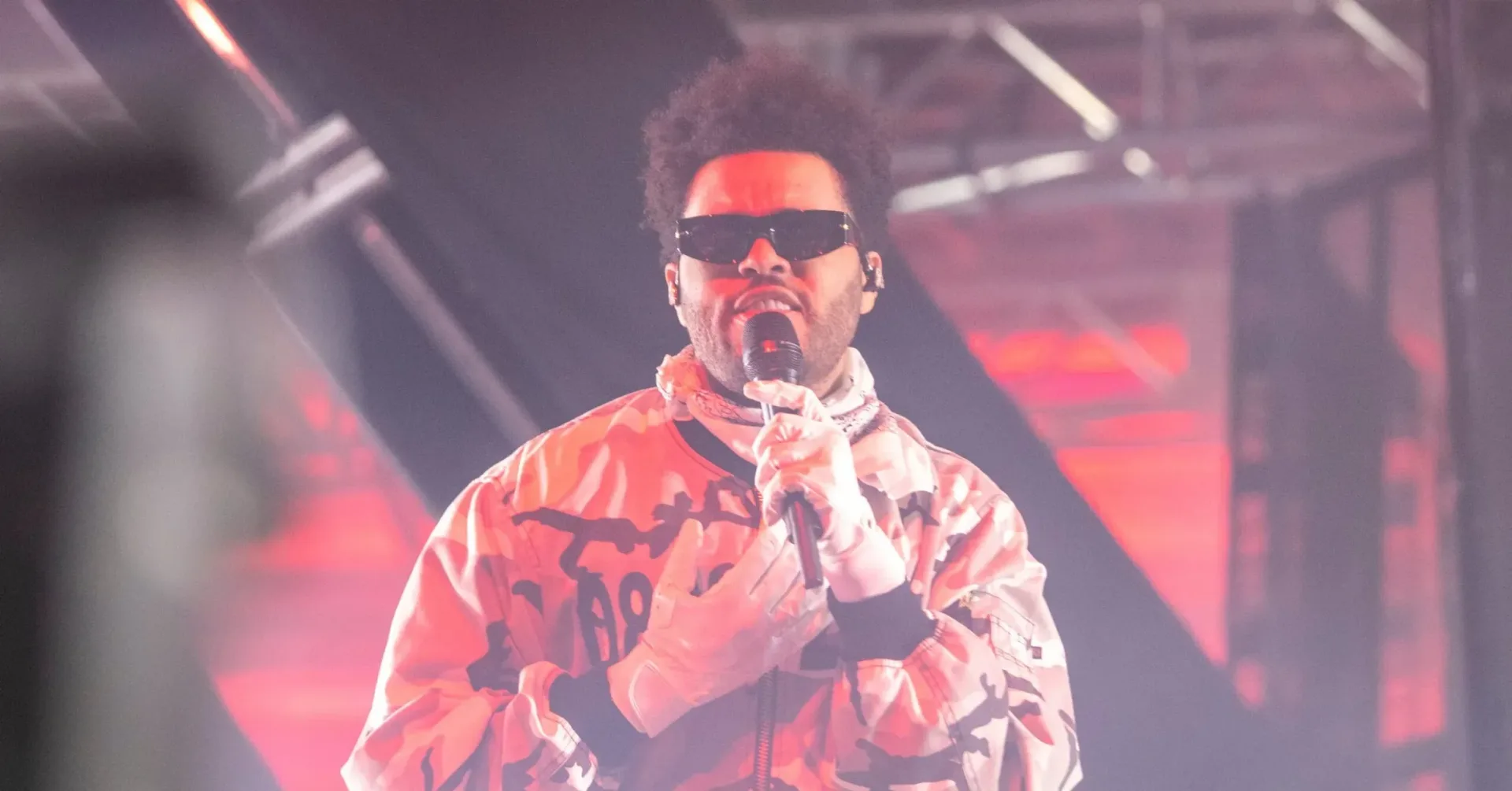
The Weeknd’s After Hours Til Dawn stadium tour has closed with a scale that is difficult to reduce to a single headline number. Its final show took place November 4 at TM Stadium Nasional in Kuala Lumpur, Malaysia, ending a run that began in July 2022 and ultimately reached 176 shows across 67 cities, 30 countries and five continents.
Live Nation says the tour grossed more than $1.3 billion from more than 9 million tickets, making it the highest-grossing tour by a male artist in history. The figure puts The Weeknd ahead of Elton John’s Farewell Yellow Brick Road tour, which grossed more than $939 million. On the cited all-time tour-gross list, only Taylor Swift’s The Eras Tour and Coldplay’s Music of the Spheres stand above it.
That is a record with some important definitions attached. Gross means the total ticket revenue reported for a tour before the many costs and revenue splits involved in mounting stadium concerts. It is not a statement of what an artist personally earned. But as a measure of demand and the total commercial scale of a live run, it is significant: audiences bought more than 9 million tickets over four years for a show rooted in three album eras.
A global stadium run, not a short victory lap
The unusually long lifespan of After Hours Til Dawn is central to the total. Rather than being contained to a conventional single-season itinerary, the tour remained active from July 2022 through November 2026. Its final Asian leg demonstrated that the demand was still substantial at the end of that cycle.
That leg was initially announced as 11 dates, then expanded to 17 sold-out stadium shows. The itinerary included three nights in Bangkok and four in Hong Kong before the Kuala Lumpur finale. Live Nation attributes more than $500 million in gross revenue and over 3 million ticket sales to the 2026 dates alone.
Those late-run figures matter because they show that the final year was not merely ceremonial. More than one-third of the tour’s reported ticket total came in 2026, while that year’s reported gross accounts for a large share of the overall $1.3 billion-plus figure. The expansion from 11 Asian dates to 17 sold-out stadium performances also points to demand that exceeded the original routing.
What the reported numbers do—and do not—tell us
Breaking down a giant touring total can make the achievement easier to understand, provided the calculation is treated as an estimate rather than a ticket-price report. Using the reported minimums of $1.3 billion and 9 million tickets, the tour works out to roughly $144 in gross revenue per ticket. Across 176 shows, that is at least about $7.4 million gross and more than 51,000 tickets per concert on average.
Those averages should not be read as a fixed price, venue capacity or guarantee for any individual night. The reported totals are both described as “more than” amounts; cities, stadium sizes and ticket tiers vary; and a gross-per-ticket calculation is not the same thing as an advertised face value. It is simply a way to illustrate the scale implied by the final totals.
The 2026 numbers yield a similarly broad estimate: more than $500 million across over 3 million tickets, or roughly $167 in gross per ticket using those floor figures. That is higher than the whole-tour minimum average, but it does not establish why. The supplied figures do not separate ticket tiers, markets, dates or any other factor that could account for the difference.
What can be said with confidence is that the tour combined massive attendance with a stadium-only level of operation across a remarkably broad route. It did not reach the record on the basis of a handful of oversized stops. The final count covers 67 cities in 30 countries, making international reach a core part of the result rather than a footnote.
Three album eras shared one touring world
After Hours Til Dawn carried three album eras across the world over four years. That framing helps explain why the tour could function as a sustained destination for audiences instead of only a narrow promotional campaign. Each stop joined a larger ongoing run, one that traveled between continents while retaining a shared title and visual identity.
For fans, a tour of this duration can create a rolling communal event: different cities attend on different dates, but participate in the same wider era. For the live business, it illustrates the value of a durable stadium concept that can keep adding dates where demand supports it. The Asian finale provides the clearest supplied example, with the schedule increasing from 11 to 17 shows and every added performance selling out.
The close in Kuala Lumpur also gives the accomplishment a concrete endpoint. Major box-office numbers can seem abstract when they are only presented as rankings, but the record was completed at a final performance after four years of travel, scheduling and repeat stadium-scale production. More than 9 million admissions across 176 shows means the tour was built from a long series of individual nights, not simply one spectacular weekend.
Where the tour sits in the larger touring picture
The Weeknd now holds the male-artist record with a reported gross above $1.3 billion, surpassing Elton John’s more than $939 million Farewell Yellow Brick Road total. The all-time position behind only Taylor Swift and Coldplay makes the distinction between an artist-category record and an overall record worth keeping clear. Both are extraordinary measures, but they answer different questions.
The male-artist mark identifies the highest reported gross among tours led by male artists. The broader all-time list compares every eligible tour, regardless of artist. In either frame, the result places After Hours Til Dawn in an exceptionally small group of stadium tours whose receipts have surpassed the billion-dollar threshold.
It also arrives during an era when stadium concert news continues to emphasize international routes rather than isolated regional dates. For another example of the format’s ongoing importance, Ye has set a Mexico City concert at Estadio Banorte for 2027. The Weeknd’s completed itinerary, however, is defined by its finished scale: 30 countries, five continents and a four-year period with its final numbers now attached.
The tour’s humanitarian component
The final tally includes more than ticket sales. Live Nation says $8.5 million was donated through the tour to the XO Humanitarian Fund and Global Citizen, supporting hunger-relief and education initiatives. That amount should be understood separately from the $1.3 billion-plus gross: one is a reported charitable contribution connected to the run, while the other is the tour’s reported box-office revenue.
The distinction matters because huge gross figures can otherwise flatten every part of a touring operation into one commercial statistic. The donation total reflects a designated humanitarian footprint tied to the tour’s reach. Its stated beneficiaries and focus areas are hunger relief and education, rather than a claim that all tour revenue served those purposes.
A final number with unusually broad reach
There is no need to overstate what a gross total can reveal. It cannot quantify what a particular show meant to an attendee, identify the costs behind the production, or reveal an artist’s personal proceeds. Yet the reported data plainly establishes the commercial and geographic dimensions of the run: more than $1.3 billion in gross receipts, more than 9 million tickets, 176 shows, 67 cities, 30 countries and five continents.
With the Kuala Lumpur performance now complete, After Hours Til Dawn stands as a four-year stadium undertaking that converted three album eras into one sustained worldwide event. Its record is not just that it went big; it is that it remained big for long enough, and in enough places, to set a new benchmark for a male artist.