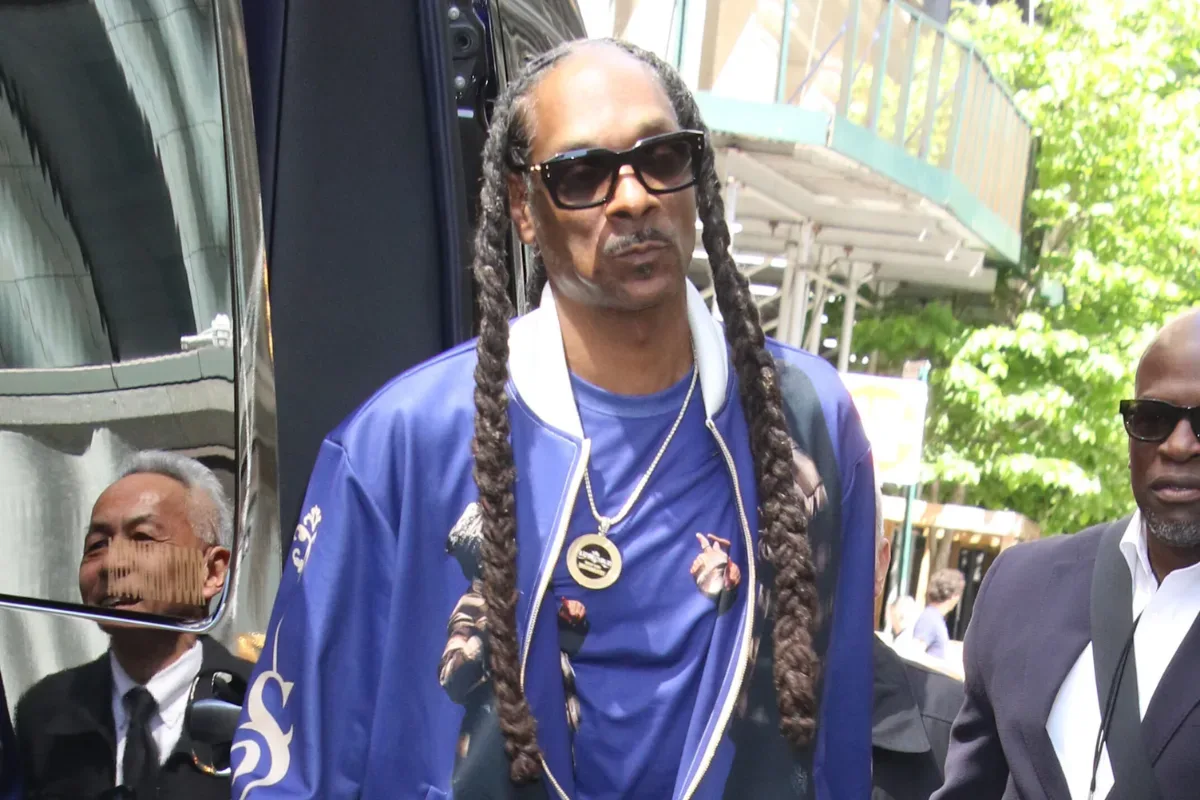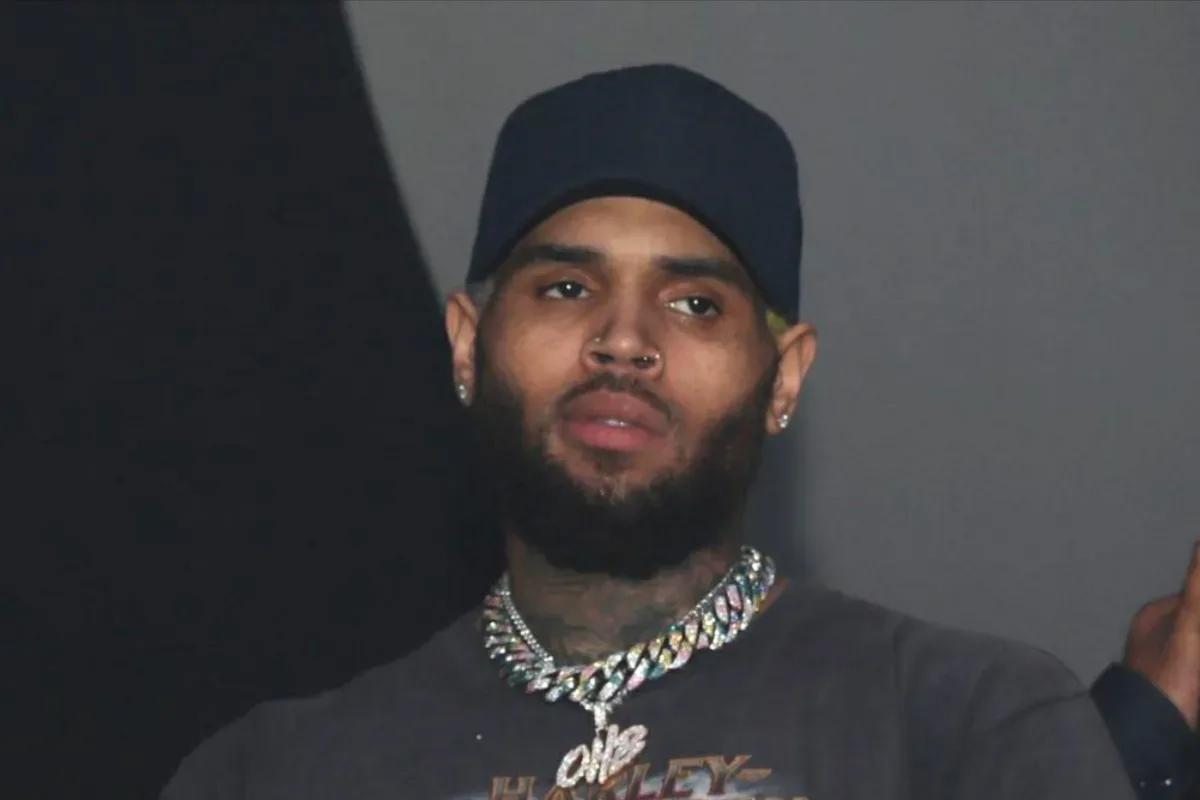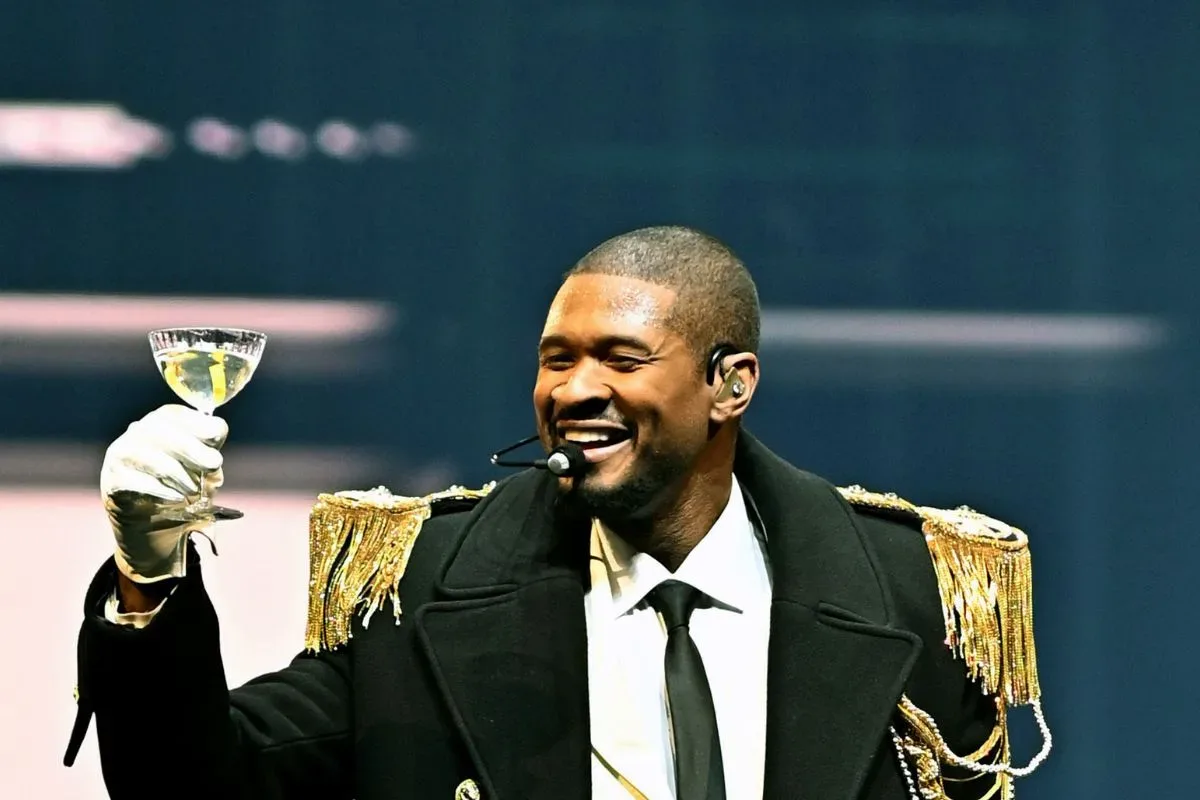
Usher and Chris Brown have reached the top of the monthly Top Tours ranking as co-headliners, a first for the chart. Their joint stadium outing, The R&B Tour, reported $77.4 million in gross ticket revenue from 423,000 tickets across 10 September performances.
The achievement is notable not simply because of the size of one month’s business, but because it puts a shared R&B production ahead of the touring field after two earlier, larger monthly revenue totals had still placed the run at No. 3. It also gives Usher his first monthly No. 1 on the ranking. Chris Brown had previously topped it for three consecutive months, from July through September 2025.
A No. 1 month built on 10 reported shows
The September totals work out to an average of about $7.74 million in gross revenue and 42,300 tickets per reported show. Those are calculations from the reported monthly totals, not separately published per-show figures. They do, however, illustrate the stadium scale required for the tour’s September chart position.
In touring reports, gross means the money generated by ticket sales before the many costs attached to mounting a large live production are subtracted. It is not the same thing as profit, nor does it say how the revenue is divided among artists, promoter, venues, crews, suppliers, and other participants. Likewise, a ticket total measures admissions reported for the shows; it does not by itself reveal ticket prices, venue capacities, attendance patterns, or the financial result of the tour.
Those distinctions matter when reading a headline figure as large as $77.4 million. The number establishes commercial scale and chart placement. It should not be treated as a direct measure of either performer’s personal earnings.
September was not the tour’s highest-revenue month. The run grossed $98.4 million in July and $91.8 million in August, but both months ranked No. 3, behind BTS and The Weeknd. September’s lower total was enough for the summit, a reminder that a monthly touring chart is comparative: a tour’s rank depends on how its reported figures stack up against other eligible tours in that particular window, not merely whether it exceeds its own earlier performance.
The cumulative picture is already substantial
By the October 3 stop in El Paso, Texas, the first 36 concerts had grossed $284.7 million and sold more than 1.5 million tickets. That cumulative gross had already surpassed the $183.9 million associated with Usher’s Past Present Future tour.
The comparison provides useful context for what a co-headlining stadium arrangement can do. It does not erase the importance of Usher’s previous tour; instead, it shows the enlarged commercial ceiling of this particular partnership. Two expansive catalogs, a single event presentation, and a stadium itinerary can create a different proposition from a solo run.
Related coverage includes Usher and Chris Brown Reach No. 1 With Record-Setting R&B Tour Month.
There is an important reporting caveat. Four October performances had not been included when the available figures were compiled. That means the published total is incomplete rather than a final, all-dates accounting. It is reasonable to say the reported gross stood at $284.7 million at that point. It would not be accurate to present that number as the final tour total or to infer results for the unreported shows.
Why the co-headlining format matters
The R&B Tour was not described as a conventional bill in which one artist performs an entire set and then yields the stage to the other. Usher and Brown reportedly moved through their material across nine acts, bringing their catalogs together in one production. Mario, Eric Bellinger, and Tank served as backing vocalists while also performing songs of their own.
That structure is central to understanding the tour’s identity. A co-headline is more than two names sharing a poster. In this case, the presentation was designed around interplay: alternating sections, multiple performers, and a show architecture that treats the pairing as the main event. The approach makes the ticket purchase about a combined R&B program rather than two unrelated performances scheduled consecutively.
For fans, the practical implication is a broader slate of music within one stadium show. For the production, the format requires coordination around transitions, stage time, backing vocals, and the pacing of nine separate acts. The reported business figures do not prove which creative decision drove demand, but the integrated format clearly distinguishes this tour from a simple shared booking.
It also places familiar R&B catalogs in an arena usually associated with the biggest cross-genre spectacles. Before the tour began, Usher framed the partnership as an argument for the genre’s place on those stages.
“It’s not about me and my brother coming together. We come together in support of our fans of R&B.”
Usher also characterized the collaboration as a long-held ambition, connected to his early support for Brown’s career. That context gives the onstage partnership a relationship-driven dimension beyond a straightforward commercial pairing, while the scale of the ticket figures shows there was substantial audience interest in seeing the two artists together.
From April announcement to stadium launch
The joint stadium run was announced in April after Usher and Brown teased it together on Instagram. Its initial schedule listed 33 dates in the United States and Canada. The tour opened June 26 at Empower Field at Mile High in Denver.
“Initial schedule” is worth emphasizing. It describes the first announced plan, not necessarily the eventual number of performances. The later report of 36 shows by October 3 reflects that the available touring data extended beyond the original 33-date listing. Without additional confirmed scheduling details, the responsible takeaway is simply that the reported concert count had reached 36 by that date.
The run also included a charitable ticket-sales component. The promoter committed $1 from each ticket sold to the FIFA Global Citizen Education Fund, intended to support children’s access to education around the world. At more than 1.5 million reported tickets by October 3, that pledge would correspond to more than $1.5 million if applied across those reported ticket sales as described. That is an arithmetic implication of the stated per-ticket commitment, not a separately reported donation total.
Charitable pledges tied to ticket sales are distinct from the tour gross. The $284.7 million figure describes reported ticket revenue. A $1-per-ticket commitment specifies a separate allocation mechanism. Keeping those figures separate helps avoid the common mistake of treating gross revenue, an artist payout, and a charitable contribution as interchangeable numbers.
How to read the chart milestone
The central milestone is precise: Usher and Brown became the first co-headliners to lead the monthly Top Tours ranking. It is not a claim that they hold every touring record, that September was their largest month, or that the reported cumulative gross is final. In fact, the available figures make the opposite clear on two of those points: July and August each brought in more revenue, and four October shows remained unreported.
What makes the No. 1 finish compelling is the combination of elements behind it. Usher earned his first lead on the monthly list. Brown returned to a position he had held for three straight months in 2025. Their partnership reached the top despite September producing less revenue than either of the tour’s preceding two months. And the production did so while presenting R&B as a stadium-scale shared event rather than splitting the evening into isolated headline sets.
The result arrives amid a wider conversation about how major live shows are packaged. Audiences increasingly encounter tours as large-format events with several creative hooks: extensive catalogs, special guests, a production narrative, and a sense that the performance is unlikely to be reproduced by either artist alone. Here, the nine-act configuration and appearances by Mario, Eric Bellinger, and Tank supplied that additional shape.
For a related look at how music and personalities continue to move across pop-culture spaces, see Snoop Dogg’s Doggyland books and their new read-aloud releases.
What remains unresolved
The reported data is strong, but it does not answer every question a reader might have. There is no final total in the figures provided. There is no show-by-show breakdown for September, no stated average ticket price, no profitability figure, and no individual share of the gross for the artists. Nor is there enough information to isolate how much any one production choice, city, guest appearance, or date contributed to sales.
Those limits do not diminish the confirmed accomplishment. They define it. The evidence supports a clear account: across 10 reported September shows, Usher and Chris Brown generated $77.4 million from 423,000 tickets and became the first co-headlining act to lead the monthly Top Tours chart. By October 3, their first 36 concerts had reached $284.7 million and more than 1.5 million tickets, with four October dates still absent from the compilation.
That is a major result for the partnership and a significant marker for an R&B stadium production. The complete financial story will require complete reporting, but the monthly chart history has already been made.