Warning: this article discusses major events from the two-hour premiere of The Traitors: New Blood.
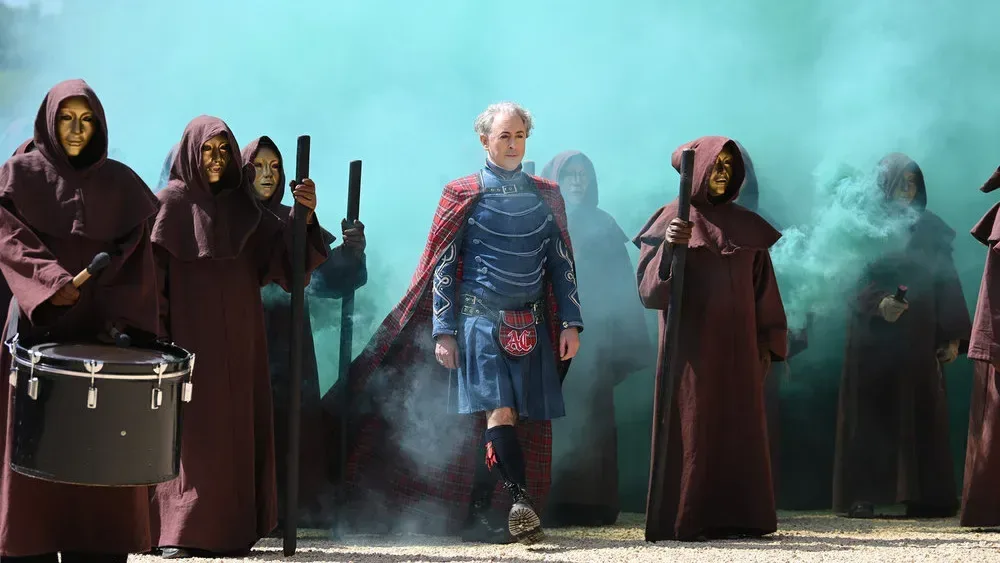
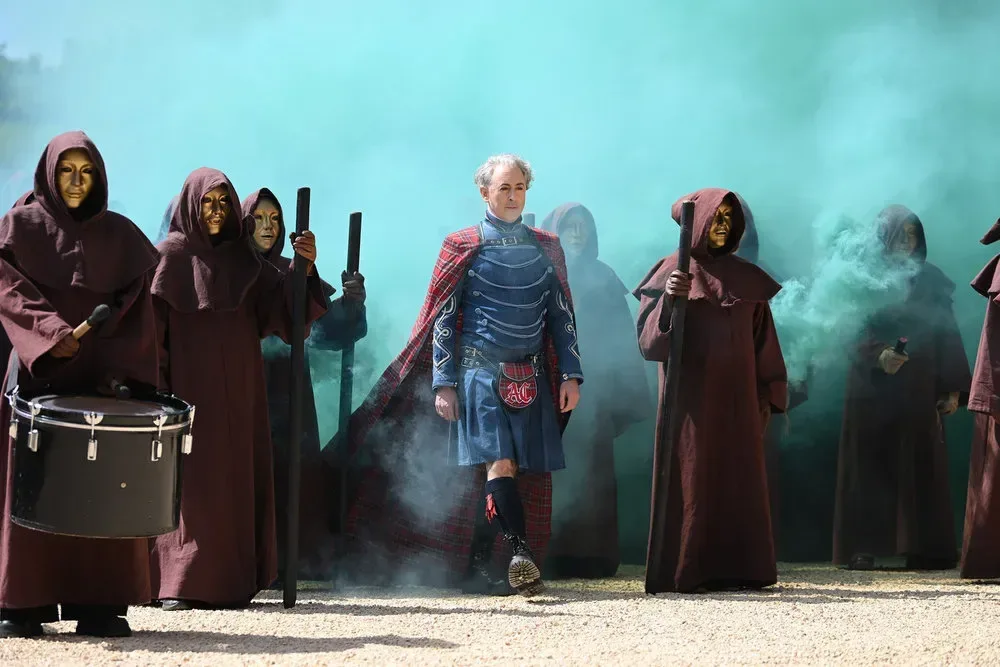
The Traitors: New Blood arrives on NBC with a familiar Scottish castle, host Alan Cumming, 22 players and the same central social-deduction problem: identify the hidden Traitors before they remove the Faithfuls from the game. But the civilian edition is not simply a celebrity-free repeat. Its premiere establishes a version where the prize money carries a more immediate weight, the players begin with extensive knowledge of the format, and a new cash reward gives everyone a concrete reason to press an accusation at the roundtable.
The underlying structure remains deliberately intact. A typical day moves through breakfast, a murder reveal, a mission, a roundtable banishment and a secret meeting among the Traitors in the turret. That reliable loop is fundamental to the show’s tension. The Faithfuls must collaborate in missions to grow a pot they may ultimately lose to their hidden opponents, while every conversation can also become evidence, theater or misdirection.
What changes in New Blood is the set of incentives attached to that loop. The show places ordinary people, rather than familiar reality-TV personalities, in a game where a potential $250,000 is already meaningful. It then adds a $15,000 bonus to the prize pot every time the group successfully banishes a Traitor. That bonus is separate from the possible $250,000 earned through missions.
It is an elegantly dangerous adjustment. Social-deduction games usually make certainty scarce: players may suspect someone but fear looking foolish, splitting an alliance or helping a Traitor escape scrutiny. A direct payout for a correct banishment gives the Faithfuls a reason to act on a strong read rather than merely survive another vote. Yet the reward does not make a correct read easier. It may instead encourage louder claims, riskier coalitions and, inevitably, accusations delivered with far more confidence than proof.
A clean slate changes the detective work
Celebrity editions come with an unusual layer of baggage. Players and viewers can bring pre-existing friendships, rivalries, public personas and assumptions into the castle. Civilian contestants do not arrive entirely without personality, of course, but they arrive without that shared pop-culture history. The audience is learning who these people are at the same pace as the cast.
That makes the first roundtable especially revealing. Mississippi realtor Kriste Lewis targets San Diego construction manager Madeline Kostopulos over a remark she believes signals Traitor behavior. Madeline’s ally, New York business executive Victor Vollbrechthausen, also draws suspicion after taking a protective shield in the first mission. The vote comes close to dividing between the two.
It is early-game deduction at its messiest: a stray comment is elevated into a theory, social alignment becomes suspicious in itself, and a practical decision in a challenge is interpreted as possible self-preservation. None of those observations automatically identifies a Traitor. But the show is built around the uncomfortable fact that players have to vote before they possess certainty. Waiting for irrefutable evidence is often impossible; acting too quickly can banish a Faithful and make the Traitors’ work easier.
Related coverage includes ‘The Traitors: New Blood’ Builds a Civilian Game Around Bigger Stakes and New Incentives.
That is why the civilian casting choice matters beyond simple relatability. With no established TV narratives to lean on, identity is more flexible. Someone can present themselves as cautious, forceful, charming, harmless or chaotic, and the others have little outside information to verify the performance. For viewers, that makes the premiere closer to a playable mystery. The cast does not know more than the audience because of old grudges or reality-show alliances. Everyone starts from the same thin file of observations.
The first Traitors, and a new recruitment pressure cooker
Cumming selects pilot Tomica Adams of Boston and funeral director Joe Vanella of Wantagh, New York, as the first two Traitors. Their initial job is the familiar one: blend in during the day, steer suspicion elsewhere and secretly choose who leaves the game at night. Their first murder is Kim Daily, a lawyer who had presented herself as a college basketball coach.
Then the premiere changes the shape of their opening turn. Tomica and Joe are told that a third Traitor will join them, and they must choose the person. Their candidates are Katie Fites, a 23-year-old marketing manager from Jacksonville, Florida, and former MLB player turned analyst Xavier Scruggs.
Rather than immediately handing either contestant a cloak, the show makes them accomplices who must audition for the role. Their test is overtly spy-game material: each has to deceive the Faithfuls by stealing a book themed around crime and punishment and getting it to the Traitors. The episode ends without confirming whether either candidate completes the task.
The accomplice mechanic does more than provide a cliffhanger. It puts prospective Traitors under a uniquely awkward form of surveillance. A normal Traitor starts with a secret and must conceal it. Katie and Xavier begin with a secret assignment that requires conspicuous action around a group already trained to look for suspicious behavior. The test also forces them into conflict with each other, since there is one available role and two people motivated to prove they can cause chaos.
Tomica and Joe’s choice is notable because the candidates are presented as markedly different people. That contrast may produce different kinds of risk. One applicant might seem easy to overlook, while another might be able to use a more confident public profile to direct group conversations. But any assessment remains speculation until the book mission resolves. The crucial point is that the original Traitors are not merely hiding; they are now making a personnel decision that can reshape their own survival odds.
Why asking players what role they want still leaves room for surprise
Before entering the castle, the civilian competitors are asked whether they would prefer to play as a Traitor or a Faithful. The prompt is new to this version’s invitation framing, although Cumming also discusses role preference with contestants in his fireside conversations. The production team’s approach is that initial Traitors should be willing to take on the task, since the role requires sustained deception, nightly decisions and constant risk management.
That preference is not a permanent guarantee. Once in the game, any player can potentially become a Traitor. The premiere immediately demonstrates the principle by making Katie and Xavier candidates for the third slot.
In game-design terms, this protects uncertainty in two directions. Players who loudly insist they would hate to be a Traitor cannot be treated as permanently cleared, because recruitment remains possible. Meanwhile, someone who appeared eager for a cloak is not necessarily selected at the outset. The role-preference card supplies useful casting information, but it is not a visible answer key for the contestants.
The initial selections are also made only after the group has arrived, traveled together and spoken with Cumming. That timing matters. The earliest social behavior can reveal who naturally leads a discussion, who watches quietly, who makes quick connections and who may be capable of carrying deception without immediately becoming a target. It also means the players begin forming impressions before the hidden roles are finalized, which adds a small but meaningful layer of uncertainty to every first-day read.
Broadcast length changes the editing challenge, not the game’s foundation
The NBC version has a different episode shape from the longer Peacock installments. Broadcast episodes run roughly 41 to 42 minutes excluding commercial breaks, requiring careful choices about where an episode can pause while preserving the show’s rhythm.
The intended solution is not simply to speed everything up. The production plans cliffhanger points in advance, seeking breaks that sustain the murder-mystery momentum without reducing the cast to a string of plot twists. The unfinished book theft is a clear example: it ends an episode at the exact moment an accomplice’s secret action could be exposed.
That distinction is important. A cliffhanger is not merely stopping at a dramatic image. In a social-deduction format, a good cliffhanger should leave a specific question active: Did the player succeed? Who saw them? Will the outcome change the hidden team’s makeup? Here, the answer carries consequences for the immediate story and the season-long balance between Traitors and Faithfuls.
The shorter format could also make the roundtable feel sharper. Each accusation has less surrounding material to soften it, and each vote can serve as a compact episode-level payoff. The risk, naturally, is that complex relationships might lose needed context. The stated aim is to preserve time for character exploration rather than treat the program as a scripted drama with reality contestants dropped into it.
Familiarity with the castle becomes a feature, not a flaw
These players do not enter the castle as blank-slate recruits. They have watched the franchise and recognize its routines. Some even know how to activate the library’s secret room by pulling the right book. Instead of treating that knowledge as a problem, the format leans into it.
The castle is a real location rather than a set rebuilt for each season, and that continuity lets returning viewers share in the contestants’ recognition. Familiar props and spaces become part of the game’s language. A library book can be both an atmospheric detail and a literal instrument of an accomplice challenge. A turret is not just a set; it signals a private zone where the hidden team makes consequential choices.
For the civilian cast, knowing the broad rules means they can play hard immediately. They understand that breakfast may reveal a murder, that a shield changes the social calculations around a mission, and that a roundtable is as much about persuading a room as it is about having the best theory. The format can therefore introduce new twists without explaining the foundations from scratch.
That philosophy resembles a game sequel that preserves its core loop while changing the complications around it. The objective remains recognizable, but players who assume they have mastered every system are vulnerable to a new rule. For a lighter example of a stealth premise built around taking something without drawing attention, see our look at Pidgeon Pocket. In New Blood, though, being caught with the oversized book could change who gets the power to deceive the entire house.
Money, atmosphere and a little castle mischief
The prize pot establishes a practical emotional center for this civilian season. During the first mission, the group adds $50,000, prompting Mark Zgoda to note that the amount amounts to a person’s full salary. The observation helps articulate why collaboration and betrayal may land differently here. The contestants must work together to build the money even though some among them may be working toward taking it.
That tension is the format’s central paradox. Missions reward group competence. The social game rewards suspicion, influence and selective trust. The new $15,000 Traitor-banishment incentive tightens the connection between the two, making accurate deduction a material contribution to the prize rather than only a strategic necessity.
Elsewhere, the show broadens its gothic playfulness. James and Oliver Phelps appear as mischievous, mysterious castle figures, small additions designed to extend the murder-mystery setting. The premiere also includes a salmon-filled decoy crate, a knowing nod to prior salmon chatter, and uses commercial-song covers, including a sinister rendition of Justin Timberlake’s “Cry Me a River.” The recognizable music is intended to give this edition a distinct tonal texture while retaining its eerie atmosphere.
Those details do not change the win condition. The Faithfuls still need to find the hidden team; the Traitors still need to outlast and outmaneuver them. But they help make the broadcast edition feel like its own package: a faster episodic frame, civilian stakes, an explicit reward for correct banishments and an opening recruitment contest that leaves the balance of power unresolved.
For now, Tomica and Joe hold the first cloaks, Katie and Xavier face their test, and the group has already demonstrated how quickly a half-formed suspicion can dominate a roundtable. The castle may be familiar. The deductions are not.