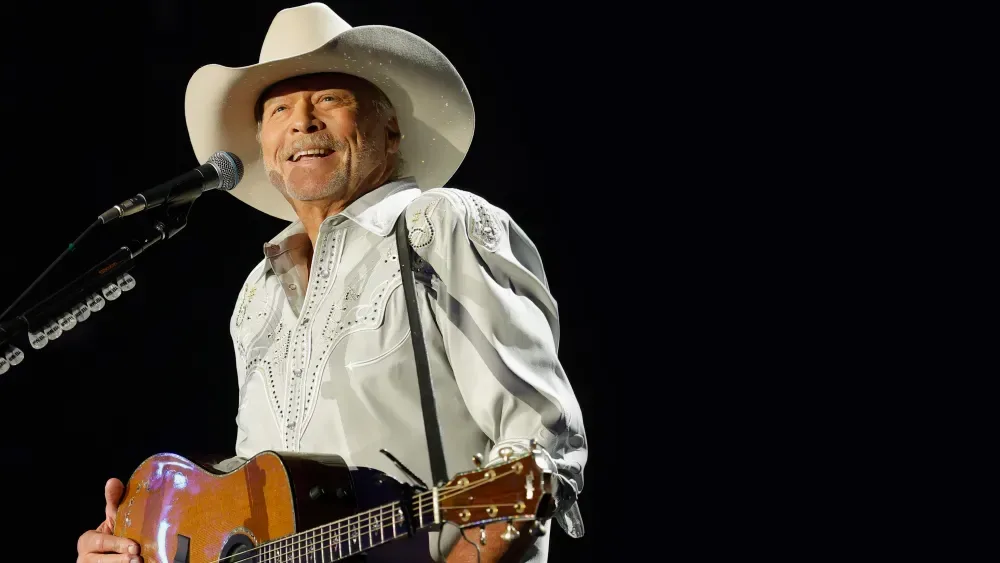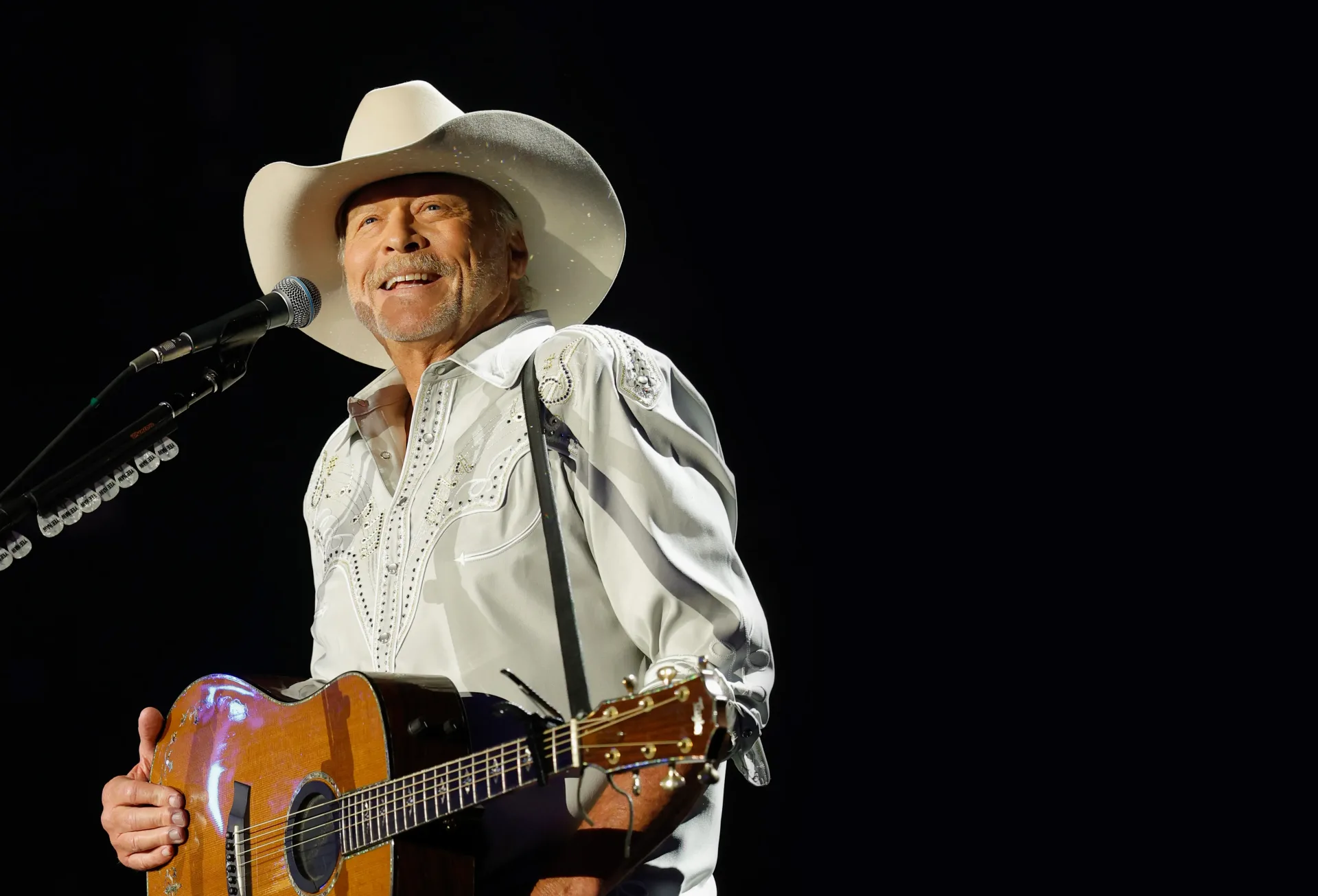
Alan Jackson’s final concert is headed to television. “Alan Jackson: The Last Show” will air on NBC on Dec. 8, preserving the country artist’s sold-out farewell performance at Nashville’s Nissan Stadium. The special will be available to stream on Peacock the following day.
Recorded on June 29, the program is framed as both a career celebration and a document of Jackson’s last concert performance. Its guest list makes clear that the event is intended to be larger than a conventional filmed set: Luke Bryan, Eric Church, Luke Combs, Riley Green, Cody Johnson, Miranda Lambert, Little Big Town, Jake Owen, Jon Pardi, Thomas Rhett, Carrie Underwood, Lainey Wilson, Lee Ann Womack, Adam Wright, Big City Brian Wright and Carlisle Wright are among the performers and participants.
For viewers who were not in Nashville, the broadcast offers a chance to see an artist’s farewell staged at stadium scale. For fans who attended, it provides a more permanent version of a night built around songs that have remained central to Jackson’s public identity for decades.
A set built around the songs people know
Jackson performed a selection of major songs at the concert, including “Chattahoochee,” “It’s Five O’Clock Somewhere,” “Remember When,” “Gone Country” and “Livin’ on Love.” Those titles span different sides of his catalog: upbeat country staples, reflective material and songs that became enduring radio fixtures. The special’s stated focus is a body of work stretching beyond three decades, rather than merely presenting a single-era retrospective.
That matters in a farewell-concert format. A final-show special is usually less concerned with promoting a new chapter than with giving a career’s recognizable landmarks room to land. Familiar songs become the framework through which guests, collaborators and audience reaction can tell the larger story. The announced titles suggest that Jackson’s television sendoff will lean into that shared recognition.
The concert will also feed into a forthcoming live release, The Last Show: One More for the Road – The Finale (Live from Nashville). A live album and television special serve related but distinct purposes. Audio foregrounds the performance itself; filmed concert programming can also preserve staging, guest appearances, crowd scale and the visible sense of occasion. Together, they make the farewell available in formats suited to different listening and viewing habits.
Music-related television events can also become part of the wider pop-culture conversation long after their original airdate, much like the symbolism attached to Megan Thee Stallion’s Tina Snow chain extends beyond the object itself. In Jackson’s case, the object is the filmed performance: a record of a particular final night, with a defined guest roster and a set of songs attached to multiple generations of country audiences.
The guest lineup gives the farewell a communal shape
The announced names cover a broad range of contemporary country performers. That does not, by itself, reveal every song choice or each artist’s role in the finished cut; the program has only identified them as featured performances and appearances. Still, the scale of participation indicates that the special will position Jackson’s final show as a communal tribute as well as a headlining concert.
That distinction is useful. A guest appearance may mean a musical performance, an onstage moment or another contribution to the broadcast, while a concert-film credit does not automatically disclose the structure of every segment. Until NBC and the production release a fuller rundown, viewers should not assume specific pairings, duets or song assignments from the artist list alone.
What is known is that the occasion gathered established country stars around an artist whose songwriting and recordings have had an unusually long public life. Jackson was inducted into the Nashville Songwriters Hall of Fame in 2011, the Country Music Hall of Fame in 2017 and the Songwriters Hall of Fame in 2018. Those honors provide important context for why a farewell set is being presented not simply as an artist’s last concert, but as a recognition of a catalog with lasting influence inside the genre.
Why the broadcast carries added weight
In 2021, Jackson disclosed that he had been living with Charcot-Marie-Tooth disease for at least a decade. Charcot-Marie-Tooth disease is a degenerative nerve condition that causes nerve damage, primarily affecting the extremities. It can interfere with a person’s ability to walk.
The diagnosis is relevant context for the emotional significance of a farewell event, but it should not be used to speculate beyond what Jackson has publicly shared. The confirmed facts are that he discussed the condition in 2021 and that the television special memorializes his final concert performance. The announced program is, first and foremost, built around music, collaborators and the songs that defined his career.
There is an important difference between a career tribute and a historical summary. The former happens in real time, with performers responding to the weight of an occasion. The latter is assembled later, often from archival material and narration. The Last Show is rooted in a specific live evening at Nissan Stadium, which gives the special an immediacy that a standard retrospective does not necessarily have. It can capture a final performance while still using its production and guests to place the moment in a broader career context.
Sam Wrench directs the television special
Sam Wrench directed Alan Jackson: The Last Show. His prior concert-film and music-special credits include Taylor Swift: The Eras Tour from 2023 and the Hannah Montana 20th Anniversary Special, along with projects involving Sabrina Carpenter, Laufey, BTS, Brandi Carlile, Billie Eilish, Andrea Bocelli and Mumford & Sons.
For a concert broadcast, the director’s job is not limited to pointing cameras at a stage. The finished program must translate a venue designed for thousands of people into a screen experience: choosing when to emphasize a performer, a guest, the crowd or the scale of the stadium; determining how performances flow together; and preserving the rhythm of a live event in an edited television format. Wrench’s background in concert films is therefore a meaningful production detail, even though the exact visual approach for this special has not been detailed.
Joan of Arc StudioWorks and EverWonder Studio produced the program. Cindy Mabe, Dawn Gates and Harper Grae are executive producers for Joan of Arc StudioWorks, while Mike Antinoro and Raj Kapoor are executive producers for EverWonder Studio. Alan Jackson, Debbie Doebler and RAC Clark are also executive producers. Allison Roithinger, Victoria Chamlee and Danny Meiseles are listed as co-executive producers for EverWonder Studio.
In television production, an executive producer is a senior credit associated with guiding major creative, logistical or organizational elements of a project. A co-executive producer is likewise a high-level production role, though the public credit list does not specify each individual’s day-to-day responsibilities. Those credits show the special is the product of a substantial team rather than a simple recording of the stadium show.
How and when to watch
- Program: Alan Jackson: The Last Show
- Television premiere: NBC on Dec. 8
- Streaming: Peacock the following day
- Recorded at: Jackson’s sold-out final concert at Nissan Stadium in Nashville on June 29
- Related release: The Last Show: One More for the Road – The Finale (Live from Nashville)
The central appeal is straightforward: a major country artist’s final concert, presented with a large slate of peers and centered on songs that have been part of his career for more than three decades. The NBC airing and next-day Peacock availability give the event two routes to its audience, while the forthcoming live album will provide another way to revisit the music from Nashville.