Netflix’s The One About Matthew Perry is not built around the kind of celebrity access that often defines an entertainment documentary. Matthew Perry’s Friends castmates do not appear as interview subjects, nor do prominent collaborators including Hank Azaria, Bradley Whitford or Aaron Sorkin. In a project about an actor inseparable from one of television’s most enduring sitcoms, that absence is immediately noticeable.
But director Mary Robertson’s three-part series makes a deliberate-feeling case for another kind of proximity. The people who speak are relatives, longtime friends, former partners, recovery peers and selected colleagues. Their value is not that they can add celebrity sparkle to Perry’s life story. It is that they describe the experience of loving someone whose public success and private illness repeatedly collided.
That choice gives the series a difficult, intimate focus. It traces Perry’s decades-long substance-use struggle, the cycles of treatment and relapse, the professional disruptions, and the aftermath of his death from a ketamine overdose in fall 2023. More coverage of The One About Matthew Perry has likewise highlighted its attention to the people closest to that struggle. The show’s essential perspective is not that fame failed to save a famous person; it is that addiction’s consequences were absorbed by a family and community as well as by Perry himself.
A portrait shaped by the people outside the spotlight
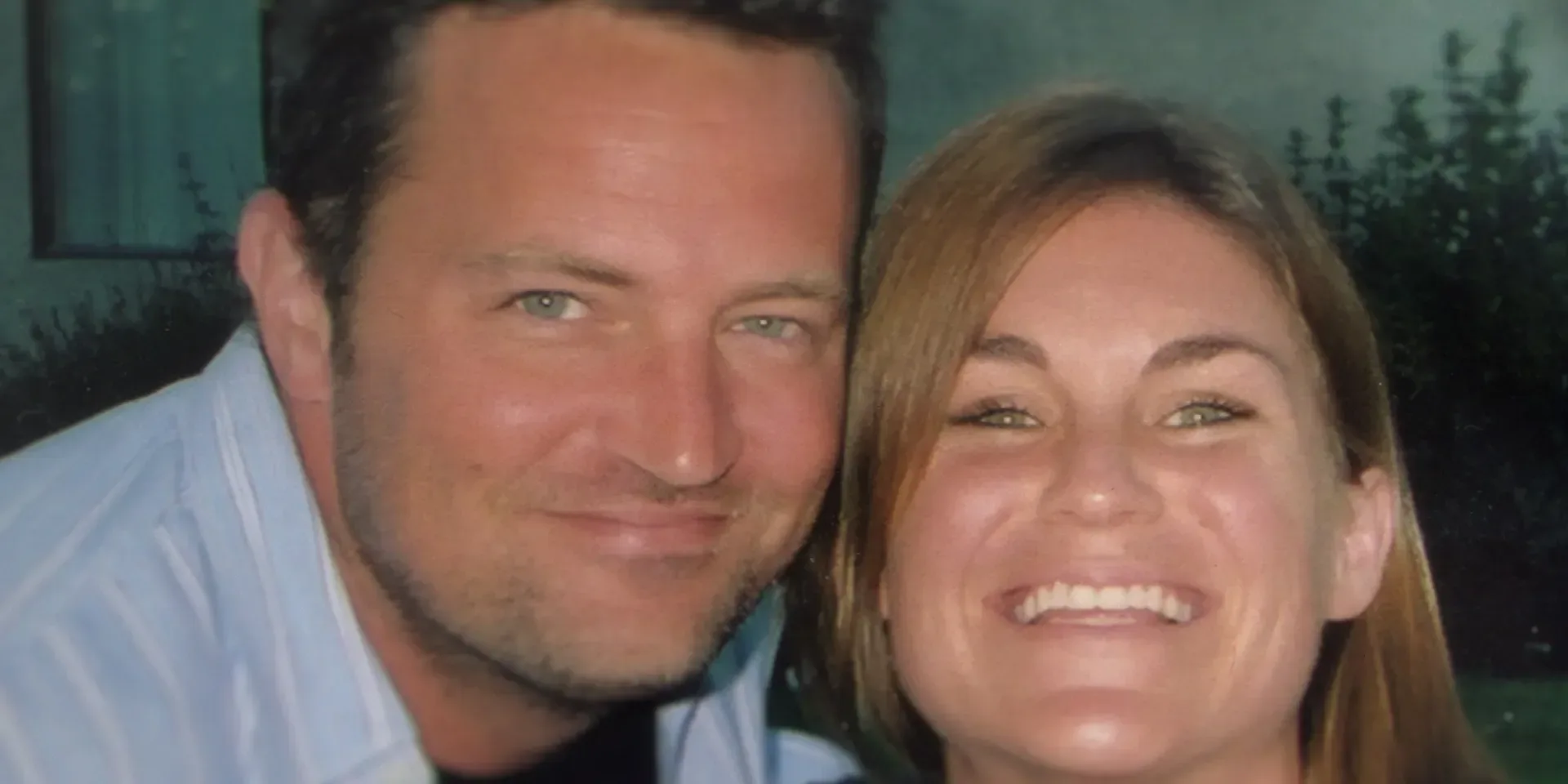
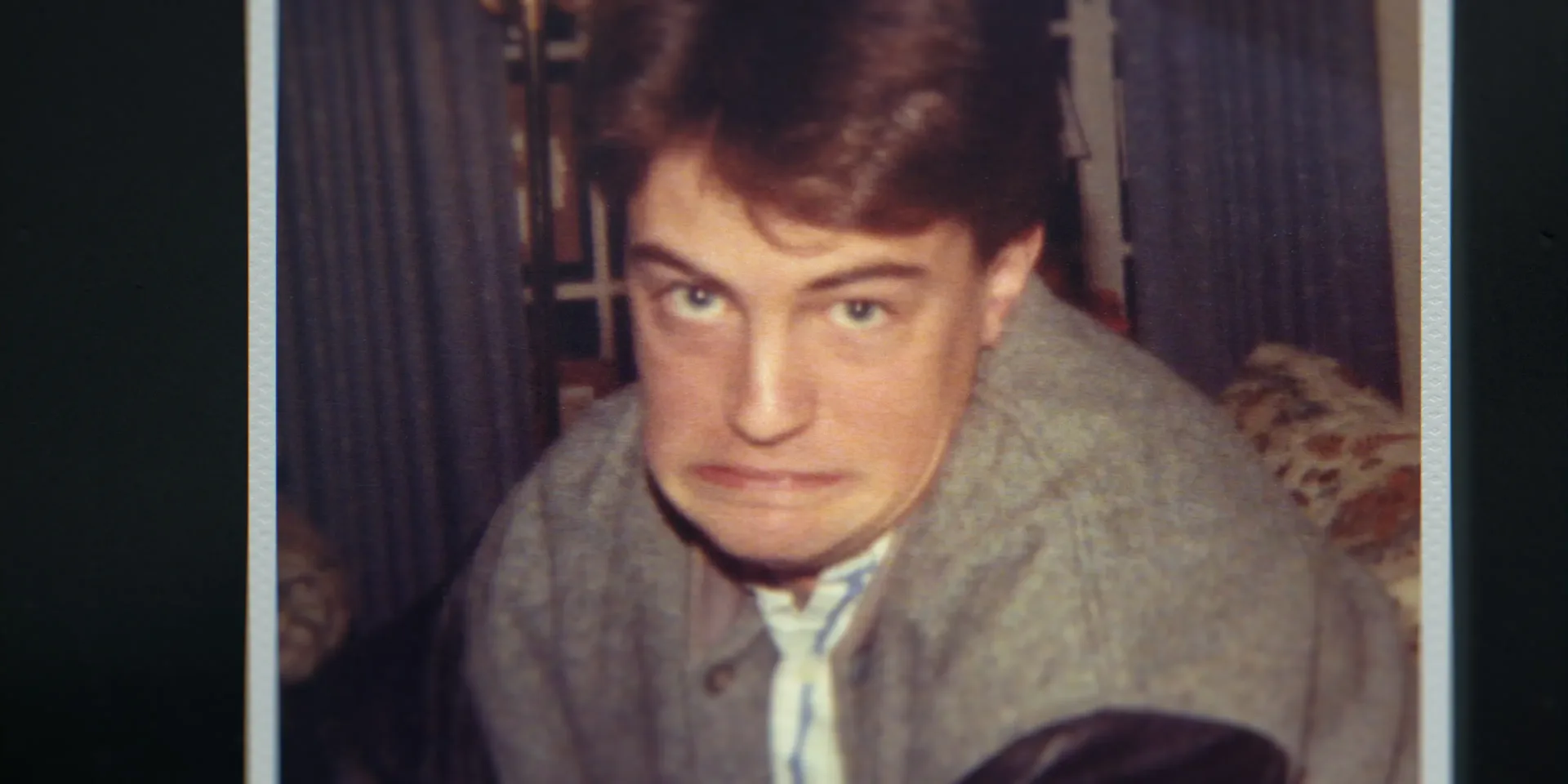
Mia Perry Bowick, Perry’s younger half-sister and a therapist, becomes the documentary’s emotional anchor. Her presence reframes an immensely familiar performer as a brother within a blended family, a person who had felt unmoored amid the separate households of his remarried parents, and a loved one whose pain became public property. That framing matters because it refuses to stop at the familiar image of Chandler Bing: the sharply timed joke, the delivery, the cultural ubiquity of Friends.
For more context, explore Jon Stewart Skewers Trump’s Nicki Minaj Remarks and a Bitter Ohio Campaign Ad on The Daily Show.
Bowick is joined by friends Roger Castillo and David Pressman, who remember Perry’s life before his global breakthrough, including evenings spent with Perry and Azaria at West Hollywood’s Formosa Cafe. Jonathan Lynn, who directed Perry in The Whole Nine Yards, is among those able to discuss the performer’s craft. Other contributors bring different forms of closeness: former girlfriends, fellow people in recovery and a younger person Perry met during one of his treatment stays.
The result is less an attempt to solve an unknowable private person than a collection of accounts from those who saw the practical reality that audiences often do not: concern, disappearance, hope, recovery, relapse and the uncertainty that surrounds all of them. It is a modest structure, but it suits the material. Perry’s life does not need a manufactured mystery. The tragedy is in how much was visible, how much Perry later discussed himself, and how hard recovery remained anyway.
What the series adds—and what it does not claim to add
Viewers familiar with Perry’s 2022 memoir and his public discussions of recovery will recognize many of the broad facts. The docuseries does not hinge on a sensational new revelation, and that restraint is one of its stronger qualities. Rather than pretending it has uncovered a secret key to Perry’s life, it adds testimony about what established events looked and felt like from nearby.
That distinction is important in a documentary about addiction. A bombshell can produce headlines, but it can also reduce a chronic, recurring condition to a single shocking incident. Robertson’s series instead emphasizes duration. Perry first took prescribed pain medication after an on-set injury while filming 1997’s Fools Rush In. The documentary follows the long stretch after that point: detox, periods of sobriety and relapses, with addiction increasingly affecting both health and work.
In this context, relapse means a return to substance use after a period of reduction or abstinence. It should not be mistaken for proof that recovery was insincere or meaningless. The series’ structure appears designed to show the opposite: recovery can be real, effortful and beneficial without progressing in a clean, permanent line. That is why the repeated attempts matter. They are not side plots on the way to a celebrity tragedy; they are the central story.
The show also avoids a troubling shortcut that modern documentaries sometimes take when their subject is no longer alive. Perry’s voice is heard through previously recorded, public material rather than any simulated or AI-generated recreation. Archival interview clips and portions of his screen work supplement the new conversations. This formal simplicity is not flashy, but it preserves a useful boundary: the production does not put imagined words in Perry’s mouth.
Fame is context, not an answer
Friends necessarily occupies substantial space. Writer Jeff Strauss and former NBC Entertainment president Warren Littlefield provide institutional context for the sitcom that turned Perry into a household name. Yet the docuseries reportedly gets through the show’s run by its midpoint rather than making it the entire destination. That decision allows the later chapters of Perry’s life to have their own weight, including efforts to establish a post-Friends career, such as Studio 60 on the Sunset Strip, while navigating addiction’s interference with work.
It is an effective correction to the simplistic logic that wealth, recognition and professional accomplishment ought to fix every other part of a person’s life. Perry himself had reflected publicly on wanting fame when he was young. The documentary places that ambition alongside the cost of having his image, performance and apparent health subject to mass scrutiny. Success may supply resources and platforms, but it does not remove illness, create intimacy automatically or guarantee stability.
The 2021 Friends reunion is used to illustrate that divide. Perry experienced anxiety around the event and was hurt by online commentary about his appearance and mannerisms. The series says viewers did not know he was still recovering from his 2018 coma and its complications. That context does not turn every online reaction into the cause of his suffering. It does, however, reveal the cruelty of treating a visibly changed person as an object for instant assessment when the fuller medical reality is hidden.
The 2018 medical crisis followed sepsis caused by opiate use. Sepsis is the body’s extreme response to an infection and can become life-threatening; in Perry’s case, the resulting coma stands as one of the documentary’s clearest reminders that this was not merely a cycle of tabloid drama or career turbulence. There were profound physical stakes.
The difficult transition from personal grief to legal facts
The final portion turns to the circumstances of Perry’s death. It addresses convictions involving people who supplied drugs to Perry, as well as his live-in assistant, Kenneth Iwamasa, who administered the fatal dose. A former U.S. Attorney helps lay out the legal material.
That factual shift can feel abrupt after the series has spent so much time in close, emotional testimony. Yet there is a reason it cannot be omitted. Documentary storytelling about a death must distinguish personal interpretation, grief and moral anger from the record of what happened. The legal details also prevent the ending from becoming abstract. Perry’s death was not simply the inevitable final chapter in a generalized narrative of “celebrity addiction”; it involved specific conduct, specific people and criminal cases.
Bowick’s response adds an explicitly personal and ethical dimension. She condemns Iwamasa’s enabling and argues that Perry’s family should have been alerted to his ketamine use. The documentary does not need to flatten her grief into a neutral legal summary. At the same time, viewers should recognize the difference between a relative’s forceful moral account and the documentary’s presentation of the convictions. Both belong in a portrait of consequences, but they do different work.
Ketamine is a drug whose role in Perry’s death is central to the series’ closing account. Here, its significance is not technical spectacle. It represents the most devastating end point of a broader story about dependency, treatment, physical vulnerability and the people around someone in crisis. The show’s decision to arrive at those legal details late means they are not allowed to eclipse the person who lived before them.
A restrained documentary about an unrestrained public image
There is a tension at the heart of any Perry documentary. His best-known work is associated with comfort viewing, familiar jokes and the sort of television that audiences revisit to feel better. A series about addiction, failed recovery and loss must acknowledge that beloved persona without exploiting the contrast between sitcom warmth and real-world pain.
The One About Matthew Perry appears most effective when it resists easy transformation. It does not propose that Perry was secretly nothing like the performer people admired, nor does it treat talent as a redemptive excuse for the damage caused by addiction. The contributions from family and friends leave room for both the artistic gifts and the suffering. That balance is tougher, and more honest, than a commemorative special built only from praise.
It also explains why the lack of famous interviewees does not sink the project. Their perspectives might have supplied production anecdotes or a stronger sense of the industry’s view of Perry. But this is not principally a show-business chronicle. It is an account of a person’s long illness and the people who kept trying to reach him, help him and understand what was happening.
For audiences expecting a cache of never-before-heard industry stories, the series may feel intentionally unshowy. For audiences prepared for a painful, direct examination of addiction and grief, that restraint is its defining feature. All three episodes of The One About Matthew Perry are streaming on Netflix.