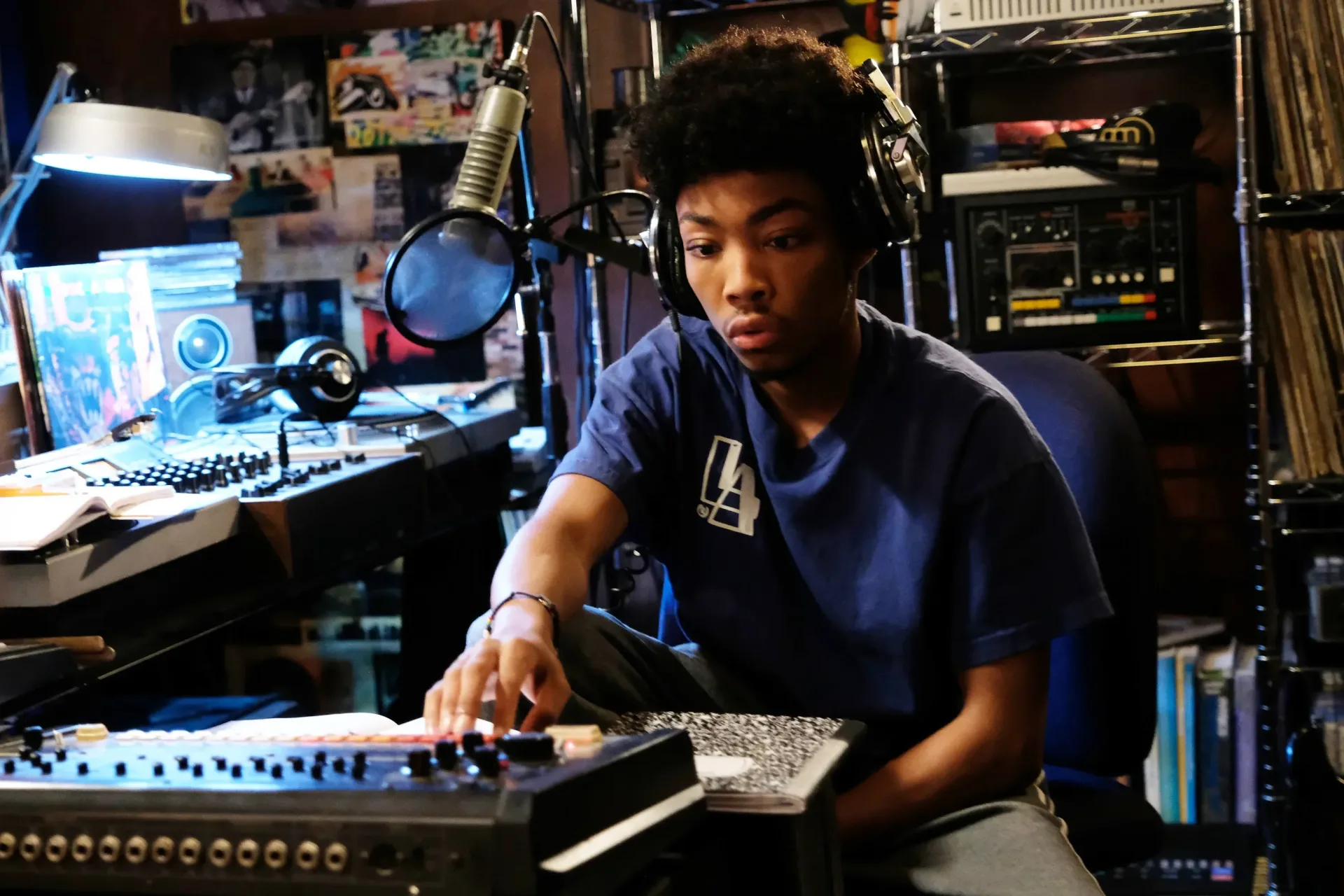
‘The Drop: A Snowfall Saga’ has a daunting job built directly into its name. It returns viewers to the world of Snowfall, the South Los Angeles crime drama that ran for six seasons from 2017 through 2023, while jumping ahead to 1990 and changing the center of gravity entirely. The previous series was rooted in the crack cocaine economy. This new story looks to the early gangsta rap era, where record labels, local radio, emerging artists and street-level danger all occupy the same increasingly volatile map.
That shift gives the FX drama a distinct identity rather than making it a simple continuation. The new series is scheduled to premiere on FX and Hulu on September 8, 2026, at 9 p.m. ET, with subsequent installments set to air Tuesdays. Created by Malcolm Spellman, The Drop brings back familiar faces in Wanda and Leon, but uses them to introduce a younger generation pursuing an opportunity that is creative, commercial and deeply risky.
Wanda becomes the bridge between two eras
Gail Bean reprises her role as Wanda, now a recovering addict who is determined to create a better future. Her former boyfriend Leon, played again by Isaiah John, is also no longer the dealer audiences knew from Snowfall. He begins at the edge of the new narrative before Wanda brings him into a plan that could change all of their circumstances.
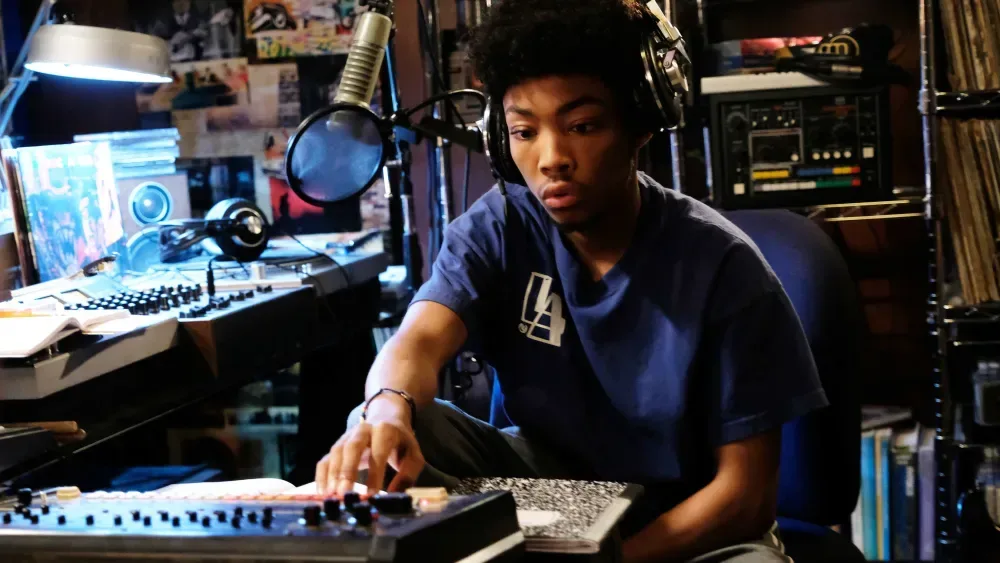
Wanda’s central ambition is to pair her 19-year-old cousin Lamarr, an aspiring producer played by Asante Blackk, with Artillery, an underground rapper portrayed by Simmie “Buddy” Sims III. Sims III is also a recording artist who performs as Buddy. Artillery arrives with a growing reputation and a provocative song about a police officer’s death, a record that brings attention but also intensifies the hazards surrounding him.
The series gives Wanda a particularly compelling role in the machinery of the music business. She is not presented as a passive observer of Lamarr and Artillery’s potential. Instead, she pushes for access, seeks out decision-makers and tries to turn raw talent into an actual career. Her route goes through Darryl, a money man played by Brandon Mychal Smith, and Jenny, the label boss played by Isidora Goreshter.
There is an especially clear thematic echo of Snowfall in Wanda’s approach to releasing music. She sees the value of giving people a taste of something first, betting that a strong response will produce demand. It is a marketing instinct with obvious parallels to the distribution strategies that shaped the earlier show’s drug-trade story. The product is different; the underlying calculation about access, scarcity and momentum is not.
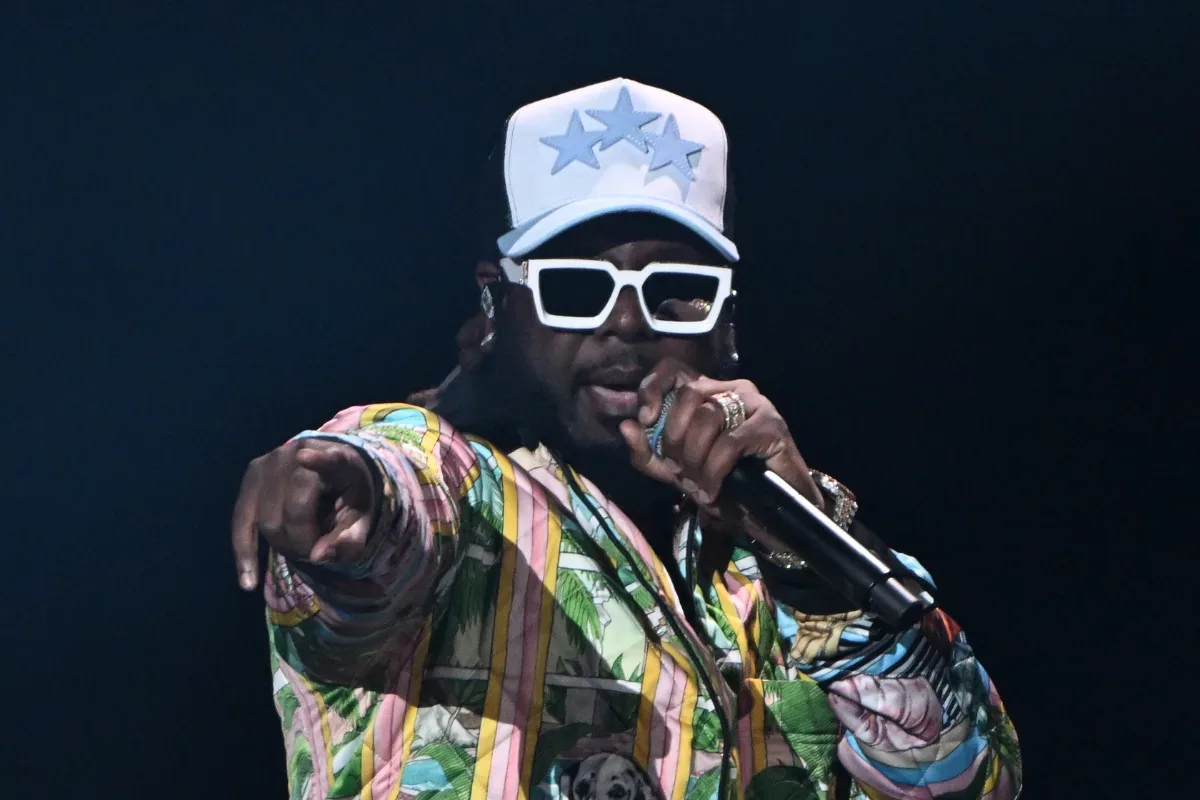
That connection makes The Drop feel less like a detached brand extension and more like a study of how survival skills can be translated, sometimes uneasily, from one informal economy into another. For more on the stakes that can surround music-business money and ownership, see this look at T-Pain’s royalty dispute with Konvict Entertainment.
A vivid 1990 South Los Angeles setting
The major asset of The Drop is its location and period atmosphere. South Los Angeles is not simply a familiar backdrop for plot mechanics. Palm-lined roads, Craftsman homes, bright concrete and the lived-in geography of the city help establish why this place could produce a musical movement with enormous cultural influence. The show’s visual interest in Los Angeles is notable at a time when productions do not always shoot in or linger on the city with this degree of attention.
Related coverage includes ‘The Drop: A Snowfall Saga’ Finds Its Rhythm in South L.A., Even When the Drama Wavers.
The series also recognizes that gangsta rap did not emerge in a vacuum. Its world includes a record-label structure that is still being shaped, artists trying to convert local buzz into reach, and a community facing the pressures of gang conflict. Artillery’s connection to the Bloods places him in the middle of an escalating clash with the Crips, one that threatens not only those directly involved but civilians who happen to be nearby.
The danger is not framed as abstract atmosphere. Artillery is pursued by police officers seeking retaliation, while he and Lamarr are attempting to keep their musical momentum alive. That tension should make the rapper one of the most essential figures in the drama: his art has commercial value, his safety is in jeopardy, and every decision around him carries possible consequences beyond a recording booth.
Early episodes, however, reportedly spend comparatively little time building Artillery as a person beyond his music, gang affiliation and immediate predicament. The same issue affects Jenny, who has her own potentially rich conflict as a Los Angeles native trying to update her father’s label. Both characters seem positioned to illuminate the show’s core topic—the difficult conversion of local expression into a music-industry enterprise—yet their stories initially appear less developed than the surrounding world.
Family history competes with the music-industry plot
Much of the dramatic attention instead goes to Lamarr’s family. He and his older brother James, played by Peyton Alex Smith, were raised by their grandparents after the death of their mother, a musician. Mykelti Williamson plays their grandfather, Big Daddy, who owns a laundromat, while Nicki Micheaux plays Gerty, the grandmother who remains strongly opposed to Lamarr and Wanda pursuing a musical future.
Gerty’s position is not merely generational skepticism about a young person trying to break into entertainment. The family’s loss has left her convinced that chasing music carries a terrible price. That creates an understandable emotional barrier around Wanda’s plan, as well as friction between Lamarr and James. Yet the show’s emphasis on this grief can pull focus from the more immediate and unusual material about radio promotion, artists’ development and label power.
An episode devoted to the family’s past broadens the timeline further through scenes spanning multiple decades. The material includes 1950s Los Angeles religious revival culture before moving through 1970s fashions, music and community life. Those glimpses of Black migration, faith and artistic tradition add texture to the family’s experience. They also show how well suited the series is to tracing cultural history through a grounded local perspective.
The drawback is structural. When the backdrop is carrying more excitement than the foreground drama, a show can feel as if it has identified its best subject but has not fully committed to it. The opening stretch of The Drop appears strongest when it lets the music scene, the city and Wanda’s instinct for advancement interact. It is less persuasive when the central figures most directly tied to that scene are left waiting for fuller characterization.
Why the spinoff’s premise still has room to grow
Snowfall was a relatively quiet success in an unusually crowded television landscape. Co-created by John Singleton, the director of Boyz n the Hood, it did not depend on a major awards haul to endure. Damson Idris became its clearest breakout star, but the series itself grew steadily and completed a six-season run—an increasingly uncommon result for an original drama. A spinoff arriving three years after its finale is therefore meaningful evidence that the setting still contains stories worth telling.
Spellman did not work on Snowfall, though his past television work includes The Falcon and the Winter Soldier. His task here is not to recreate the parent series beat for beat. By putting Wanda’s hustle at the narrative center, The Drop can explore a different kind of ambition: not control of a criminal empire, but access to an industry where talent, distribution, reputation, capital and danger all collide.
There is also room for the show to interrogate its own grandest ideas. Wanda believes one Artillery song, heavily sampling Chaka Khan’s “Ain’t Nobody,” could become a shared cultural force powerful enough to cool gang conflict. That is a huge claim for any fictional track to carry. Music can absolutely create connection, identity and visibility; asking one single to solve entrenched violence is a much heavier proposition. The series will need to earn that faith rather than simply declare it.
Still, its ingredients are promising: Bean’s Wanda has purpose and initiative, Blackk’s Lamarr represents a young producer’s uncertain entry point, and Sims III’s Artillery has the potential to become a fuller portrait of an artist navigating fame under pressure. Add a carefully realized South Los Angeles setting and an era where musical invention was becoming a commercial battleground, and the spinoff has a strong foundation. Its next challenge is to give every major player as much specificity as it gives the city around them.
Key details
- Series: The Drop: A Snowfall Saga
- Creator: Malcolm Spellman
- Setting: South Los Angeles in 1990, four years after the end of Snowfall
- Premiere: FX and Hulu, September 8, 2026, at 9 p.m. ET
- Returning characters: Wanda (Gail Bean) and Leon (Isaiah John)
- New central characters: Lamarr (Asante Blackk), Artillery (Simmie “Buddy” Sims III), James (Peyton Alex Smith), Darryl (Brandon Mychal Smith), Jenny (Isidora Goreshter), Big Daddy (Mykelti Williamson) and Gerty (Nicki Micheaux)