The Drop: A Snowfall Saga may be built around rap’s promise of self-determination, but Malcolm Spellman’s stated plans for its future put the danger squarely in the machinery surrounding the music. The showrunner sees record-label power, gang pressure and money pulling at a family that is trying to build something of its own in 1990s Los Angeles.
There is an important caveat before treating any of that as a roadmap: FX has not renewed The Drop. Spellman has said he has not heard from the network about another season. The ideas discussed for seasons two and three are therefore creative intentions for a continuation, not confirmed production plans, release dates or episode orders.
That distinction matters because the first season is framed as an entry point. It establishes the family and starts to turn more decisively toward the music business in its later episodes. A potential continuation would not merely use rap as period flavor or a route to fame. Spellman’s emphasis is on the way an industry can strain the people closest to an artist and turn artistic opportunity into a survival problem.
“The music business destroys families, and this family will spend its entire existence in this show trying to survive.”
What “label power” means for the story
In this context, label power means more than an executive choosing a single or a playlist placement. It describes leverage: the ability of a company and its agreements to shape an artist’s work, money and options. Spellman’s proposed direction would examine manipulation at that level, alongside the outside force exerted by gangs and cash.
The supporting context supplied by Buddy, the Compton rapper who plays Artillery, gives that idea a concrete human scale. He has described signing away intellectual property and learning that budgets approved through a label could later be treated as money owed. Intellectual property is the ownership interest in a creation, such as music or writing. If an artist signs away rights, control over work and its potential value can move elsewhere. A label-backed budget can sound like investment, but the concern Buddy described is that it can also become an obligation charged back to the artist.
That is a dramatically useful tension because a character can appear to be moving forward while acquiring fresh constraints. Better resources, recordings and visibility do not automatically mean greater independence. For a family-centered series, the consequences do not have to stay in a contract meeting: debt, divided loyalties and changed priorities can alter relationships at home.
The premise connects with a broader question around success in music: who gains authority when a new artist gets closer to the industry’s institutions? The show’s possible answer appears unlikely to be simple. A label is one pressure point, while street expectations and the family’s own needs create others. The potential conflict is not just whether someone becomes successful, but what must be surrendered—or defended—to get there.
That focus also makes the personal cost that can accompany success a relevant wider pop-culture lens. In The Drop, the stakes are specifically rooted in its characters’ family ties, Los Angeles setting and music-business ambitions.
Wanda’s shift from survival to agency
Gail Bean returns as Wanda Bell, a character whose earlier journey gives the spinoff considerable emotional history. In Snowfall, Wanda struggled with addiction, entered recovery and eventually left for Ghana with Leon Simmons. In The Drop, her path is not defined by Franklin Saint’s operation. She is building a team around her own ambition and pursuing a place in rap.
That change is central to the show’s potential music-industry story. Wanda is no longer presented simply as someone exposed to the consequences of another person’s power. She has her own goals, connections and responsibilities. That can be empowering, but it also means she may have to make decisions within the same exploitative systems the show wants to examine.
Her position supplies a more complicated version of agency than a straightforward escape narrative. Building a team indicates leadership and purpose, yet any artist or manager trying to obtain leverage can be forced to negotiate with people who have more institutional power. If future seasons pursue Spellman’s outline, Wanda’s challenge may be to grow without reproducing the control she has spent so much of her life trying to escape.
Leon’s community work creates a parallel path
Isaiah John reprises Leon Simmons, whose current work is centered on serving the community through a legal clinic. That puts Leon on a parallel track to Wanda’s music ambitions. He is trying to make an impact through organized local service while Wanda pursues an industry where deals, visibility and ownership can dictate a person’s future.
The contrast is meaningful without requiring the two characters to become opponents. Leon’s legal-clinic work represents a direct response to community need, while Wanda’s route through rap may create a different kind of platform and economic opportunity. Their relationship, along with Wanda’s family, has been identified as a significant part of the new story.
In practical story terms, Leon’s role may provide a way to show the consequences of power from outside the recording environment. The supplied material does not establish specific future plots for him, so it would be premature to predict how the clinic will intersect with the label storyline. What is established is that his character remains invested in community service, and that commitment sits beside a family increasingly exposed to money, music and criminal pressure.
Lamar, James and Artillery widen the pressure points
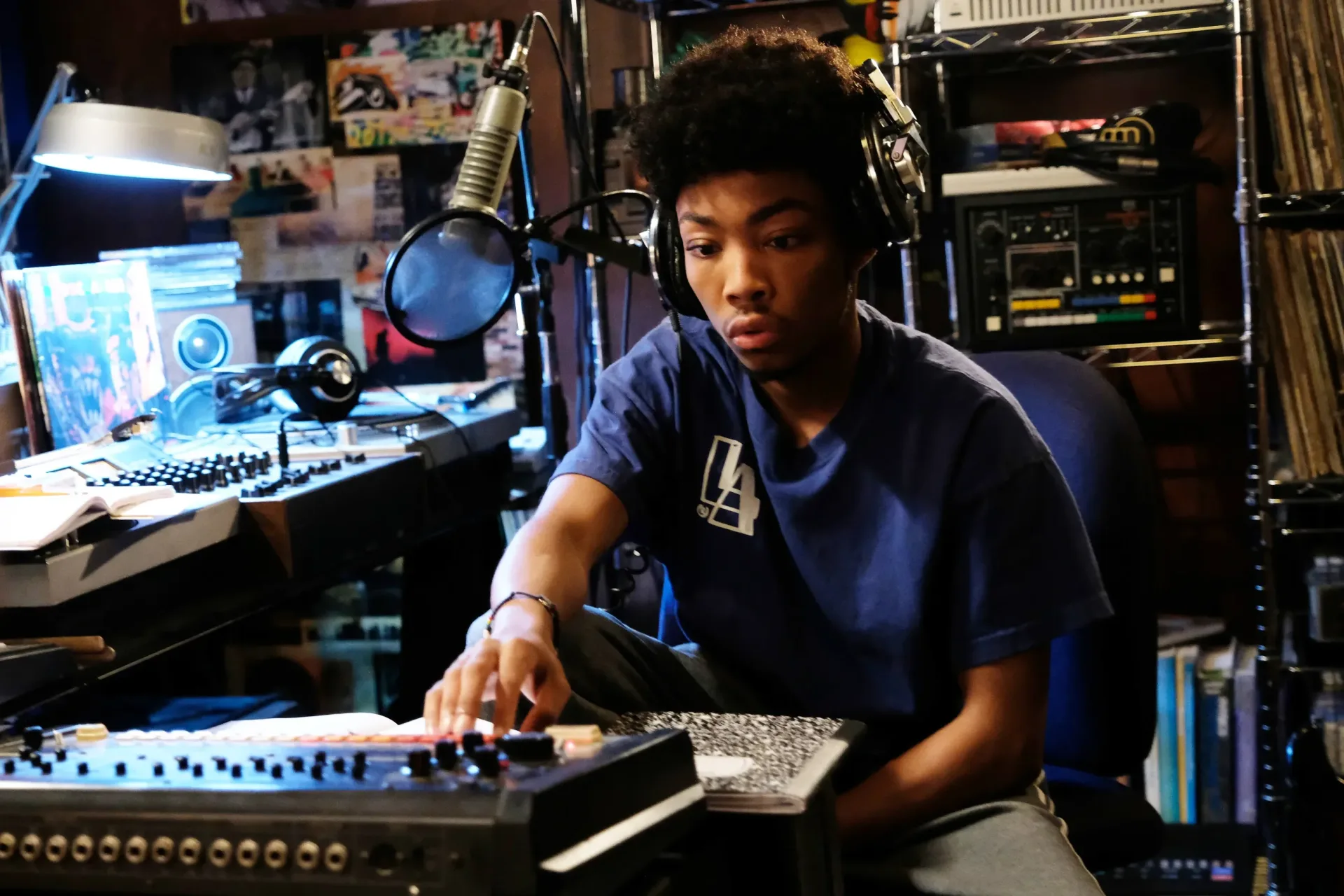
Music runs through Wanda’s family. Asante Blackk plays her younger cousin, Lamar Kinsey, a talented performer Wanda has encouraged for years. Lamar’s ability is therefore not an abstract discovery by an industry scout; it has family history behind it. That makes the prospect of outside control especially fraught. Success for Lamar could validate Wanda’s belief in him, while also putting something personal into the hands of people focused on commercial value.
Peyton Alex Smith plays Lamar’s older brother James, who faces pressure from Big Daddy to take over the family business. The supplied details do not define every aspect of that business, but they establish a clear competing expectation: James is being pushed toward an inherited responsibility while Lamar’s talent points toward another future. The brothers’ situation offers the show a family-level version of the central theme—individual ambitions colliding with structures that expect obedience.
Artillery brings yet another angle. Played by Buddy, the character is described as a gifted writer dealing with street recognition and hostility from the LAPD’s CRASH unit. His songs place him in conflict with forces that reach far beyond the studio. Where Lamar’s arc is tied closely to Wanda’s encouragement and his brother’s obligations, Artillery’s position emphasizes how an artist’s public identity and writing can draw dangerous attention.
CRASH, as presented in the series material, is the LAPD unit associated with the hostility Artillery faces. The information available does not provide a specific storyline or outcome involving the unit. It does make clear that Artillery’s conflicts cannot be reduced to label negotiations: he is navigating the stakes attached to recognition in his environment as well.
A continuation would deepen, not replace, the Snowfall connection
The Drop: A Snowfall Saga is set in 1990s Los Angeles, following a predecessor that focused on the city’s crack epidemic. Wanda and Leon’s return provides continuity, but the spinoff’s focus marks a shift in terrain. The story moves toward rap, family enterprise and the precarious forms of power available to people trying to define themselves beyond Franklin Saint’s world.
That does not mean the past is irrelevant. Wanda’s recovery and Leon’s commitment to the community carry forward the lived consequences of the earlier story. The newer series changes the question from how people endure a criminal operation’s reach to how they might build a future when entertainment-industry leverage, money and gangs all claim a stake in that future.
For now, that future exists as Spellman’s stated creative direction rather than an approved renewal. The clearest takeaway is not that seasons two and three are on the way, but that the team has identified a sharp thematic engine should the show continue: talent may open a door, while ownership, family loyalty and institutional power determine what waits on the other side.