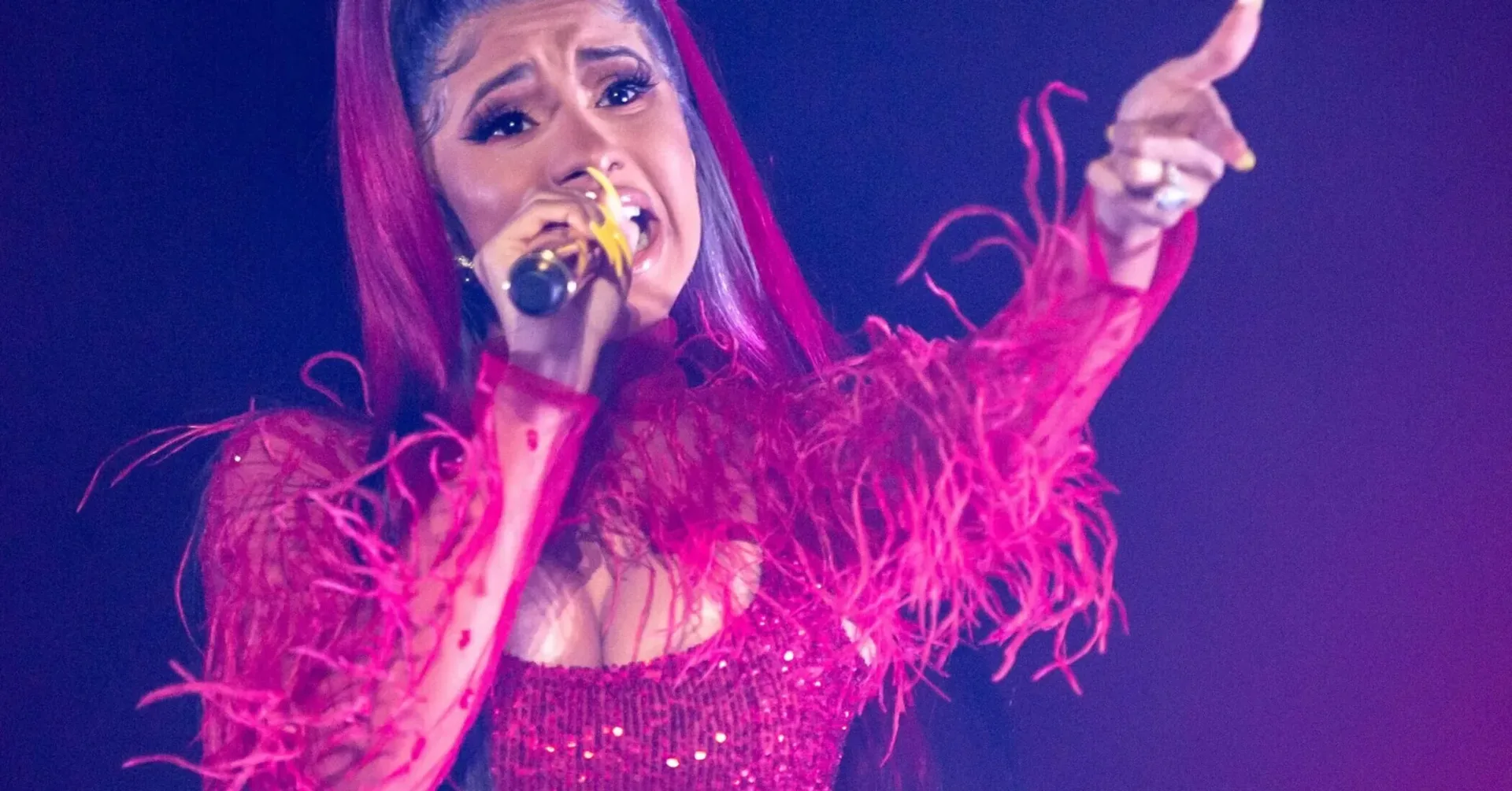
Cardi B has spoken candidly about the emotional strain she says has accompanied a major high point in her career. In comments shared during a livestream, the rapper described feeling isolated by jealousy and resentment within her own circle, rather than by criticism from strangers online.
At 34, Cardi B said she is still learning hard lessons, including lessons that come with professional success. Her focus was not simply on fame, money or public scrutiny. Instead, she described the unsettling experience of realizing that people she cares about may not be happy when things go well for her.
“It’s so crazy that at the age of 34, I’m still learning lessons. I’m still taking L’s and I’m still learning lessons,” Cardi B said.
Success can change the dynamics around it
Cardi B’s central point was about proximity. A harsh post from an anonymous account is easy to identify as hostility; disappointment from someone in a trusted personal or professional orbit can be much harder to navigate. She said she has been experiencing jealousy and efforts to “humble” her, and made clear that she does not see those feelings as coming only from distant detractors.
She described success as frightening because it can make motives difficult to read. Even a positive update, such as signing a new contract, can feel risky to share if the people hearing it may privately resent the achievement.
“Being successful, it is so scary. You just don’t know who got that secret animosity for you,” she said. “It’s like you cannot even express, hey, I got a new contract because deep down they’re upset that you getting it.”
That distinction matters. Cardi B was not naming people or offering a public accounting of specific disputes. Her remarks were broader: an account of what distrust can do to a person when professional wins no longer feel safe to celebrate in private.
What she means by feeling “lonely at the top”
The phrase “lonely at the top” is often used as a shorthand for the distance created by status, responsibility or visibility. In Cardi B’s remarks, it has a more personal meaning. She said she has never been at a higher point in her career or her life, yet that rise has come with a desire to retreat.
She said she wants to change her number and go away, a statement that conveys exhaustion and a wish for firmer boundaries. It should not be treated as a formal statement of a planned break, career change or specific action. What is clear is that Cardi B described feeling pushed toward isolation by the behavior she perceives from people around her.
“It’s lonely at the top. I have never been as high as I am right now in my career, in my everything. And it just makes me want to be alone for real,” she said. “I want to change my number and just go away. Y’all turning me so evil and so dangerous.”
Her language about becoming “evil and dangerous” was tied to the effect she says repeated attempts to undermine her have had on her outlook. She contrasted that feeling with how she sees her earlier self, saying she used to be nice and kind but now feels herself becoming colder and meaner.
A boundary-setting message, not a list of allegations
There is a temptation around celebrity livestream comments to turn every broad observation into a guessing game about unnamed friends, collaborators or family members. Cardi B did not identify an individual in these remarks, and the available comments do not establish who, specifically, she believes has acted against her.
The more grounded reading is that she is expressing the cost of having to second-guess relationships. “Secret animosity,” as she put it, is not necessarily a claim about a single event. It describes uncertainty: the fear that praise may be insincere, that a celebration may conceal resentment, or that someone’s apparent support may have conditions attached to it.
That is also why the comments land beyond celebrity culture. The scale is unusual—Cardi B is discussing a career that she says is at its highest point, following a tour reported at $70 million—but the emotional issue is recognizable. Career advancement can shift power, money, access and expectations inside a relationship. When those changes are not discussed honestly, success can become a source of tension rather than a shared milestone.
The practical implication: privacy can become protection
Cardi B’s comments suggest a narrowing of access, at least emotionally. Wanting to change a phone number is a familiar symbol of that impulse: reducing the number of people who can reach you, limiting the flow of information and deciding more carefully who gets immediate access to good news and difficult moments.
For a public figure, that impulse is especially understandable in a practical sense. Personal relationships overlap with teams, contracts, publicity and public commentary. A private disappointment can quickly become material for public speculation. But the larger theme is not unique to public life: boundaries are not necessarily a punishment for other people. They can be an attempt to preserve trust by being more deliberate about where vulnerability is placed.
That does not mean isolation itself solves the problem. Cardi B’s own comments show the tradeoff. Pulling away may feel protective when trust is in question, but it can also intensify the loneliness she described. Her livestream did not present a neat answer. It presented a frank acknowledgment that success has not insulated her from hurt.
Why the comments resonate now
Public conversation often treats professional success as an uncomplicated victory lap. Awards, tours, deals and visible milestones can create the impression that someone has reached a place where ordinary emotional difficulties no longer apply. Cardi B’s remarks challenge that assumption. Her stated experience is that greater success has made some relationships feel less certain, not more secure.
There is also a difference between public criticism and private disappointment. Artists are expected to encounter online negativity and media pressure; those pressures are part of the visible machinery around celebrity. Cardi B spoke instead about the people who are supposed to be closer to the center, where affirmation and honesty ought to be easier to find.
Her willingness to make that contrast public offers a less polished picture of accomplishment. A major career moment can coexist with doubt, suspicion and fatigue. Being successful can expand resources and opportunities while also forcing sharper choices about trust.
Those pressures are part of a wider entertainment business where professional disputes and high-stakes digital platforms remain frequent points of friction. For another recent music-industry legal development, see coverage of RBX’s amended Spotify lawsuit.
What Cardi B did—and did not—say
- She did say that she feels jealousy and attempts to humble her are coming from people in her circle.
- She did say she has reached a new personal and professional high while feeling lonely.
- She did say the situation has made her feel colder and inclined to withdraw.
- She did not publicly identify the people she had in mind in these comments.
- She did not announce a retirement, hiatus or confirmed plan to leave the public eye.
For now, the clearest takeaway is the one Cardi B supplied herself: achievement has not removed the need to learn, recalibrate and protect her peace. Her comments frame that process not as a glamorous side effect of celebrity, but as an ongoing personal cost of navigating success when trust feels uncertain.