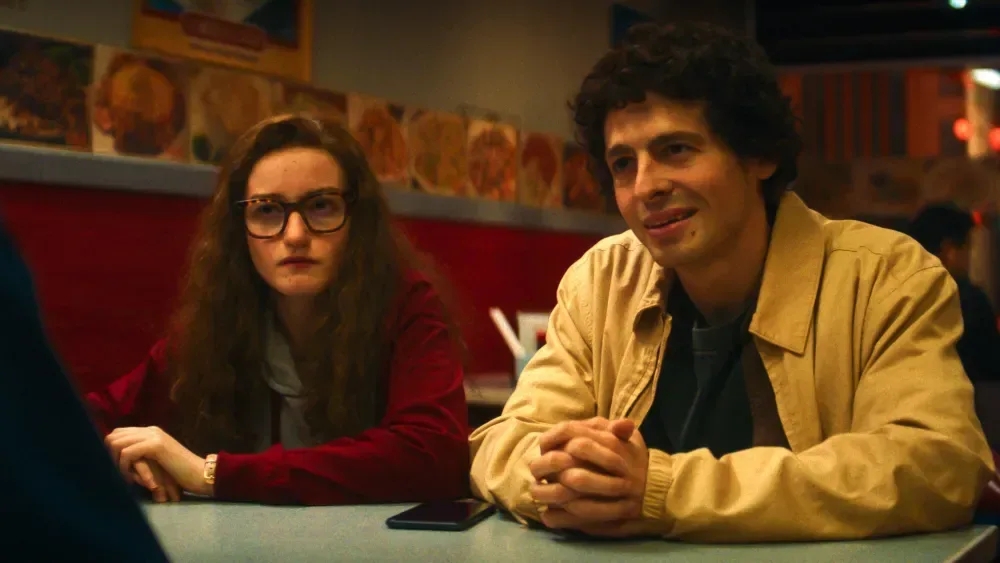
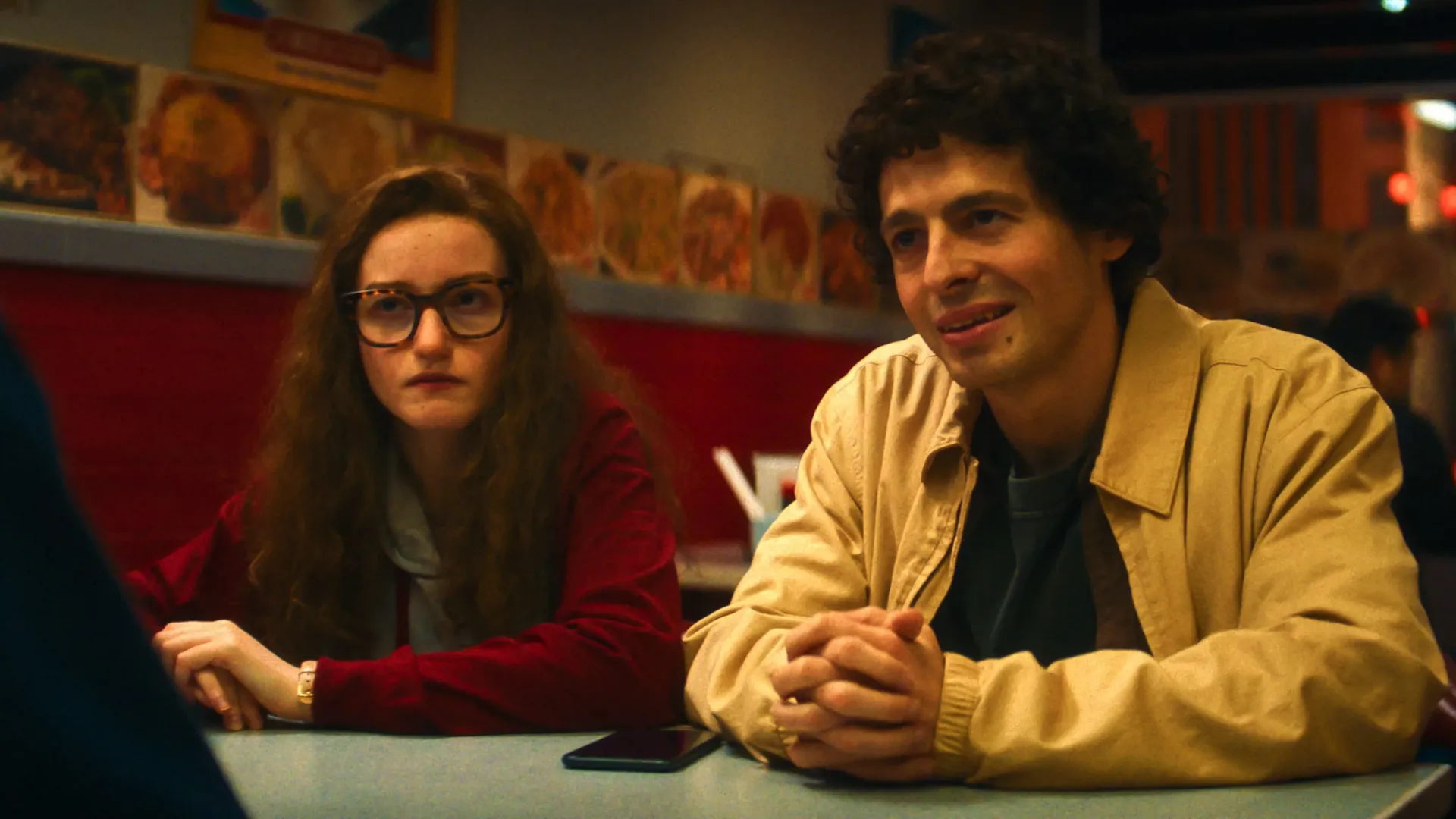
FTX is a story that ought to be tailor-made for a limited series: extraordinary money, extreme confidence, opaque technology, a fast-growing circle of loyal insiders and a collapse that exposed the peril beneath the image. Netflix’s The Altruists has eight hourlong episodes to make that saga legible. Yet the show’s central creative decision is to narrow the tale into the unstable romance between FTX founder Sam Bankman-Fried and Caroline Ellison, the former leader of affiliated hedge fund Alameda Research.
That relationship is not irrelevant. It provides a human route into the entwined companies and the catastrophic conflict at their center: FTX used billions of dollars in customer funds to cover Alameda’s trading losses. But making the pair’s on-and-off connection the show’s emotional engine comes at a cost. The Altruists too often treats the machinery, beliefs and public mythology surrounding FTX as scenery. The result is a drama with plenty of incident, recognizable names and a plainly consequential real-world subject, but little sustained clarity about why the FTX collapse was distinctive.
A story with more than one center
Created by Graham Moore and produced by Higher Ground alongside Vox Media Studios and Scoop Productions, The Altruists moves between FTX’s early rise and its downfall five years later. The latter timeline is signposted by an FBI office raid, a familiar flash-forward device that tells the audience where events are heading before the earlier plot catches up.
Anthony Boyle plays Bankman-Fried, while Julia Garner plays Ellison and also serves as an executive producer. The supporting cast includes Paul Reiser and Robin Weigert as Sam’s parents, Joe and Barbara Bankman-Fried; Karan Soni as Nishad Singh; and Alex Lawther as Sam Trabucco. Those names point to the scale of the story the series could tell: a network of friends, family, executives and employees around a company that briefly projected enormous influence.
Instead, the show repeatedly returns to Sam and Caroline as a couple. It uses their closeness as a metaphor for FTX and Alameda’s compromised relationship, which is a sound dramatic starting point. But a metaphor cannot replace explanation. The show’s intimate framing makes the collapse feel like the extension of one troubled personal dynamic rather than the outcome of organizational failures with enormous consequences for customers.
There is a tonal mismatch, too. The series is broadly sincere about two people who imagine themselves as morally serious and fundamentally good, even as their decisions grow more damaging. It occasionally makes room for absurdity: an employee’s reaction to the fraud is anger at having been excluded after urging lawbreaking for years. Yet those satirical bursts do not form a coherent approach. The show is neither an unsparing farce about grandiose tech-finance culture nor a sufficiently probing psychological drama. It hovers between modes.
Effective altruism gets a clearer introduction than crypto
The title comes from effective altruism, often shortened to EA. In the series, Sam and Caroline first connect as analysts at Jane Street Capital through an interest in the movement’s “earn to give” idea: accumulating money in order to direct it toward doing the greatest good. EA-branded shirts are a recurring visual marker for characters in that world.
That emphasis gives the drama a potentially valuable angle. The show presents the ideology as a language through which its characters rationalize extreme behavior, including treating maximum-risk choices as mathematically optimal. It also suggests that the group’s reluctance to communicate openly about discomfort enables Sam’s increasingly autocratic behavior and complicates Caroline’s polyamory.
Related coverage includes The Altruists Review: Netflix’s FTX Drama Loses Sight of the Crypto Story.
But the show stops short of interrogating its own premise. It observes that these characters want to do good, then largely treats the pursuit of a personal fortune as the natural route to that goal. A more searching version of the story could ask what happens when moral ambition becomes inseparable from wealth, scale and personal exceptionalism. Instead, moral self-image is mainly presented as tragic irony: the “good guys” who slowly become criminals.
That framing is too generous and too shallow at once. It risks turning ideology into a costume rather than examining how it might shape behavior, loyalty and blind spots. The material contains all the ingredients for a sharper account of certainty dressed up as ethics. The Altruists identifies those ingredients but does not do enough with them.
Crypto remains the show’s biggest blind spot
The clearest weakness is the thin treatment of cryptocurrency and the financial ecosystem in which FTX and Alameda operated. Crypto is not automatically easy television. Financial instruments, exchanges and trading losses can quickly become jargon-heavy; a drama has to translate without pretending its audience has already memorized every term. But avoiding that work does not make the setting more accessible. It makes the stakes less concrete.
An exchange is, in basic terms, a place where customers can trade assets. A hedge fund is an investment operation that trades in pursuit of returns. In this story, the line between the exchange and its affiliated trading firm is crucial, because the use of customer money to address Alameda’s losses is the wrongdoing that should make the crisis intelligible. When the show leaves the systems and incentives around that relationship hazy, it asks viewers to recognize that something is terribly wrong without fully showing how that wrong could happen.
That absence also blunts the historical texture. The FTX collapse came after an era of tech companies selling world-improving idealism and before artificial intelligence became the dominant technology-business obsession. The finale explicitly notes that AI is hotter than crypto, and Anthropic appears in the series’ orbit as an FTX investee. The line underlines how quickly crypto’s period of cultural dominance can seem to have receded.
That transition is worth exploring, especially as new AI products and policy fights keep returning questions about hype, capital and accountability to the foreground. For another current example of the way generative AI has collided with creative industries, see this look at Suno’s artist-likeness filters and the copyright dispute around its tools. The parallels should not be overstated: FTX, cryptocurrency and generative AI are not the same business or the same controversy. Still, The Altruists is right to position its subject within a larger succession of tech narratives built on futurism and confidence.
Where it falls short is turning that observation into drama. Without a stronger picture of what made crypto culture, markets and institutions different, FTX becomes another generic story about brilliant founders, credulous followers and a startup going bad. Those themes matter, but they are not the whole story.
Performances that do not fully solve the characterization problem
Boyle gives Bankman-Fried the traits the scripts emphasize: rapid speech, visible anxiety and a desire for validation. Yet the character is smoothed into a more familiar kind of alienated genius. Several of Bankman-Fried’s stranger public habits are referenced or omitted rather than rendered as meaningful behavior, including the reported tendency to take interviews while playing video games and sleep on an office-floor bean bag. The latter is mentioned in dialogue but not visualized.
Those details would not merely be eccentric decoration. In a series about image and leadership, they could help establish how a founder’s self-presentation becomes part of the institution’s culture. Leaving them at the margins makes the central figure feel less particular. Boyle’s Sam is nervous, clever and emotionally needy, but not fully uncanny or hard to read in the way the role seems to require.
Garner’s Ellison goes in the other direction. Her performance emphasizes nervous laughter, a pronounced voice and the outward signals of awkwardness. The result is vivid but close to caricature. A broader satire might have made that heightened approach feel purposeful; a more intimate study might have asked what Ellison believes, fears or wants when she is not reacting to Sam. Here, the character’s interiority is too often eclipsed by the performance’s visible tics and by the romance itself.
The show makes a pointed choice in presenting Caroline as the first woman Sam sleeps with, a detail that appears devised for the drama. It is emblematic of the adaptation’s priorities. Rather than deepening the public record or clarifying the larger corporate story, it reaches for an intimate beat that makes the relationship more narratively tidy. That may be effective for a conventional melodrama, but it makes an already over-centralized pairing feel even more artificial.
Eight episodes, scattered attention
Time is not the problem. Eight hourlong episodes provide ample room to develop several dimensions of the FTX story. The issue is how that time is spent. Nishad receives an office-romance subplot, while Trabucco gets additional backstory despite having left FTX before the collapse. These threads may broaden the ensemble on paper, but they pull attention from the questions the series has not yet answered.
The family material is another missed opportunity. Nishad offers a cutting explanation for Sam’s need to prove himself, telling him that his parents love him but do not like him. Reiser and Weigert have limited room to establish whether that insight fits the relationship. Consequently, the show raises questions about Joe and Barbara’s faith in their son before and after his arrest without building enough emotional or behavioral groundwork for their choices.
A reporter’s investigation is also briefly floated as a possible framing device, then abandoned. That is not a demand for a procedural; it is a sign of a series that seems aware of alternative ways to organize its material. An investigative perspective could have given audiences a path through the corporate and financial complexity. A family-centered approach could have tested the psychology behind Sam’s self-image. A workplace story could have charted how insiders noticed, ignored or normalized warning signs. The Altruists gestures toward each and commits decisively to none except the romance.
Even the production’s far-flung settings, including Macau and Malta, appear to receive limited visual resources. A drama does not need spectacle to convey scale, but the series’ constrained sense of place adds to the impression that events are occurring in a small emotional bubble. That is especially unfortunate for a company whose reach and spending were central to its public persona, including the Larry David Super Bowl advertisement the show could have used to illustrate FTX’s high-profile marketing presence.
The practical issue for viewers
All eight episodes of The Altruists are streaming on Netflix. Viewers who want a character-led dramatization of Sam and Caroline’s relationship will find a clear, accessible narrative. The cast is strong enough to keep that story watchable, and the show does not lack potentially explosive material.
Viewers hoping for a clear explanation of the FTX failure, however, should calibrate expectations. This is not a comprehensive map of the cryptocurrency industry, the exchange’s operations or the institutional conditions that allowed the crisis to develop. It is a romance-centered account of people inside that story, often at the expense of the story’s defining structures.
That choice gives The Altruists its shape, but it also leaves the series oddly weightless. FTX was not simply a cautionary tale about a bad relationship or the corruption of idealistic young people. It was a sprawling failure in technology and finance whose meaning lies partly in its systems, not just its personalities. The show knows that wider world exists. It just keeps returning to the smaller room.