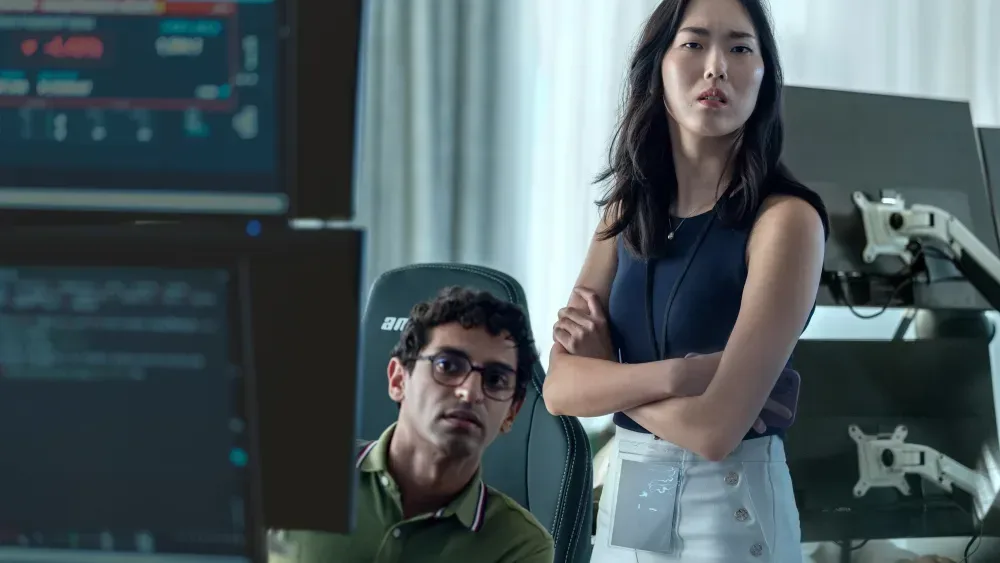
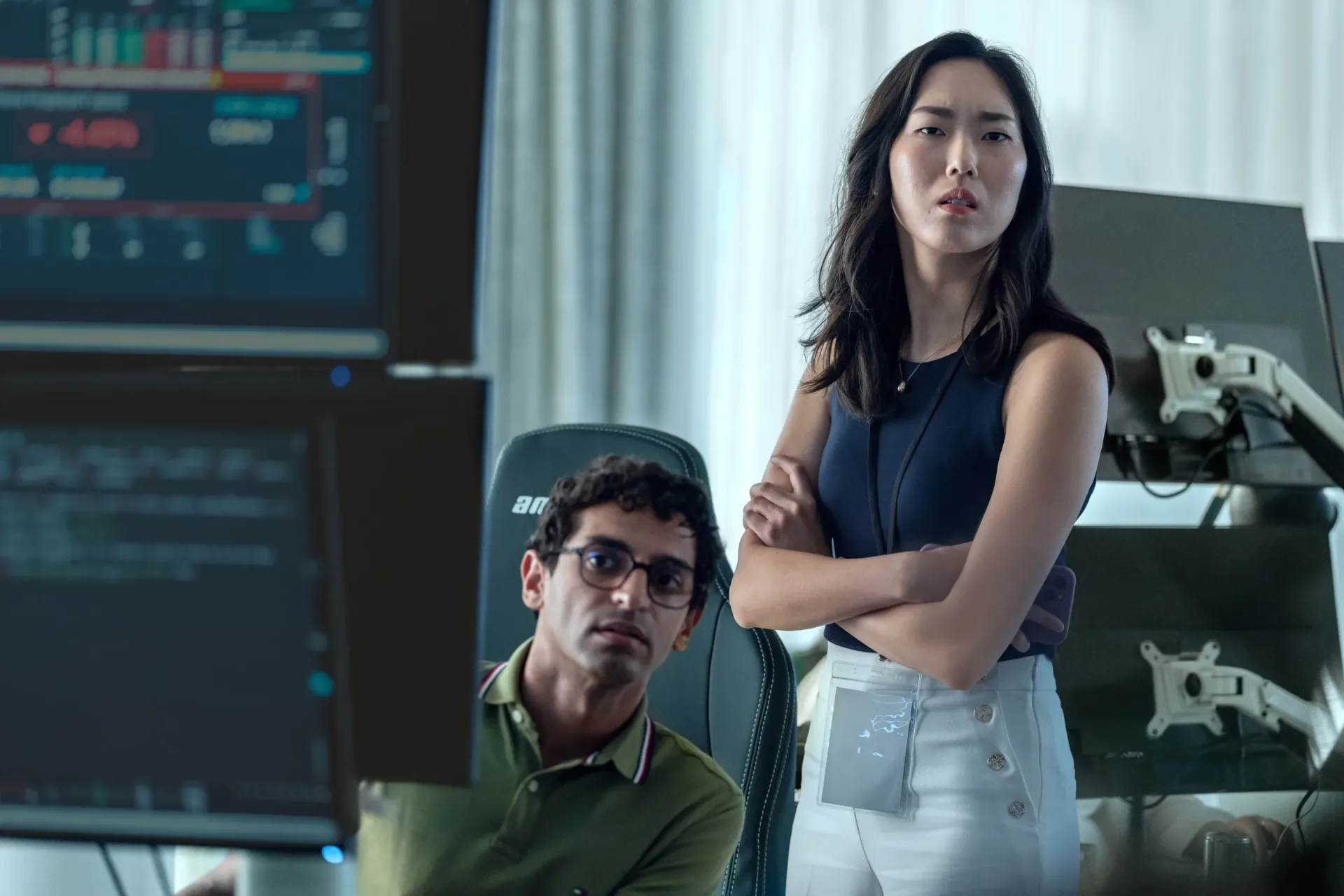
Former FTX COO Constance Wang has criticized Netflix limited series The Altruists, saying she was not consulted about its depiction of her and objecting specifically to the Chinese accent used by actor Madison Hu for the character based on Wang.
In posts on X, Wang said viewers had asked whether Netflix had spoken to her during the development of the series. Her answer was no. She argued that even one conversation could have avoided an accent she says she does not have, characterizing the choice as stereotypical.
“People have asked whether Netflix consulted me. They didn’t,” Wang wrote. “One conversation would at least have saved Madison Hu, who plays me, the trouble of putting on a Chinese accent I don’t have.”
Her comments raise two related questions around dramatizations of recent, high-profile events: how closely a show based on reality should adhere to the accounts of people involved, and what responsibility a production has when depicting a real person’s identity, speech and background.
Wang says the series felt disconnected from the events she knew
Wang’s objection goes beyond the accent. Earlier in the week, she wrote that people who had worked at FTX and Alameda Research recognized very little in the series besides the names. She said the story had little to do with what actually occurred at the cryptocurrency exchange and its affiliated trading firm.
“Maybe you’ll enjoy The Altruists as a romantic comedy,” Wang wrote. “For those of us who watched it together, it felt like someone else’s story with our names attached.”
That is an important distinction in her criticism. Wang is not merely disagreeing with a minor plot detail or a single performance choice. She is describing a fundamental gap, in her view, between a scripted entertainment narrative and the events it invokes.
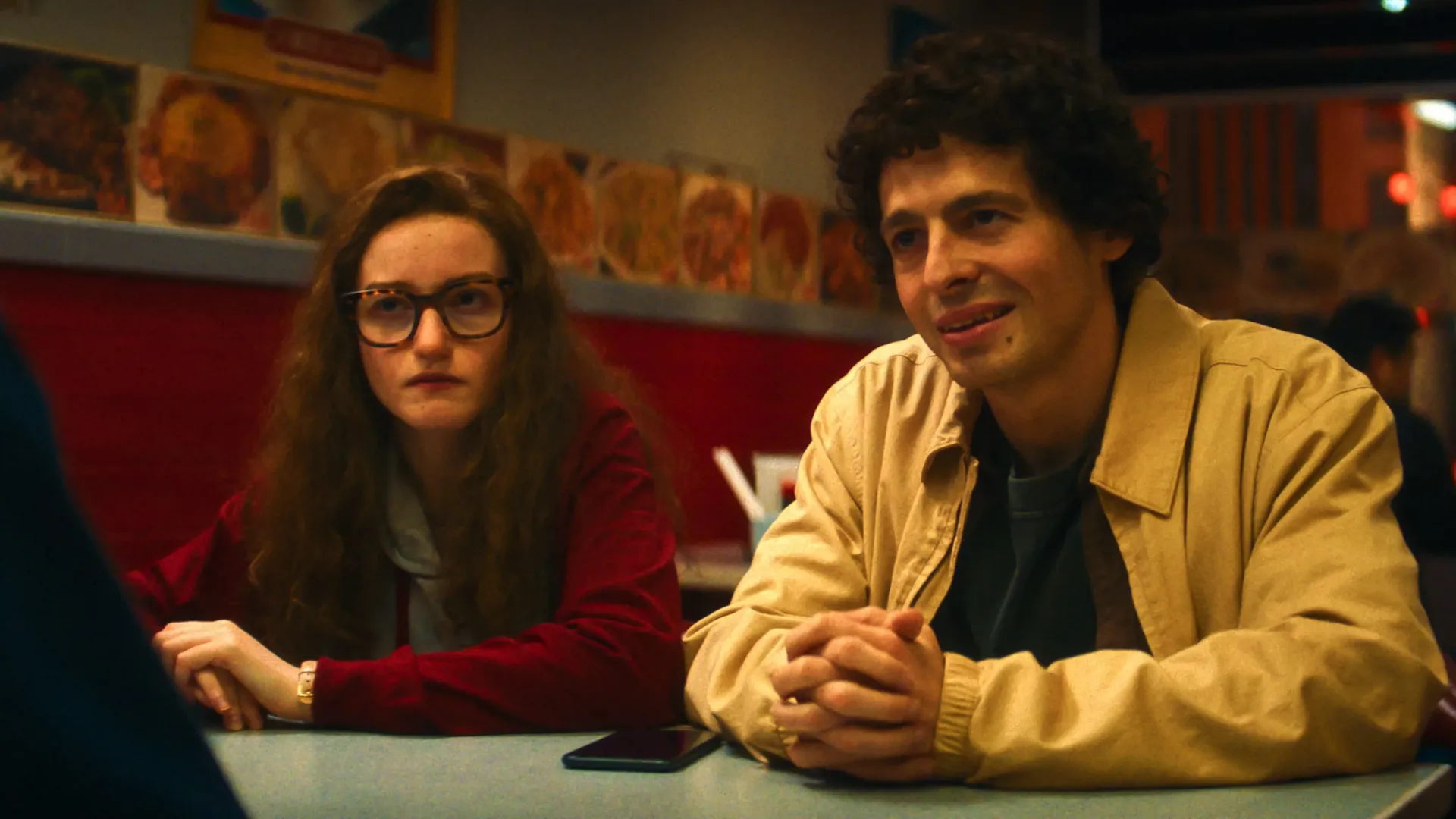
The Altruists, created by Graham Moore, premiered on Netflix on November 19. It stars Anthony Boyle and Julia Garner in a drama inspired by the story of Sam Bankman-Fried and Caroline Ellison. Netflix’s stated premise follows two ambitious idealists attempting to remake global finance before being accused of stealing $8 billion.
The program’s framing signals a dramatic retelling rather than a documentary account. Yet Wang’s reaction illustrates why that label does not settle every issue for people whose names, workplaces and personal traits are recognizable within a dramatization. A production may use fictionalized scenes to construct character arcs or compress complicated events, but viewers can still reasonably connect those portrayals to living people.
Why the accent criticism matters
An accent is not simply a bit of production texture. In a portrayal of a real person, it can become one of the quickest and most memorable signals an audience uses to understand who that person is. Wang’s complaint is that the signal chosen for her was not grounded in her own speech.
That makes her critique more specific than a general accusation of inaccuracy. She says the performance imposed a Chinese accent on a Chinese American figure who does not speak that way. Her description of the choice as stereotypical focuses attention on the difference between representing heritage and relying on an assumed manner of speaking as shorthand for it.
For audiences, this is also a useful reminder that an actor’s accent in a “based on” story should not automatically be treated as a documentary fact. Voice, cadence and pronunciation can be built from scripts, direction and dramatic convention. When the real individual says a defining performance choice does not reflect them, that response is meaningful context for watching the series.
It does not, on the evidence available, establish what conversations happened inside the production or why the creative choice was made. Wang says she was not consulted; no response from Netflix, the show’s creative team or Hu is included here. The available record therefore supports reporting Wang’s criticism, not assigning an unconfirmed motive to those involved.
The real-world case behind the drama
The series draws from a collapse with immense financial and legal consequences. Bankman-Fried founded FTX, a cryptocurrency exchange, in 2019. FTX later failed, and Bankman-Fried was convicted by a federal jury on seven counts of fraud and conspiracy connected to the collapse of the exchange and Alameda Research, the affiliated hedge fund. He was sentenced to 25 years in prison.
The U.S. government alleged that Bankman-Fried cheated investors and customers out of more than $10 billion through FTX and Alameda Research. Those allegations and the criminal case form the serious real-world backdrop to a show whose promotional description uses an energetic, character-driven hook.
A cryptocurrency exchange is a platform where users can trade digital assets. A hedge fund is an investment business that manages capital and makes trades or investments. Alameda Research was the trading firm affiliated with FTX, and Ellison served as its CEO. She was also in a relationship with Bankman-Fried.
Those definitions matter because FTX and Alameda were separate but connected entities. Any television version of their story has to turn corporate structure, financial dealings and legal allegations into scenes and characters that a general audience can follow. Simplification may be part of the medium, but Wang’s posts challenge whether the simplification in The Altruists went so far that it ceased to resemble the history known by former employees.
Fact, inspiration and dramatic storytelling
“Inspired by” stories often operate in the territory between biography and fiction. Names, companies, relationships and public events can give a series a powerful sense of recognition. Writers may then build dialogue, private conversations and interpersonal conflicts that cannot be independently verified from the public record.
That blend can be especially fraught when the underlying events are recent and the people portrayed are still able to respond. A viewer may understand that a limited series is not a court transcript, while still absorbing its characterization as a plausible account of what its real-life counterparts were like.
Wang’s complaint makes the stakes tangible. Her assertion is not only that some events were changed; it is that she saw little of her actual workplace experience in the series and that the portrayal added a speech pattern she rejects. The first point concerns narrative accuracy. The second concerns representation. Together, they show how creative choices can affect a real person even when a show is promoted as dramatized entertainment.
For viewers interested in the FTX story, the practical approach is to separate several layers: the show’s fictional construction, the publicly described legal outcome for Bankman-Fried, and the firsthand objections offered by people such as Wang. None of those layers should be casually substituted for another.
- The drama: a limited-series interpretation built around characters inspired by Bankman-Fried and Ellison.
- The legal record described here: Bankman-Fried’s federal conviction on seven fraud and conspiracy counts, his 25-year sentence, and the government’s allegation involving more than $10 billion.
- Wang’s account: a former executive’s personal criticism that the show did not consult her, did not reflect the events she knew, and depicted her with an accent she does not have.
What Wang’s response adds to the conversation
Entertainment projects based on corporate collapse frequently invite attention because the subject already has recognizable characters, extraordinary sums of money and major public consequences. The story can easily be treated as a spectacle. Wang’s posts redirect attention to a narrower but consequential point: people depicted in those stories can experience the results as personally distorting, not merely dramatically embellished.
Her use of the word “stereotypical” also puts the casting and performance discussion in a wider cultural context. A Chinese accent is not interchangeable with being Chinese, and Wang says it is not part of her own identity or speech. That is the core of her objection, and it is a claim viewers can keep in mind without assuming details that have not been established.
The dispute arrives amid a busy period for screen storytelling and the business around it; the economics shaping what reaches streaming audiences are changing quickly, as explored in this look at microdrama’s growth and profitability challenge. But the issue raised by Wang is less about format than responsibility: when a production borrows the outlines of a real person’s life, the smallest-seeming detail can carry outsized weight.
For now, Wang’s statements stand as a direct rebuke of The Altruists’ treatment of the FTX and Alameda story. She says the series attached familiar names to a substantially different narrative, and that its version of her included an accent she says was never hers. The criticism does not resolve every debate about artistic license, but it does give audiences a clear reason to distinguish between a compelling television account and a faithful representation of real people.