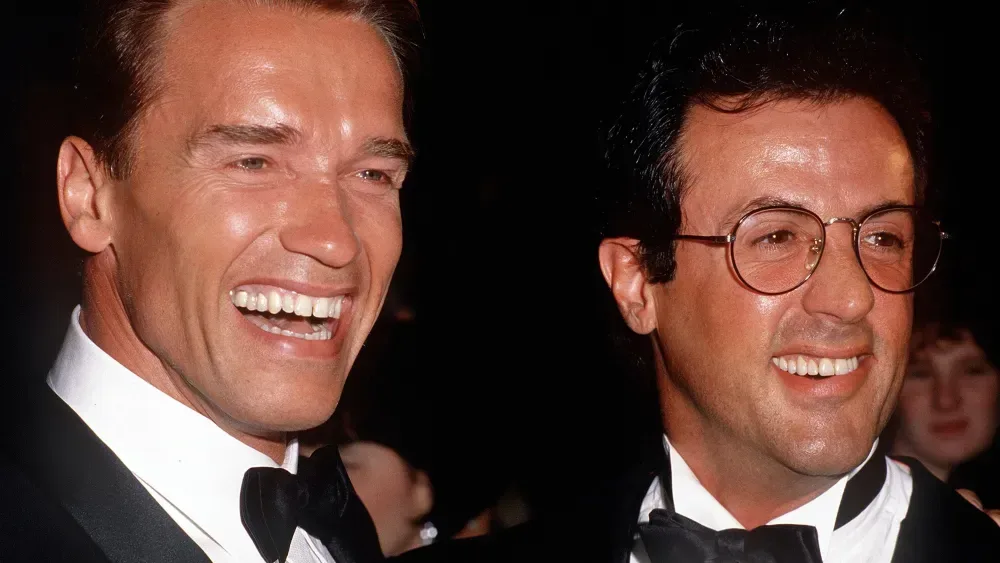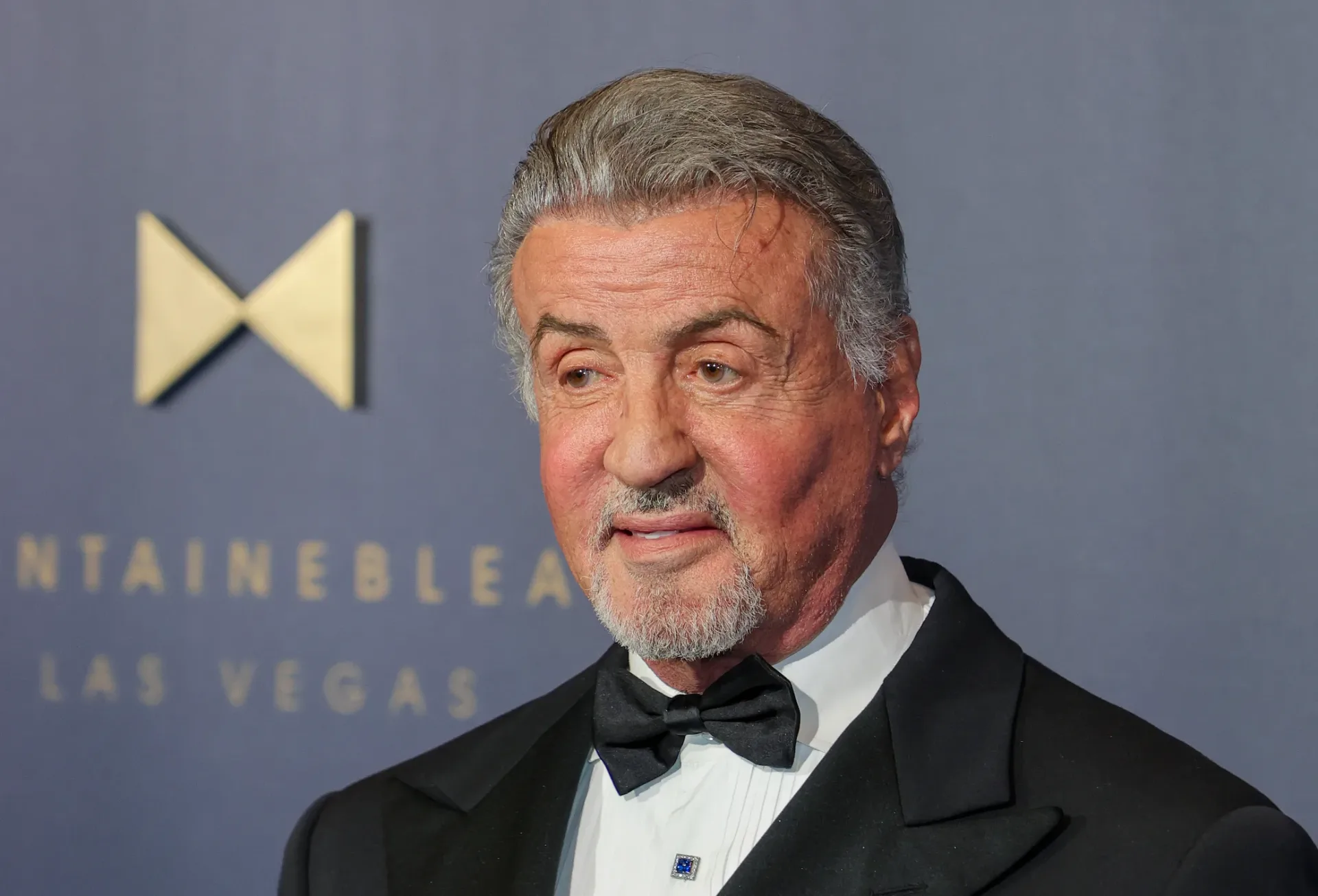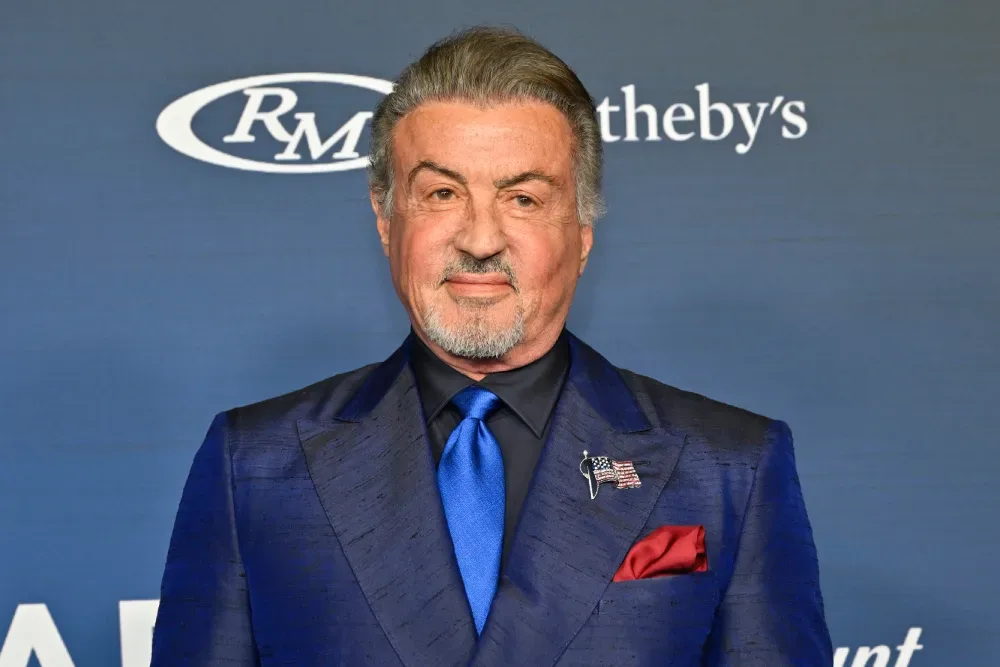
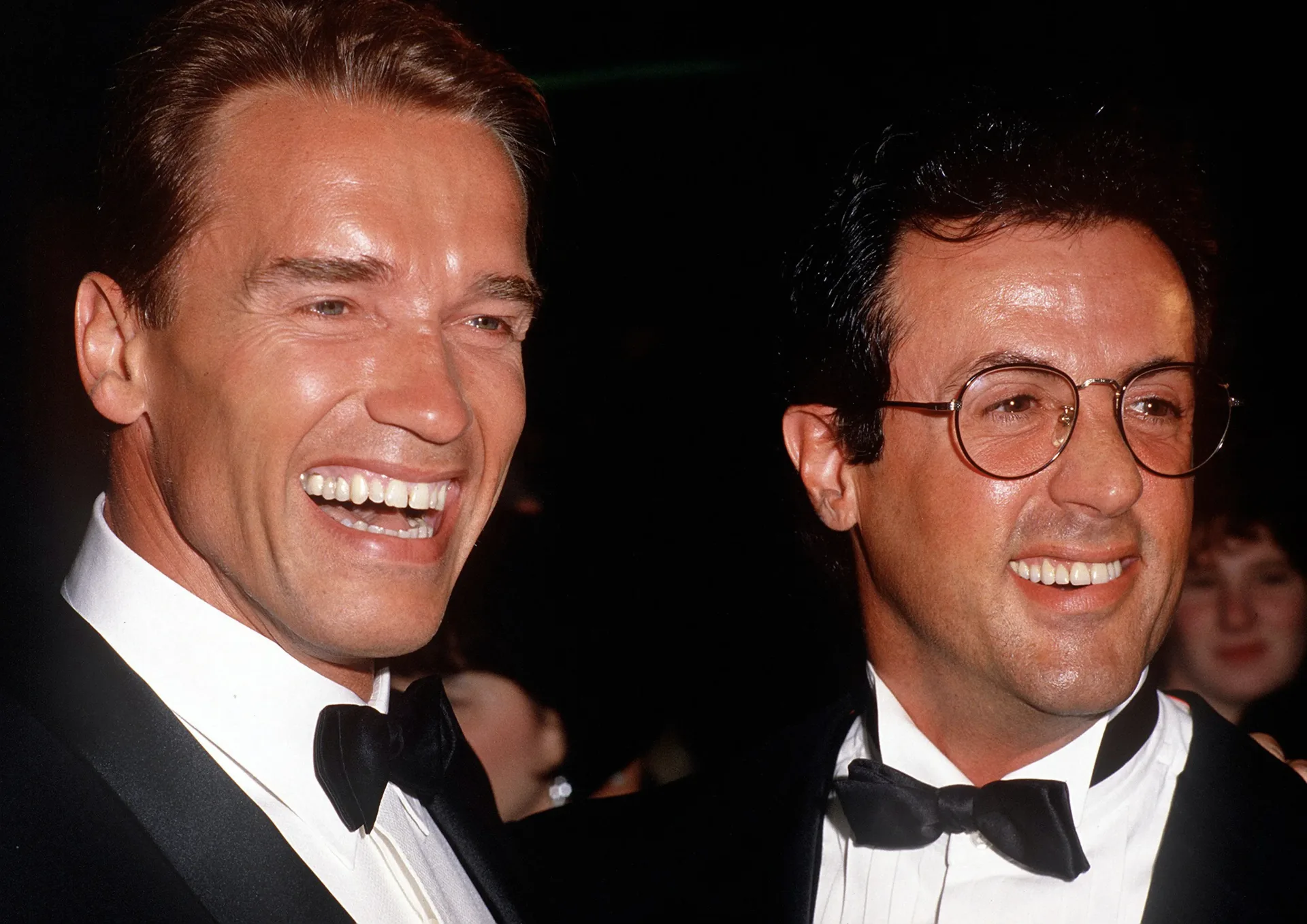
Sylvester Stallone has looked back on the long-running competition between himself and Arnold Schwarzenegger as more than a celebrity feud. In his telling, it was an intense professional contest that helped define the action-movie space around them—and one he ultimately found motivating.
Speaking on The Rest Is Entertainment podcast, Stallone said the rivalry influenced his career and encouraged him to take chances. The two performers were, in his words, confrontational from the outset, each seeking to lead a developing corner of mainstream cinema built around physical presence, oversized characters and decisive heroes.
That competition did not simply exist in tabloid-style headlines. Stallone described it as a battle over position within the same genre. He recalled that neither man was inclined to yield the role of action cinema’s most prominent star, and that their competitive energy continued both publicly and privately.
“We’re both physical, and now, who’s going to be the vanguard, the leader in that genre?” Stallone said.
A contest for action-film leadership
Stallone framed the situation as two actors arriving as a particular kind of action picture was becoming a major arena for star-driven filmmaking. He said he had not initially intended to become an action star, but that First Blood changed his view of what the form could accomplish.
For Stallone, the appeal was not just chases, weapons or fights. He characterized effective action movies as a modern form of mythology, connecting their heightened protagonists and trials to figures and stories such as Hercules, Achilles, The Iliad and The Odyssey.
That description helps explain why the competition could become so personal. “Modern mythology,” as Stallone uses the phrase, means stories that place a heroic figure in outsized challenges meant to test endurance, identity and resolve. It is an interpretive lens rather than a claim that every action film follows ancient literature directly. Still, it points to the scale of ambition Stallone saw in the genre: an action lead was not merely someone who performed physically demanding scenes, but a figure audiences could recognize immediately and rally behind.
Schwarzenegger was an obvious rival in that landscape. Stallone recalled seeing him at the Golden Globe Awards and interpreting Schwarzenegger’s look as a pointed challenge—what Stallone called “stink eye.” Schwarzenegger then won, a moment Stallone remembers as sharpening the sense that this was a genuine contest rather than a passing comparison.
The actors’ respective films became part of the back-and-forth. Stallone cited Rambo and Schwarzenegger’s Commando as examples of how their careers appeared to answer one another. The point is not that either film was formally made as a response to the other; Stallone’s account is about the competitive atmosphere surrounding their work. Each new role could be read as a new move in the pursuit of action-star primacy.
Why rivalry could be productive
Stallone openly called the relationship contentious, but he also said he enjoyed it. That combination is central to his recollection. Competition can be destructive when it narrows choices or turns every professional outcome into a personal loss. Here, Stallone presents it differently: the pressure to keep up gave him an external reason to stay alert, make bolder decisions and keep building momentum.
His use of the word “vanguard” is revealing. A vanguard is the leading edge of a movement—the people seen as pushing into new territory first. Stallone was not describing a quiet contest for a single award or one film’s result. He was describing a struggle to be identified as the public face of an evolving genre.
There is also a practical career lesson in the story, though it should not be confused with a universal prescription. Rivalry appears to have worked for Stallone because it was tied to a specific professional goal: making films and sustaining an action-screen persona at a high level. It gave the competitors a visible benchmark. For people in creative fields, useful competition may similarly clarify standards and inspire effort, but it needs boundaries. A rival can illuminate what a person wants to improve; they should not become the only measure of whether work has value.
Stallone’s account also avoids pretending the two men were collaborators during the peak of the feud. They did business together as part of the movie-themed restaurant chain Planet Hollywood in 1991, yet Stallone said they still would not stand onstage together for a speech. That detail illustrates the difference between a shared commercial enterprise and a settled relationship. Working adjacent to a competitor does not necessarily dissolve the tension that competition creates.
The moment the contest stopped making sense
Stallone said the rivalry was not truly put aside until roughly 20 years later, when Schwarzenegger ran for governor of California. In Stallone’s telling, a meeting at the same cigar venue led him to say that the conflict had gone on long enough. Schwarzenegger’s political path meant that the actors were no longer competing for the same immediate place in movies.
That shift matters because it suggests the feud ended not through a dramatic public confrontation, but because the original conditions had changed. Their careers were no longer running on parallel tracks in the same way. Stallone thanked Schwarzenegger for waking him up and keeping the competitive fire lit, and said Schwarzenegger felt similarly.
It is a notably mature framing of a famous rivalry. Stallone does not revise the contentious period into an uncomplicated friendship, nor does he describe it as a pointless misunderstanding. Instead, he recognizes that the contest had meaning at the time while also acknowledging that it no longer needed to govern their relationship.
That distinction is useful when considering celebrity rivalries generally. Public narratives often flatten them into either hostility or friendship, as if there can be no middle ground. Stallone’s version is more complicated: the relationship could be tense, energizing and professionally consequential, then later become friendly without erasing what came before.
Competitive still, but in a different register
Stallone said he and Schwarzenegger remain friendly. He also made clear that competitiveness has not vanished altogether. He described it as part of their nature and said he still enjoys it, while adding that they are no longer financially competitive in the same way.
That final qualification gives the story its clearest sense of perspective. The rivalry was once bound up with status, leadership and the commercial stakes of the action genre. Now, as Stallone describes it, the edge remains more as temperament than as an all-consuming business contest.
For fans, the appeal of the anecdote is partly the reminder that a genre can be shaped by contrasting stars without requiring a tidy winner. Stallone’s recollection emphasizes the friction between two people who both wanted to set the standard. The result, in his view, was not only conflict but a continuing incentive to raise the bar.
Action cinema has long depended on performers who project certainty under pressure, and Stallone’s comments show that the off-screen environment could be pressured too. The bigger takeaway is not that professional hostility is necessary for great work. It is that Stallone found a way to turn an unusually direct rivalry into forward motion—and later to appreciate the person who had helped keep that fire burning.
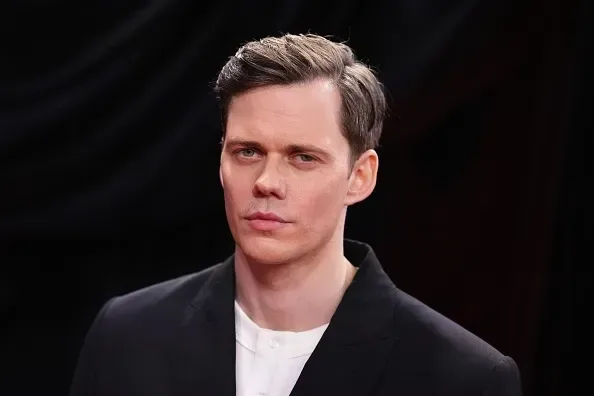
For another recent look at a screen performer weighing the shape of a major franchise role, see Bill Skarsgård’s comments on potentially playing a James Bond villain.