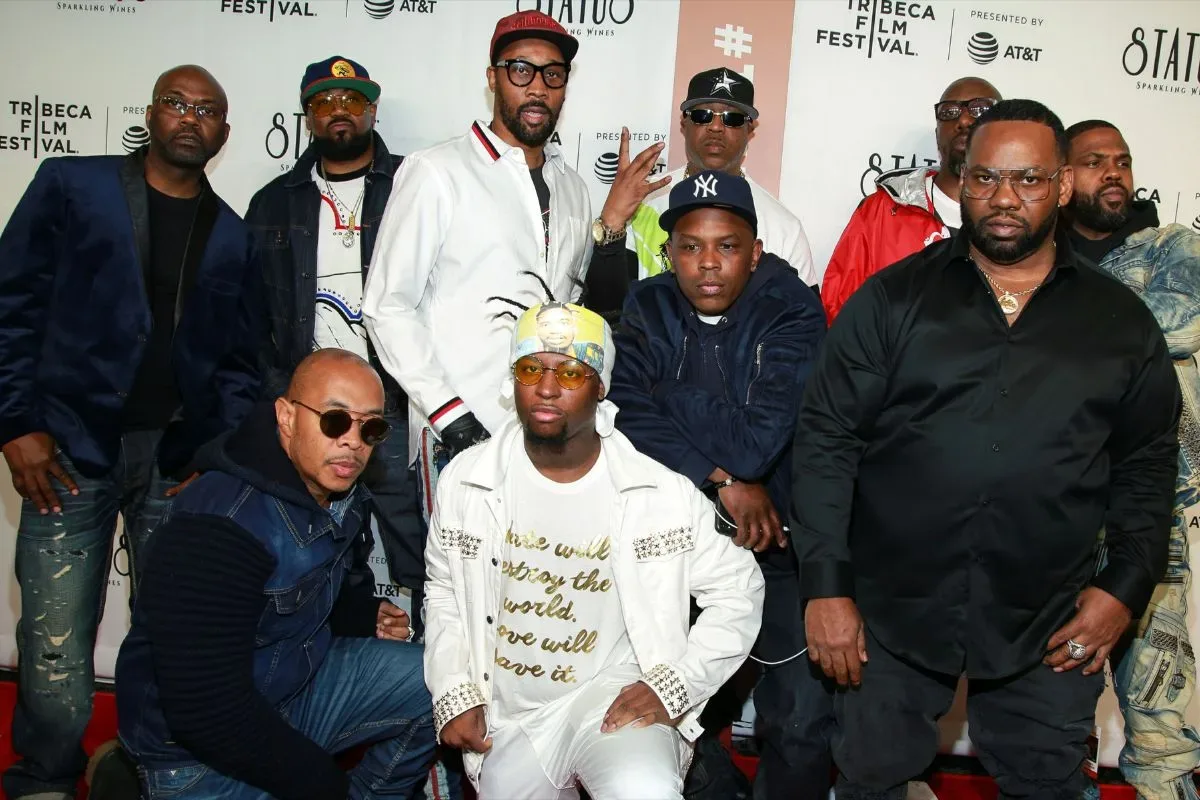

Steve Rifkind has called on Chris Rock to apologize to the staff of Loud Records after Rock described Wu-Tang Clan as having rewritten hip-hop “without a big machine behind them” during the group’s Rock & Roll Hall of Fame induction introduction.
Rifkind’s response does not dispute the scale of Wu-Tang Clan’s creative achievement. In fact, he thanked Rock for his praise of the group. His objection is narrower, but it points to a long-running tension in music history: a concise celebration of an artist’s independence can unintentionally erase the label workers, promoters, distributors and artist-development staff who helped bring that work to an audience.
In the caption to a November 14 Instagram reel, Rifkind wrote that Rock owed Loud’s staff an apology for the remark. Rifkind also said Rock had once wanted to put out comedy albums through Loud because of the label’s work with Wu-Tang Clan and Mobb Deep.
The exchange is ultimately about language as much as it is about credit. “Without a big machine” is an effective line for an induction-stage tribute because it captures Wu-Tang’s forceful arrival, singular identity and unconventional approach to the business. But Loud Records was a real operation with staff, distribution and a release strategy—not an invisible footnote.
Loud Records’ place in the Wu-Tang story
Loud released Wu-Tang Clan’s 1993 debut, Enter the Wu-Tang (36 Chambers). Rifkind built the label with Rich Isaacson, and the company’s early catalog also included Mobb Deep, whose 1995 album The Infamous contained “Shook Ones Pt. II.”
The distinction matters because releasing an album involves more than putting a finished recording into stores or onto radio. A label’s work can include identifying artists, handling promotion, coordinating distribution, building internal teams and supporting the long process of artist development. Those functions do not replace artistic authorship. They are, however, part of the infrastructure that can determine whether boundary-pushing work gets heard beyond its earliest audience.
In April 1994, Rifkind said Loud had 30 staff members and RCA/BMG distribution. He framed its goal in unusually competitive terms, saying he did not expect to merely compete with major labels but to beat them. That history complicates any simple choice between an artist acting alone and an artist backed by a conventional major-label apparatus.
Loud may not fit the image evoked by an all-powerful, impersonal “big machine,” yet it had resources and an organized staff. RCA/BMG distribution is especially important context: distribution is the system that moves recorded music into the channels where listeners can buy or otherwise access it. In the physical-record era, that practical reach could be decisive. A record needed a route from studio and label to retailers, radio ecosystems and listeners.
Rifkind has previously described the early chain of events that led to the Wu-Tang deal. He recalled first hearing “Protect Ya Neck” on a tape provided by someone on his college-radio promotions team. He also said RZA later brought the group to an RCA office in New York, where the members performed the song in a small room. Rifkind’s account is that he decided to sign the group during that meeting.
That does not change who made the music or the vision that set Wu-Tang apart. It does show why Rifkind is pushing back: the story of an act’s breakthrough includes moments of artistic creation, but it also includes people who recognized that work and committed an institution’s time and money to it.
Independence can mean more than one thing
Rock’s wording can be understood as praise for Wu-Tang Clan’s ability to operate on its own terms rather than a literal claim that no organization supported the group. Wu-Tang’s mythology and business legacy have long been tied to a fierce sense of self-definition. The group’s music, individual personalities and wider orbit made its emergence feel bigger than a standard label rollout.
Still, there is a meaningful difference between creative independence and having no industry infrastructure. Creative independence concerns control over sound, presentation, identity and decisions. Industry infrastructure describes the practical machinery behind a release: personnel, promotional work, distribution and relationships that give a project a path to the public.
Those ideas can coexist. An artist can retain an unmistakable identity while working with a label. A label can take a chance on music outside the prevailing mainstream while still having a distribution partner and a staff. Framing the story as one extreme or the other risks flattening a more interesting reality.
Rifkind’s post therefore reads less like an attempt to take ownership of Wu-Tang Clan’s success than a demand for proper recognition of the people who worked at Loud. Whether Rock responds publicly is unknown. What is clear is that the dispute has brought renewed attention to the network of people behind several foundational East Coast hip-hop releases.
The broader Loud catalog behind Rifkind’s complaint
Rifkind’s argument gains weight from Loud’s work beyond Wu-Tang Clan’s debut. He has identified The Infamous and Raekwon’s Only Built 4 Cuban Linx… as major Loud releases from 1995. The label also worked with Xzibit and Tha Alkaholiks.
Mobb Deep’s Loud catalog continued with Hell on Earth in 1996, Murda Muzik in 1999 and Infamy in 2001, before the duo later released projects through other companies. Rifkind has also recalled creating Loud’s New York A&R team, including hiring Schott Free, who brought in Matty C. A&R, short for artists and repertoire, generally refers to the label function associated with finding talent and working with artists as recordings and careers develop.
That catalog history makes the apology request about collective labor. Record labels can be criticized, often rightly, for the power they exercise in music. But a label is also made up of workers whose contributions can vanish when an artist’s success is retold only as a lone-genius story. Rifkind’s wording specifically centers Loud’s staff, rather than simply claiming personal credit.
There is another wrinkle in Rock’s connection to the Wu-Tang circle. Rock spent time in the studio with Method Man during work on Tical 2000: Judgement Day. Method Man recalled in a 2024 interview that Rock was present while Janet Jackson recorded an album shout-out Method Man had requested. That shared history makes Rifkind’s criticism feel less like a random executive reacting to an awards-show soundbite and more like a dispute arising inside overlapping cultural and professional circles.
A legacy still active onstage and on tour
Rifkind’s links to artists in the Wu-Tang orbit have remained visible. RZA brought him onstage during Wu-Tang Clan’s July 2025 Madison Square Garden concert, where Havoc also appeared alongside Raekwon and Ghostface Killah.
Later in 2025, LOUD Live and Live Nation announced a joint Raekwon and Mobb Deep tour built around the 30th anniversaries of Only Built 4 Cuban Linx… and The Infamous. The announced itinerary covered 19 cities. The tour is another reminder that these records remain connected not only by influence, but by the label history Rifkind says Rock’s introduction overlooked.
For listeners revisiting that era, the useful takeaway is not that a label executive should be placed above the artists. It is that durable music scenes are rarely made by one person or one institution. Wu-Tang Clan’s impact rests on the group’s work, and the label’s early role is a separate but relevant part of how that work entered the marketplace and became a lasting cultural force.
Debates over acknowledgment are common whenever a landmark act receives formal honors. A ceremony favors sweeping narratives; the real history is usually more complicated. In this case, Rock’s line celebrated Wu-Tang’s defiant independence, while Rifkind insists that celebration should not come at the expense of Loud Records’ employees. Both ideas point back to the same extraordinary body of music—and to the ongoing question of whose labor gets remembered when that music is honored.
That question also fits a wider present-day conversation about rap’s enduring catalog and the stories attached to it. Fans revisiting Kendrick Lamar’s “These Walls” offer another example of how renewed attention can shift the focus from a famous song’s broad reputation to details that deserve closer consideration.