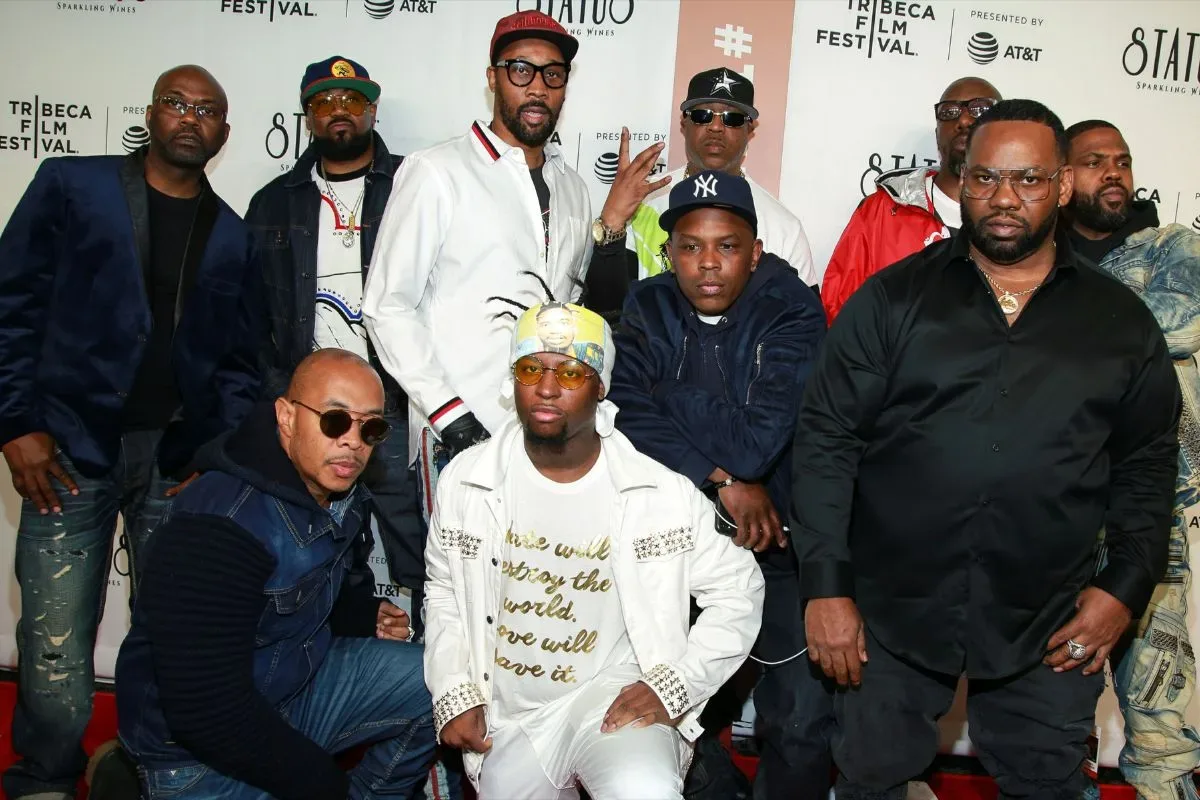
Wu-Tang Clan’s Rock & Roll Hall of Fame celebration is still expected to proceed at the Peacock Theater in Los Angeles, despite a nationwide flight halt that could have created a major logistical problem for a live event built around musicians, guests and tribute performers arriving from different places.
The important distinction is timing. Organizers said the artists needed for the ceremony had already made it to Los Angeles before the disruption, and rehearsals had been taking place for two days. That means the immediate risk to the staged induction program—getting its essential participants into the city—had apparently been avoided.
For viewers, it is a reassuring update, but not a blanket guarantee that every honoree will be physically present. Sade, Oasis and Iron Maiden had already said they would not attend, and those planned absences are separate from the aviation issue. The event can proceed while still being a ceremony in which some inductees are represented in other ways.
Wu-Tang’s induction carries a wider hip-hop presence
Wu-Tang Clan is entering in the Performer category, the designation for recording artists whose body of work is being honored. The group was selected on its first nomination, alongside fellow first-time nominees Luther Vandross and Phil Collins.
The Hall’s eligibility rule requires an artist’s first commercial recording to be at least 25 years old. In Wu-Tang’s case, that threshold places the group’s foundational era firmly in the institution’s historical frame rather than treating the induction as a reaction to a current release or reunion cycle.
The class also recognizes several figures with pivotal ties to hip-hop’s development. Queen Latifah and MC Lyte are receiving Early Influence honors, while Rick Rubin is among the recipients of Musical Excellence.
Those labels matter because they describe different forms of cultural impact. Performer recognition centers on an act’s recorded artistic work. Early Influence acknowledges artists whose work helped shape the sound, direction or broader development of rock and popular music. Musical Excellence is used for contributors whose influence may be tied to producing, songwriting, session work or other major creative roles beyond the conventional front-person model.
Taken together, the honors put multiple generations of rap history in the same event: Wu-Tang as a group whose catalog transformed East Coast hip-hop’s possibilities, Queen Latifah and MC Lyte as foundational voices, and Rubin as a producer associated with rap’s recording history.
Related coverage includes Wu-Tang Clan’s Rock Hall Induction Is Set to Proceed in Los Angeles.
Why Enter the Wu-Tang (36 Chambers) remains central to the story
Wu-Tang Clan’s path began on Staten Island, where an independent single helped draw the attention of Loud Records. The group’s 1993 debut album, Enter the Wu-Tang (36 Chambers), remains the clearest reference point for why the collective’s induction has such weight.
Its musical identity came from the collision of distinct voices with RZA’s deliberately rough-edged production. Soul samples and martial-arts dialogue were woven into the recordings, helping establish a world that sounded recognizably unified even as the performers brought sharply different deliveries and personalities.
That balance is a useful way to understand Wu-Tang’s legacy. The group was not simply a roster of talented MCs sharing tracks. Its appeal was tied to the way a collective identity could accommodate contrast: multiple voices, multiple personas and a common sonic environment. The martial-arts dialogue was more than an isolated reference; placed alongside the sample-driven production, it contributed to a vivid atmosphere that listeners could identify immediately.
That approach also gives a Hall of Fame ceremony more to celebrate than a single album or single performer. Wu-Tang’s story encompasses a collective, a producer-led aesthetic and individual members whose contributions shaped the group’s public identity. In a live tribute format, that makes the question of who is present especially meaningful.
Ol’ Dirty Bastard’s family will be part of the recognition
The ceremony is expected to include an important family element. Icelene Jones, the widow of Ol’ Dirty Bastard, said Young Dirty Bastard would represent his father and perform with the group. Jones arrived in Los Angeles with two of her daughters ahead of the event.
Ol’ Dirty Bastard, born Russell Jones, died on November 13, 2004, at age 35. The ceremony follows one day after the anniversary of his death, giving the family’s participation a dual significance: it is both an acknowledgment of Wu-Tang Clan’s collective achievement and a remembrance of a member who cannot be there himself.
Young Dirty Bastard’s appearance should not be read as an attempt to erase that absence. Rather, it provides a direct familial connection in a moment that is inherently retrospective. For a group built around distinctive individual presences, recognizing Ol’ Dirty Bastard’s place within the Clan is inseparable from recognizing the group’s legacy as a whole.
“We’ve been in rehearsals for two days, and the show is going to be incredible and not to be missed,” a representative said.
Rehearsals are particularly significant for an event like this because they suggest that the participating lineup, musical arrangements and stage transitions were already in motion before travel was interrupted. That does not reveal the full running order or confirm every guest appearance, but it is meaningful operationally: a live ceremony depends on more than performers reaching the venue on the night.
What the travel update does—and does not—confirm
The update confirms that the participants necessary for the scheduled show were already in Los Angeles and that Saturday’s ceremony was expected to move forward. It does not establish that every inductee will attend, that any previously announced absence has changed, or that every possible tribute participant is included.
That distinction is worth keeping clear amid a disruption that naturally invites speculation. Sade, Oasis and Iron Maiden had each already indicated they would skip the ceremony before the flight halt. Their situations should not be folded into the later travel problem.
For those waiting to see the event, the practical takeaway is straightforward: the induction was still on the calendar, the production had been rehearsing, and Wu-Tang’s recognition was expected to be part of the night. The taped ceremony is scheduled to debut on ABC and Disney+ in December.
Music honors often become a meeting point between past work and the people charged with carrying that work forward. In this case, the immediate production news is unusually consequential because it preserves a ceremony that brings together Wu-Tang, Young Dirty Bastard and a class reflecting rap’s artists and behind-the-scenes innovators. For more entertainment coverage beyond music, see the continuing discussion around Adam Driver and a canceled Ben Solo project.