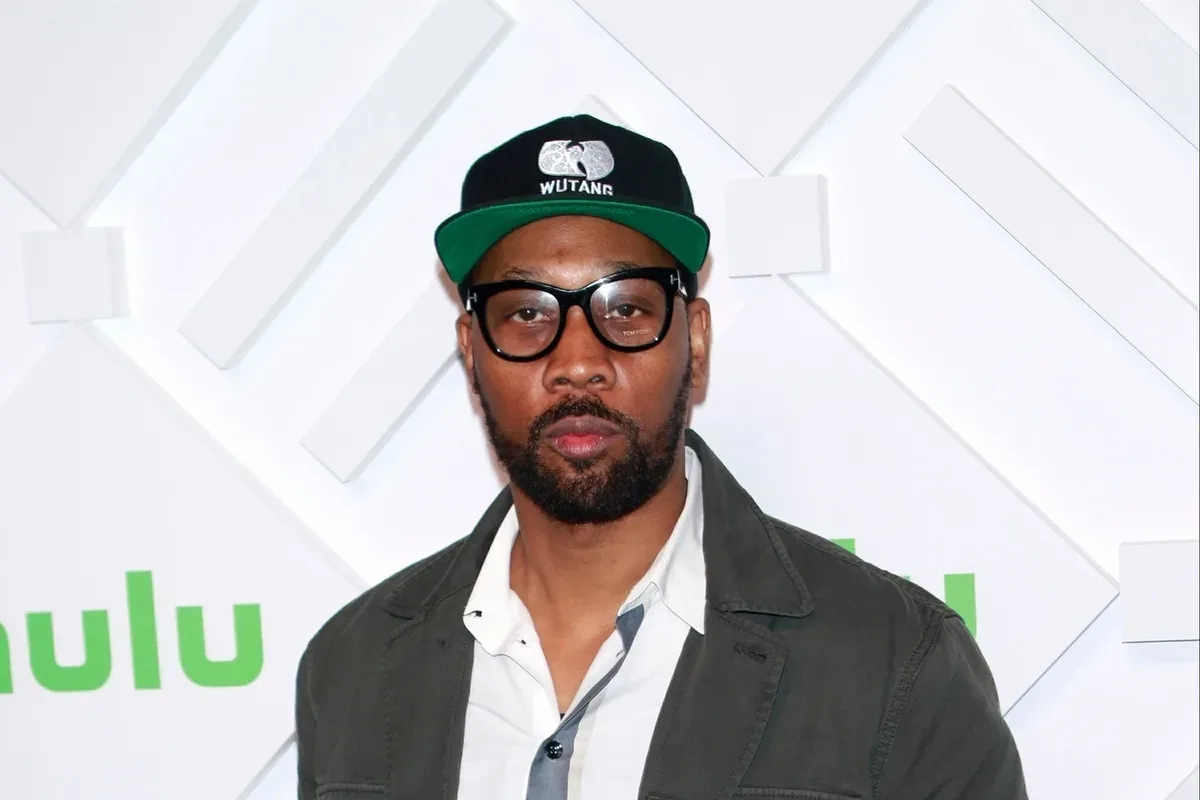
RZA has invested in AYO Music Group, an invitation-only music-rights company focused on a persistently unglamorous problem behind the songs: money that creators and rights owners may fail to collect when copyright information is incomplete, duplicated or in conflict.
The Wu-Tang Clan founder joins a group of AYO backers that includes Disturbing Tha Peace co-founders Chaka Zulu and Jeff Dixon, family office CIH Group, and David Goldberg, the Ewing Athletics owner who was the company’s first investor. AYO’s work concerns existing rights and the income those rights generate, rather than the creation or release of new music.
That distinction is central. A track can be widely heard, loved and available to audiences while the records used to identify its writers, performers or owners still contain gaps. AYO’s pitch is that those gaps can be found in data, then surfaced for the people with a legitimate interest in resolving them.
“I have spent thirty years making sure the people who created the music got paid for it, and I have watched a lot of money disappear into paperwork along the way,” RZA said. “Deborah and Pär have built something that actually finds it. That is a mission I want to be part of.”
What AYO says it is looking for
One of the company’s tools is called Gapfinder. It searches music-rights registration data for problems that can obstruct royalty collection, including duplicate entries, absent registrations and conflicting identifiers.
AYO says its database spans more than 57 million compositions and 210 million registrations across 300 international performing rights organizations. Those figures describe a large information-matching task: the same underlying work can appear across systems, territories and claims, and a rights holder needs reliable information if it is to identify where a record does not line up.
In practical terms, a composition is the song as a written musical work, while a registration is an entry in a rights system associated with that work. An identifier is the information used to distinguish and connect records. If registrations are missing, duplicated or point to incompatible information, the path from use of music to payment can become harder to follow.
The company says its remit reaches publishing, neighboring rights and recordings worldwide. These are separate areas of music rights and, crucially, separate places where creators, performers and recording owners may need to make sure the relevant data is complete. AYO offers a one-time check of a songwriter’s work or a catalog, as well as subscriptions intended to provide continuing access to its data.
Related coverage includes RZA Invests in AYO Music Group’s Royalty-Finding Platform.
The available information does not specify what results any particular creator might receive from a check, how long corrections can take, or what a subscription costs. It also does not establish that every discrepancy represents unpaid money. What it does show is AYO’s emphasis on finding issues that may interfere with collection, rather than treating a data review as an automatic payout.
Why the people behind it matter
AYO was co-founded by Deborah Mannis-Gardner and Pär Almqvist. Mannis-Gardner founded DMG Clearances in 1996 and has worked on sample clearances for Drake, Kendrick Lamar and Beyoncé. She also helped prepare De La Soul’s catalog for its streaming arrival in 2023.
That background matters because sample clearance and royalty data are different jobs that meet at a common pressure point: accurate rights information. Clearance work addresses permission around material being used in a new recording. A royalty-search platform, as AYO describes itself, examines the registrations and claims connected to music that already has rights and revenue attached to it. The supplied details do not suggest the two activities are interchangeable; rather, they show that the company has leadership with experience in rights-related documentation.
Almqvist previously co-founded Tracklib, a sample-licensing platform. Alongside Mannis-Gardner’s clearance history, that gives AYO’s founding team experience in an area of the business where correct ownership and work information is not merely clerical detail. It is the infrastructure needed to connect music, permissions and claims.
RZA’s interest also fits his prior involvement in the administrative side of a major catalog. Wu-Tang Productions previously entered a global publishing administration agreement with Downtown Music covering the group’s interests in its back catalog and selected work by individual members. The agreement included material from Enter The Wu-Tang: 36 Chambers, Wu-Tang Forever, The W and Iron Flag.
Publishing administration and AYO’s stated data-search mission should not be treated as the same service. Still, both sit within the wider work of managing music rights after the recording is made. The former agreement demonstrates that rights administration has already been part of Wu-Tang’s business picture; the AYO investment places RZA behind a company aimed at locating data inconsistencies that can affect collection.
The value—and limits—of a data-first royalty search
AYO’s claim is not that technology alone replaces the people who make decisions about a catalog. Its offering is more specific: use a broad database to flag places where information may be incomplete or contradictory. For an individual writer, that could mean a one-off review. For an owner managing a larger catalog, ongoing access may be more useful because rights information can require continued attention.
That is an important practical difference. A one-time check is designed to find a snapshot of potential problems. A subscription implies repeated use of the underlying data. Neither option, based on the information available, guarantees a particular recovery. The apparent value is in narrowing the search for records that deserve closer examination.
The scale AYO cites—57 million compositions, 210 million registrations and 300 international performing rights organizations—also helps explain why an audit tool would be pitched as useful. When a rights holder is dealing with information distributed across many organizations, entries that look alike, missing records and differing identifiers can be difficult to spot manually. Gapfinder is intended to identify precisely those kinds of mismatches.
For artists and catalog owners, the investment is a reminder that the business of music does not end when a song is released or a catalog is placed with an administrator. Registration quality remains consequential. A creator may have work, ownership or performance-related interests to track, and AYO’s stated focus covers publishing, neighboring rights and recordings rather than only one of those lanes.
For listeners, none of this changes a favorite album overnight. But it illuminates the less visible layer beneath music’s public life: databases, registrations and identifiers that help determine whether the people connected to a work can locate the income attached to it. The story is less about a new consumer-facing music product than a behind-the-scenes attempt to make rights data more usable.
An investment in the paperwork behind the music
RZA’s endorsement gives AYO a high-profile investor whose career has involved both landmark recordings and catalog administration. The rest of the investment group adds ties to hip-hop and business, while the founding team brings experience in clearances and sample licensing.
AYO remains invitation-only, so the supplied details do not indicate a broad public launch or open enrollment. Its available options are described as one-off writer or catalog checks and subscriptions for continued data access. The company’s work is focused on existing rights, with the aim of finding the registration problems that can leave potential royalty income difficult to identify.
That makes the premise straightforward even if the underlying systems are not: better music-rights data can make it easier to find where the paperwork no longer reflects the work. RZA’s investment is a vote of confidence in that narrow but consequential mission. For more coverage involving major music figures and the business around them, see our report on Sade honoring fans and key collaborators ahead of the Rock Hall ceremony.