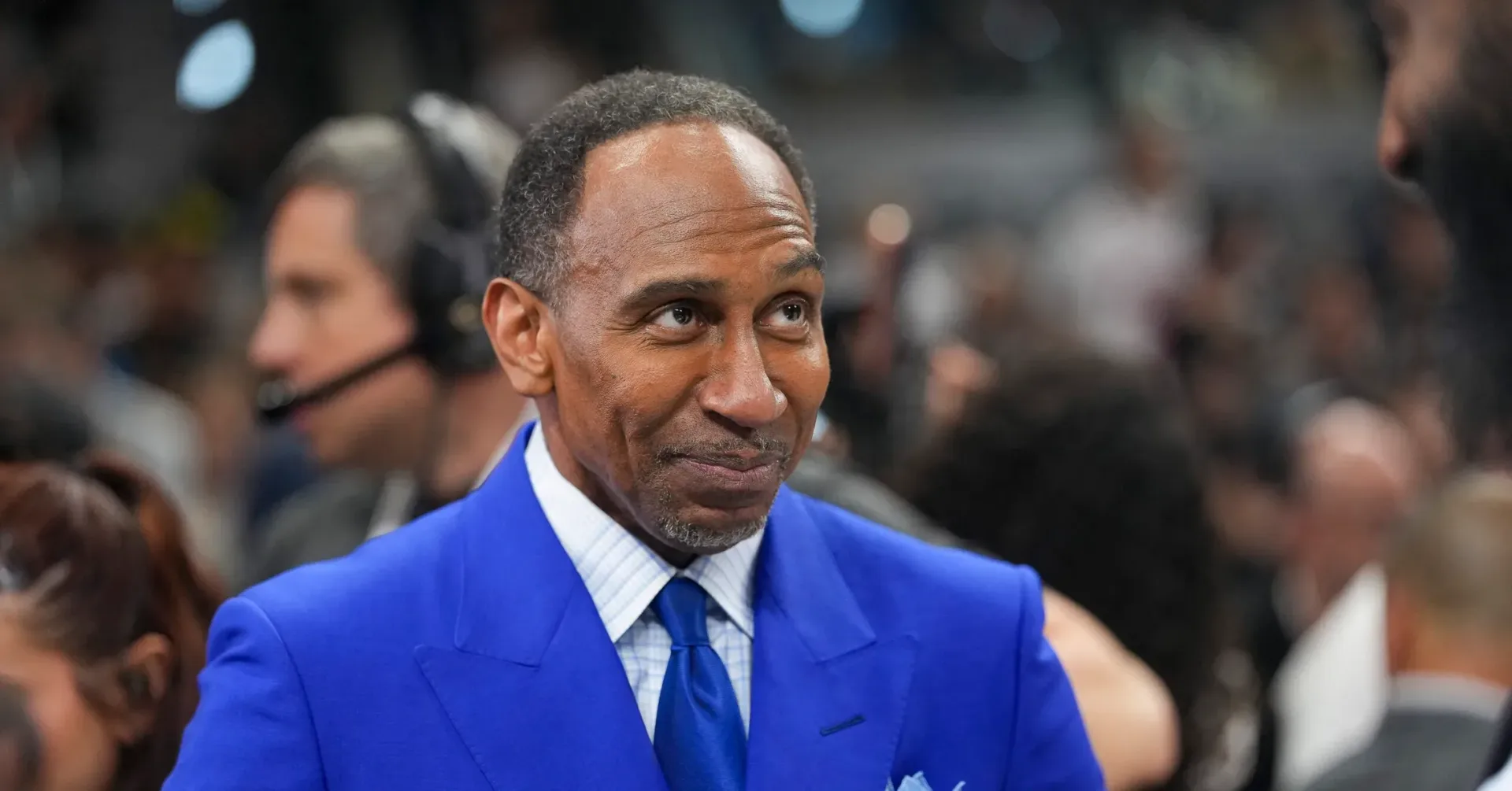
Stephen A. Smith has once again placed the possibility of a presidential run into the conversation—while also drawing a sharp line between believing he could win and actually entering a race.
In a discussion with Patrick Bet-David during midterm coverage, Smith said he would be willing to leave his present work behind if he had already won the presidency. The campaigning part is the obstacle. He said he will not sacrifice his career for a chance that may not materialize, even as he expressed confidence that he could prevail.
“If I were to win the presidency and had to give up what I’m doing to run the country, would I do it? Sure,” Smith said. “But I’m not going to do it to campaign. I’m not gonna give up everything on a maybe. I wish that I could, because I believe that I could win.”
That is an important distinction. Smith did not announce a candidacy, describe a campaign organization, name a timetable, or say that he is actively preparing to run. His comments amount to a statement of personal political confidence paired with a practical refusal to take on the risks that a real campaign would demand.
He also said he would run as a Democrat, though he embraced a description from friends that he is a “conservative Democrat.” Smith characterized his own politics as supportive of a safety net, free-market capitalism, strong borders, national security, economic strength, and safer streets.
What Smith is—and is not—saying
Public figures frequently get asked whether they could move from media, entertainment, or sports into electoral politics. The question can be useful as a measure of their political aspirations, but it does not necessarily signal imminent action. Smith’s answer is more conditional than declarative: he says he would take the office, but not the uncertain path required to seek it.
That qualification matters because a presidential campaign is not simply a personal decision made in front of a microphone. It entails a sustained public operation, constant scrutiny, political alliances, travel, fundraising, message discipline, and the possibility of a public loss. Smith’s formulation recognizes that he has a valuable existing platform and does not want to surrender it for an outcome he cannot guarantee.
His confidence is nevertheless clear. Saying “I believe that I could win” goes beyond casual interest in politics. It suggests that Smith sees a constituency for a direct, highly visible communicator who does not fit neatly into the usual ideological boxes. Whether that constituency could turn into electoral support is a separate question, and Smith did not offer a strategy for doing so.
For now, the claim should be read as a hypothetical, not a launch. There is no indication in these remarks that Smith has committed to a campaign or that a presidential bid is underway.
A Democrat with a deliberately unconventional label
Smith’s self-description centers on a blend of positions that he believes distinguishes him from friends who view him as more conservative than the typical Democrat. He accepted that characterization to a degree, then outlined the principles he considers non-negotiable.
“You told me I’m the most conservative Democrat you have ever met, and I’m here to tell you you’re probably right,” Smith said. “I do believe in a safety net. But I am about free market capitalism, I am about strong borders, I am about strong national security, I am about a strong economy, and I am about safety in the streets. Come hell or high water, I’m that guy.”
Several of those phrases are broad political terms rather than detailed policy proposals. A safety net generally describes public support intended to help people through hardship. Free-market capitalism broadly refers to an economy where private businesses and market competition play the principal role. Strong borders is a political framing associated with prioritizing border enforcement and immigration control, while national security concerns protecting the country from external and internal threats.
Smith did not provide a legislative agenda or explain how he would balance those priorities when they come into conflict. That does not make the statement meaningless; it just defines its limits. These are values and political identifiers, not a platform with operational detail.
The label “conservative Democrat” can also communicate different things to different audiences. In Smith’s usage here, it appears to be a way of saying that he sees himself as a Democrat while emphasizing public order, border policy, national security, and market-oriented economics. It does not establish that he agrees with every position held by conservatives or Republicans, and he explicitly said he would run as a Democrat.
The media figure’s political advantage—and trade-off
Smith’s public profile gives him an advantage that ordinary first-time candidates do not have: widespread name recognition and a built-in communication platform. He is already accustomed to speaking forcefully, making arguments in a fast-moving media environment, and being evaluated by audiences that may disagree with him. Those abilities can help a political figure command attention.
But visibility is not the same as political infrastructure. A broadcast or digital audience can be broad without being organized around voting, volunteering, or sustained political participation. Likewise, a personality that succeeds through sharp debate and immediate reaction can face different pressures in a campaign, where every statement may be examined as a policy commitment or a contradiction.
Smith’s own comments point to another trade-off: his current career is not merely a fallback plan. It is the reason he says he will not run on a “maybe.” He is weighing the security and reach of the position he already holds against the enormous uncertainty of electoral politics.
That dynamic is particularly relevant for recognizable figures who move between entertainment and political commentary. A public platform can create the perception that a transition into office is natural. Yet performing well in public discourse and building a campaign are distinct tasks. Smith did not minimize that gap; he effectively made it the basis for declining to pursue a run right now.
Why the timing adds to the discussion
Smith made his remarks amid midterm coverage after Democrats retook the House and Senate. The discussion also raised the possibility of a Senate outcome in Mississippi that had appeared unlikely months earlier. Those results formed the immediate political backdrop for a conversation about who might appeal to voters and what kind of Democratic identity could be viable.
Election outcomes can encourage speculation about new political figures, particularly when they disrupt expectations. Still, broad shifts in an election do not automatically establish demand for a particular candidate, especially one who has not entered a race. The supplied information provides no polling, campaign planning, endorsement activity, or voter research tied to Smith.
What it does provide is a window into how Smith wants to define himself politically. He is not presenting himself as someone who has abandoned the Democratic label. Instead, he is arguing that his brand of Democrat includes views often emphasized in conservative politics alongside a commitment to a social safety net.
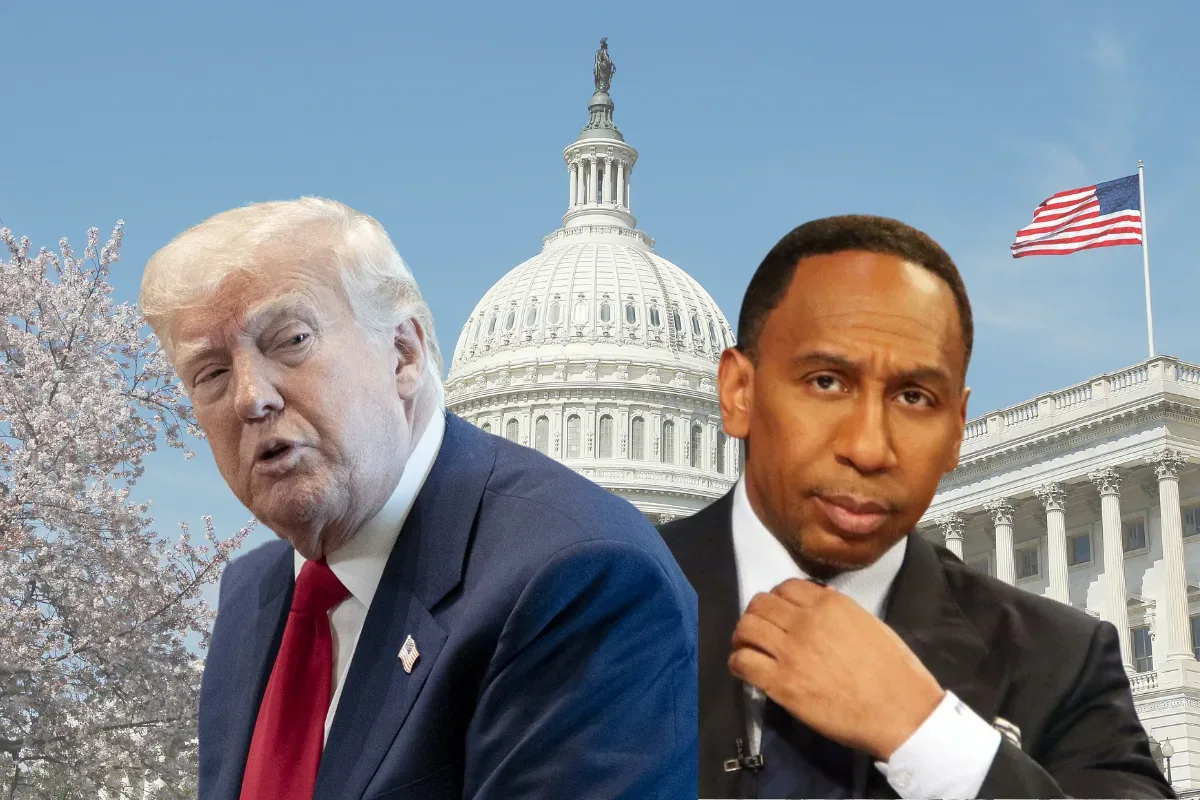
That mixture is likely to provoke debate precisely because it is designed to be legible across ideological lines. Smith has spent recent years engaging more directly with political subjects, including a recent White House dinner with Bill Maher and Donald Trump. Those appearances and conversations make his presidential hypotheticals more notable than an offhand remark from someone with no involvement in public affairs.
The practical reading: confidence without candidacy
The straightforward takeaway is not that Stephen A. Smith is running for president. He has not said that. It is that he believes he possesses the potential to win, would accept the responsibility of the office if elected, and identifies as a Democrat with a notably conservative-leaning emphasis on several issues.
At the same time, he says the threshold for a real run is higher than personal confidence. He does not intend to abandon his current career in pursuit of a campaign whose outcome is uncertain. That is both a political statement and a calculation about what he is willing to risk.
Political entertainment has a way of turning hypotheticals into ongoing plotlines, whether in real life or in scripted stories such as the political thriller “Trinity”. Smith’s remarks will likely keep the speculation alive. But the factual position remains simple: he is talking about the possibility, not taking the steps of a candidate.