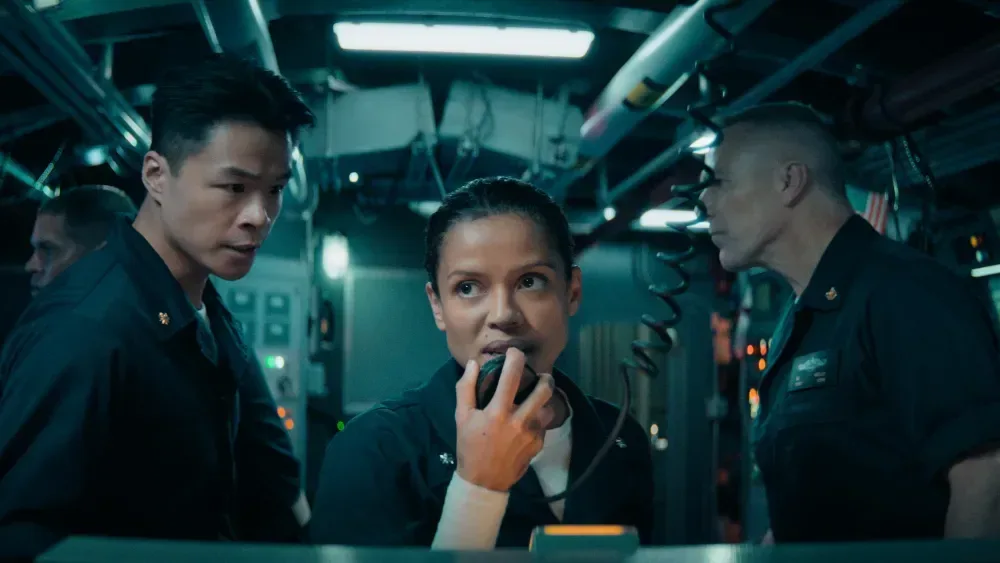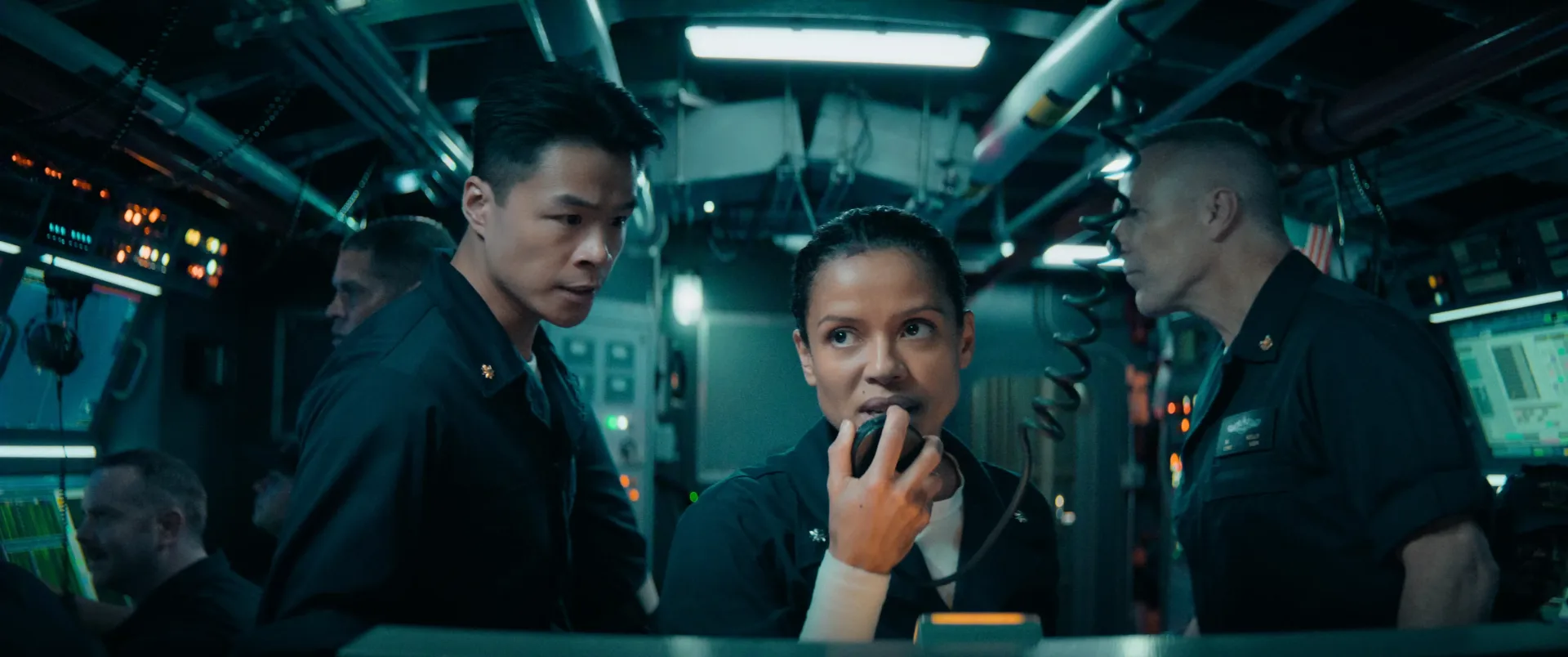
Netflix’s new political thriller Trinity will arrive on Dec. 1. The seven-episode series places Gugu Mbatha-Raw and Richard Madden inside a high-stakes conflict involving military authority, government secrecy and the looming threat of global war.
Mbatha-Raw plays Commander Katherine Decker, while Madden takes the role of Secretary of Defense Webb Preston. Their characters form an unexpected connection, but it is not presented as a safe or simple alliance. Decker becomes entangled in a classified initiative known as Trinity and must navigate a painful divide: she can back Preston’s approach to preventing World War III, or work to bring his concealed actions into the open.
That setup gives Trinity a clear dramatic engine. Its central question is not merely whether a secret program can succeed. It is whether the people nearest to it can trust each other, and whether the apparent goal of security can justify what remains hidden.
A Dec. 1 launch for a seven-episode thriller
Trinity is a compact, seven-episode series rather than an open-ended procedural. That episode count suggests a focused season-long story in which the Trinity program, Decker’s relationship with Preston and the risk of a wider international catastrophe can develop together.
The supplied story details do not establish how Netflix will schedule those seven episodes, so viewers should not assume a weekly rollout or a full-season drop. What is confirmed is the Dec. 1 debut date and the basic premise: a commander is forced toward a consequential choice after becoming involved in the dangerous machinery surrounding Trinity.
For audiences, the most important term in the premise may be political thriller. It describes a story where power, public institutions, decisions made behind closed doors and competing loyalties create the suspense. The danger in this kind of drama does not need to come only from a single physical threat. Information can be leverage; secrecy can be a weapon; and a decision designed to avert disaster can create another crisis if it is made without accountability.
In Trinity, the World War III stakes make those tensions deliberately enormous. Yet the character framing remains intimate: Decker is caught between supporting Preston and exposing him. The premise thereby puts professional duty and personal trust on the same collision course.
Gugu Mbatha-Raw and Richard Madden lead the conflict
Mbatha-Raw’s Katherine Decker carries the commander title, positioning her close to the operational and institutional dimensions of the story. Madden’s Webb Preston, meanwhile, is Secretary of Defense, a role that places him at a much higher level of political leadership. The difference matters dramatically. Decker and Preston may be working toward a shared outcome—stopping a global conflict—while possessing very different power, access and responsibility.
The series’ tension will hinge on what Preston has withheld and what Decker is prepared to do after learning more. A character described as being caught between support and exposure is not simply investigating from a safe distance. She is implicated by her proximity to the strategy itself, making every decision potentially consequential.
That design leaves room for two interpretations of Preston’s position, neither of which should be treated as confirmed before the series arrives. He may regard secrecy as a necessary part of preventing catastrophe. Or the secrets surrounding Trinity may be too serious to defend, regardless of the stated objective. The premise intentionally gives Decker, and viewers, a dilemma rather than an easy moral map.
The creative team behind ‘Trinity’
Jed Mercurio serves as showrunner, writer and executive producer on Trinity. A showrunner is generally the lead creative figure for a television series, overseeing the show’s overall direction and helping guide its writing and production. Mercurio’s multiple credits indicate that he is central to both the storytelling and the larger production leadership.
Jimmy Mulville, for Hat Trick Mercurio, and Mendy Mericle are also executive producers. Executive producers can have varying day-to-day responsibilities depending on a production, but the credit identifies them as senior contributors to the series’ creative or production oversight.
Michael Cuesta directed and executive produced the first two episodes. Directing the opening pair can be especially significant on a serialized thriller, because those episodes introduce the show’s world, establish its visual and dramatic tone, and set the initial rhythm for the relationships at the center of the plot.
The supporting cast includes Marcia Gay Harden, JD Pardo, Bruce Greenwood, Robert Wisdom, Kirk Acevedo, Ben Cotton, James Remar, Jason Ralph and Mark O’Brien. Specific character details for those performers have not been provided, so their roles in the Trinity program or in Decker and Preston’s struggle remain undisclosed.
What the trailer setup establishes—and what it does not
The new trailer introduces the series through its political-intrigue premise and its two leads. It confirms a story built around classified information, strategic conflict and an escalating choice for Decker. It also establishes that the title “Trinity” belongs to the top-secret program at the heart of the narrative.
It does not, from the available information, reveal the program’s precise nature, the full list of parties involved, or the specific secrets Preston is keeping. Those omissions are useful to note because a show about classified operations relies heavily on what characters know, what they suspect and what they cannot safely reveal. Naming every mechanism too early would undercut the uncertainty that the premise is designed to create.
Rather than promising a story exclusively about covert action, the setup points to a thriller driven by competing obligations. Decker’s possible support for Preston’s strategy and her obligation to expose his secrets are not two unrelated missions. They are opposing responses to the same looming threat. If she protects the plan, she may protect an approach whose moral or political consequences she cannot accept. If she reveals it, she may disrupt an effort intended to prevent a devastating war.
That tension is what separates a political dilemma from a simple mission briefing. The show’s premise puts its lead in a position where the right action is uncertain and the cost of acting may be inseparable from the cost of staying silent.
A new entry in Netflix’s thriller slate
Trinity joins a wider streaming landscape where high-concept political and espionage stories frequently ask audiences to follow information as closely as action. The program’s key mystery is embedded directly in its title, while its stakes are embedded in Decker’s choice. Seven episodes gives the series a defined space to answer what Trinity is, why Preston’s secrets matter and what Decker decides to risk.
Fans looking for more streaming-drama context can also read about the reported plans around Marvel’s Zodiac spy-drama model. Trinity, however, stands on its own premise: a commander, a defense secretary, an unlikely bond and a classified operation whose concealed details could reshape the stakes of an international crisis.
Netflix has set Dec. 1 as the date for viewers to find out where Decker’s loyalties land—and what the name Trinity ultimately means for the people attempting to keep a global conflict from breaking out.