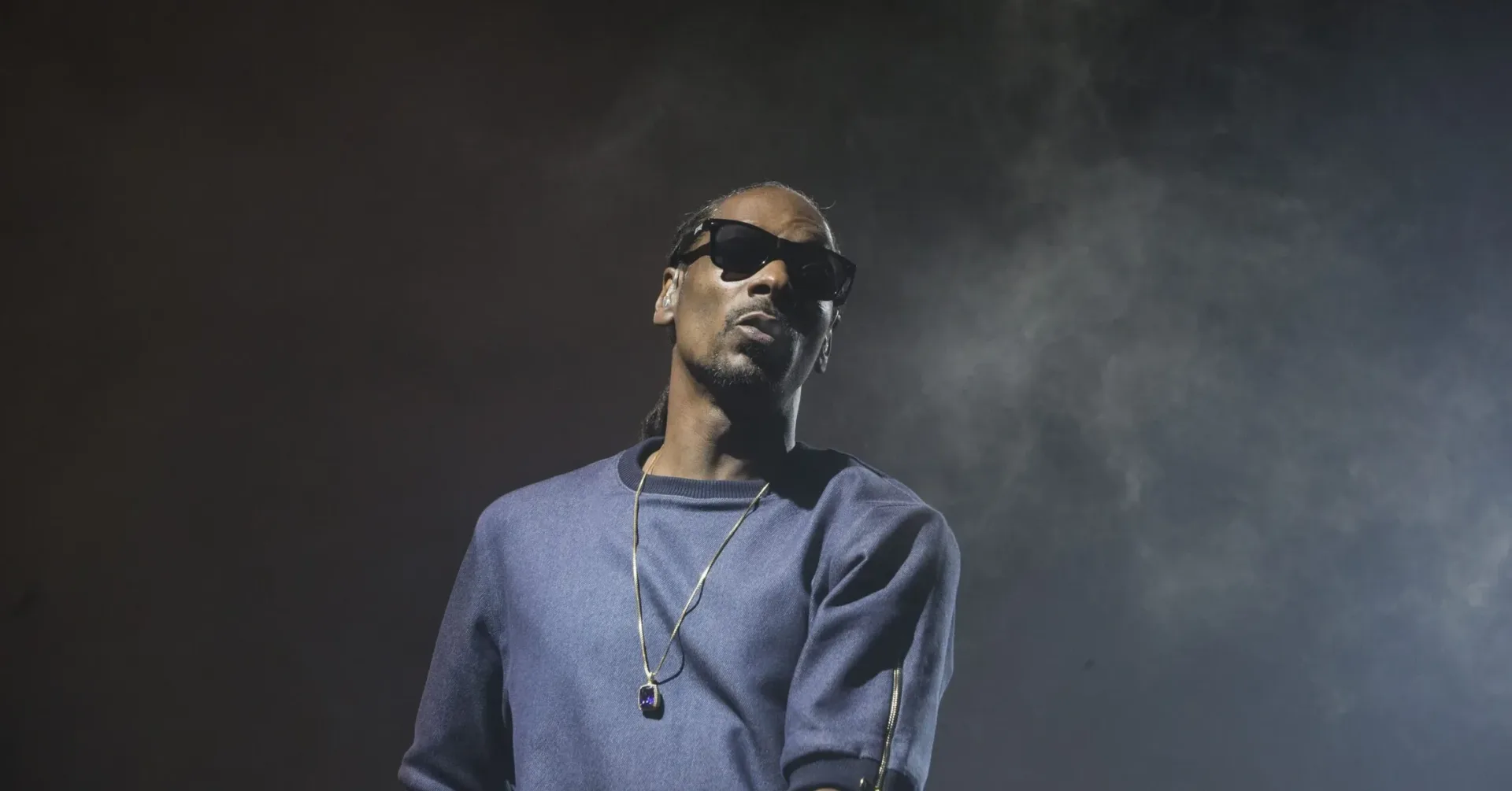
Snoop Dogg’s “Lodi Dodi” has a new animated visual, bringing one of the best-known songs from Doggystyle into a style of online music culture that has helped introduce it to another generation. Directed by Tristan Zammit, who works professionally as Tristious, the video combines an animated Snoop with footage of the rapper performing in the studio.
The release is a fittingly layered update for a recording that was already part of a much longer rap conversation. Snoop’s “Lodi Dodi,” from his 1993 debut Doggystyle, reworks Doug E. Fresh and Slick Rick’s 1985 “La Di Da Di.” The new visual does not change that lineage; it gives the song a fresh setting in an era where short-form clips, anime-inspired edits and viral trends can direct listeners toward records made decades earlier.
A classic record enters an animated setting
The video places an animated version of Snoop in a cartoon world, while retaining studio-performance footage as part of its presentation. That mix matters: animation offers an interpretive layer rather than simply reproducing a familiar performance image. The result positions the record in a visual language already recognizable to viewers encountering the song through anime edits and social platforms.
Tristious directed the visual, with Alex Sarzosa credited as editor. Zammit is Toronto-born and Philadelphia-based, and his earlier work includes videos for XXXTENTACION, Juice WRLD, Lil Uzi Vert and Lil Yachty. Among the named credits are XXXTENTACION’s “BAD!,” Juice WRLD’s “Righteous” and Lil Uzi Vert’s “Myron.”
That résumé helps explain why this collaboration makes sense beyond the surface novelty of putting a 1993 rap recording into a cartoon environment. Tristious has worked in a space where animation can function as more than decoration: it can be an emotional frame, a stylized extension of an artist’s persona, or a way to make a catalog track feel native to the screens on which people now discover music.
What “reworks” means in this case
A rework is not necessarily a straightforward cover. In this context, it describes an artist reshaping an earlier song into a new performance and identity. “Lodi Dodi” is connected directly to Doug E. Fresh and Slick Rick’s “La Di Da Di,” a 1985 classic. Snoop’s version therefore carried an intergenerational relationship from the beginning: it was a newer artist taking a foundational rap performance and making it part of his own debut-era voice.
That history is important to the animated video because it prevents the release from being read merely as a nostalgia exercise. The song has already traveled once across generations through its reworking of “La Di Da Di.” Its recent traction through TikTok trends and anime edits represents another route by which a familiar recording can gain a new audience. The current visual acknowledges the route listeners are using rather than asking those listeners to approach the song only as a museum piece.
Anime edits, broadly speaking, are fan-made or trend-driven video pairings that place music alongside animated imagery. They can become powerful discovery tools because a song is experienced with a visual mood, character moment or rapid-cut sequence rather than as an isolated audio track. The supplied information does not identify a particular edit or trend responsible for “Lodi Dodi” gaining momentum, but it does establish that the track has recently circulated through that creative ecosystem.
Why the new video matters for a catalog song
Catalog music is shorthand for an artist’s existing body of released work, particularly recordings that are no longer new releases. A new video can give a catalog song a renewed cultural moment without pretending it is newly written. In “Lodi Dodi’s” case, the song’s standing comes from its place on Doggystyle, while the visual supplies a contemporary entry point.
There is a practical benefit to that approach for different kinds of viewers. Longtime listeners can return to the recording with a new visual interpretation. Newer listeners who first know the track from edits or viral clips can see it connected explicitly to Snoop’s original album era. Neither audience has to give up its own relationship with the song for the other one to exist.
The choice also highlights how visual formats can influence music preservation. Preservation does not only mean archiving an original version unchanged. It can also mean creating a new pathway toward that original version, making clear where it sits in an artist’s work and in the broader chain of influence. Other music projects have likewise used new formats to invite audiences back into established material, though the “Lodi Dodi” video takes a distinctly animated route.
Tristious and the handoff between visual eras
The collaboration can be understood as a handoff between visual vocabularies. Snoop’s original record belongs to the early-1990s West Coast rap landscape and to his debut album. Tristious arrives with a career built around animated music visuals for a later group of rap artists. Combining those perspectives lets the video present Snoop as an animated character without severing the work from the human performer, since studio footage is also included.
That balance is notable. An entirely animated video might place all attention on a fictionalized version of the artist; an entirely studio-based performance video would lean more heavily into a conventional documentary feeling. By using both, the visual can play with a cartoon setting while still grounding the song in Snoop’s performance presence.
The supplied credits identify Zammit as director and Sarzosa as editor, but do not provide further production details, a release platform, or a description of individual animated sequences. Those limits are worth keeping in view. The central confirmed idea is the blend of animation and studio performance, not a broader technical claim about the video’s production methods.
A legacy being interpreted in more than one medium
The animated “Lodi Dodi” release arrives as a separate screen project is preparing to revisit Snoop’s beginnings: a forthcoming biopic. The film’s casting includes Myles Bullock Be as Dr. Dre, Algee Smith as Warren G and Tre Hale as Suge Knight. The available details identify those castings, but do not establish a release date or further production specifics.
Still, the overlap is revealing. A biopic generally revisits an artist’s story through actors and a narrative feature format. An animated music video revisits a specific work through stylization and performance imagery. Both can involve reinterpretation, but their purposes are different. The film project points toward a dramatized account of formative history, while the “Lodi Dodi” visual keeps attention on one enduring recording and the ways it is currently being heard.
For Snoop, these projects suggest a legacy broad enough to support multiple perspectives at once. There is room for an actor to portray figures from his early orbit, for a contemporary animator to put his likeness into a cartoon world, and for audiences to reconnect with the underlying album track through social-media discovery. That is not a replacement of the original song’s context. It is evidence that the track can still communicate across changed platforms and aesthetics.
The important throughline: a song built to travel
“Lodi Dodi” now connects at least three clearly stated moments: “La Di Da Di” in 1985, Snoop’s reworking on 1993’s Doggystyle, and the new animated visual directed by Tristious. Each stage reflects a different means of keeping a performance active in culture. First came the foundational record; then a defining reimagining by Snoop; now a visual designed for a digital environment in which animated edits have renewed the song’s momentum.
The most useful way to view the new video is not as an attempt to update the past out of obligation. It is a contemporary interpretation of music that has always had movement built into it. “Lodi Dodi” was already a conversation with an earlier generation of rap. The Tristious-directed visual continues that conversation in a form that can meet younger listeners where they are, while giving established fans a new lens on a Doggystyle standout.