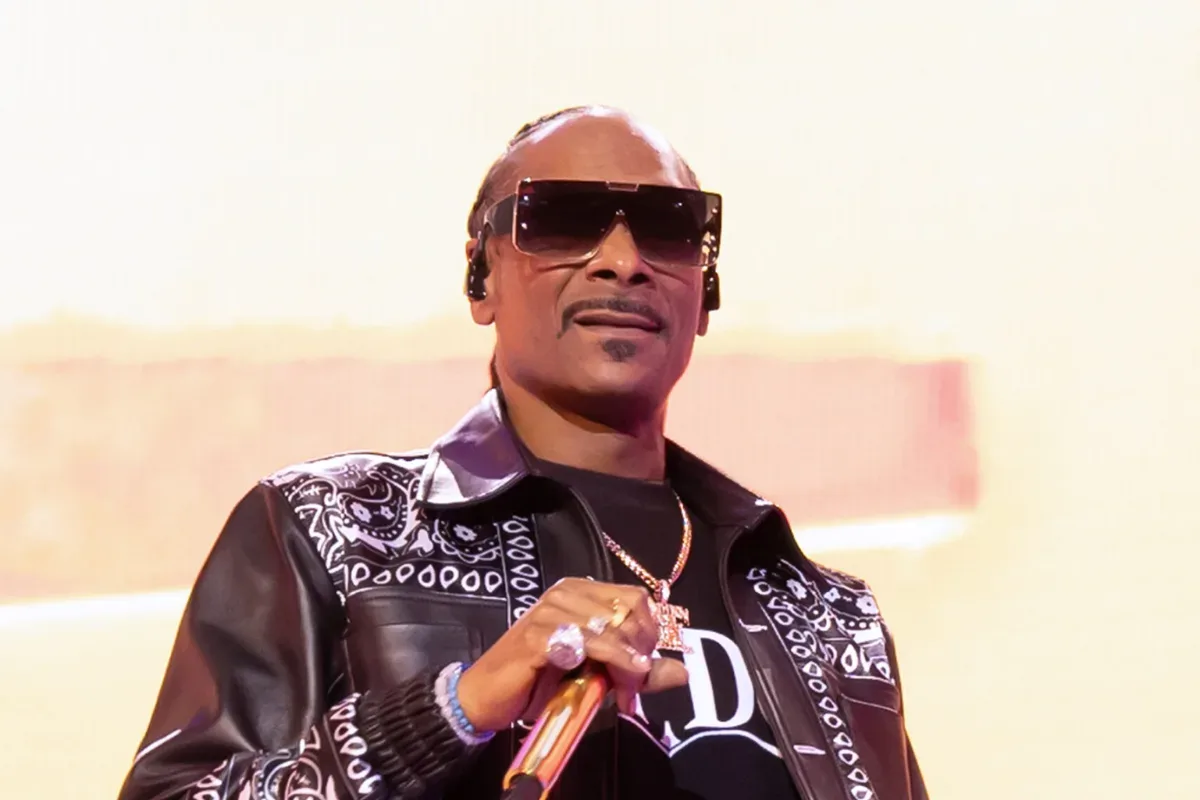
Snoop Dogg’s Dr. Bombay ice cream brand has chosen Australian violinist Annabelle Traves for an unusual three-month remote tasting assignment worth $30,000. Traves, a Dubai-based performer whose concert background includes Carnegie Hall in New York, will receive $10,000 per month under the contract.
The role drew more than 350,000 applicants before the field was narrowed to 50 finalists for interviews. Hiring partner Deel announced Traves’ selection on October 28, and Snoop Dogg delivered the result to her in a video message.
It is a conspicuously unconventional crossover: a concert musician moving into flavor ideation for a celebrity-backed ice cream brand. But Traves’ winning approach was not to pretend she had a conventional food-industry résumé. Instead, she leaned into the skill she had. Her application featured a violin rendition of Young, Wild & Free, the Snoop Dogg, Wiz Khalifa and Bruno Mars track.
A job built around taste, ideas and international reach
Traves’ work is expected to include identifying ideas for international flavors and helping with the development of an ice cream connected to Deel as Dr. Bombay looks toward new markets. That wording is important: the assignment is not framed solely as repeatedly sampling existing tubs of ice cream. It combines tasting with early-stage creative input.
In product development, flavor ideation means generating and assessing possible flavor concepts before they become a finished item. An idea can start with a recognizable dessert, a regional ingredient, a familiar combination, or a broader food trend. It still has to make sense as ice cream, however. A compelling dessert inspiration may not translate neatly into a frozen product without further development.
Traves already has two distinctly Australian possibilities in mind: lamington and pavlova. A lamington is generally associated with cake, chocolate coating and coconut, while pavlova is a meringue-based dessert often served with fruit. Those suggestions show the kind of cultural starting point the role could accommodate: taking a dessert recognizable in one market and considering whether it might have a place in a broader lineup.
The supplied details do not establish which, if any, ideas will become retail products. Nor do they describe a release schedule, territories or a final flavor list. At this stage, the practical significance is that Dr. Bombay has hired someone specifically to contribute international perspective during a defined three-month term.
“I’ve spent my life training my ear, so I’m hoping my palate holds up to the same standard!” Traves said.
The line captures the playful logic behind her selection. Musical training is not food-science training, and there is no indication that the job treats the two as identical. Still, both involve close attention to sensory differences. Traves’ application appears to have made that connection memorable without disguising where her actual expertise lies.
Why the violin application mattered
With more than 350,000 people seeking one position, an applicant needed a way to be visible before the interview stage. Traves considered presenting herself as though she possessed specialist ice-cream-making knowledge, but chose a different route. She used music—the discipline in which she has trained and worked—to make a direct, relevant creative case.
That choice matters because the role itself sits at the meeting point of food, brand identity and entertainment. A straightforward culinary pitch might have been credible, but a performance of a song associated with Snoop Dogg also made the submission specific to the opportunity. It connected Traves’ own professional identity to the public figure behind the brand.
Her experience offers a useful distinction for applicants in similarly crowded creative searches: authenticity is not the same as simply listing credentials. It can mean selecting a real skill and demonstrating it in a way that answers the assignment’s personality. Traves did not need to claim a background that was not hers for the application to be taken seriously.
That does not mean a musical submission is a universal template for non-music work. The approach made sense here because the employer and brand were already linked to music and entertainment. The broader lesson is narrower and more practical: identify the skill that is genuinely yours, then make its connection to the opportunity easy to understand.
There is also a reminder here that a memorable entry is not necessarily a gimmick. A gimmick might attract a glance without proving anything else. Traves’ violin performance worked as a demonstration of practiced ability, not merely a novelty. Her own takeaway was to use one’s strengths and put oneself forward even when the odds are long.
Remote hiring and the visa question
The job also raised a real-world logistics question. Traves is Australian and lives in Dubai, and she was unsure whether she could take the position without a U.S. visa. Deel had her signed up within 48 hours.
That detail is more meaningful than the standard “remote job” label can suggest. Remote work often involves more than choosing a video-call platform. When a company works with someone based in another country, questions can include where the person is located, how the agreement is structured and how onboarding is managed. In this case, Deel’s involvement appears to have helped settle the immediate cross-border hiring concern quickly.
It also makes the global-flavor brief feel less cosmetic. Dr. Bombay is asking a musician living in Dubai, with Australian dessert ideas, to consider international concepts. The role’s structure allows the company to draw on someone outside the United States rather than treating geography as an automatic barrier.
None of that guarantees that an international idea will reach stores, and a three-month creative contract is not the same thing as a permanent executive role. But it illustrates how a short-term brand project can reach beyond the company’s local hiring pool—particularly when the project is expressly concerned with new markets.
Dr. Bombay’s move beyond supermarket shelves
The tasting hire arrives during a year in which Dr. Bombay has also tested a more direct physical presence. On April 19, the brand opened what was billed as its first physical storefront in Venice Beach, next to Marathon Burger. The location was announced as a venture operating through October.
Lil Baby joined the business as an investor and co-founder for that storefront effort. The shop gave consumers a brand-specific place to encounter flavors including Baked Blueberry Muffin and peanut butter varieties, rather than limiting the brand’s presence to supermarket shelves.
A storefront and a remote flavor-tasting contract are very different experiments, but both point toward a brand trying to create experiences around its products. The Venice Beach location put the ice cream in a destination setting; the Traves appointment turns flavor development into a public-facing story with a global angle.
That approach is especially fitting for a celebrity-associated food brand. Flavor names and product concepts can do more than identify ingredients—they can help carry tone, personality and cultural references. The supplied information does not provide sales figures or an expansion timetable, so it would be premature to measure the commercial result of either initiative. What is clear is that Dr. Bombay has used both a temporary physical location and a highly visible hiring campaign to extend its profile.
What the selection says—and what it does not
Traves’ selection is not evidence that professional musical training is a standard route into food development. It is evidence that a company chose a musician for a specific, limited assignment after a vast applicant search, with international flavor concepts among the stated responsibilities.
Nor should the prize-like framing obscure that this is paid work with defined terms: three months at $10,000 a month, totaling $30,000. The eye-catching part is the subject matter—tasting ice cream—but the contract also calls for creative participation and is tied to the brand’s exploration of new markets.
For Traves, the result creates a rare bridge between a concert career and a food brand. For Dr. Bombay, it supplies a spokesperson-like creative contributor whose application itself already generated a story. And for applicants watching from the sidelines, it is a strong example of a simple principle: the most useful pitch is often not an imitation of somebody else’s expertise, but a clear demonstration of your own.
The music-business side of celebrity ventures can be just as important as the headline-grabbing casting decisions; for a separate discussion of how business incentives can shape music-industry narratives, see this look at a possible business incentive in a Drake-related debate.