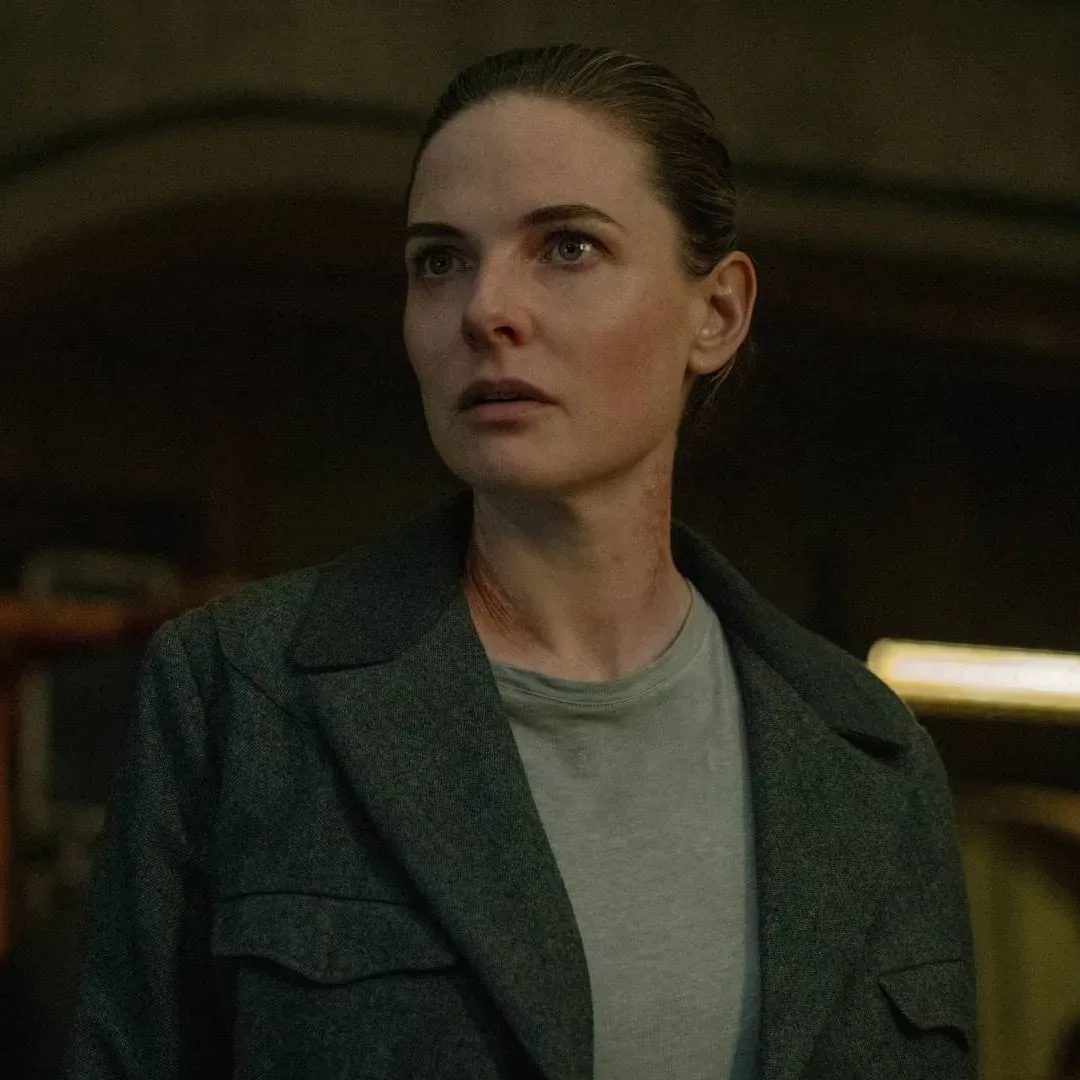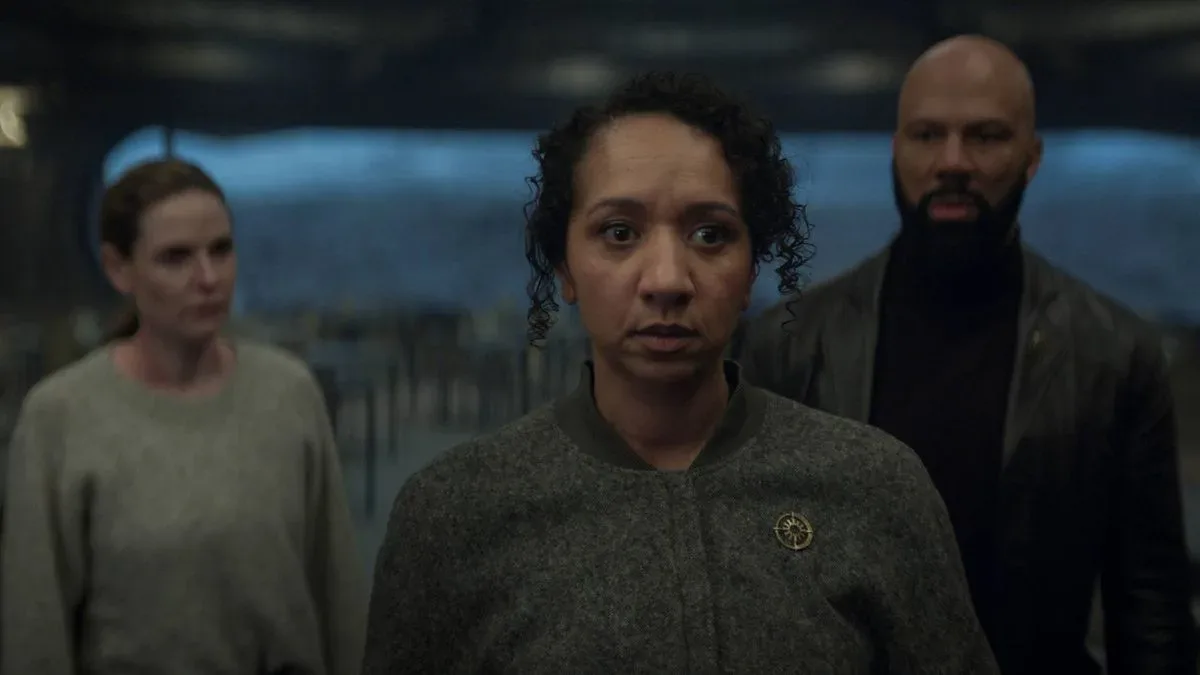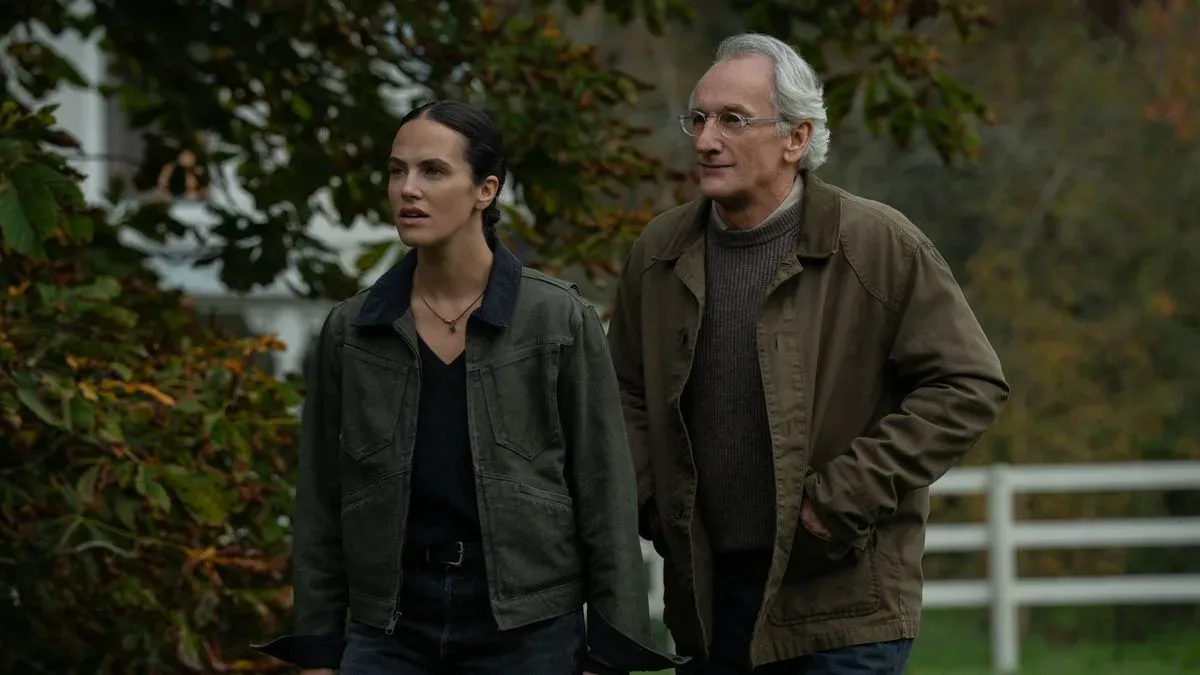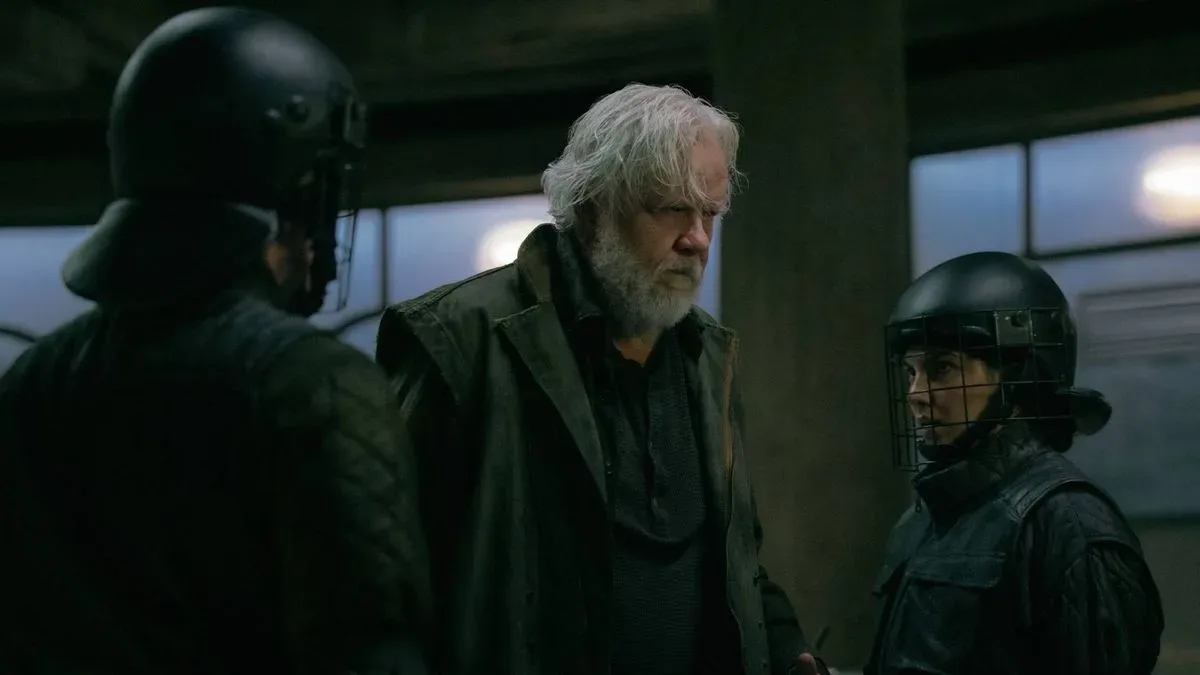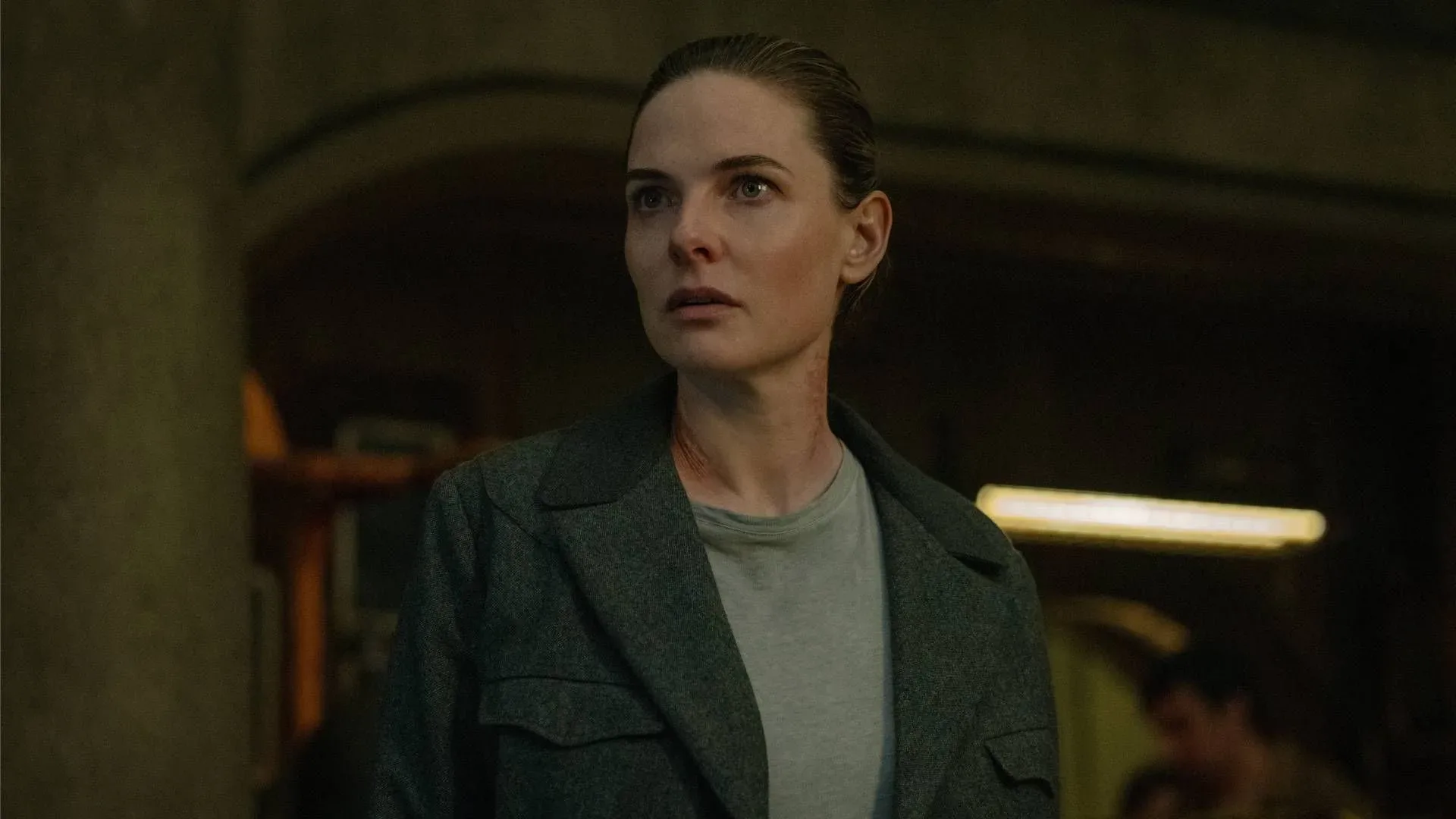
Major spoilers for Silo season 3, episode 10 follow. The third-season finale turns the show’s familiar underground paranoia into something much larger and uglier: Silo 18 has not merely been governed by a cruel system. It has been watched, managed and, when necessary, marked for extermination by people in Silo 1.
The episode connects the season’s earlier material to Juliette Nichols’ present-day crisis while leaving enough uncertainty for the already-confirmed fourth and final season. The immediate danger is stopped, but the rebellion has graduated from fighting for one silo’s survival to contemplating an assault on the command center behind the entire Project. It is a remarkably large mission statement for a series in which a single staircase can feel like an epic journey.
What happens at the end of Silo season 3?
The finale establishes that former Congressman Daniel Keene is now known as Troy, a Silo 1 specialist revived from cryogenic sleep whenever the people in charge require a hard decision. Dr. Victor Crnkovich wakes him through rapid sequencing, and Troy has little or no access to his former identity, his relationship with Helen Drew or even his original name. He is a tool sharpened by memory suppression and repeatedly put back in the drawer.
Rosalind Thurman’s Silo 1 treats the Directive as its overriding mission. Troy explains that avoiding contamination between silos is the top priority, with the implication that an entire population can be destroyed if it appears to threaten that goal. The Pact, meanwhile, is the system of written rules imposed on individual silos. They are related but not identical: one governs the inhabitants, while the other supplies Silo 1’s wider purpose.
The flashback storyline also places Troy at the center of the Silo 17 catastrophe. He authorizes the use of a lethal compound against the people who emerge from the silo, while drones kill survivors left behind. His sister Charlotte, operating under the name Susan and seemingly without memories of him, is the senior drone commander. She resists his instructions, offering another example of the finale’s central idea: identities may be chemically buried, but they do not always stay buried politely.
In Silo 18, Bernard’s sacrifice buys Juliette and the Mechanical rebels a slim chance to stop the safeguard. Camille appears to be cooperating with the Algorithm, which is actually Victor in Silo 1, but this proves to be a deception. It creates the seconds Knox and Shirley need to seal the safeguard pipe before the compound can flood the silo. The rescue succeeds, denying Silo 1 the ability to wipe out Silo 18 from afar.
Victor then cuts communications after arguing with Camille and takes his own life. Shortly afterward, Troy is rapid-sequenced again, having spent another 35 years in cryo and arriving in the same present-day era as Juliette. At the forward vault, Juliette and Troy reach an uneasy arrangement: Silo 18 will not attempt contact with another silo, and Silo 1 will not initiate the safeguard. Juliette agrees outwardly, but plainly sees this as a pause rather than a peace treaty. Her real intention is to take the conflict directly to Silo 1 before its rulers expect an attack.
Victor’s final message and why Helen matters
Victor’s last act is to leave Troy a message identifying the woman who keeps breaking through the walls in his mind: Helen Drew. Throughout the season, the revived specialist has repeatedly asked Victor about a woman he cannot place. Victor’s records contain many versions of that same question, showing that memory-erasing medication has not fully erased the emotional imprint.
Troy’s response to learning Helen’s name is one of the finale’s most important turns. Silo 1 depends upon people performing roles without fully understanding the personal history that made them vulnerable to its control. Daniel Keene’s memories may have been fragmented, but Helen remains a persistent fault line in the manufactured identity called Troy. Whether that makes him an ally, an unstable danger or both is a key question for season 4.
Who dies in the finale?
The largest loss is the slaughter of 9,832 people identified as fugitives during Silo 17’s destruction. The operation makes clear that Silo 1’s safeguards are not theoretical warnings or distant administrative threats; they are mechanisms for mass death.
The episode’s principal individual death is Dr. Victor Crnkovich, played by Matt Craven. His suicide follows the failure to safeguard Silo 18. The show leaves his exact motivation open. Victor seems burdened by the years and by the system he helped build, and he may even feel a degree of relief when Silo 18 outmaneuvers him. Failure, guilt, exhaustion and the collapse of his own certainty may all be part of the answer.
Is the surface air really poisonous?
The evidence in episode 10 strongly suggests that the atmosphere is not instantly lethal in the way Silo residents have been taught to believe. Thousands from Silo 17 spend substantial time outside without sealed suits, far exceeding the brief exposure of people sent out to clean. The more likely cause of those familiar cleaning deaths is the compound deployed by a high-altitude drone, especially when someone lacks the effective tape that has protected select suits.
That does not prove the outside world is harmless. Nanobots may still exist in the atmosphere or pose a threat that Silo 1 considers existential. The Directive’s fixation on keeping silos apart implies some danger beyond simple political control, although the finale has not confirmed what that danger is. The show has opened a door to the surface without declaring it a carefree picnic zone.
What is the compound, and did Per Stenson end the world?
The compound’s precise composition remains unidentified. It behaves like a rapidly fatal airborne weapon, and it could be a conventional toxin or a nanobot swarm. The latter theory has weight because nanotechnology is closely tied to Per Stenson’s wealth and fears. The same substance, or a version of it, appears to be used both for cleaning operations and for safeguard systems designed to kill everyone inside a disobedient silo.
Stenson’s responsibility for the disaster outside the silos is also not confirmed. The behavior around the planned open day, combined with a nuclear detonation near the silo site, makes it plausible that he caused or anticipated the blast in order to force the Project into operation. His warnings about humanity’s future and nanobots provide a motive. Still, plausible is not proven. The finale does not establish whether the wider world was destroyed, whether the blast devastated only the local region, or whether Stenson directly ordered it.
Stenson does not appear in Silo 1 during the finale, nor is he named there. He may be in cryo, or he may have died much earlier. A season 4 trailer shown after the credits indicates that he will return in some form, but the specific circumstances remain unclear. That post-credits tease is not merely decorative: it points toward Silo 18 taking its fight to Silo 1.
The Project is a reset button, not simply a shelter
The finale gives the Silo Project a chilling philosophical frame. Its creators seemingly view humanity’s past as something from which the species must be freed. The memory alteration, forbidden relics and tightly controlled history are therefore not accidental excesses. They are part of a planned reset. A population that cannot remember old mistakes also cannot easily question the people who decided which memories qualified as mistakes.
Thurman also tells Charlotte/Susan that her ability as a pilot will matter at the Project’s end. The finale does not define that endpoint or explain why piloting will be necessary. It does, however, suggest that the silo network has a final phase beyond indefinite underground survival.
This interest in contested history and constructed identity makes a look at how a biopic can wrestle with a messy literary legacy a useful companion read, even if Silo expresses its ideas with more bunkers, surveillance systems and terrifying plumbing.
Could Juliette be related to Daniel and Helen?
Helen is very unlikely to still be alive. She appears to have entered Silo 18, which has no known cryogenic system equivalent to Silo 1’s, while Daniel has survived across vast spans of time through repeated freezing. The likely scenario is that Helen lived a normal lifespan in Silo 18 after becoming separated from Daniel.
Someone in Silo 18 is very likely descended from Daniel and Helen, though the show has not confirmed who. George Wilkins is a possible candidate because of the yellow duck Pez dispenser he gives Juliette, an object originally connected to Daniel and Helen. It could have traveled through generations as a family keepsake. Juliette herself is another possibility. Her defiance resembles Helen’s, while her ability to improvise under pressure recalls Daniel’s. The prospect of Juliette confronting a distant ancestor remade into Silo 1’s enforcer would add an appropriately cruel twist to the final season.
How old is the Project, and when does season 4 arrive?
The exact timeline remains obscured because ordinary silo citizens cannot preserve reliable long-term records under routine memory manipulation. What is certain is that Troy has spent at least 42 years in cryo by the events of episode 10, including the 35-year jump near the end. Victor’s collection of repeated questions about Helen shows that Troy has been awakened and returned to cryo many times. That makes a timeline of centuries entirely possible.
Earlier evidence from the Silo 18 mines suggested roughly 300 years of labor, which fits the scale implied by the finale. The Project has endured long enough to turn an emergency shelter into a civilization that treats its own beginning as contraband.
Silo season 4 is confirmed as the final season. Seasons 3 and 4 were filmed back-to-back, with season 4 production wrapping in March 2026. It is scheduled for Summer 2027, though no more exact release date has been announced. For another reminder that shared entertainment is often better when everyone understands the ground rules, see the unwritten rules of couch multiplayer. Silo 1 would probably ban those too, right after fun and electrical tape that actually works.