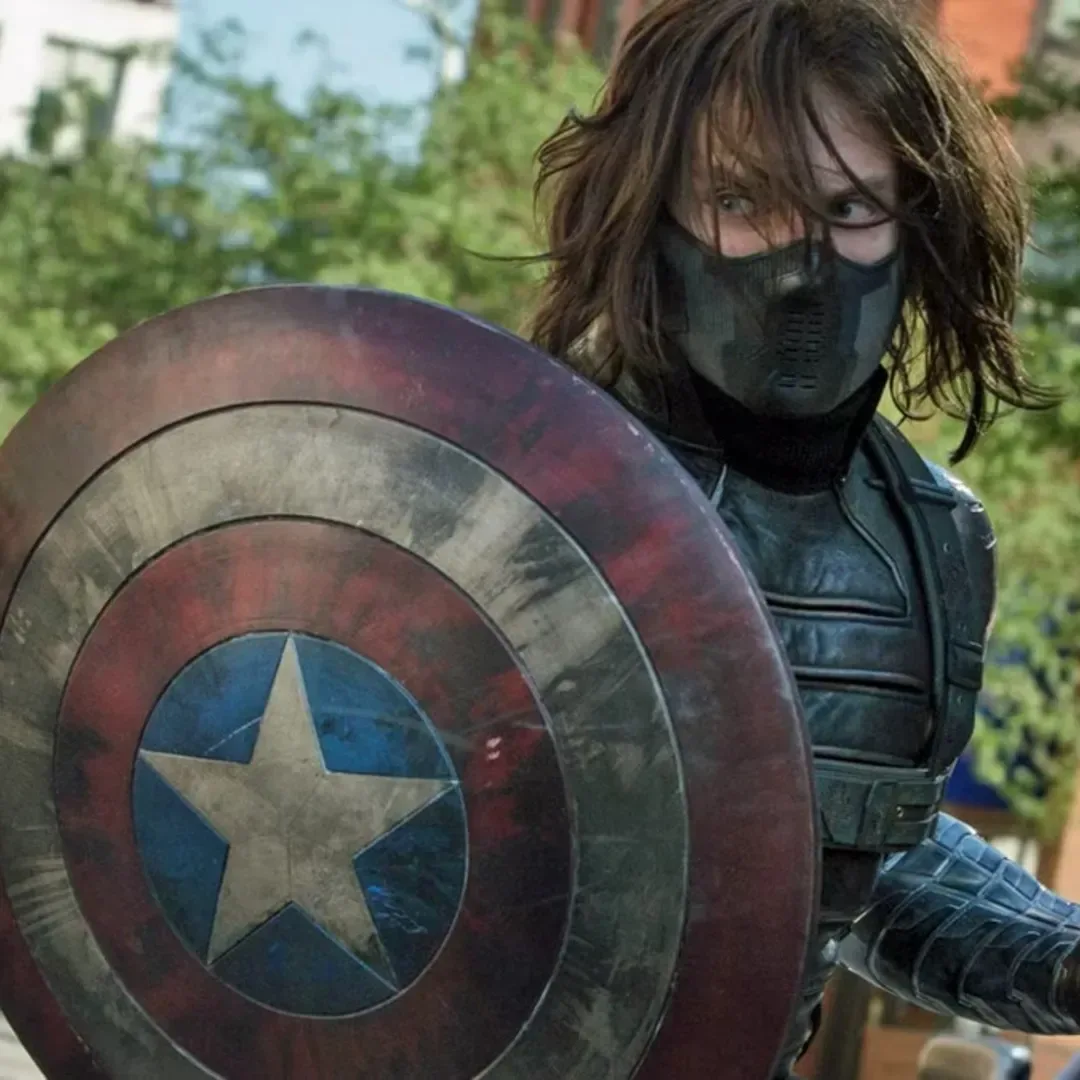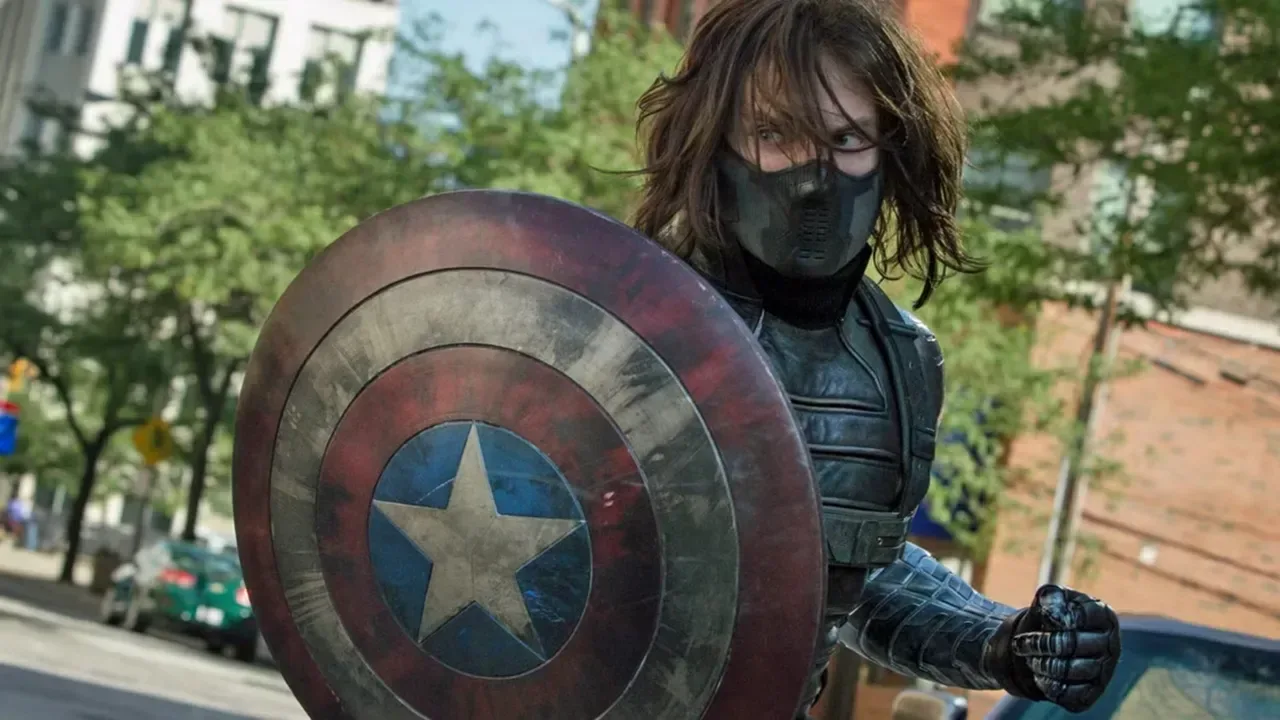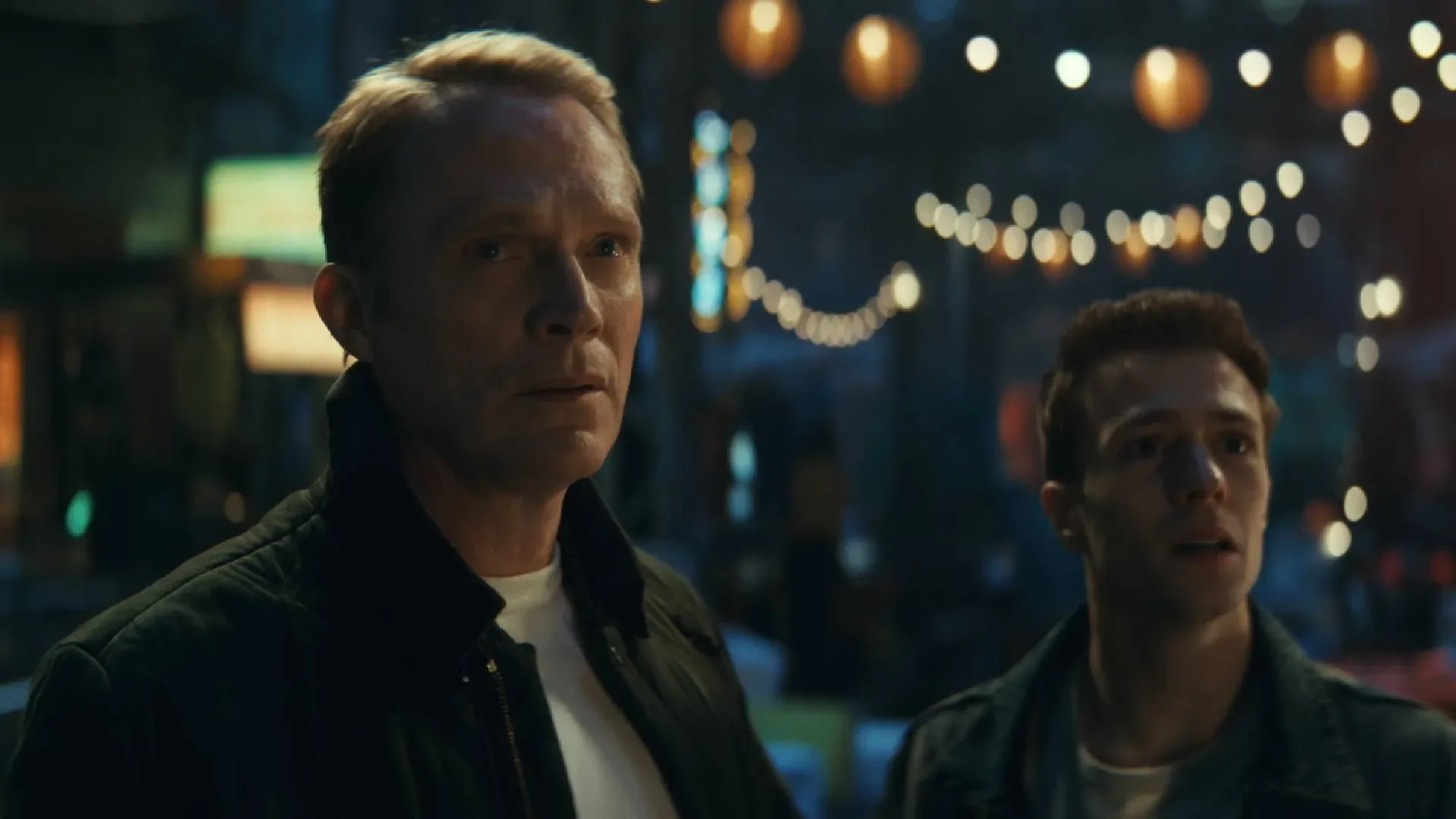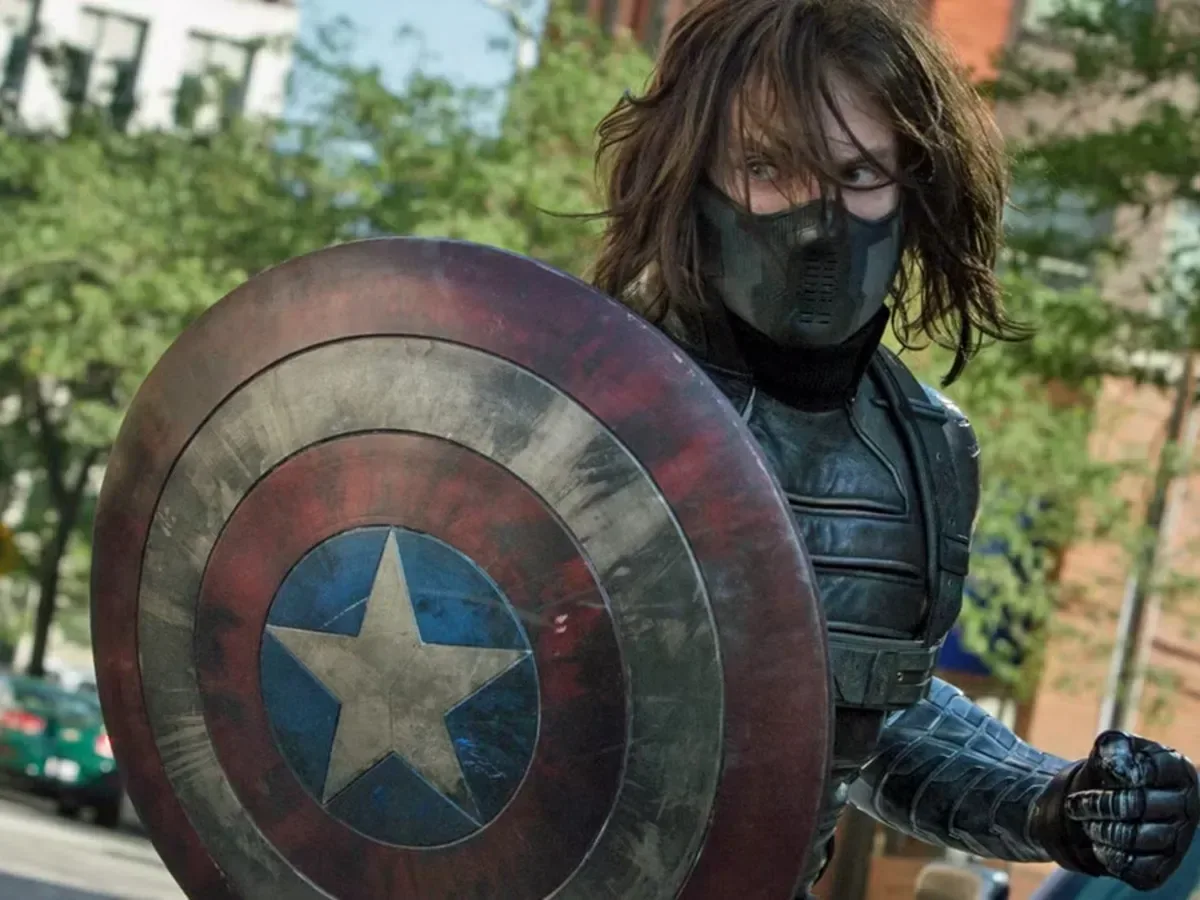
Sebastian Stan has an idea for a Bucky Barnes movie that would trade portal storms, sky beams, and emergency assemblies of costumed colleagues for something considerably more unnerving: one man, one face from the past, and an obsession that will not leave him alone.
Stan recently described a solo film concept he floated to Marvel Studios president Kevin Feige, characterizing the pitch as half-joking but clearly specific enough to have a shape. Its inspiration point was Denis Villeneuve’s 2015 thriller Sicario, not in the sense of directly remaking that film’s story, but in its tighter, adult-oriented, tense approach. Stan’s proposed Bucky project would run on a modest budget and follow a personal investigation connected to the years when Bucky was being controlled and used as the Winter Soldier.
Feige’s response, as Stan recounted it, was positive: the idea sounded cool. That is not a confirmation that a Bucky Barnes solo movie is in development, much less a sign that it has a writer, director, release window, or a finished Marvel logo waiting to be projected over thunderous music. But it is an unusually clear glimpse at how Stan sees the character’s next great standalone story.
A mystery hiding inside a superhero history
The central image of Stan’s pitch is wonderfully compact. Bucky believes he recognizes someone from his past—someone tied in some way to his brainwashed life. He cannot let the recognition go. His search for answers becomes a journey, and the movie becomes a thriller.
That setup matters because it does not require Bucky to receive another giant global assignment simply to justify his lead role. The Winter Soldier’s history is already packed with blank spaces, manipulation, fractured memory, and consequences that could plausibly surface years later. A stranger seen in a crowd, a remembered gesture, or a detail that does not fit could be enough to start the machine. The suspense would come from determining whether Bucky’s instinct is correct, whether his recollection can be trusted, and what the answer would demand of him if it is.
In a franchise accustomed to threats with enormous nouns attached—multiverse, universe, timeline, world—there is something appealingly severe about a story whose stakes begin with an unresolved personal truth. Bucky has lived through having his identity stripped away and weaponized. A thriller about him trying to identify someone, while questioning what he himself remembers, could make his past feel dangerous in a new way.
Stan’s outline centers on a Bucky who spots a possible connection to his brainwashed years and becomes determined to find out who that person is.
That is a clean engine for a film. It can support surveillance, pursuit, uneasy alliances, false leads, moral compromises, and action that emerges from the investigation rather than arriving because a sequel requires a larger third act. It also lets the character’s cybernetic arm remain what it should be in this kind of story: a tool, a burden, and an instantly recognizable complication—not the entire premise.
Why a smaller Bucky film makes sense
Bucky Barnes has existed across the Marvel Cinematic Universe for more than a decade, shifting between roles as assassin, fugitive, soldier, friend, teammate, and survivor. Sebastian Stan has had room to reveal different sides of him, but Bucky has often operated in narratives constructed around other people’s journeys or large team dynamics. That is not a weakness; the character works extremely well as a presence who carries history into a scene. Still, it leaves substantial room for a story that stays close to his perspective.
A smaller-scale production could use that focus as an advantage. Rather than treating a solo outing as an obligation to introduce a dozen new heroes, launch several spin-offs, and attach the fate of reality to an explosion, it could build pressure through places, conversations, and uncertain motives. The strongest version would not abandon action. It would make every confrontation feel like an answer Bucky may not want.
There is also a tonal fit here. The Winter Soldier’s most memorable material has frequently involved espionage, conspiracies, shadowy institutions, compromised loyalties, and the cruel practicalities of covert violence. Those ingredients are already in Bucky’s narrative DNA. A grounded thriller could revisit them without merely repeating an earlier chapter of the MCU.
The word “grounded” can get stretched until it means a superhero wears a darker jacket, so the distinction is worth making. A Bucky mystery would not need to pretend its hero lives in a world without fantastical technology or superhuman figures. It would simply choose to make the human question central. Who was this person? What did they do? What was done to Bucky? And does uncovering the past help him heal, or drag him into another cycle of violence?
The pitch is not a production slate
For now, the careful wording is essential. Stan presented the notion as a half-joking pitch, and Feige’s favorable reaction does not amount to a green light. No official solo Bucky Barnes feature has been announced through the information available here. Fans should resist treating an intriguing actor-led idea as a calendar item.
That uncertainty does not make the concept less interesting. Big franchises have sometimes made room for projects that arrive with a distinct performer-backed point of view, and Stan’s proposal is notable because it is not simply “give Bucky a movie.” It comes with a format, a budget philosophy, a tone, and a story hook. Even at the conversational-pitch stage, that is more concrete than a generic wish for extra screen time.
There is precedent within the MCU for stories that look backward to illuminate a character’s life. Black Widow, for example, arrived after Natasha Romanoff’s death in Avengers: Endgame and explored an earlier period of the timeline. If Marvel ever wanted to tell a Bucky story set between established appearances, or one that unearths an undisclosed Winter Soldier-era incident, the franchise’s timeline offers plenty of potential gaps. That does not mean such a plan exists; it means Bucky’s story is structurally capable of supporting one.
It also means a hypothetical solo film would not necessarily depend on the character’s exact fate in the next ensemble chapters. Marvel stories have used flashbacks, earlier timeline slots, alternate settings, and other narrative routes before. Any discussion beyond that is speculation, especially with major events still ahead.
Bucky’s immediate MCU future comes first
Stan is set to return as Bucky in Avengers: Doomsday, due this December. He could also appear in Secret Wars the following year, though that has not been established as a certainty in the information available. Those huge films naturally make them the immediate focus for the character, and they may shape what possibilities exist afterward.
That makes Stan’s intimate-thriller notion feel less like a replacement for the Avengers material and more like a compelling counterweight. Ensemble event movies can show Bucky operating amid massive forces and an enormous cast. A contained solo thriller could show what he does when there is no mission briefing, no packed team roster, and no easy way to hand the emotional weight to somebody else.
For superhero audiences, that contrast can be valuable. The genre’s best character pieces often find a specific wound, fear, or relationship and refuse to let spectacle obscure it. Bucky’s history offers a particularly potent version of that opportunity because his trauma is inseparable from the plot mechanics that made him who he is. A stranger from that period would not merely be a villain-of-the-week clue. They could represent evidence of a life Bucky never had the freedom to live.
There is a gaming-shaped parallel in the pleasure of a focused side campaign: the compact mission that does not try to replace the main quest, but gives a familiar companion a complete arc and a different genre toolset. For another example of why a concentrated detour can carry real appeal, see our take on Radical Dreamers and its unusual Chrono connection.
Stan’s schedule and the Batman question
Outside Marvel, Stan is filming The Batman Part 2 through December. His role has not been officially revealed. Rumors have linked him to Harvey Dent, also known as Two-Face, but that remains unconfirmed. Observers have pointed to Stan’s bald haircut as a reason to question the rumor, while others have suggested it could relate to a transformation or styling choice. Until more is disclosed, it is best treated as exactly what it is: rumor rather than casting confirmation.
For now, the Bucky concept belongs in a similarly intriguing but unconfirmed category. It is not a promise of a movie. It is, however, a persuasive answer to a question superhero franchises should ask more often: what happens when a long-running supporting character gets a story sized to their scars instead of the entire cosmos?
Stan’s answer is a lean, obsessive thriller about memory, identity, and a man who cannot walk away from the possibility that his past has found him again. If it ever progresses beyond a pitch, the Winter Soldier may finally get a mission where the most dangerous territory is not a battlefield, but the part of his own history he still cannot fully see.