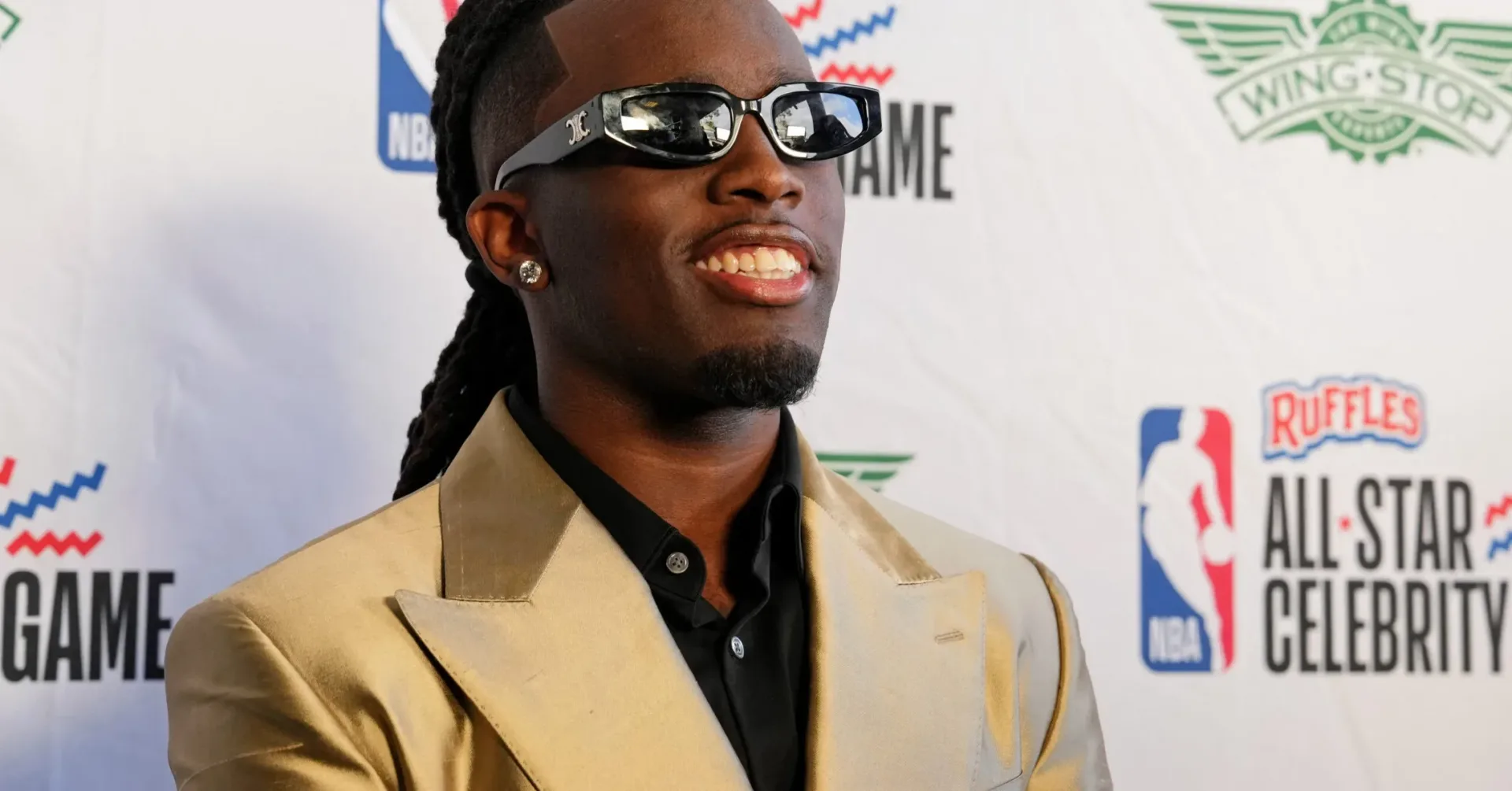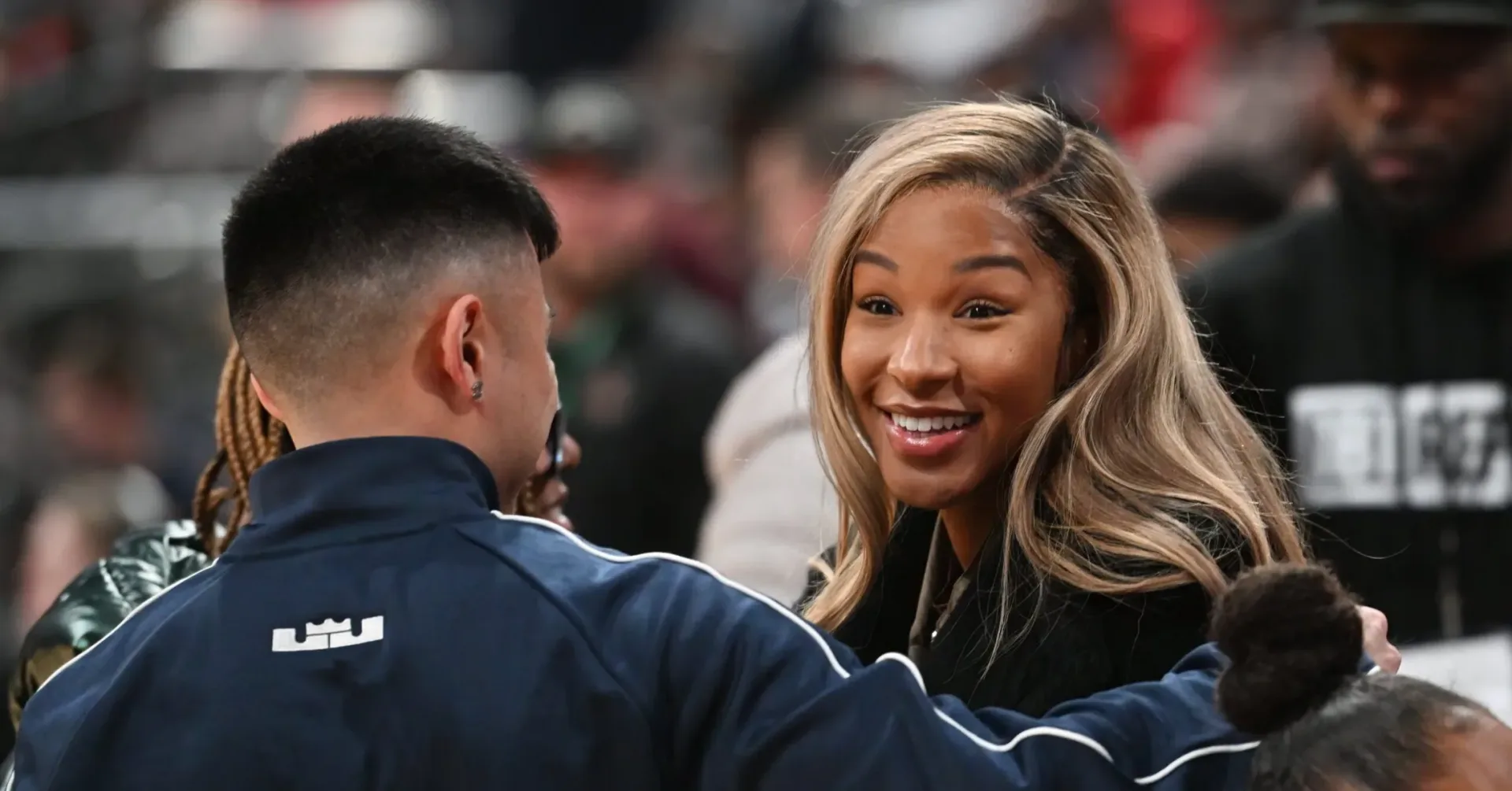
Savannah James visited Kai Cenat’s Vivet pop-up at ComplexCon on the event’s first day, adding another high-profile appearance to the early rollout of the creator’s independent fashion label. The activation, described as one of the show’s larger and more elaborate setups, has now closed following ComplexCon’s October 4 conclusion.
The visit matters less as a product endorsement than as a snapshot of Vivet’s opening strategy. Cenat did not introduce the label as a simple run of creator-branded basics. Its first collection arrived with a runway presentation during New York Fashion Week, followed by a substantial convention-floor presence intended to put the clothing in front of a broader fashion and pop-culture crowd.
Vivet’s debut collection contains 20 pieces, with listed prices running from $20 to $1,195. The assortment covers hoodies and tracksuits alongside leather jackets, boots, loafers and clear heels. That range is central to the label’s positioning: the Beginner Hoodie supplies a lower-cost way into the brand, while the leather, fur and footwear push toward a more ambitious, styled wardrobe rather than a standard merchandise capsule.
A busy first public showcase for Vivet
James was not the only recognizable visitor reported at the pop-up. French Montana also checked out the collection, while Lil Yachty, Plaqueboymax, Molly Santana and Karrahbooo were among the other names said to have stopped by. Celebrity traffic alone cannot establish the lasting quality or demand for a label, but it can help a young brand demonstrate that it is operating beyond the immediate orbit of its founder’s audience.
That distinction is particularly relevant for an internet personality moving into fashion. Creator merchandise is often built around recognition: a logo, catchphrase or limited design gives fans a direct way to signal affiliation. A fashion label asks for a different kind of attention. Buyers may still arrive because of the founder, but the garments need to communicate their own design point of view, construction ambitions and place within a wider wardrobe.
The source material frames Vivet as an attempt to make that distinction. Cenat has presented the project as a serious fashion endeavor, tied in part to his Trinidadian and Haitian roots, rather than a conventional merch line. The label was first announced in December 2025 after roughly a year of teasers, then brought its initial collection to the runway before its ComplexCon appearance.
In that context, a large pop-up does more than create a place to shop. It gives visitors a physical read on the brand: its scale, styling and presentation can all reinforce whether a digital creator’s clothing project feels like a standalone label. A convention setting also brings together fashion-focused attendees, music figures, online personalities and casual observers, making it a useful place to test whether interest extends past an established fan base.
What the collection says about the label’s approach
The 20-piece collection’s $20-to-$1,195 spread creates several different entry points without making every item serve the same customer. Hoodies and tracksuits are familiar foundations for a creator-linked label, and the Beginner Hoodie is positioned as the straightforward access item. Leather outerwear, fur and dressier footwear introduce a different proposition: products that ask consumers to consider Vivet as a fashion name in its own right.
Related coverage includes Savannah James Stops by Kai Cenat’s Vivet Pop-Up at ComplexCon.
Price architecture is the term often used for this kind of tiered approach. Put simply, it means a collection offers goods at multiple price levels, from accessible items that help people enter a brand to premium pieces that communicate its upper ambitions. Here, the low end may invite curiosity from Cenat’s existing audience, while the high end gives the brand room to present a more elevated image.
It also creates a practical challenge. The $20 item and the $1,195 item are not evaluated in the same way. At the lower end, shoppers may weigh design, convenience and fandom. At the upper end, they are more likely to scrutinize materials, finish, fit and whether the visual identity separates the product from competing luxury-leaning streetwear. The available information establishes Vivet’s range, but it does not provide enough detail to judge those elements firsthand.
The collection’s aesthetic has already drawn debate. Some fans have compared its muted color palette, oversized silhouettes and distressed treatments to Yeezy. Those comparisons indicate that viewers recognize a familiar visual language in the debut, though similarity in broad styling cues is not the same as proof of direct equivalence. Oversized cuts, restrained tones and worn-looking finishes are established visual approaches; their presence alone does not settle how distinctive a label will become over time.
For Vivet, the more useful question is whether future releases can make its own references and identity clearer. The name is drawn from Latin and is described as meaning something that will live forever. That long-term framing gives the brand an aspiration beyond a one-drop cycle, but only further collections can show how consistently the idea is expressed through clothing and presentation.
Why the pop-up’s closure is not the end of the story
Because ComplexCon has ended, the Vivet pop-up is no longer open. Its short lifespan is typical of an event activation: the point is to concentrate attention in a defined period and create a memorable physical moment around a launch. It should not be confused with a permanent retail location or a promise that any specific pieces will remain available after the show.
That distinction is useful for anyone following a new label. A pop-up can reveal momentum, but it does not by itself confirm future product runs, restocks or resale performance. Limited releases can increase interest because people perceive scarcity, yet scarcity is not automatically durable demand. The source material notes that creator-brand resale can be inconsistent, and there is no basis here to project values for any Vivet item.
For prospective buyers, the sensible takeaway is to separate the brand’s visible buzz from facts that are currently known. The confirmed picture is a 20-piece debut, a broad stated price range, a New York Fashion Week runway launch and a now-finished ComplexCon pop-up that attracted high-profile visitors. Details such as future quantities, release schedules and secondary-market results remain unestablished.
That restraint is especially important when fashion launches are amplified by celebrity appearances and online discussion. Interest can be real without every item becoming difficult to obtain or increasing in value. Consumers should focus on whether they want to wear a piece and whether its price makes sense to them, rather than treating a new creator-founded label as a guaranteed collectible proposition.
Celebrity visibility, creator reach and fashion credibility
James’s stop at the booth gives Vivet a useful moment of cross-audience visibility. As the wife of LeBron James, her appearance naturally reaches beyond Cenat’s core community, and the reported visits from musicians and online figures broaden that effect. But the more substantial signal is the label’s effort to place itself in fashion-specific spaces rather than relying only on social-media promotion.
Music, internet culture and apparel have long occupied overlapping territory, with personalities often becoming the bridge between audiences. That same crossover is visible whenever artists’ stories move from performance into broader cultural identity, as in this look at LL Cool J’s early creative path. Vivet is entering that larger cultural overlap from the creator side, attempting to turn digital recognition into a label with a tangible, independent identity.
Calling Vivet a serious fashion project does not mean it has already resolved the hard parts. The debut has generated attention, and the price range shows a willingness to work across different tiers. Yet fashion credibility is built through repetition: subsequent collections, recognizable choices, coherent storytelling and the ability to sustain interest when launch-week novelty fades.
Still, the opening sequence is clear. Cenat teased Vivet for close to a year, announced it in December 2025, launched its first collection on a runway last month and followed that with a prominent ComplexCon installation. Savannah James’s visit was one visible moment within that rollout, while the closed pop-up marks the end of its first convention chapter rather than the end of the brand’s test.