Sam Kinison’s unmistakable scream may be headed for a digital encore. Bill Kinison, the late comedian’s brother and former manager, has partnered with Uare.AI, with talent agency Buchwald also involved, to explore an artificial-intelligence-based revival of Sam Kinison’s voice and personality.
The basic idea is straightforward, even if the cultural implications are anything but: a system trained around a specific performer could generate material or appearances that evoke that performer after their death. Buchwald has described the arrangement as a way to expand opportunities for Kinison across multiple areas, but no specific project, format, release plan, or platform has been detailed.
That missing detail matters. “AI revival” can mean very different things in practice: an authorized archival presentation, a synthetic voice used in a new production, an interactive digital character, advertising, or an entirely new performance built to resemble a comedian who can no longer approve a word of it. The partnership establishes the ambition, not yet the final shape of the work.
A singular comic persona is a difficult thing to recreate
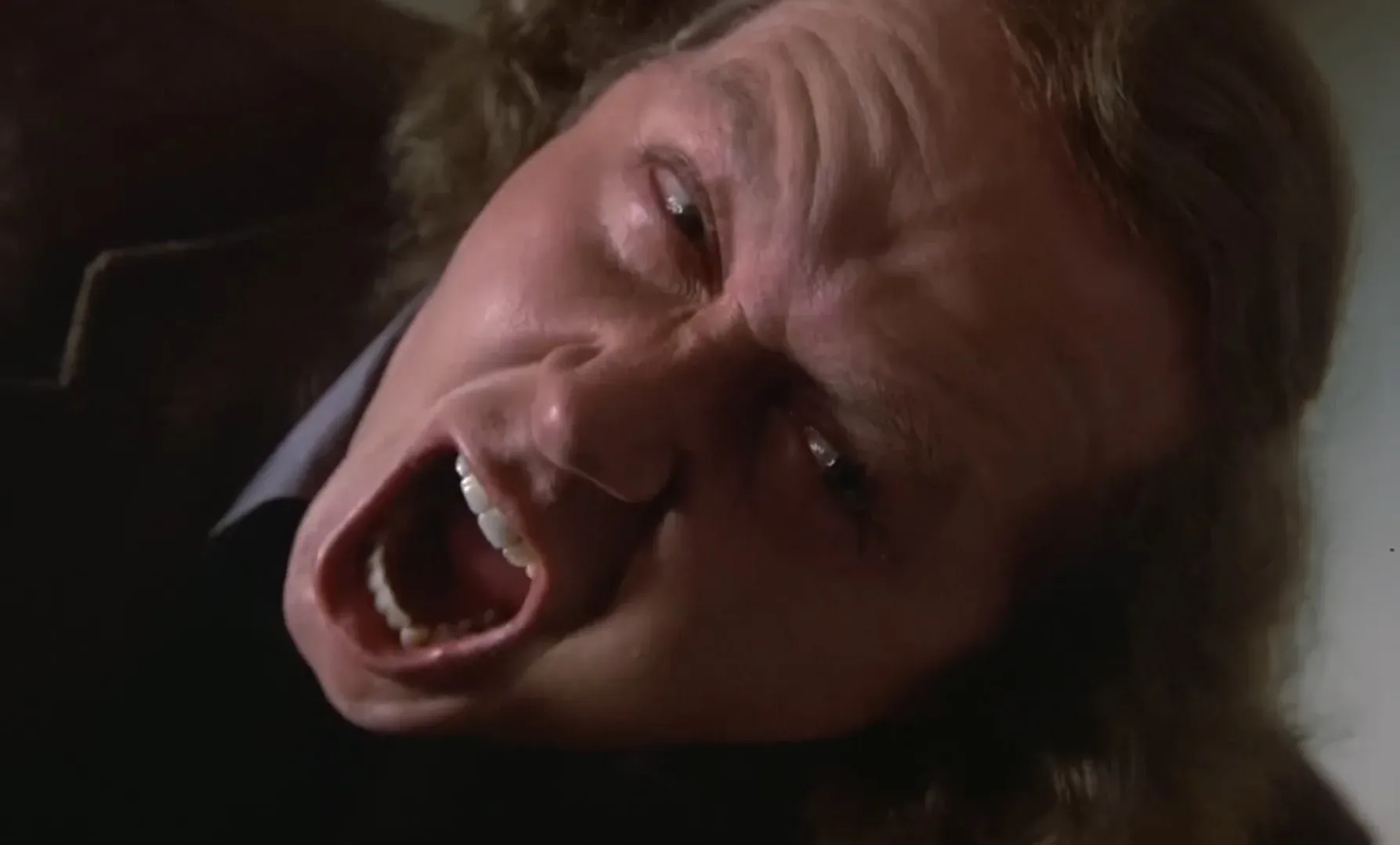
Kinison was not merely a stand-up with a recognizable voice. Before comedy, he was a Pentecostal preacher, and that background informed a forceful onstage presence that treated a club set like a fevered sermon suddenly taken hostage by rage, confession, and a full-throttle howl. In the 1980s, he emerged among the Comedy Store-connected stand-ups whose confrontational “bad boy” energy helped reshape popular perceptions of the form.
His wild hair, intense delivery, and explosive shouting made him a pop-culture fixture beyond the stage. He hosted Saturday Night Live, appeared in Rodney Dangerfield’s Back to School, and played the conscience of Lee Arenberg’s character in an episode of Tales from the Crypt.
That history is exactly why an AI treatment may sound plausible to some people. Kinison had a highly identifiable performance surface: cadence, volume, phrasing, physical presentation, and an instantly recognizable scream. Those are the traits a synthetic recreation can try to imitate.
But an impression is not the same thing as a comic mind. Stand-up depends on choices made in response to time, audience, social change, and personal instinct. Even a model that can produce a convincing audio resemblance would still face the harder challenge: what does it mean for a machine to create “new” Kinison material when Kinison himself is not present to choose the target, deliver the bit, revise it, or reject it?
What “training on a personality” suggests
Uare.AI was founded in 2024 and is focused on models trained around specific voices and personalities rather than broad, general-purpose pools of material. In simple terms, a general model is designed to handle many subjects and styles. A specialized model is meant to reproduce a narrower set of characteristics associated with one person.
Related coverage includes Bill Kinison Partners With Uare.AI to Explore Sam Kinison AI Revival.
For a performer, those characteristics can extend beyond sound. Voice refers to the audio qualities people recognize: pitch, rhythm, accent, timing, and intensity. Likeness is broader, encompassing a person’s recognizable identity and presentation. Personality is broader still, and also much less tidy. It can imply patterns of speech, attitudes, references, comic structure, and the public persona audiences associate with someone.
Those categories can blur quickly in a commercial setting. A project that begins as a voice recreation may still trade on a familiar face, a famous persona, or the expectation that audiences are encountering something authentically connected to the original artist. The closer the simulation gets, the more important it becomes to explain what has actually been made.
Transparency is not a minor label tucked beneath the player controls. It is a practical audience expectation. Fans should be able to distinguish archived Kinison performances from newly generated material, and to understand whether they are hearing restored recordings, a synthetic voice, an AI-written script, or some combination of the three.
Estate approval answers one question, not every question
Bill Kinison’s involvement means the initiative is being pursued with family participation rather than as an obviously unauthorized imitation. That is significant. Consent and stewardship are central questions whenever a dead celebrity’s identity is used in new work.
Still, authorization is only the start of the conversation. A family or estate can grant permission, but audiences may separately ask whether a project reflects the artist’s own wishes, protects the work’s context, and makes clear where the historical performer ends and the modern technology begins.
Kinison’s past approach to his image adds a pointed wrinkle. During his lifetime, he reportedly turned down an agreement with Slim Jim; the deal went instead to Randy Savage. That does not automatically tell us what he would have thought about AI decades later, and it would be unfair to claim it does. It does, however, show that the public image being licensed now was not always treated as a commodity to be sold at any available opportunity.
For estate-managed AI projects, the strongest practical safeguards are likely to be the least glamorous ones: clear approval processes, limits on subject matter, accurate labeling, and meaningful separation between original recordings and synthetic additions. Comedy in particular can age unpredictably. A generated routine may create reputational consequences that an estate must live with, while the performer whose identity powers it cannot clarify intent or take responsibility for its reception.
Comedy is not just a voice filter
The technical pitch for celebrity AI often starts with recognizability. If a system can produce a voice that listeners immediately identify, it can create an attention-grabbing illusion of continuity. With Kinison, the temptation will be especially obvious: reproduce the scream, make the delivery breathless and abrasive, and let recognition do the rest.
Yet that risks shrinking a career into a catchphrase-shaped audio setting. Kinison’s notoriety came from the full collision of material, persona, physicality, delivery, and the era in which he performed. A loud synthetic voice may be technically impressive while still missing the live-wire unpredictability that made the original act feel dangerous or immediate.
There is also a distinction between preserving work and extending it. Restoration, remastering, and archival releases aim to make existing performances available in better or more accessible forms. A generative revival attempts to add fresh output under a familiar identity. Both can be commercially valuable, but they are not creatively or ethically interchangeable.
That difference should be central if the Kinison venture moves ahead. Calling something “Sam Kinison” carries a promise that goes beyond sound alike-ness. The more a project relies on new machine-generated writing or performance, the more carefully it needs to state that it is an estate-authorized AI interpretation rather than a newly discovered work by the comedian.
Part of a growing posthumous-AI business
The Kinison plan arrives amid a wider push to commercialize deceased celebrities through AI. ElevenLabs announced in May that it would replicate Stan Lee’s voice and likeness for audiobook appearances, including his famous “Excelsior!” exclamation. Gene Wilder’s estate is also licensing his image for a Netflix reality project connected to Willy Wonka.
Each example is different in medium and creative purpose, but they share a commercial premise: a recognizable identity can remain an active asset after the person’s death. For rights holders, that can mean new pathways for licensing and audience reach. For audiences, it can turn a familiar cultural figure into something closer to a continually updateable property.
That pressure is not limited to dead performers. Living celebrities are increasingly trying to set boundaries around the use of their faces, voices, and identities as synthetic media improves. The larger technology industry is grappling with similar questions of control, product readiness, and public trust, as seen in the ongoing scrutiny around AI development efforts such as the reported reshuffle around Apple’s Siri work.
For entertainers, the stakes can be unusually personal. A synthetic likeness is not merely a product feature; it can speak in a recognizable voice, make apparent choices, and appear to endorse ideas. When the individual is deceased, the people making those choices are necessarily someone else: an estate, agency, technology company, producer, or some combination of them.
What to watch for next
The announced partnership leaves more unanswered than answered, which makes the next specifics more important than the headline. Is the intended work audio-only, visual, interactive, or live? Will it use existing recordings, generated dialogue, or newly generated jokes? Will material be identified in a direct, prominent way as AI-generated? And what rules will determine what the digital Kinison can and cannot say?
Those questions are especially relevant because comedy carries tone and authorship so visibly. A synthetic musical performance can be framed around a known song. A recreated actor can be placed within a scripted role. Stand-up presents a more exposed claim: the audience is asked to believe that the person onstage has something to say now.
Bill Kinison framed the collaboration as a means of keeping his brother’s legacy alive. That may prove to be the core tension of the endeavor. Preserving Sam Kinison’s legacy and manufacturing additional Sam Kinison-branded output are related goals, but not identical ones. The eventual project will be judged not only by how accurately it can approximate an infamous scream, but also by whether it treats the person behind that scream as more than a reusable sound effect.