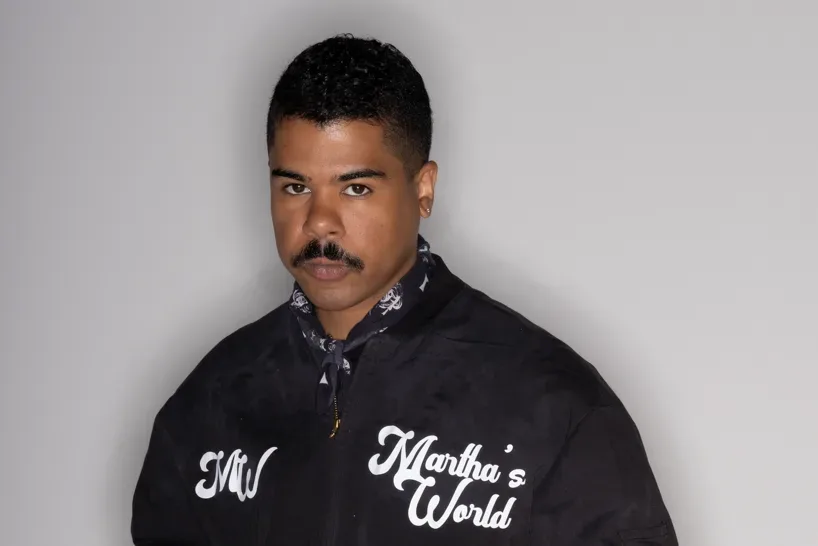

Russ cut a Houston listening party short after audience chatter repeatedly carried over the unreleased music being played. The free event, held at downtown vinyl bar Off The Record, was presented as a first-come, first-served chance to hear The Elephant & The Rider with the Atlanta rapper in attendance.
The rapper later said Houston was the only event he had ended early across 16 listening parties. Footage from the room showed him asking attendees to quiet down, while security escorted people out. An attendee who was among the second group admitted said the room was already emptying when she came back from the restroom.
The point of contention was not whether people could react to the music. Russ made clear in the room that discussion about songs listeners had just heard was welcome. The issue, as he framed it, was unrelated conversation continuing while tracks were actively playing.
A listening party is not just a party
The distinction may seem fussy until the format is taken seriously. A listening party is a deliberately controlled first encounter with a body of music. In this case, attendees were not arriving to hear a familiar set of hits, where singing, talking, movement and a generally noisy atmosphere can be part of the exchange. They were being offered unreleased material, with the artist there to gauge how it lands.
That makes basic listening etiquette more than a request for silence. It is the condition that allows the event to work. Listeners need enough quiet to pick up lyrics, production choices, transitions and the overall shape of a project. The artist, meanwhile, can observe the collective response: which moments prompt immediate recognition, which create a pause, and which seem to pass without much reaction.
Those responses are not necessarily verbal. A room can communicate plenty through attention, laughter, applause, singing, visible surprise or stillness. But sustained side conversations introduce noise that is neither a response to the record nor useful feedback. They also prevent other people in the room from having the experience they came for.
Russ said he personally books and funds these free events. In a social-media post addressing the Houston incident, he said the series mattered to him because he wanted to hear fans react in real time. He said security had to intervene repeatedly after people continued talking over the songs despite being asked to stop.
“I don’t tolerate disrespect from my own family lol and I’m certainly not gonna pay money out of my pocket to be disrespected,” Russ wrote.
His wording underscores a practical reality behind “free” fan events: no admission price does not mean there is no cost or no agreed purpose. The artist and venue still commit time, planning and resources. Fans, in turn, are being asked to meet a modest expectation—listen while the music is playing.
Why the room matters to an independent artist
Russ has publicly emphasized independence and retaining control over when his music arrives. The listening-party series fits that wider approach. Rather than leaving the first public conversation around a project solely to streaming releases, promotional cycles or online comment sections, the format creates a direct setting between artist and audience.
That directness can have creative value. The series grew from a vinyl-bar listening event in New York for Russ’s previous album. After that experience, he expanded the idea to other cities. It is not simply a meet-and-greet attached to playback; it is a way to test how songs occupy a room before the public can revisit them alone through headphones or speakers.
One example from London illustrates why an artist might prize that feedback. Russ played “Recognize,” his collaboration with singer Jessy Blakemore, who was present for the event. When he asked the room to sing along, he realized the hook did not return at the song’s end. The response helped prompt his desire to bring it back.
That is a useful explanation of what “real-time feedback” can mean. It does not require an audience poll or a formal critique. Sometimes the response reveals a structural detail: listeners may be ready for a refrain to return, but the arrangement has already moved on. A hook is the memorable repeated lyrical or melodic section of a song, often central to how a crowd recognizes and participates in it. If the room expects one more pass and does not get it, that reaction can tell an artist something no isolated draft necessarily does.
It would be a mistake, though, to assume an artist must change music whenever a crowd responds unexpectedly. A listening room is one input, not a referendum. The value lies in giving an artist an immediate, human impression that can be weighed alongside their own intentions for the record.
Houston exposed a mismatch of expectations
The Houston situation appears to be a mismatch between the atmosphere some people brought into the venue and the purpose Russ believed had been clearly set. A vinyl bar can naturally suggest a social setting. People may arrive expecting to mingle, especially at an event with no ticket cost and rolling entry. Yet the event’s offer was specifically a preview of an unreleased project with its creator in the room.
Neither point erases the other. Social spaces are noisy by default; focused listening requires an explicit shared rule. In this case, Russ reportedly gave that rule in person, separating song-related talk after a track from unrelated discussion during it. Once he had repeatedly asked for quiet, the conflict became less about differing assumptions and more about whether the request would be respected.
Security removing attendees is a sharp escalation for a fan event, and ending the session early affects people who were observing the expectation as well as those who were not. It also explains Russ’s frustration. The premise depends on a room functioning together; when that breaks down, the artist can either continue with compromised playback or stop the event. He chose the latter.
Russ said the Houston experience would influence whether he holds another listening party in the city. That leaves the future of the format there uncertain, rather than establishing a definite end to the broader run.
What fans can take from the incident
The simplest practical lesson is that fan-event etiquette changes with the format. Concert rules are not always listening-party rules. At a show built around a released catalogue, excited conversation and audience participation can be expected in many parts of the venue. At an unreleased-album playback, the music itself is the program.
- Listen during the track. Save unrelated catch-ups for before playback, between songs or after the event.
- React without drowning out the record. Applause, a brief cheer and visible enthusiasm are different from an ongoing side conversation.
- Respect requests from artists, staff and security. If the room is asked to quiet down, treat it as a condition of remaining in the event.
- Remember that unreleased does not mean disposable. The artist may be using the room to understand the work, not simply to provide background music.
For artists and venues, the incident also highlights the value of stating the listening expectations before playback begins and reinforcing them between tracks if necessary. That is not evidence that clearer instructions would have prevented this particular dispute; Russ says he did ask people to stop talking. But it is a useful operational takeaway for events that invite a social crowd into a focused playback setting.
There is a broader appeal in the kind of intimate, artist-led experience Russ has been trying to build. It gives listeners a moment that cannot be duplicated exactly by a release-day stream, while giving the musician an opportunity to see a song take shape in the minds of the people it is meant to reach. That same closeness also makes the arrangement fragile. Everyone has to agree that, for a few minutes at a time, the unreleased music gets the room.
For another recent music-focused story, see iLoveMakonnen’s new chapter with “Lie 2 Me”.