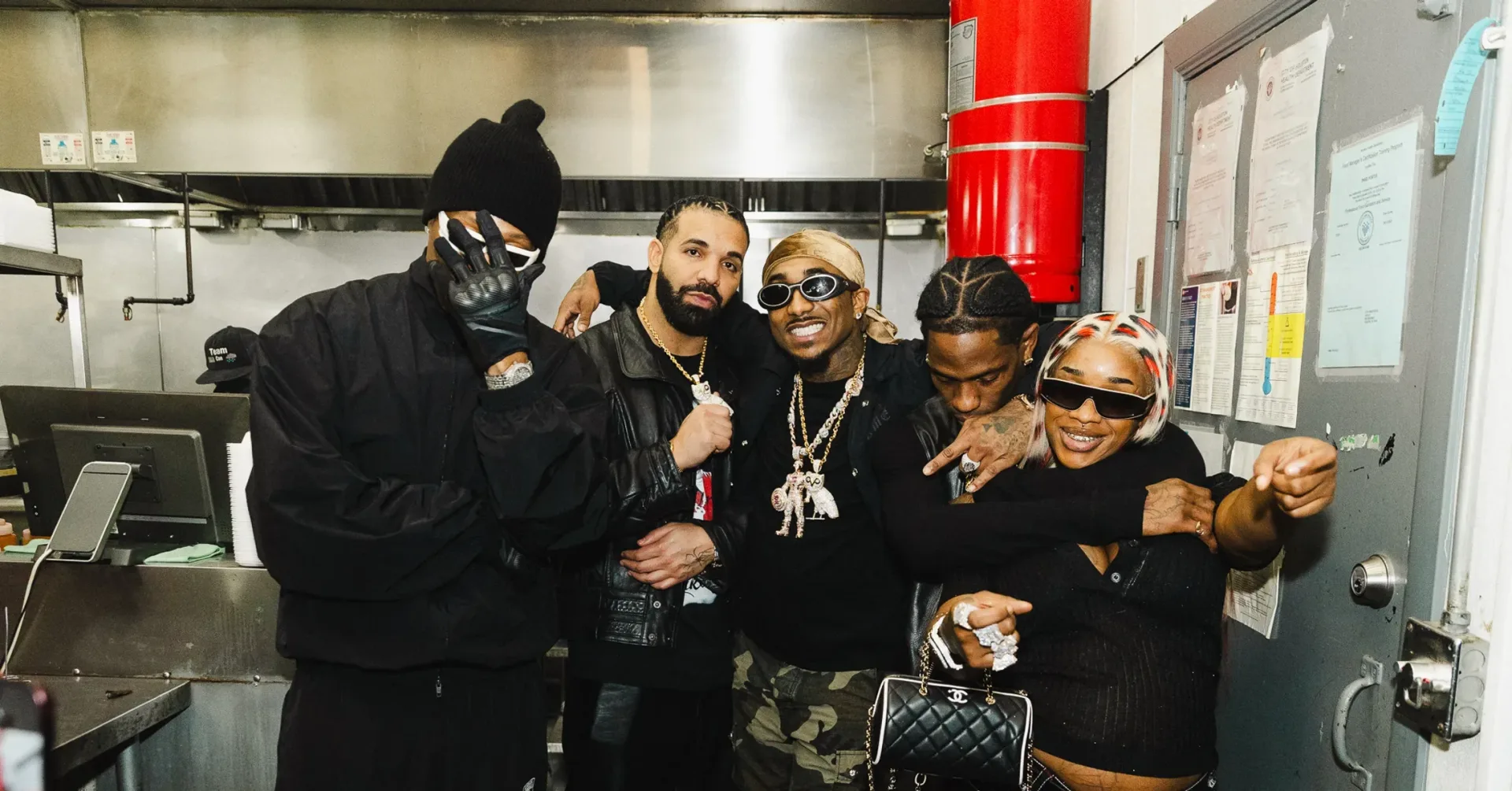

Rice University says a segment of Drake’s music video for Future’s “Ya Hit” was filmed at its James Turrell-designed Twilight Epiphany Skyspace without the institution’s knowledge or involvement. The Houston campus landmark appears in the video, which pairs Future, Drake, Travis Scott and Loe Shimmy on the track released November 6.
A university spokesperson said neither Rice nor the Moody Center for the Arts participated in the production. The statement draws an important boundary between visiting a public artwork and using that artwork as the setting for a commercial production: the former is welcomed, while the latter is governed by a separate permission process.
A campus artwork, not an open production set
Twilight Epiphany is not simply an eye-catching campus backdrop. The Skyspace is a pyramid-like structure with an opening to the sky, designed around changing light and sound. Its programmed light presentations are timed to sunrise and sunset, meaning the work’s experience is tied to both its architecture and the conditions of the sky above it.
That distinction matters in this situation. A visitor can enter a space, view the work and share their experience of it. A film crew, by contrast, is creating material for public distribution as part of a commercial project. That activity may involve equipment, personnel, scheduling, site access, visual control and use of a landmark’s identity in a finished release. Institutions commonly handle those circumstances through location and filming permissions rather than their ordinary visitor rules.
Rice’s guidelines reportedly put the Skyspace among a small group of campus landmarks that require written authorization for commercial filming, authorization that is rarely granted. The university also asks commercial productions to file material beforehand, including a shooting script and proof of insurance.
A shooting script is a production-facing plan that breaks down what will be recorded, rather than merely the lyrics or creative concept behind a music video. It can help a location owner understand where a crew intends to work, what scenes are planned and whether a proposed shoot may conflict with safety, operations or the character of a sensitive site. Proof of insurance is documentation that a production carries relevant coverage, a standard safeguard where a crew’s activity could create property damage or liability concerns.
What Rice has said — and what remains unknown
The university’s position is narrow but clear: it says it was not aware of and was not involved in the video’s production. It has not explained how the crew gained access to the Skyspace, and it has not identified when the footage was made.
Rice also has not announced whether it will pursue any action connected to the shoot. That leaves major questions unanswered, including whether anyone sought permission, whether the filming was recognized while it occurred, and whether there will be any dispute over the use of the location in the released video.
Those unanswered details should not be filled with assumptions. The available statement establishes the university’s lack of involvement; it does not establish the precise route by which a production team entered the space, who may have been present, or what steps occurred before filming. Likewise, the existence of a written-permission rule explains Rice’s concern without revealing an outcome beyond the statement already made.
Public access does not equal commercial clearance
The most useful takeaway for viewers is that a publicly accessible arts site can still carry restrictions on commercial use. Public collection access and filming clearance are not interchangeable permissions.
Rice has said Drake would be welcome to return as a visitor and that people are welcome to experience the public collection. That invitation does not alter the university’s stated position on the video. Instead, it clarifies that the issue is the production activity, not an artist’s personal presence at the campus or interest in the artwork.
For a location as distinctive as the Skyspace, that difference is especially easy to miss. Its atmospheric design can make it feel like an ideal video set, but its status as a specific artwork and protected campus landmark gives the institution a reason to oversee commercial shoots closely. Permission requirements can protect artwork, manage access for other visitors and ensure that a venue knows how its spaces are being used.
It is also worth separating permission from endorsement. When a recognizable campus or art venue appears in a video, audiences may assume the owner or institution collaborated with the artist. Rice’s statement directly rejects that possible impression. A location’s appearance in a finished music video does not, on its own, mean the location operator approved the production or took part in it.
The Skyspace had only recently reopened
The appearance is notable because Twilight Epiphany had recently returned to public use. The Skyspace reopened September 15 following a two-year closure. Rice said renovated lighting was installed under the supervision of Turrell’s studio.
That restoration context adds weight to the university’s special handling of the landmark. Light is not a peripheral decoration in a Skyspace; it is central to the way the work is experienced. The renovated lighting and the sunrise-and-sunset programming underline why the venue may be treated differently from an ordinary walkway, lawn or general campus building.
It also explains the broader appeal of the site for moving images. A structure framing the sky, paired with controlled light and sound, creates a striking setting without needing extensive constructed scenery. But visual appeal does not change the need for a production to follow a property owner’s rules.
Houston’s role in the “Ya Hit” video
The Skyspace was not the video’s only Houston location. Other scenes were filmed at Area 29. Together, the venues place part of the “Ya Hit” visual in Houston while giving the release markedly different environments: one a notable campus artwork built around perception and natural light, the other a separate local venue.
“Ya Hit” brings together Future, Drake, Travis Scott and Loe Shimmy. Conversation around the release initially centered on the performers and Drake’s contribution to the song, but the Rice footage has shifted attention toward the practical questions behind a music-video location. It is a reminder that a few seconds of a highly recognizable setting can generate a separate story about access, artistic spaces and the permissions behind commercial imagery.
The video’s visual format is also part of why location choices travel so quickly beyond the song itself. Music videos are built to be watched, paused, shared and scrutinized for backgrounds as much as performances. That makes a distinctive site valuable creatively, while also making location authorization more consequential when the finished imagery reaches a large audience. For more on how display settings can affect the way filmed material is presented at home, see Roku TV’s Auto-Adjust Refresh Rate and native movie frame rates.
Why the distinction matters for future shoots
For artists, managers and production teams, the episode offers a straightforward practical lesson: an accessible place is not automatically a cleared commercial location. Before recording at a university, museum, public artwork or landmark, productions need to identify the site owner or operator, determine whether commercial filming is allowed and provide the requested materials early enough for review.
That process is not merely administrative friction. At an art installation, a venue may need to account for the work itself, visitor access, preservation concerns and the technical footprint of a shoot. A filming request can also give the owner an opportunity to distinguish between permissible general photography and a staffed production intended for monetized or promotional distribution.
In Rice’s case, its response does not claim involvement or approval, and it does not set out a next step. What it does establish is the university’s view that the Skyspace appearance was outside its commercial-filming process. The school continues to welcome visitors to the public collection, but its statement makes the dividing line unmistakable: viewing the art is one thing; turning it into a music-video location is another.