East Tennessee State University’s Reece Museum has extended the deadline for From the Archives to the Mic, a rap contest that asks artists to make new work from a tightly defined set of historical recordings. Entrants now have until Monday, January 18, 2027, to submit an original song built around one of four approved tracks connected to the field-recording work of Zora Neale Hurston and her collaborators.
The contest’s premise is straightforward, but its creative and ethical stakes are larger than a conventional beat challenge. Participants are not simply handed a sound to loop. They are being asked to engage with recordings made in the 1930s, explain how that source changed their song, and make the archival material central to the finished work. The museum will place the greatest weight on originality, while also judging how the sample is used, the quality of lyrics and songwriting, and an entrant’s connection between the new work and the people or places heard in the original recording.
Four tracks, two field-recording locations
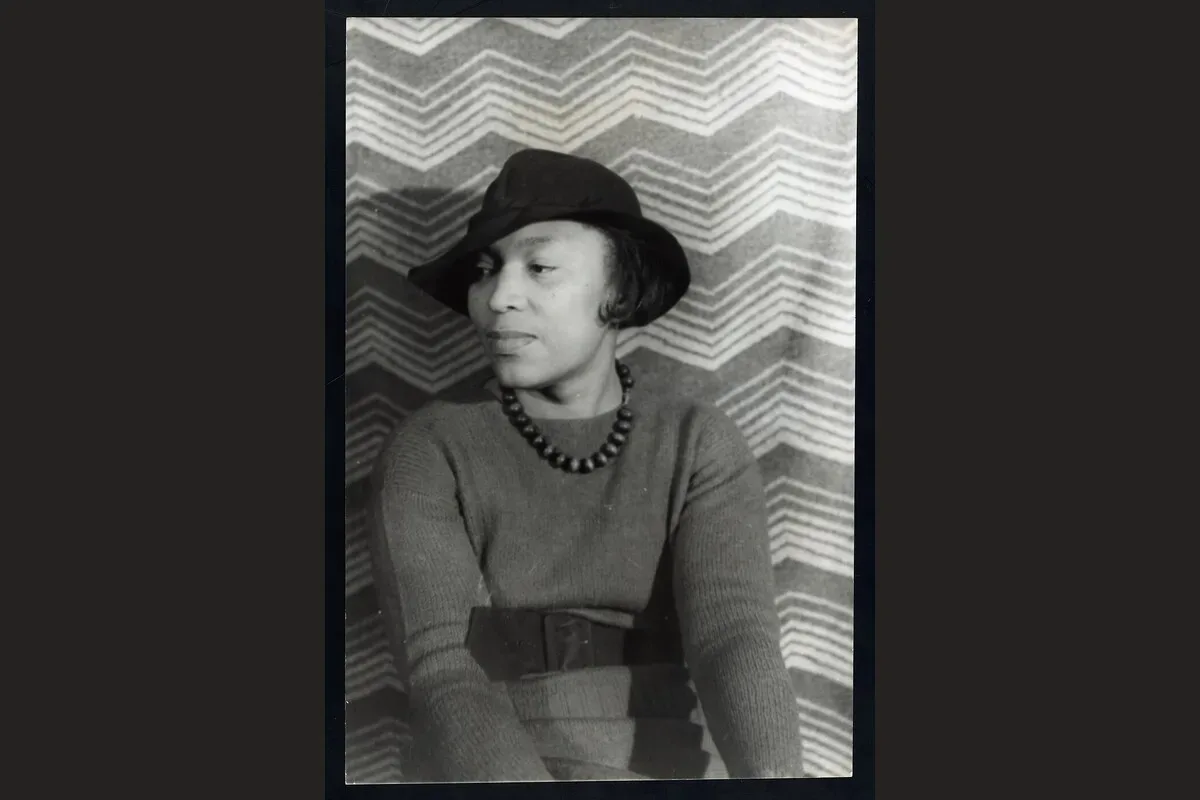
Three of the four approved tracks stem from a 1935 collecting trip to Frederica on St. Simons Island, Georgia. Hurston, Alan Lomax and Mary Elizabeth Barnicle recorded folk material there. The foundational recording for the contest track Down Bad features John Davis and his group.
The two other tracks from that Georgia trip, Favored and Ring a Ding, are based on performances by girls whose names are not listed in the archive. That missing identification is an important piece of context rather than a detail to be smoothed over: competitors are encouraged to connect their songs to the people or places in the source material, but the surviving archival information does not identify every performer.
The fourth selection, Cinema, comes from a 1938 recording made by Barnicle in Pineville, Kentucky. Its underlying source is a church congregation. Together, the tracks give participants recordings tied to distinct communities and settings rather than a single, uniform musical catalogue.
The St. Simons Island sessions captured more than songs. Their wider body of material includes church services, children’s games and interviews with Gullah speakers. That broader context helps frame the contest as an encounter with documented community life, not merely a search through vintage audio for an appealing musical fragment.
What “making the sample central” means here
A sample is a portion of an existing recording incorporated into a new composition. In hip-hop, sampling can mean anything from a brief vocal cut to a recurring instrumental passage that provides a song’s rhythmic or emotional backbone. For this contest, artists must use one of the four supplied or approved tracks as a central element of an original song.
That wording matters. A barely audible reference is unlikely to fulfill the stated aim as effectively as a sample that actively shapes the record’s structure, flow, subject or atmosphere. A contestant could build around a repeated phrase, alter the timing of a vocal texture, let a congregational sound set the mood, or write verses that respond to the location and history attached to the recording. The rules do not prescribe one arrangement, so the creative decisions belong to the artist. But the judging criteria make clear that the relationship between the archival material and the new work needs to be audible and meaningful.
Producer Nathan Blye and performer Josh Outsey brought the recordings to the museum through their Future Proof project and the Reece Museum’s Hip Hop Listening Room. Blye’s team spent eight months working through thousands of recordings during the project. That research process is significant because archival audio is rarely a neutral folder of ready-made sounds. Recordings carry incomplete documentation, particular recording circumstances and the presence of real performers whose names and histories may be unevenly preserved.
“Hip-Hop is taking scraps and making them shine,” Blye said in comments about the project.
In this setting, the idea is less about treating the archive as a quarry for interchangeable bits and more about transformation with context. The contest’s required written statement turns that expectation into a practical submission requirement.
Submission requirements and practical boundaries
Artists must submit three pieces: the recording itself, written lyrics and a 100- to 200-word statement explaining how the archival material influenced the entry. The requested statement is short, but it can clarify decisions that might not be obvious from the finished track alone: why a particular sound was chosen, how the original performance informed the writing, or how the song addresses a person, community or place connected to the source.
The museum recommends a running time of two to five minutes. That is guidance rather than an announced disqualification threshold, but it establishes a useful target for an entry intended to be evaluated as a complete song rather than a sketch.
There is also a clear rights condition: artists cannot add samples that they do not have permission to use. This is separate from the contest’s four designated recordings. A competitor who adds outside dialogue, a commercial recording or another unlicensed audio source risks undermining an otherwise eligible submission. Keeping the production limited to original material, properly cleared elements and the approved archival track is the most direct way to respect that condition.
A useful checklist for entrants
- Choose one of the four approved contest tracks: Down Bad, Favored, Ring a Ding or Cinema.
- Make that archival material a central part of an original song.
- Keep the recording in the museum’s recommended two-to-five-minute range.
- Provide written lyrics alongside the audio.
- Write a 100- to 200-word explanation of how the archival recording shaped the song.
- Do not use additional samples without permission.
- Submit by January 18, 2027.
How the judging priorities shape strategy
Originality carries the most weight in the judging. The use of the sample and the quality of the lyrics and songwriting follow behind it at equal weight, while judges will also assess how effectively the entry relates to the original people or places. For artists, that balance discourages a one-note approach.
A technically flashy flip of an old recording may not be enough if the song has little lyrical or conceptual identity. Conversely, strong writing that leaves the sample feeling incidental may not fully meet the contest’s archival purpose. The strongest entries are likely to unite arrangement and subject: the production gives the historical recording room to matter, while the words demonstrate that the artist has thought about where it came from.
There is room for creative interpretation without pretending that every historical question has a simple answer. In particular, the unnamed girls represented in the archive behind Favored and Ring a Ding should not be assigned invented identities or biographies. The available information supports recognizing that their names are not listed, and that absence can itself be acknowledged thoughtfully. Working honestly with what is known—and what is not—fits the contest’s emphasis on connection much better than filling archival gaps with fiction.
The same applies to place. Frederica on St. Simons Island and Pineville, Kentucky, are not decorative labels for song credits; they identify the locations tied to the recordings. A statement or lyric need not become a history lesson, but it should show that the chosen audio has a provenance. Provenance, in this case, means the recorded material’s documented origin and chain of context: who was recorded where, and within what collecting work.
A museum contest built around listening
From the Archives to the Mic places a modern hip-hop practice alongside recordings that predate the genre by decades. That is not a claim that the two are identical. It is an invitation to hear continuity in techniques of repetition, voice, rhythm, testimony and transformation while keeping the historical record visible.
The Reece Museum’s Hip Hop Listening Room provides the immediate setting for that exchange, with Future Proof serving as the project that brought the archival material into this new framework. The contest also demonstrates why access and description matter when institutions hold historical audio. A recording becomes more useful to artists and audiences when they can identify its location, its documented performers and its limitations. In the present case, the contest rules turn that knowledge into part of the creative task rather than leaving it in a catalogue entry.
For a broader example of how performance-based cultural material can be framed for an audience, see this coverage of a concert film’s family viewing context. The Reece Museum project is very different in form and historical purpose, but both underscore that music and performance gain meaning from the circumstances surrounding them.
Prize and next steps
The announced prize is a $100 gift certificate from Laced Up Cuts and Kicks. The museum expects to notify the winning artist by January 29 and plans a performance in February.
With the deadline moved to January 18, 2027, prospective entrants have additional time to listen closely, develop an original composition and make the required connection between archival source and contemporary song explicit. The contest’s structure rewards more than finding a compelling loop: it asks artists to make something new while showing that they understand the voices and places that made the new work possible.