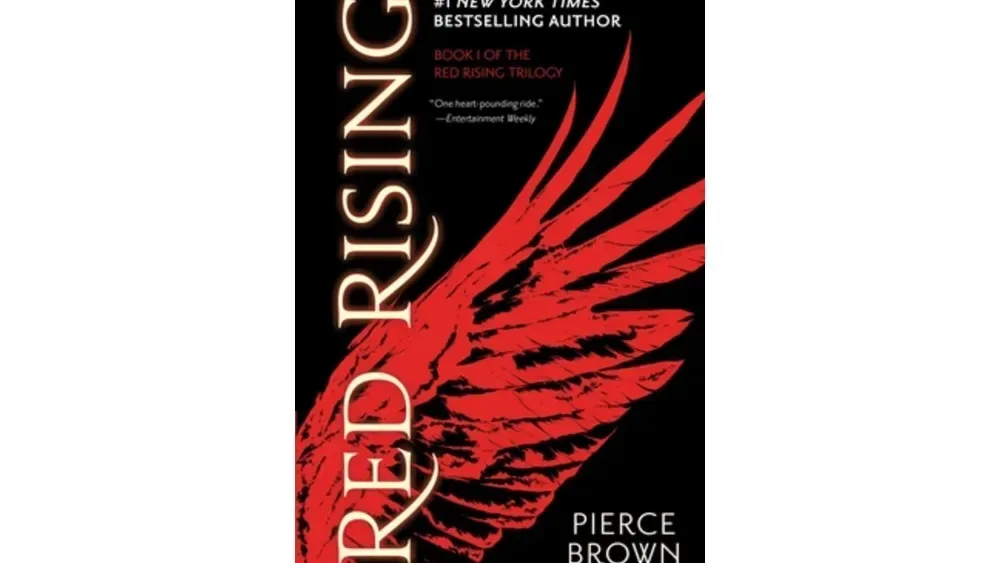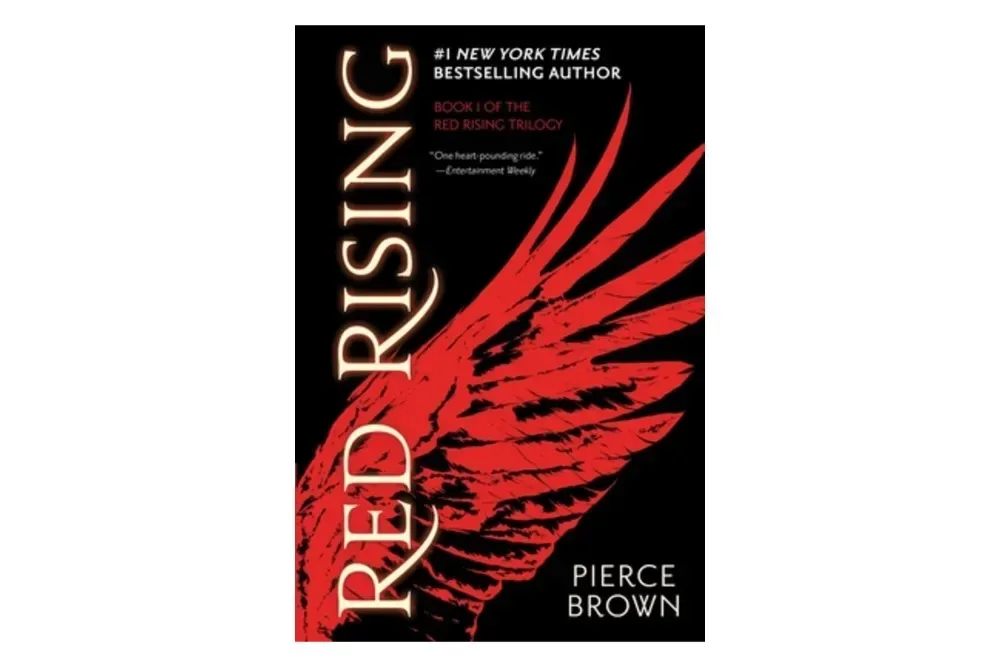
Paramount is developing a movie adaptation of Red Rising, the first novel in Pierce Brown’s science-fiction series. Francis Lawrence is attached to direct, while Justin Rhodes will write the screenplay. Brown, whose novel launched the series in 2014, will serve as an executive producer.
The project has a creative team with a clearly defined division of roles: Lawrence and Cameron MacConomy will produce through About.Blank alongside Francesco Goedhuis, and Brown remains involved as executive producer. That is the central development news. There is no release date, cast, production timetable, or platform plan included with the current information.
A story built around class, identity and rebellion
Red Rising is set in a future in which humanity has colonized planets and arranged society into a color-coded caste system. At the bottom are the Reds, who endure slave labor in mines on Mars. At the top are the Golds, a physically powerful ruling class that controls the solar system while also fighting among itself.
The first book follows Darrow of Lykos, a Red miner whose personal loss places him inside a rebellion’s plan to strike back at the Golds. His mission requires a drastic transformation: Darrow is remade to pass as a Gold and then enters a military school populated by other young people competing and being tested for positions within the highest levels of Gold society.
That premise gives the prospective film several overlapping dramatic engines. It is a revenge and resistance story, but it also depends on Darrow’s ability to survive an identity change in an environment designed to expose weakness. The academy setting adds a competitive structure to the larger political conflict, with recruits facing tests before they can enter the elite ranks.
The color system is more than a visual detail in the premise. It functions as the organizing principle of the world: social status, labor and political power are divided by color. In practical adaptation terms, that means the film will need to make the hierarchy understandable on screen while keeping the audience close to Darrow’s much more personal journey through it.
What Francis Lawrence brings to the adaptation
Lawrence has substantial experience adapting young-adult fiction for the screen. He directed every Hunger Games film, including 2023’s The Ballad of Songbirds and Snakes and the forthcoming prequel Sunrise on the Reaping. He also directed the Stephen King adaptation The Long Walk.
That background is relevant because Red Rising similarly blends youth-focused competition with a society structured by coercion and unequal power. The premise is not simply about a school: the school is tied to the ruling order Darrow is attempting to infiltrate. The film therefore has to handle both the contained pressure of the training environment and the much wider stakes of a rebellion against the system behind it.
Lawrence’s attachment does not confirm any particular approach to the material, nor does it establish how closely the movie will follow each element of the novel. It does, however, put a filmmaker with experience turning high-stakes speculative fiction into franchise-scale movies at the center of the project.
The first novel is only the beginning
The planned film is based specifically on Red Rising, not on the full series. Brown has published six books in the saga: Red Rising, Golden Son, Morning Star, Iron Gold, Dark Age and Lightbringer. A seventh and final novel, Red God, is still to come.
That creates a substantial body of existing material, but it should not be read as confirmation of a multi-film commitment. For now, the announced project is a movie based on the opening novel. The broader series matters chiefly because it establishes that Darrow’s story continues well beyond his initial entry into Gold society, with later books carrying the consequences of the conflict introduced in the first installment.
For readers watching the move from page to screen, the distinction is worth keeping in mind. A first-film adaptation must introduce the caste system, Darrow’s loss, the transformation, the rebellion’s goal and the academy trials without assuming a future installment will be made. At the same time, it has to leave the story feeling like a complete movie rather than an extended setup for material that has not been announced for adaptation.
Why the creative credits matter
Rhodes is credited as screenwriter, meaning he is responsible for translating Brown’s novel into a feature screenplay. A screenplay is not a chapter-by-chapter reproduction of a book; it is the blueprint for scenes, dialogue and the dramatic structure of a film. With a novel involving a complex social order and a protagonist living under a false identity, the screenplay’s choices will be especially important in determining what viewers learn, when they learn it and how Darrow’s internal stakes become visible.
Brown’s executive-producer role places the original author among the project’s producers, though that credit alone does not specify day-to-day creative authority or guarantee that every detail of the novel will appear in the movie. It does mean the author is formally connected to the production as the adaptation takes shape.
Meanwhile, the producing team is led by Lawrence and MacConomy for About.Blank, with Goedhuis also producing. Producers guide a project through development and toward production, working across the practical and creative process. Their involvement is meaningful at this early stage, but it is not the same as a finished film, an announced start date or a disclosed cast list.
What has not been revealed
The announcement answers the basic question of whether a Red Rising movie is moving forward: yes, a Paramount adaptation is in development with a director, writer and producing team attached. It leaves many of the next questions unanswered.
- No actors have been announced for Darrow or any other role.
- No release date has been provided.
- No production start date or filming location has been disclosed.
- No information has been given on the movie’s rating, runtime or visual approach.
- No further films based on the later novels have been confirmed.
Those absences are normal for a development-stage adaptation. A director and screenwriter attachment signals momentum, but there are still major steps between a screenplay in development and a completed film reaching audiences.
A new entry in the adaptation conversation
Book-to-screen projects can draw attention back to their original stories long before a movie is ready. That may be particularly true here because Red Rising already has six published novels, with the final book still forthcoming. Newcomers can begin with the 2014 opener, while established readers have a clear point of comparison as details of the adaptation emerge.
The film also arrives during an active period for high-profile pop-culture adaptations and expansions of established fictional worlds. In adjacent comics coverage, interest in major Batman publishing events offers another example of how existing audiences follow developments around long-running franchises. Red Rising is a different kind of property, but the core question is familiar: how will a new medium introduce a dense world to first-time viewers while giving existing fans a recognizable version of what they value?
For now, the most concrete answer is the team behind the first movie. Francis Lawrence will direct, Justin Rhodes will write, and Pierce Brown will executive produce as Paramount develops an adaptation of Red Rising. The next meaningful updates will be the ones that clarify how that team intends to bring Darrow’s infiltration of Gold society—and the rebellion driving it—to the screen.