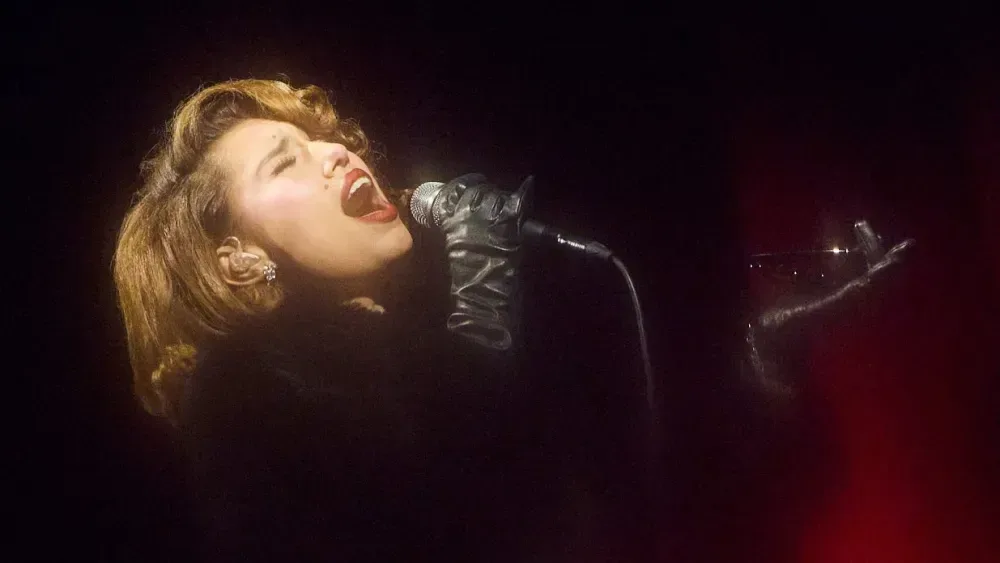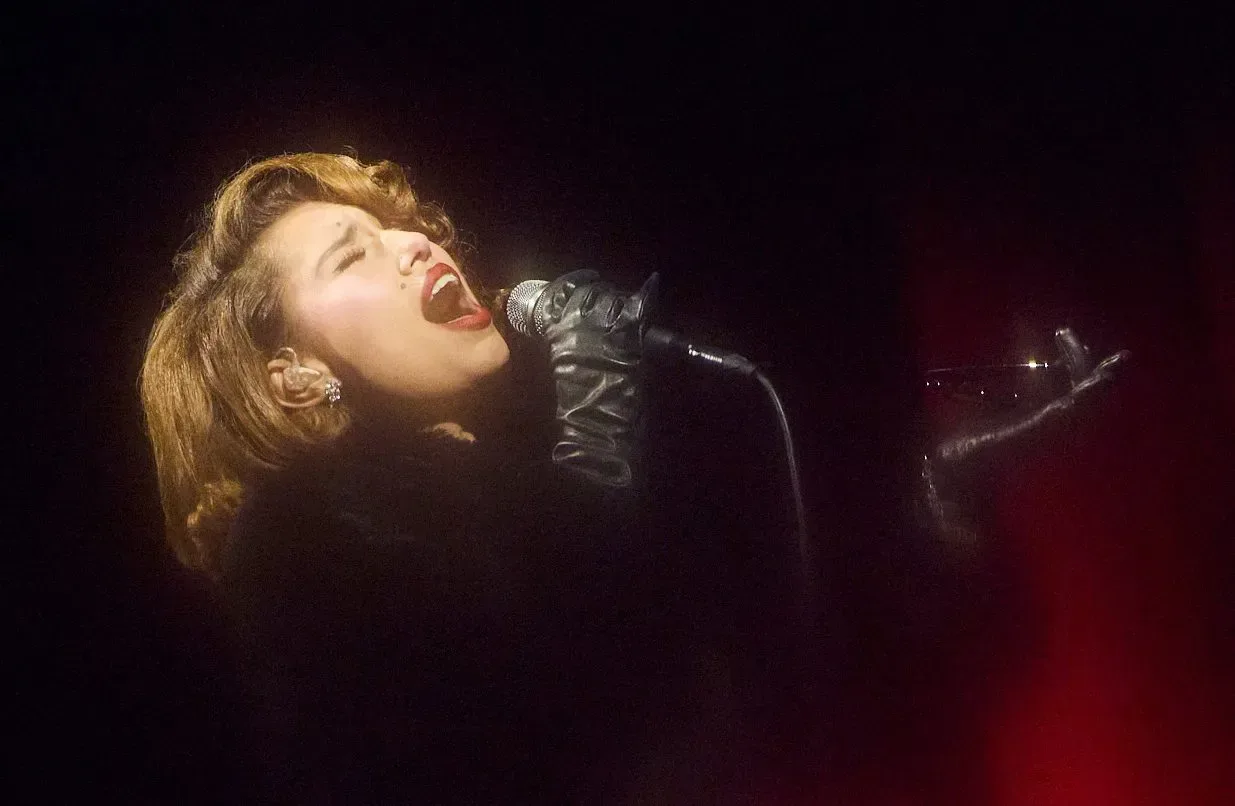
Raye has won the 2026 Mercury Prize for This Music May Contain Hope, her second studio album. The record prevailed over a shortlist spanning established names, newer voices and a charitable compilation, placing Raye at the center of one of the U.K. and Ireland’s most closely watched album honors.
The result recognizes an album built at scale. This Music May Contain Hope contains 17 tracks, runs for roughly 70 minutes and is organized into four seasonal sections. Its wide stylistic range and long-form structure make it a record intended to be heard as more than a set of disconnected tracks: the sequencing and sectional concept are part of the album’s proposition.
What the Mercury Prize win means
The Mercury Prize is an album award focused on music from the U.K. and Ireland. It does not map neatly onto a major U.S. award, though it differs from the Brit Awards in purpose: the Brit Awards are closer to the broad, Grammy-like national awards model, while the Mercury Prize’s identity is tied specifically to honoring an album.
That distinction matters here. A prize centered on an album can elevate decisions that are easy to flatten in a single-song conversation: pacing, cohesion, sequencing, range, thematic framing and the willingness to build a project that asks listeners for sustained attention. Raye’s winning record appears deliberately designed around those album-scale considerations, from its four-part seasonal structure to its unusually expansive 17-song length.
The award’s prior winners include Arlo Parks, Little Simz, the xx and James Blake. That history does not establish a single musical template; instead, it suggests that the prize’s winners can come from markedly different corners of contemporary music. Raye’s victory adds another ambitious, artist-led album to that lineage.
An album that embraces its size
“Ambition” can be an imprecise critical term, so it is worth grounding it in the details available here. In this case, it means a record divided into four sections, moving across numerous styles and taking approximately 70 minutes to do so. A 17-track album with that design has a different job from a compact release built around immediate repetition and quick playlist consumption.
The potential trade-off is clear. More songs and more stylistic turns can make a project feel overextended to listeners who prefer an economical, uniform record. But the same traits can create the sense of a journey when the shifts have purpose. The structure of This Music May Contain Hope frames those changes as part of a larger experience, rather than treating variety as an end in itself.
That is also why the album’s attention-demanding quality is central to the result. It is not positioned as passive background listening. The award recognizes a project that makes room for scale, contrast and a full-album commitment at a moment when music often reaches audiences one track, one clip or one recommendation at a time.
Related coverage includes Raye Wins 2026 Mercury Prize for ‘This Music May Contain Hope’.
Seasons as a structural device
Dividing an album into seasons gives a long record a formal backbone. Rather than simply presenting 17 songs in sequence, the approach creates four internal chapters. Listeners can understand the album as a progression with changes in mood or perspective, even without reducing it to a single genre or sonic lane.
It is a useful reminder that “concept album” does not have to mean a literal narrative with named characters or a rigid plot. A concept can also be architectural: a way of grouping material, establishing movement and asking the audience to notice relationships between songs. The available details establish the seasonal division, but they do not specify a story or prescribe one interpretation of it. The important point is the record’s intentional shape.
A notably varied shortlist
Raye won from a field that included Dave’s The Boy Who Played the Harp, Dove Ellis’ Blizzard, Florence + the Machine’s Everybody Scream, Jade’s That’s Showbiz Baby!, Knats’ A Great Day in Newcastle, Kojey Radical’s Don’t Look Down, Nia Archives’ Emotional Junglist, Olivia Dean’s The Art of Loving, Paul McCartney’s The Boys of Dungeon Lane, Suede’s Antidepressants and the War Child Help(2) compilation.
The list is significant not only because it included high-profile contenders such as Olivia Dean and Paul McCartney, but because it put very different kinds of album projects in the same conversation. A compilation connected to War Child stood beside solo artist records; veteran acts appeared beside contemporary artists with distinct approaches and audiences. Winning from that group reinforces the breadth of Raye’s accomplishment without requiring the prize to declare one style inherently superior to another.
For listeners, the shortlist can function as a useful album-first listening list. It favors the idea that records are worth encountering in their complete form, including works that may not be summarized by a single obvious song. That is a worthwhile counterpoint to the tendency to experience new releases in fragments.
A live ceremony with familiar names
Suede and Pulp were among the performers at the ceremony. Suede’s presence carried an additional connection to the night, as Antidepressants was one of the shortlisted albums. The performances helped make the event more than a result announcement, turning it into a live showcase around the shortlisted field and the broader culture of album-making.
Raye’s victory arrives amid an active period for music news across pop culture, where both current projects and legacy-scale names continue to command attention. For another recent album-release development, see our coverage of Westside Gunn’s planned HEELMATIC release.
Why the result stands out
There is no supplied evidence here to claim how the judging unfolded, what individual jurors valued, or whether any single contender was considered a favorite. What can be said is that This Music May Contain Hope won with a clear identity: it is lengthy, sectional, stylistically expansive and built to reward concentration.
In practical terms, the Mercury Prize gives that kind of record a prominent new entry point. People who only know Raye through individual songs now have a strong reason to approach the complete album, preferably in a setting that allows its seasonal divisions and 70-minute scale to register. For an artist whose winning work resists being treated as background noise, that may be the most fitting outcome of all.