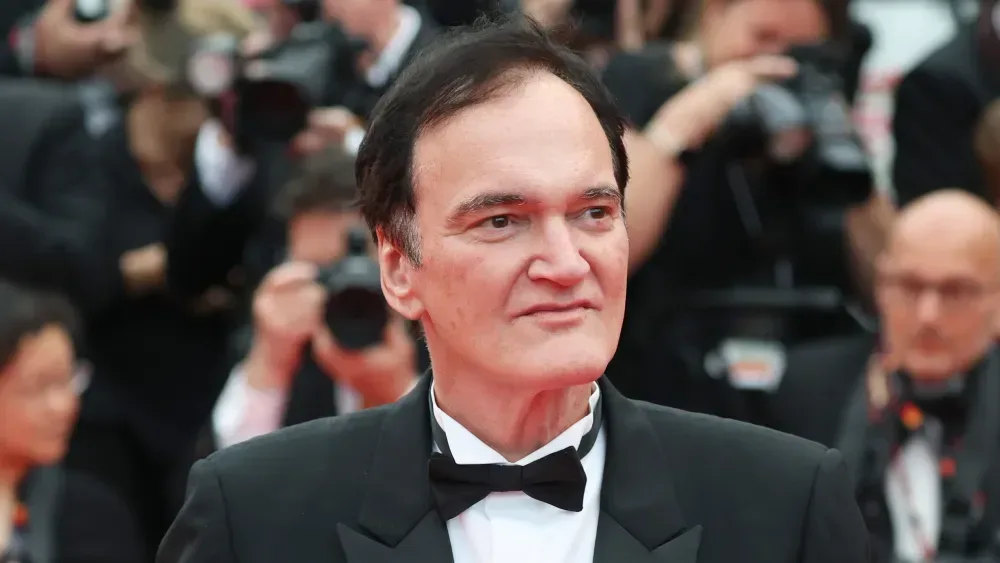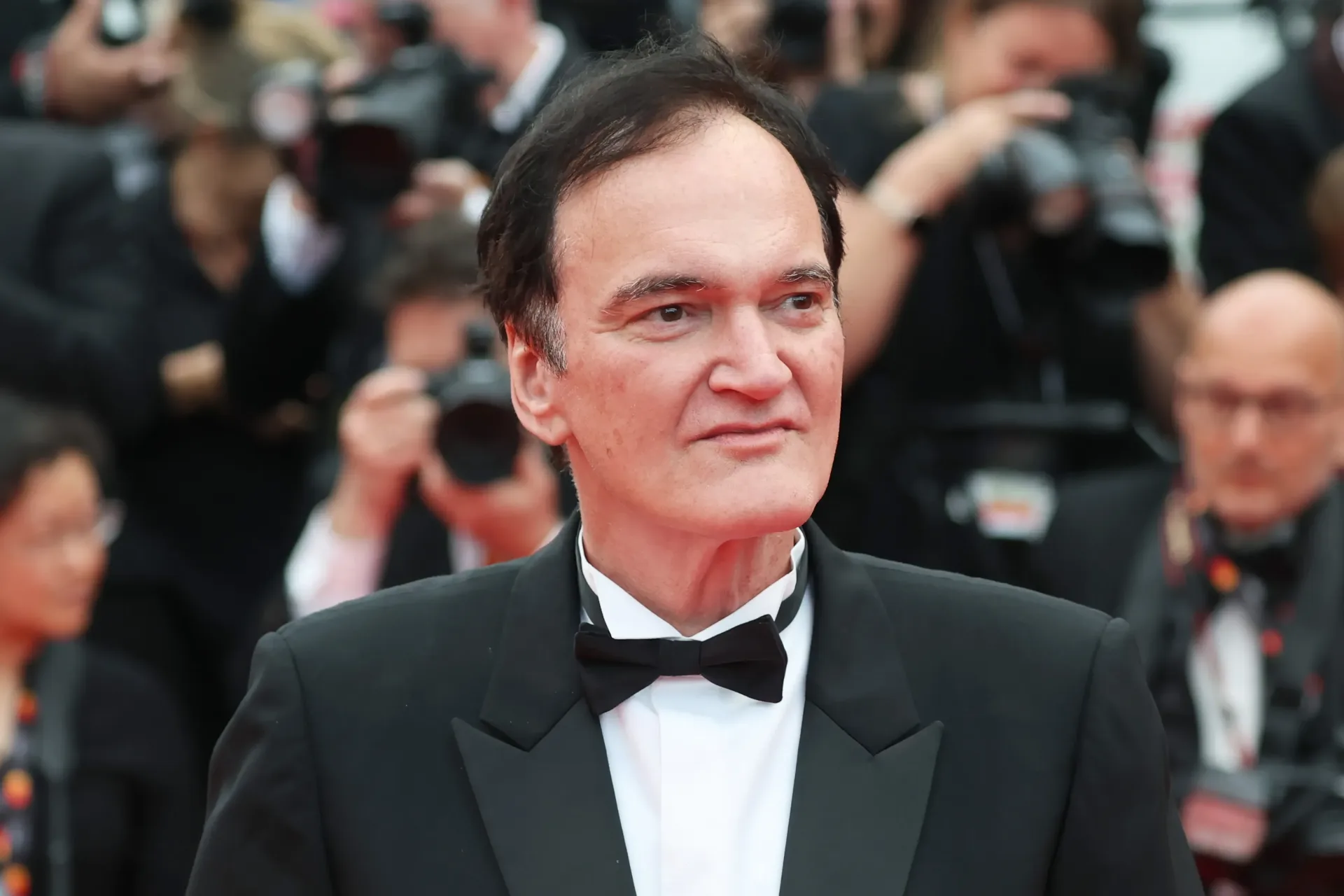
Quentin Tarantino has said he has completed a script he likes for the feature film he considers his tenth, the project he has long framed as his final movie. That is a meaningful development for a filmmaker whose self-imposed 10-film endpoint has become part of every discussion around his future. It is not, however, a production announcement, a release plan or confirmation that cameras are about to roll.
The distinction matters. Tarantino described the script as finished, but said his immediate priority is The Popinjay Cavalier, his stage production. Once that work is complete, he intends to spend time with his family and live with the decision before determining what he wants to do. In plain terms: the screenplay exists, but its route to the screen remains undecided.
“I’ve written a script that I really like,” Tarantino said, while explaining that he wants to do the play first and then see what he wants to do after taking time with his family.
A screenplay is not the same thing as a greenlit film
For fans, the word “script” can sound tantalisingly close to a finished movie. In filmmaking, it is a major creative milestone, but it is only one part of the process. A completed screenplay provides the narrative blueprint: characters, action, dialogue and scene structure. It does not itself identify a cast, a studio partner, a production schedule, a title, a start date or a release window.
None of those further details were confirmed here. Tarantino did not reveal the script’s story, genre, setting, characters or prospective actors. He also did not say that he has committed to directing it next. His comments should therefore be read as confirmation of writing progress, not as a promise of imminent filming.
That measured reading is especially important because Tarantino’s own wording leaves room for reflection. Saying that he wants to see “who I am” after doing the play suggests that the period ahead is part of the creative decision, rather than a simple delay on a locked production calendar. The material may be written, but the filmmaker is still weighing his relationship to it and to the idea of a tenth feature as a career capstone.
Why the theatre project comes first
The Popinjay Cavalier began as a screenplay before Tarantino concluded that it worked better as a play. That detail is useful context for the current film-script news: he is not treating the screen as the automatic final form for every idea. In this case, the story’s strengths apparently pointed toward a live theatrical setting instead.
The play is described as a swashbuckling comedy and stars Sacha Baron Cohen. It is scheduled for London’s Phoenix Theatre, with previews planned for late February, an opening next March and a three-month run due to end on June 13. The announced production gives Tarantino a substantial commitment before any next move on the tenth-film screenplay.
Related coverage includes Quentin Tarantino Says He Has Written His Tenth Film Script.
Moving a work from film to theatre is more than a change of venue. Film can use editing, camera placement, location changes and post-production to control pace and perspective. Theatre has to create its momentum in real time, with performers, staging, dialogue, sound and the audience all sharing the same moment. A story that “really worked as a play” may have had a particularly strong live rhythm, performative energy or stage-friendly structure—though no plot specifics have been disclosed.
For Tarantino, the play also represents a clear chance to work in a different medium before making a decision about the feature. That does not establish that the tenth film will borrow from the stage project or follow any particular theatrical influence. It simply means his next public creative undertaking is not the movie script he has now confirmed writing.
The significance of a tenth feature
Tarantino has repeatedly connected his retirement from feature filmmaking to a tenth film. The number gives the eventual project an unusual burden of expectation. Most films are judged first on their own terms; this one will also inevitably be assessed as a possible endpoint to a widely known directing career.
That framing can affect how audiences interpret even limited updates. Confirmation that a screenplay exists will prompt speculation about whether it is truly the last one, what kind of story could serve as a finale and how it might connect to his earlier work. But those are audience questions, not answers supplied by the update. The only firm creative fact is that Tarantino says he has written a script he likes.
There is a practical implication as well. A filmmaker who has placed special importance on a final feature may be less inclined to rush from draft to production simply because a script is complete. Tarantino’s stated desire to complete the play, spend time with his family and then reassess fits a process in which the next decision is deliberate rather than automatic.
It is also worth separating retirement from a specific activity from retirement from all creative work. The available comments concern a planned final feature film, while Tarantino is simultaneously pursuing theatre. The existence of The Popinjay Cavalier demonstrates that a potential end to his feature-directing run does not mean an end to writing or storytelling in every form.
The last released Tarantino film remains Once Upon a Time in Hollywood
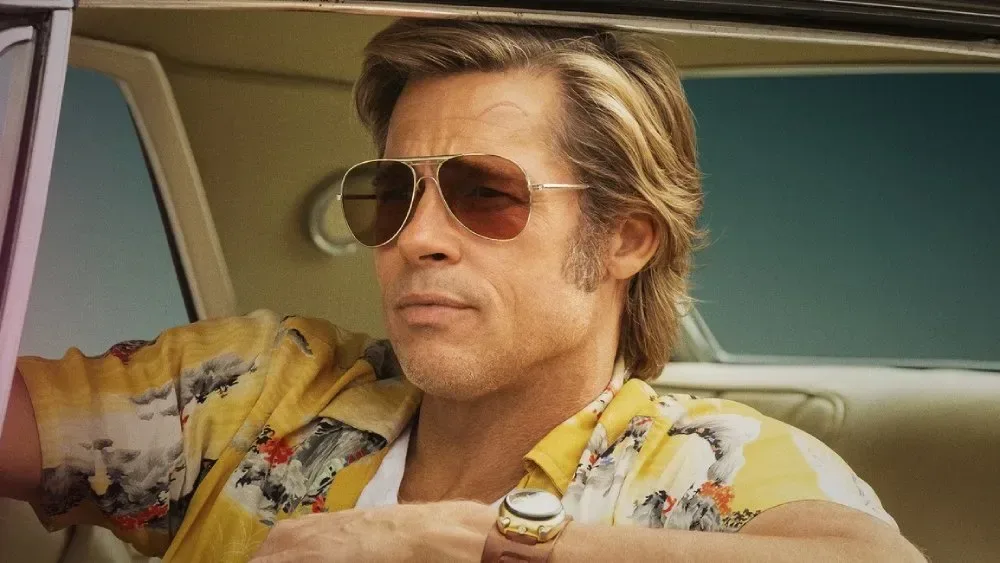
Tarantino’s most recent released film is 2019’s Once Upon a Time in Hollywood, starring Brad Pitt, Leonardo DiCaprio, Margot Robbie and Margaret Qualley. The film’s awards recognition underscores why a follow-up carries such attention: Pitt won the Oscar for supporting actor, while Barbara Ling and Nancy Haigh won for production design. Tarantino received nominations for best picture and best director, and DiCaprio was nominated for best actor.
Those results are historical context, not a forecast for the unwritten production path ahead. They do, however, show the scale of attention around a new Tarantino feature. With the last release dating to 2019, the confirmation of a completed screenplay is the clearest indication yet that another film remains a live possibility—albeit one that Tarantino has not committed to making immediately.
The gap also makes it sensible to resist filling in blanks with rumours. There is no verified title, no confirmed cast and no disclosed premise. Similarly, the report does not establish whether the screenplay has gone through multiple drafts, who has read it, whether financing is in place or how closely it may resemble any past concept associated with Tarantino. Until he offers more, the script should be understood as a private creative work he has acknowledged, rather than a publicly defined movie package.
What audiences can reasonably expect next
The immediate public-facing project is the London production of The Popinjay Cavalier. Its planned run provides the most concrete piece of Tarantino’s schedule currently available. After that, he has signalled a period of personal time and reconsideration, not a hard deadline for a film announcement.
- Confirmed: Tarantino says he has written a script he likes for the feature he views as his tenth.
- Confirmed: He intends to focus first on The Popinjay Cavalier, which originated as a screenplay and was reworked for the stage.
- Confirmed: The production stars Sacha Baron Cohen and is scheduled for the Phoenix Theatre in London.
- Not confirmed: The movie’s title, story, cast, production start, distributor or release date.
- Not confirmed: That Tarantino has made a final decision to direct the screenplay next.
For readers tracking filmmakers moving between screen projects and other media, the broader conversation around adaptations remains active; recent news concerning The Mortuary Assistant film adaptation is another reminder that a film’s progress can be shaped by developments far beyond the existence of a premise or script. Tarantino’s situation is different, but it likewise illustrates why a single writing milestone should not be mistaken for a complete production timeline.
For now, Tarantino has supplied an answer to one of the biggest open questions: he does have a script. What remains unanswered is nearly everything that turns a screenplay into a feature film. The next dependable marker is his theatre debut, after which he has deliberately left himself space to decide whether and how this prospective tenth movie proceeds.