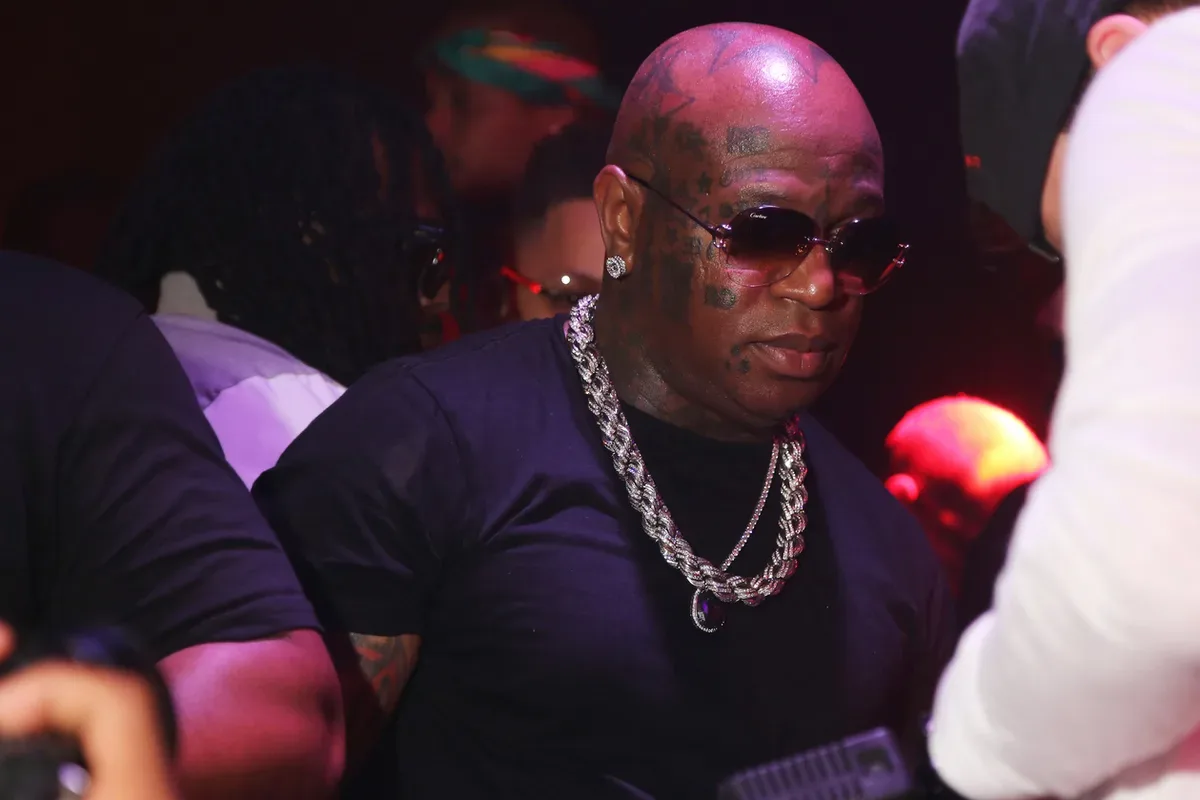

Prodigy’s estate has filed a lawsuit accusing Havoc of excluding it from revenue tied to Mobb Deep performances and merchandise following Prodigy’s death in 2017.
Ikesha Dudley, Prodigy’s widow, filed the case in White Plains, New York. The complaint names Havoc, whose legal name is Kejuan Waliek Muchita, along with HClass Entertainment, Inc. and Kejuan Muchita, Inc. The core dispute is over Mobb Deep LLC, the business entity the duo established in 2000 to hold group trademarks and copyrights and to manage its commercial affairs.
Dudley alleges that Prodigy’s estate owns half of that company, yet has received no share of its live-performance or merchandise proceeds since his death. The claims are allegations in a civil complaint, not findings by a court, and the supplied information does not include a response from Havoc or the other defendants.
What the lawsuit alleges
The estate says Havoc assumed control of Mobb Deep LLC after Prodigy died and excluded Dudley from management. It further alleges that he declined to provide the estate with the company’s books or disclose its profits.
For more context, explore The Horror Game Awards 2026 Streams Worldwide November 20 With 21 Categories and 20-Plus Reveals.
At issue is post-2017 business conducted under the Mobb Deep name. Dudley alleges that Mobb Deep played at least 172 shows across North America, South America and Europe after Prodigy’s death. She says those appearances, together with merchandise sales, generated millions of dollars, while the estate received none of the resulting proceeds.
The complaint also accuses Havoc of using HClass Entertainment, Inc. and Kejuan Muchita, Inc. to divert Mobb Deep-related business away from the group company. The estate characterizes the alleged conduct as a pattern involving self-dealing, concealment and diversion of company assets, revenue and business opportunities.
That distinction matters because the case is not simply framed as a disagreement over a single concert payment or one product line. The estate’s allegations describe a broader dispute about who controlled the duo’s business after one member’s death, what revenue passed through Mobb Deep LLC, and whether the alleged 50-50 ownership position was honored.
Related coverage includes Prodigy’s Estate Sues Havoc Over Alleged Mobb Deep Profit Dispute.
The legal claims, in plain terms
Dudley’s suit alleges breach of fiduciary duty, conversion and unjust enrichment. Those are separate legal theories, but each addresses a different part of the alleged financial harm.
- Breach of fiduciary duty generally concerns an alleged failure by someone with responsibilities to a company or co-owner to act loyally, carefully and in the interests they are required to protect. Here, the estate alleges that the management and control of Mobb Deep LLC were handled in a way that shut out its claimed half-owner.
- Conversion is an allegation that someone wrongfully exercised control over property belonging to another person or entity. In this dispute, that theory is relevant to the alleged diversion of revenue and to the estate’s request for the return of Prodigy’s master recordings.
- Unjust enrichment is a claim that a party improperly benefited at someone else’s expense. The estate’s position is that Havoc and the named companies retained business income that should have been shared with the estate.
None of those claims establishes liability by itself. The case will turn on the governing company arrangements, ownership rights, financial records, the handling of specific deals and the parties’ evidence about what revenues existed and where they went.
What the estate wants from the case
The requested relief goes beyond an unspecified damages payment. Dudley is asking for an accounting of Mobb Deep LLC’s earnings and for the estate’s alleged share of profits to be turned over.
An accounting is particularly important in a dispute where one side says it was denied access to company books. Practically, it is a demand for a clear financial reckoning: money received, expenses, revenue sources, distributions and other transactions relevant to the company’s business. It can be central when the disagreement is as much about access to information as it is about the final amount allegedly owed.
The estate also seeks the return of all of Prodigy’s master recordings. A master recording is the original recorded performance from which later releases, reproductions and other uses are typically derived. The request does not establish where any masters are currently held or resolve their ownership; it makes the recordings an explicit part of the property dispute.
In addition, Dudley is seeking punitive damages and a jury trial. Punitive damages are sought to punish especially wrongful conduct rather than merely compensate a claimant for a loss. Whether they are available depends on the law and the facts ultimately proven. A jury demand means the estate is requesting that a jury, rather than only a judge, decide factual issues that are eligible for jury resolution.
A business dispute alongside new Mobb Deep music
The lawsuit arrives during an active period for the Mobb Deep catalog and name. Infinite, released in October 2025, was the group’s first full-length album since Prodigy’s death. Havoc worked with The Alchemist on the project, which used recordings Prodigy left behind.
Havoc has previously spoken about discussing that album with the estate, saying his focus was specifically on the album. That earlier statement provides a narrow point of contact between the surviving member and the estate on a music project. It does not answer the lawsuit’s separate allegations concerning management of Mobb Deep LLC, live-performance earnings, merchandise income or the estate’s requests for records and masters.
The difference is significant. Recording projects can involve permissions and discussions tied to a particular release, while the complaint raises wider questions about the group’s operating company and the handling of business opportunities over multiple years. The two can overlap, but the supplied allegations do not establish that an agreement concerning Infinite resolved any of the claims now being asserted.
Why the company structure is central
Mobb Deep LLC was reportedly formed in 2000 to own the duo’s trademarks and copyrights and to conduct the group’s business. That makes the entity’s records central to the estate’s case.
Trademarks commonly protect identifiers such as a group name and branding, while copyrights protect specified original works, including music and recordings depending on the rights involved. When a company is used as the vehicle for those rights and for commercial activity, income from touring, merchandise and licensing may be connected to decisions about the company’s assets, contracts and management. The complaint’s allegations focus on whether the estate retained its claimed ownership and participation in that structure after Prodigy’s death.
The 172-show allegation is likewise not merely a number attached to the case. It gives the estate’s claimed loss a defined commercial scope, spanning multiple regions and years after 2017. Still, the allegation alone does not reveal the terms of those bookings, the costs associated with them, which entity received payment, or how any net proceeds should ultimately be divided. Those are the kinds of issues an accounting and the underlying financial records could address as the litigation proceeds.
Hell On Earth anniversary activity continues separately
The legal action coincides with a separate anniversary campaign for Mobb Deep’s Hell On Earth. The album followed The Infamous and reached No. 6 on the Billboard 200. A limited anniversary jersey was announced on November 19 as part of activity marking 30 years of the record.
That anniversary merchandise is separate from the lawsuit’s unresolved allegations, but it underscores why control of group branding and commercial rights can remain consequential decades after an album’s original release. The complaint does not determine who is entitled to any particular anniversary-related revenue. Rather, it asks the court to examine the broader business relationship and the estate’s claimed stake in Mobb Deep LLC.
For now, the key points are the estate’s assertion that it owns half of the duo’s company, its claim that it was denied both revenue and access to financial information, and its request for profits, records, master recordings, punitive damages and a jury trial. The merits of those claims—and any defenses from Havoc or the two named companies—remain to be resolved through the legal process.