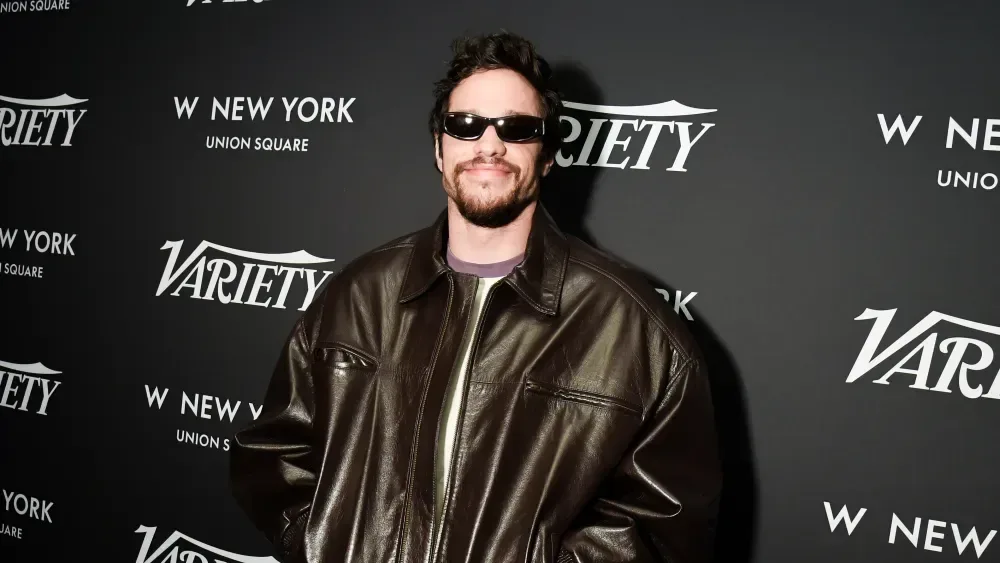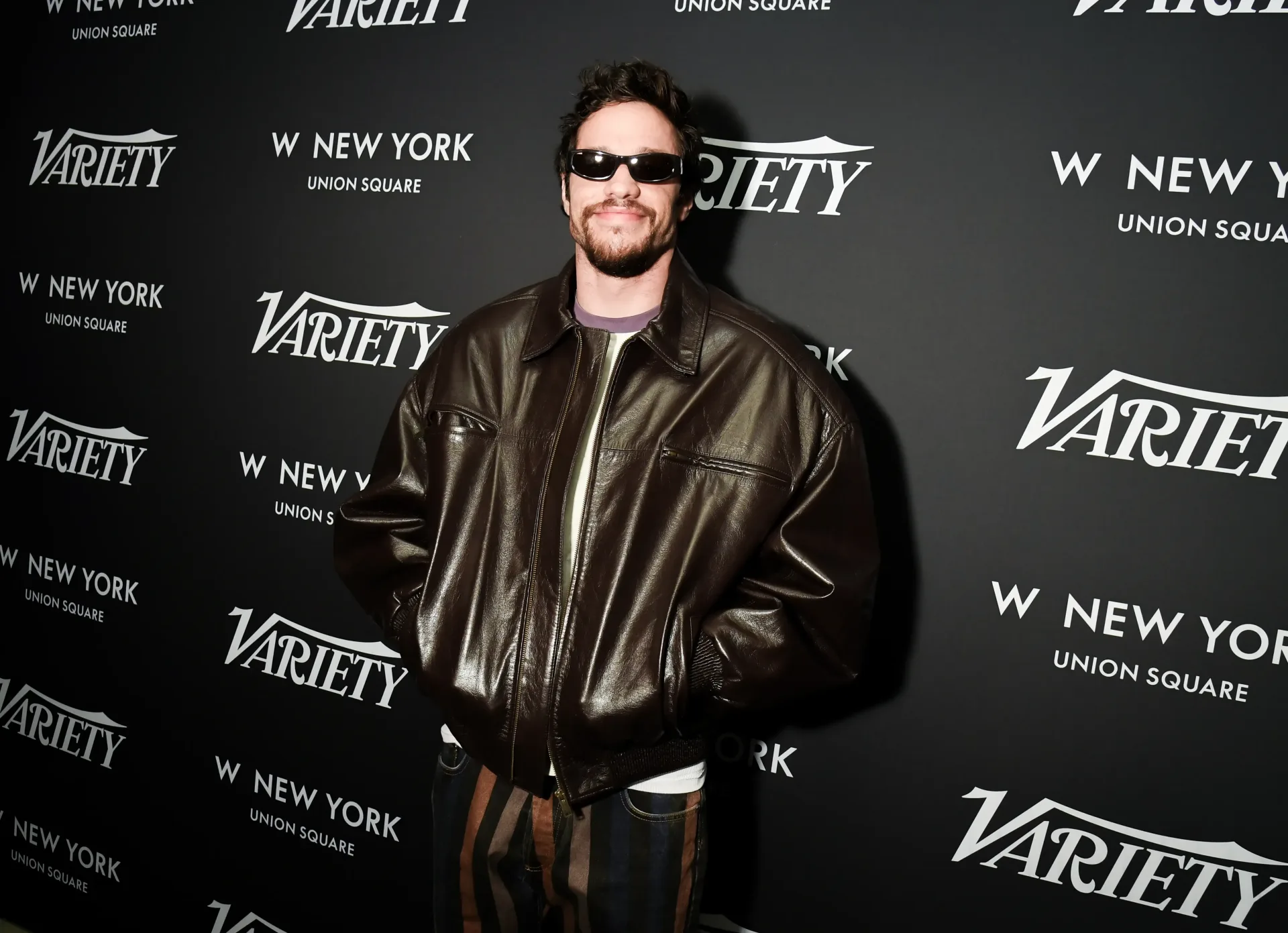
Pete Davidson was the honoree at a New York gathering held Thursday at Living Room Bar & Lounge in Manhattan’s Flatiron District. The Staten Island comedian, who is recovering from a concussion sustained during production on Tommy Karate, attended in blacked-out sunglasses and a large chocolate-brown leather jacket.
The evening was staged as a celebration of New York itself as much as of Davidson. Guests included comedian Matt Friend, Gayle King, Ana Navarro and Kareem Rahma, the host of Subway Takes. The mix matters: it placed a stand-up and screen performer among people associated with television, news, street interviews and digital media, all of which have distinct but overlapping relationships with the city.
Davidson posed on the red carpet and later spent time talking with attendees. The event followed a career-spanning interview in which he addressed his exit from Saturday Night Live, public attention around past relationships and the concussion from Tommy Karate. No additional details about the injury, the film’s production or Davidson’s recovery timetable were disclosed at the event.
A night built around a recognizable New York mix
Inside the lounge, the atmosphere paired ornate, old-city styling with a contemporary Manhattan guest list. Champagne, lobster rolls and tuna tartare were served as the room became a setting for conversation rather than a performance venue. That distinction is useful: this was an industry-and-culture gathering honoring a local figure, not a new project premiere, a tour announcement or a formal reveal of future Davidson work.
The night also arrived during a period of heightened civic feeling around the city. The Knicks’ NBA championship win in June — their first in 53 years — was cited as a recent example of how a shared event can spill into streets, homes and public gathering places. Fashion creator Nicky Campbell described joining the ensuing Times Square celebration after watching the win with friends, recalling a crowd energy he had not previously experienced during his 12 years living in New York.
That context gives the party’s “New York” framing a little more weight than a standard city-themed invitation. Celebrity gatherings often use location as backdrop. Here, the city was also the subject: its street culture, the way its personalities cross paths, and its capacity to turn private reactions into visible public moments.
Why Davidson fits the occasion
Davidson’s Staten Island roots make him an especially natural choice for a New York-centered honor. His career has moved through major mainstream entertainment spaces, while his public identity has remained closely tied to the city. The supplied account does not characterize his comedy or offer a full account of his career, but the guest list and the focus of the accompanying interview point to the wide cultural territory he now occupies.
That is also why the conversation around him was not limited to comedy. A performer’s career can become a public narrative made from work, interviews, appearance, personal headlines and choices about when to leave an established platform. Davidson’s discussion of departing Saturday Night Live speaks to that larger transition: leaving a high-profile institution does not end public interest; it changes the terms on which the person is seen.
Related coverage includes Pete Davidson Honored at Flatiron District New York Party.
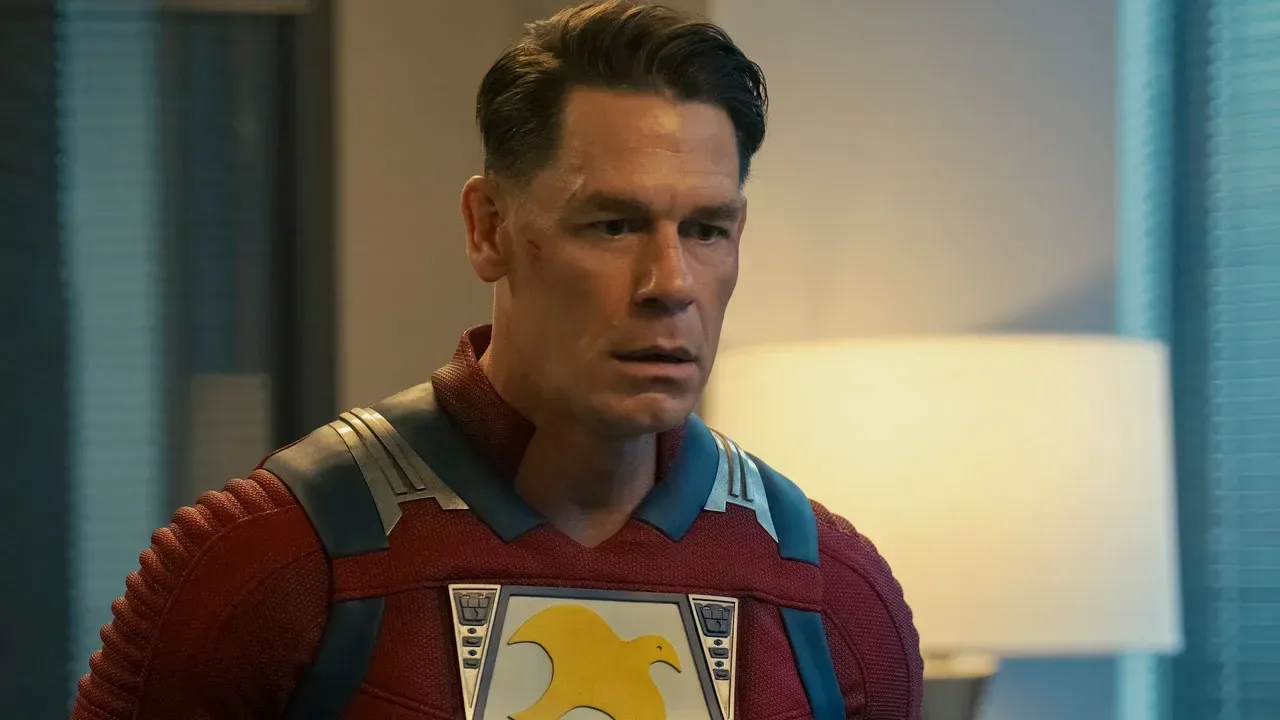
For entertainment audiences, this is a familiar dynamic. Public figures may be best known for one role or show, then face the challenge of defining what follows without allowing their prior association to become the only story. A current example of a performer discussing franchise priorities can be found in John Cena’s comments about the future of Peacemaker, another case where individual career ambitions are discussed alongside a much larger entertainment ecosystem.
Matt Friend’s street-level origin story
Matt Friend’s comments offered the clearest explanation of why New York remains important to performers who work with observation and immediacy. He said his start involved conducting interviews on city streets and doing impressions, then summed up the appeal of the place in simple terms: “There’s nothing like this city.”
Street interviews are exactly what they sound like: short conversations conducted in public, often relying on spontaneous encounters rather than a controlled studio setting. They can be especially valuable for comedians and online creators because the environment produces unpredictable responses, recognizable local textures and immediate audience feedback. An impression, meanwhile, is a performance that recreates the voice, mannerisms or presence of another person. Both forms depend on quick observation.
New York is well suited to that kind of work because the streets themselves can function as a stage, a testing ground and a source of material. That does not mean every creator’s route looks the same, or that the city automatically creates success. But Friend’s account makes a narrower and more defensible point: his own early work was inseparable from being out in the city and interacting with people in real time.
The practical significance of gatherings like this
Events centered on a single honoree can look lightweight from the outside: photos, food, conversation and a tightly packed set of familiar faces. Yet their value is often in the overlap. A comedian can meet a television host; a creator whose work was built on the subway or sidewalk can share a room with people from traditional news and entertainment; different audiences encounter the same cultural figure from different angles.
In this case, that overlap was visible in the attendee list. Davidson represents comedy and screen celebrity. King and Navarro bring prominent broadcast-TV associations. Rahma’s work is built around casual, public-facing conversations. Friend’s origin story connects comedy to street interviewing and social media. The party did not announce a collaboration between those guests, and none should be inferred. Still, the range of people present illustrates how porous New York’s media and entertainment scene can be.
There is a practical lesson for readers following celebrity culture, too: not every notable event is a launchpad for a product announcement. Sometimes the news is simply that an established figure has been recognized in a room full of peers, and that the room’s composition says something about where culture is being made and circulated. Here, the evidence supports a snapshot of a city’s creative network rather than a promise of Davidson’s next project.
What is known — and what is not
Several details are clear. Davidson attended while recovering from a concussion suffered while filming Tommy Karate. He arrived at the Flatiron District venue, walked the carpet, greeted hosts and socialized with guests. The gathering featured champagne and passed food, and it was explicitly oriented around celebrating New York.
Other details remain unknown. There was no stated release plan for Tommy Karate, no update on the scope of Davidson’s injury beyond his continued recovery, and no announced new film, television or comedy project tied to the party. Likewise, the Knicks celebration served as local context, not as an event connected to Davidson’s honor.
That uncertainty is worth retaining. Celebrity-event coverage can easily turn an appearance into a supposed hint of a new career move. In this instance, the more grounded read is straightforward: Davidson was the centerpiece of a New York celebration that brought together comedians, broadcasters and creators, with the city’s unusually communal energy as the unifying theme.
New York as the shared character
The evening’s strongest through line was not a new project or a single speech. It was the idea that New York continues to provide a meeting point for different kinds of personalities and ambitions. Campbell’s account of the championship celebration emphasized collective release in public space. Friend emphasized the creative possibilities of street encounters. Davidson’s recognition connected a local upbringing to a career that has played out in front of a national audience.
Those are different versions of the same idea: in New York, the boundary between city life and cultural production is often thin. A crowd at Times Square, an interview on a sidewalk, a conversation in a Flatiron lounge and a comedian associated with Staten Island can all become part of the same cultural picture. For one Thursday night, Davidson was at the center of it.