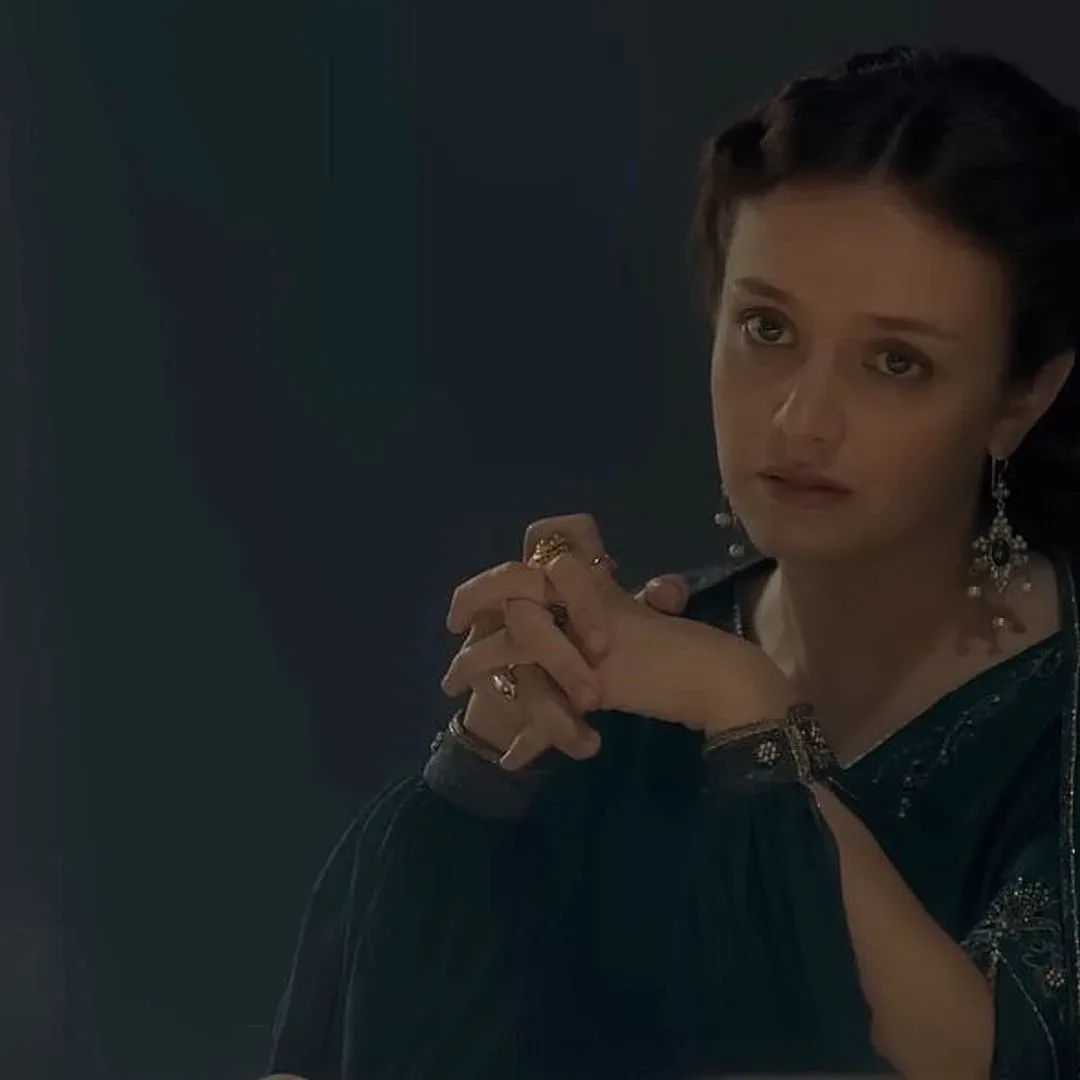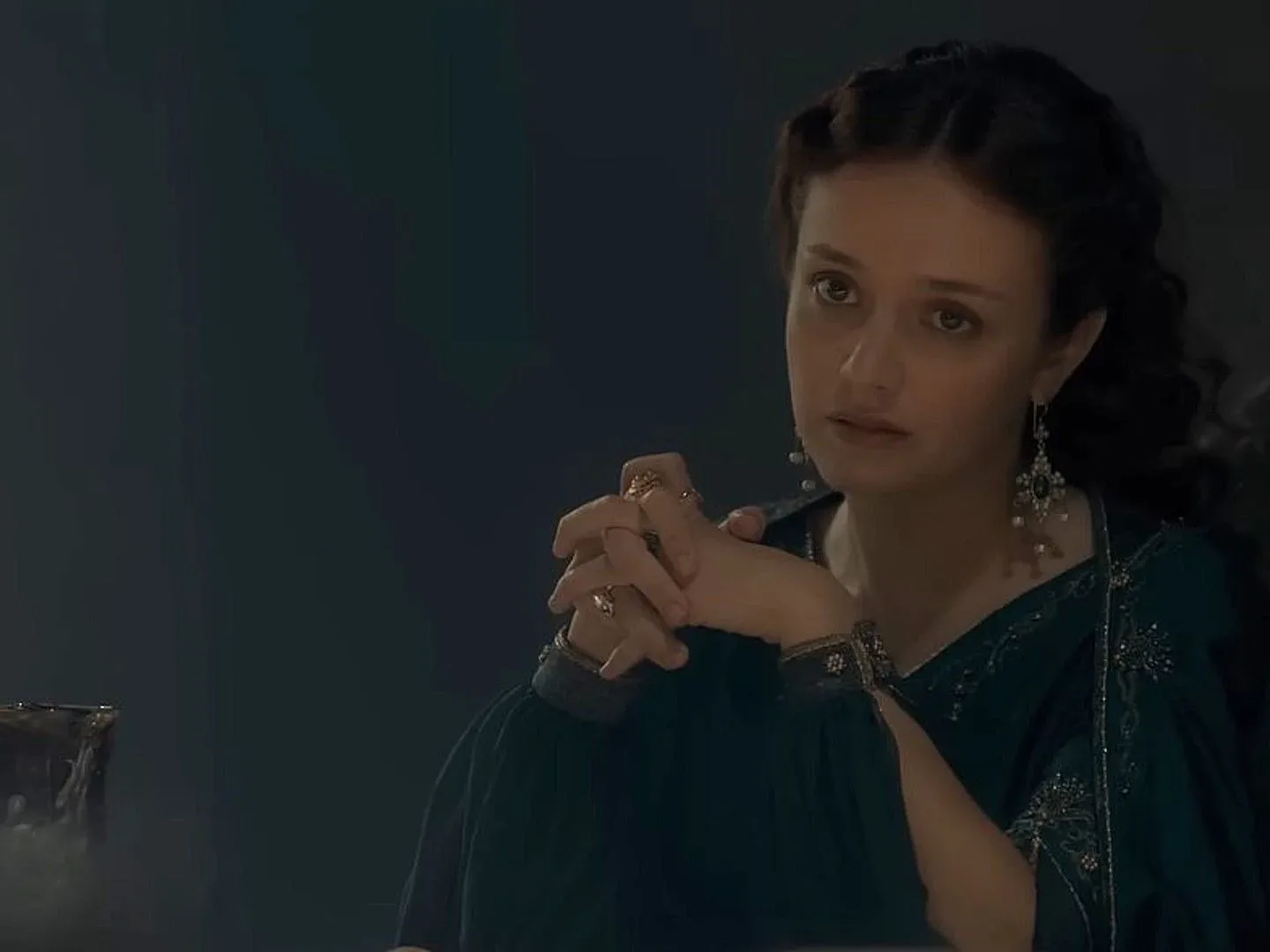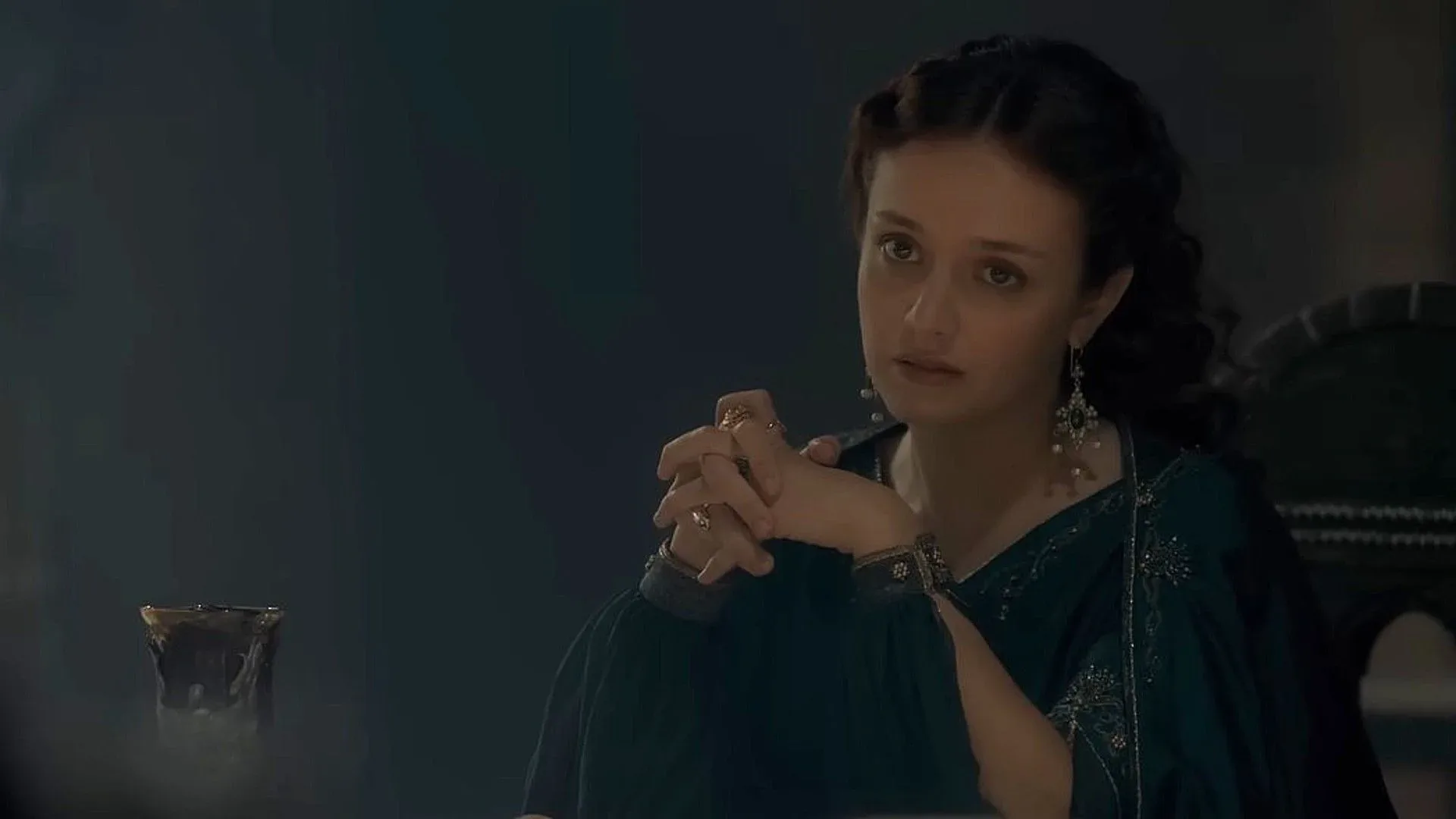
House of the Dragon is approaching its last chapter, but there is still a considerable stretch of road between the current moment and the series finale. Olivia Cooke, who plays Alicent Hightower, has said that filming for season 4 is expected to start next spring. The fourth season is positioned as the show’s final season, with a 2028 release also stated.
That is a meaningful, if still limited, piece of scheduling clarity for a production defined by big intervals between instalments. It does not establish an exact filming date, a premiere window within 2028, episode details, or a complete production timetable. It does, however, indicate that the last season is not already in front of cameras and that the cast’s return to Westeros remains ahead rather than underway.
Cooke’s comments also put a human point on the machinery of a major fantasy drama. Asked whether work had started, she said it had not, then described the prospect of processing the show’s end on a delayed emotional timetable. In her telling, the sadness may land well after the job itself is over. That feels particularly fitting for a series in which so much is built around people carrying old wounds, inherited grudges, and consequences that arrive long after the act that caused them.
What “filming next spring” does and does not confirm
The phrase is useful, but fans should not treat it as a full release plan. Principal photography is the industry term commonly used for the main period in which scenes are filmed with the cast. It is a major production milestone, yet it is only one stage of making a season of television.
After filming, a project may move through editing, sound work, music, visual effects, colour finishing, promotional planning and delivery. A dragon-heavy fantasy series can have an especially complicated path once cameras stop, because the final image can depend on work that is completed after performers have left the set. None of those downstream stages has been detailed here, so it would be premature to read Cooke’s filming remark as a promise of an earlier-than-stated release.
The clearest current outline is therefore straightforward:
- Season 4 is described as the final season.
- Cooke says filming is expected to begin next spring.
- The season is stated to arrive in 2028.
- No precise premiere date or further production milestones have been established in the available information.
That distinction matters. A schedule can be informative without being complete, and an actor’s indication of an expected start should not be inflated into claims about completed scripts, finished casting, episode count, trailers, or a locked debut date. The dragons may be circling the runway, in other words, but they have not taken off.
A final season after a familiar waiting pattern
Since its 2022 debut, House of the Dragon has released a new season every two years. The stated 2028 arrival for season 4 continues that broad rhythm. For viewers, the result is a long-form experience with substantial space between chapters: enough time for theories to grow elaborate, memories to become selective, and one family-tree argument to reproduce into three more family-tree arguments.
The gaps have another practical consequence. A report has linked year-long breaks between seasons with viewership declines. That does not by itself explain every change in an audience, nor does it settle how the final season will perform. It does frame the challenge awaiting the series: a finale must reward the viewers who stayed engaged while also giving less active fans a reason to come back after a long pause.
For a serialized drama, a gap is not merely empty calendar space. It can make continuity harder to retain. Characters’ alliances, personal losses and political goals may feel vivid at the end of one season, then require a mental refresh when the next begins. In this case, that difficulty is magnified by a story designed around competing claims, shifting loyalties and several figures whose names are very similar because Westeros apparently regards straightforward filing systems as a personal insult.
The 2028 date gives audiences time, but it also raises the value of clarity when the show eventually returns. A final season will need to carry the narrative forward, not simply remind everyone where the banners were last planted.
Alicent’s unresolved emotional terrain
Cooke’s role makes her perspective on the ending especially notable. Alicent is one of the drama’s central figures, and the final season will arrive after events that leave her in a potentially raw emotional position following the death of her daughter. The questions around what that loss does to her loyalties are part of why a neat prediction would be foolish. This is Westeros; neat predictions tend to be the first thing tossed into the nearest fire.
One possibility raised by the show’s current setup is whether Alicent could direct blame at Rhaenyra, played by Emma D’Arcy. Another is how she might contend with the relationship between Aegon, played by Tom Glynn-Carney, and Aemond, played by Ewan Mitchell. Those are open dramatic questions, not confirmed plot outcomes. The available information does not establish who will be blamed, what decisions Alicent will make, or where any alliance will stand when season 4 begins.
That uncertainty is worth preserving. “Emotionally charged” is not the same as “certain to take a particular action.” Characters in a political fantasy can respond to grief with confrontation, retreat, bargaining, revenge, loyalty, contradiction, or several of those things in the same conversation. Alicent’s value as a character has often rested in precisely that pressure: private feeling and public responsibility do not line up cleanly, while every decision carries consequences beyond the people in the room.
Why the ending carries extra weight
Final seasons are judged differently from ordinary seasons. Viewers naturally assess them not only as a run of episodes but as the resolution of years spent following a story. That brings heightened attention to character conclusions, pacing, payoff and the degree to which earlier conflicts receive meaningful closure.
There is also a clear shadow hanging over the discussion: the divisive ending of Game of Thrones. The hope around House of the Dragon is not simply that it completes production on time. It is that its final chapter earns confidence as an ending in its own right. Whether it does so cannot be known from a filming start indication, and it would be unfair to declare either triumph or disaster years before the season reaches viewers.
Still, the stakes of the conversation are easy to understand. The series has one season remaining, the cast will eventually have to say goodbye to roles that have occupied years of their lives, and the audience faces another long wait before it can judge the full shape of the story. Cooke’s description of grief arriving later captures something beyond one performer’s experience: endings often become real only once the routines, sets, scripts and anticipation have finally stopped.
What fans can reasonably expect now
At this stage, the responsible expectation is patience rather than prediction. Season 4 is intended to be the final season; filming is expected next spring; and 2028 is the stated release year. Anything more granular requires future confirmation.
That may be an unsatisfying answer for viewers who would happily trade a small council meeting for a precise date, a teaser and an approved dragon itinerary. But it is also a more useful one than treating speculation as production fact. There is time for the story’s final campaign to take shape, and time for official details to emerge as the work progresses.
In the meantime, people tracking what to watch across services may find broader streaming-navigation developments useful, including JustWatch TV’s planned expansion of its streaming guide. For Westeros specifically, though, the current status is simple: the final return is on the horizon, the cameras are expected to roll next spring, and Cooke is already bracing for the delayed impact of goodbye.