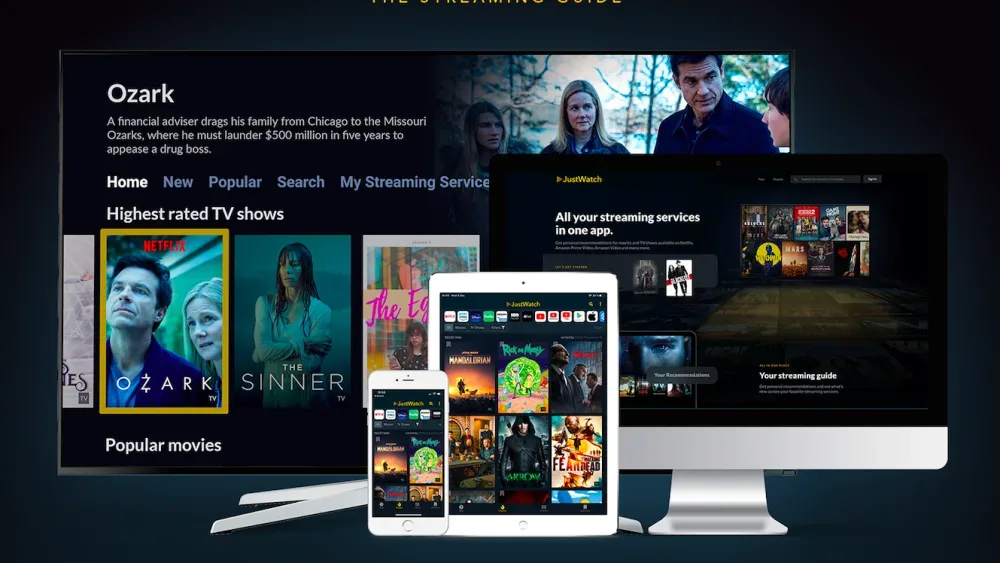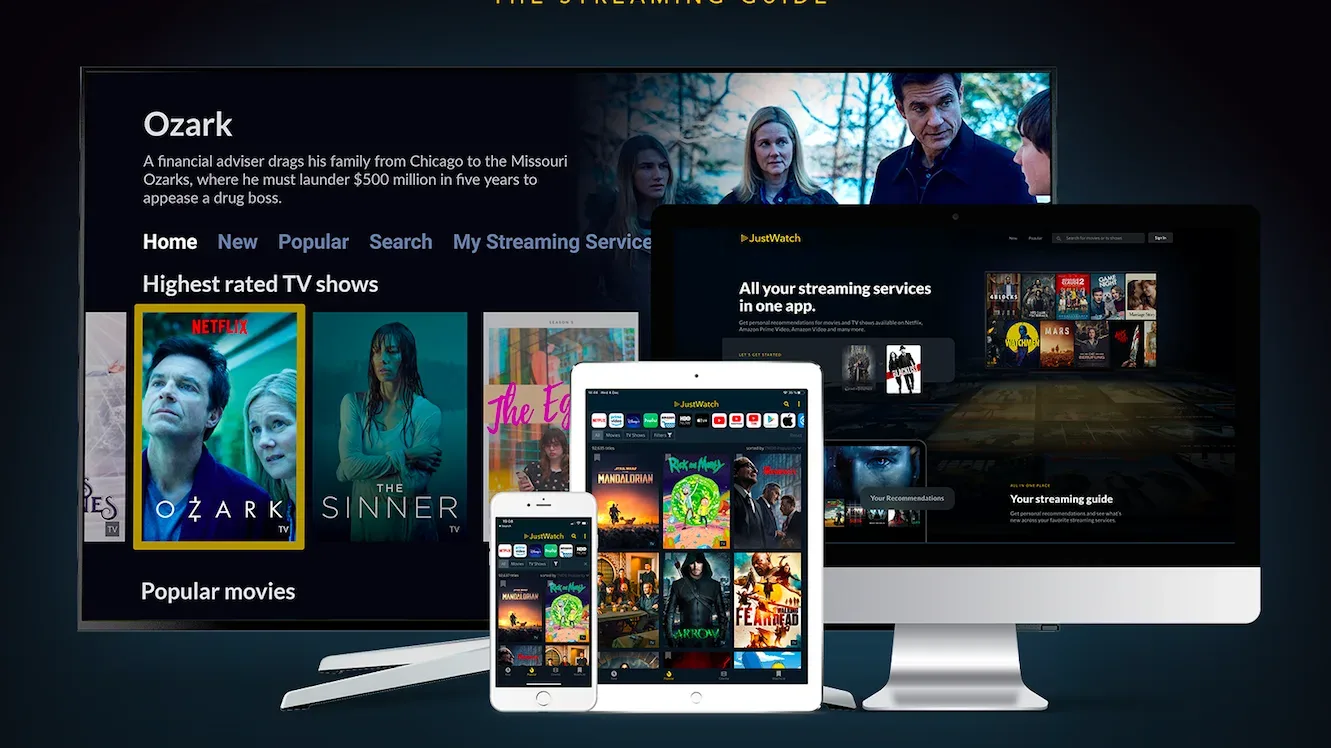
Finding something to watch has become its own form of entertainment, except with fewer dragons and more tabs. JustWatch Group plans to make that search a little more direct in October with the launch of JustWatch TV, a streaming service built into the company’s existing app and website.
The launch is notable because JustWatch has primarily functioned as a streaming guide: a place where users search for films and television shows, then learn where those titles can be watched. JustWatch TV adds a new layer to that model. Rather than only pointing viewers toward another platform, it will let them watch selected programming inside the JustWatch experience.
The service is scheduled to become available to existing JustWatch users in October across the United States, Canada and select European countries. Its offerings will include free, advertising-supported viewing, rentals and an ad-free subscription option. Crucially, the company says viewers will still be encouraged to find titles on their preferred third-party streaming services when that is the better fit.
What AVOD means for JustWatch TV
AVOD means advertising-based video on demand. In practical terms, it describes on-demand film and television viewing that is funded at least partly by advertising rather than requiring a viewer to pay a recurring subscription fee for every title.
That does not mean every way to watch on JustWatch TV will be free. The planned model combines several access routes:
- Ad-supported viewing: selected titles can be watched without a standard subscription, with advertising supporting that access.
- Rentals: viewers can pay to access individual titles.
- An ad-free subscription: a paid option intended for viewers who prefer not to watch ads.
- Links back to preferred services: users can also rediscover a title through streaming services they already use.
The significance is not merely that another streaming app is arriving. JustWatch TV is intended to operate at the intersection of discovery and playback. A person searching for a hard-to-find movie may be able to watch it free on JustWatch TV, rent it there, subscribe for an ad-free route, or use the guide to locate it elsewhere. The available path can vary by title, territory and service.
For viewers, that structure could reduce one particularly familiar modern ritual: discovering that a film exists, learning it is unavailable on the service they expected, and beginning a new search from scratch. The value proposition is convenience, although the precise catalog and the individual titles available through each viewing option have not been detailed.
A guide becomes a destination
David Croyé, founder and CEO of JustWatch Group, framed the move as an extension of the company’s longstanding effort to connect fans with movies and shows, including titles that can be difficult to locate or were previously unavailable. The company says millions of people use its guide daily while searching across a catalog measured in the hundreds of thousands of movies and TV shows.
That background explains why the launch is different from a standalone streaming platform simply opening its virtual doors. JustWatch already has an audience arriving with an active question: “Where can I watch this?” JustWatch TV is designed to provide one possible answer immediately, while retaining the ability to direct the viewer to other services.
Quentin Carbonell, senior vice president of global content acquisitions and strategy at JustWatch, described the service as a response to a fragmented viewing landscape. The planned curation spans prominent film and television titles as well as less easily found selections. In that sense, the product is trying to make choice less binary. It is not positioned solely as “watch here” or “go away”; it aims to present several legitimate ways to reach the same film or show.
That is a meaningful distinction for a guide. A conventional guide’s job ends at the handoff. JustWatch TV’s job may continue through playback, rental or subscription, depending on what a viewer selects. Yet the company’s stated commitment to helping users find programming on their favorite services suggests it does not intend to abandon the broad discovery role that made the platform useful in the first place.
What is confirmed, and what remains open
Several details are confirmed for the October rollout. JustWatch TV will live directly within the JustWatch app and website. It will be available to existing JustWatch users. It will launch in the U.S., Canada and selected European markets. It will offer advertising-supported viewing, rentals and an ad-free subscription option.
JustWatch Group has also identified a group of launch partners: Paramount, New Regency, Fremantle, Bleecker Street and Vortex Media, alongside additional companies. Those partnerships establish that the service’s library will involve recognized film and television suppliers, but they do not answer every consumer-facing question.
For example, no full launch catalog has been specified, and there is no title-by-title breakdown of what will be free, rental-only, included with the ad-free option, or available exclusively through a different service. The company also has not detailed subscription terms or the exact European countries included in the initial availability statement. Viewers should therefore treat the October launch as the beginning of the offering, not as a complete map of its eventual library or regional reach.
That uncertainty matters because streaming rights are often specific to both territory and access model. A title may be available in one country but not another; it may be free with ads in one arrangement and rental-only in another. JustWatch TV’s central promise is easier navigation through those possibilities, but the actual viewing choice will still depend on the rights and options attached to an individual title.
Why the hybrid approach could matter
There is a practical appeal to putting free viewing, paid rentals, subscription viewing and cross-service discovery in one interface. A viewer does not necessarily approach every movie with the same willingness to pay. Some will happily sit through ads for a casual rewatch. Others may rent a newly desired title rather than wait. Still others may already have access through a favorite service and simply need a reliable way to identify it.
By presenting multiple routes, JustWatch TV could make the decision more transparent than a one-size-fits-all storefront. It also potentially gives less prominent titles another route to being found. When discovery begins with a search rather than a front-page promotional carousel, an older, niche or otherwise difficult-to-find film has a better chance of appearing alongside a viewer’s intent.
There is also an industry implication in the company’s stated position. Rather than presenting itself only as a substitute for other services, JustWatch TV says it aims to support filmmakers, distributors and streaming platforms around the world. The mixed model is central to that claim: titles can be viewed within JustWatch TV where available, while other services remain part of the discovery journey.
Whether that balance works will depend on execution. A discovery platform earns trust when its results are clear about where a title can actually be watched and what each option requires. The new service’s biggest opportunity is to make that clarity feel native instead of making viewers decipher a maze of separate apps, rental stores and subscription tiers.
What viewers should look for in October
For existing users in supported markets, the immediate change should be that JustWatch TV appears as a viewing option inside the app and website they already use. The useful questions will be straightforward:
- Is the title available to watch directly through JustWatch TV?
- If it is, is it ad-supported, a rental, or part of the ad-free subscription offering?
- If it is not directly available, which preferred services carry it?
- Does availability differ in the viewer’s country?
The launch arrives amid a broader digital-entertainment environment where the way content is labeled, surfaced and monetized can shape whether audiences find it at all. That visibility question is also relevant in games; for a recent example involving discovery on a major PC storefront, see this report on a game’s search visibility after its storefront label changed.
JustWatch TV’s bet is that viewers do not merely need another catalog. They need fewer dead ends between wanting to watch something and actually pressing play. October will show how well a familiar streaming guide can turn that premise into a useful destination of its own.