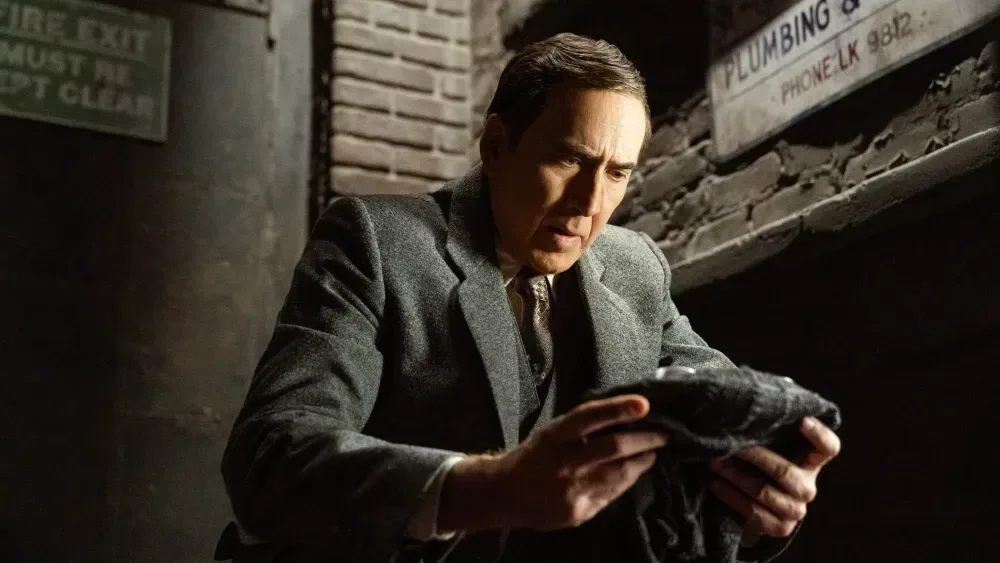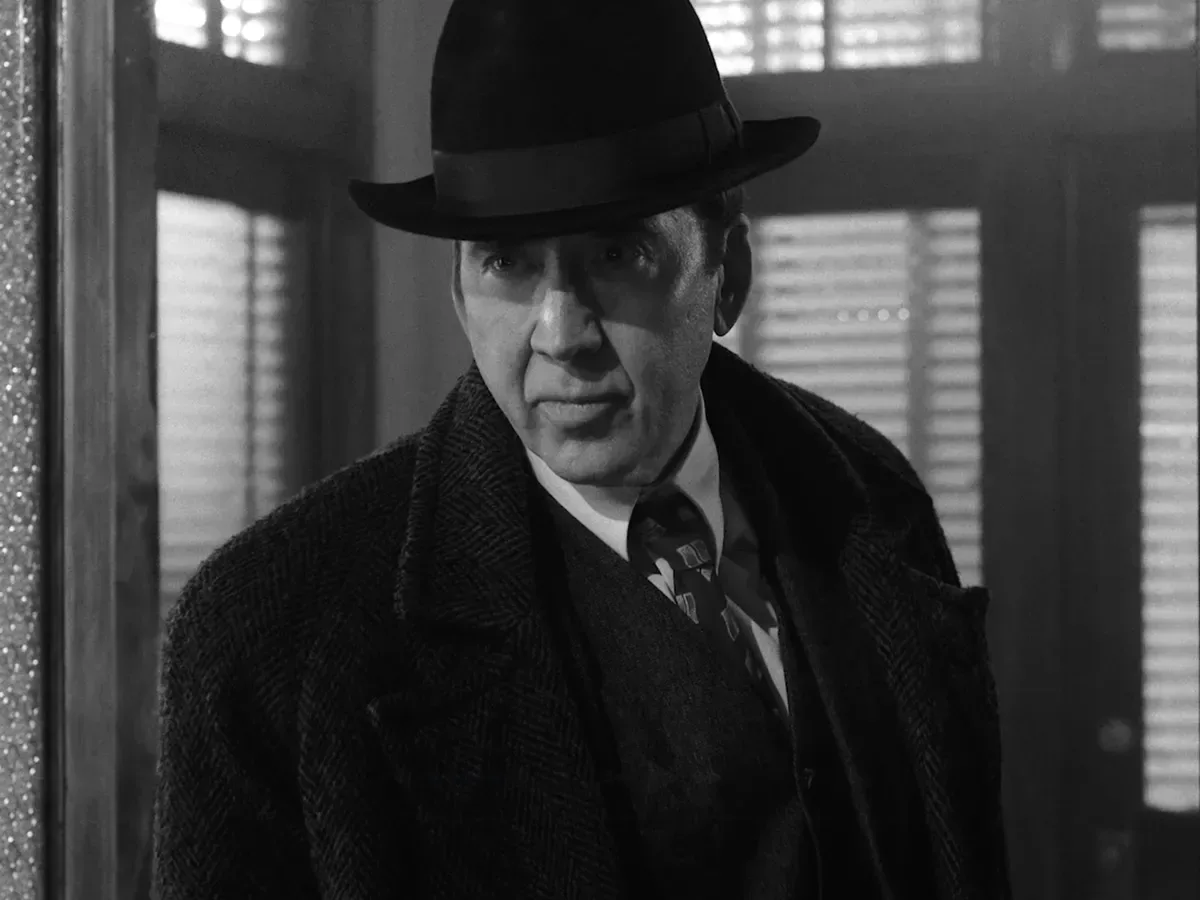
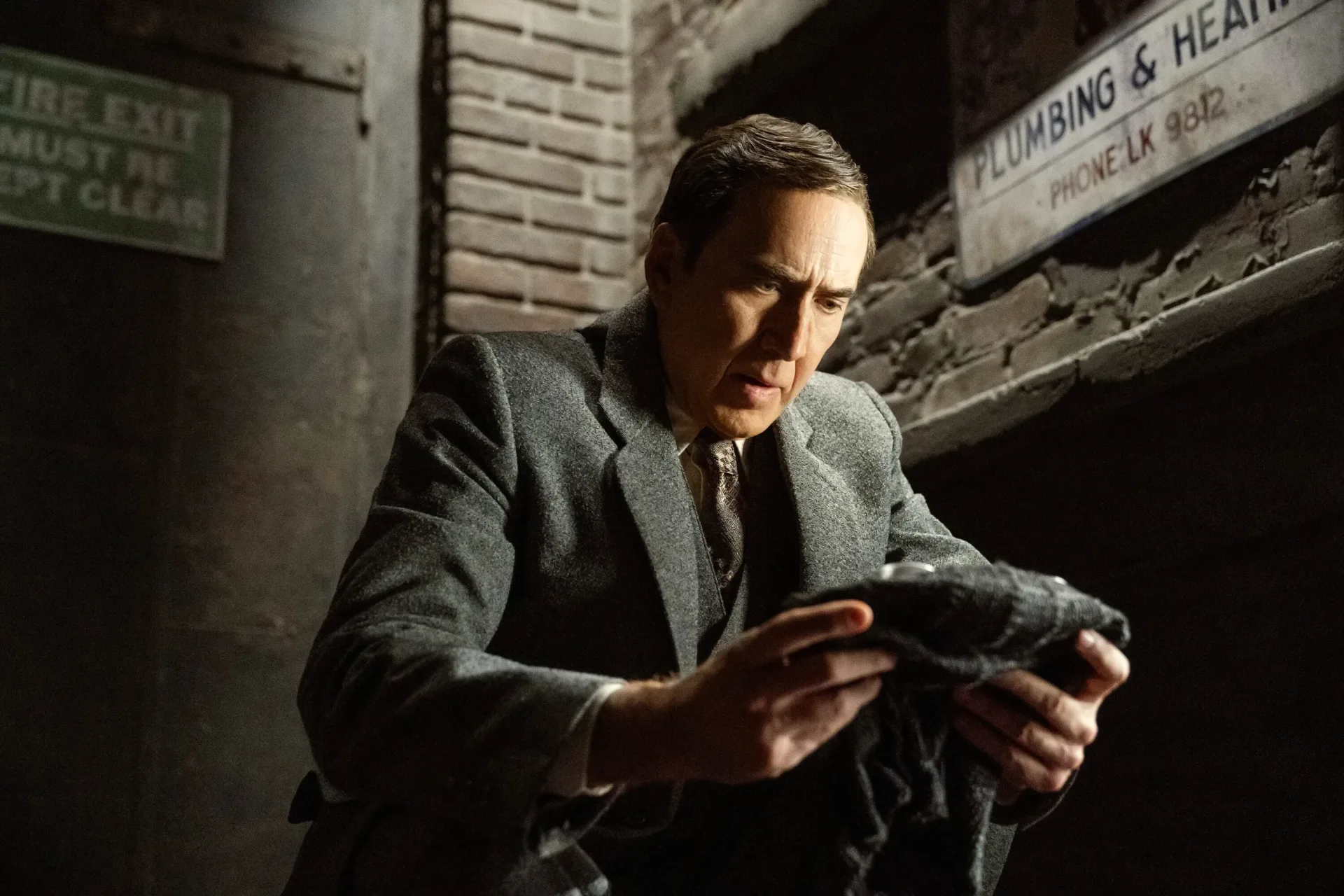
Nicolas Cage is not mourning the end of Spider-Noir. Although the Prime Video series has been cancelled after one season, Cage has said he sees the decision as a way to preserve both the season and his version of private investigator Ben Reilly.
His position is unusually direct in an era when a cancelled genre series is often discussed chiefly as an unfinished campaign for renewal. Cage’s view is almost the opposite: one season can be the intended artistic size of a story, particularly when the central performance depends on a distinctive, carefully sustained tone rather than a character designed to run indefinitely.
“It’s a perfect season,” Cage said when asked whether there was more of Ben Reilly’s story he wanted to tell. He described the role as “idiosyncratic” and said the performance involved high-risk, tightrope-like choices. Extending that approach into second and third seasons, he argued, could lead to repetition and ultimately wear out its welcome.
A cancellation Cage regards as closure
Cage said he felt relief rather than disappointment when the show was not renewed. He does not want to repeat the character, and he believes the existing season can remain fresh precisely because it is complete.
That distinction matters. A cliffhanger cancellation and a finite story that reaches a satisfying stopping point can produce very different reactions, even if each only lasts one season. Cage is framing Spider-Noir as the latter. He loves the character and the season, but considers continued appearances more likely to dilute what made the performance compelling than to add to it.
His comments do not settle whether every viewer will agree that Reilly’s story had reached a natural endpoint. They do make clear, however, that the actor himself does not see an unmade continuation as a missing creative obligation. For Cage, the virtue of the series is tied to its ability to remain a singular, preserved piece of work.
What Cage means by a “high-risk” performance
Calling a performance high-risk does not necessarily mean dangerous in a literal production sense. In this context, Cage is talking about creative risk: acting choices with an unusually specific style, rhythm, voice, manner or emotional register. Such choices can make a character memorable because they avoid the most familiar version of a genre role. But that same specificity can become predictable if it is repeated too often without meaningful variation.
For a noir private investigator, the challenge is especially apparent. The archetype comes with recognizable expectations: mystery, guarded emotions, hard-earned instincts and a world that can feel morally compromised. An actor can play those elements straight, or lean into a more stylized interpretation. Cage has characterized Ben Reilly as idiosyncratic, suggesting that the role relied on choices more particular than simply filling the standard detective silhouette.
That can make a one-season format an advantage. The audience gets a concentrated version of the idea without asking the performer to reproduce the same highly tuned effect year after year. Cage’s point is not that ambitious acting should be avoided; it is that an intense approach has a natural limit if the work starts to imitate itself.
Strong viewing and awards recognition did not prevent the end
The end of Spider-Noir is also a reminder that visible measures of success do not automatically produce a renewal. The series logged 2.6 billion viewing minutes over its first six weeks in Nielsen streaming-content ratings. It also received 11 Emmy nominations and won five awards.
Viewing minutes are a useful measure, but they are not the same thing as a count of individual viewers. The figure represents the total amount of time spent watching: a viewer who completes multiple episodes contributes more minutes than someone who watches only part of one. That makes the measurement valuable for showing accumulated engagement, while also limiting what can be concluded about the precise size of the audience.
Likewise, nominations and wins demonstrate substantial recognition, but awards attention and renewal decisions answer different questions. Awards speak to the work’s reception within the relevant voting bodies. A streaming service deciding whether to make another season must weigh its own considerations, which are not detailed here. The available facts establish that Spider-Noir reached a large number of viewing minutes and earned major awards recognition; they do not provide a reason for the cancellation.
It is tempting to treat the numbers as evidence that another season was inevitable, but they are better understood as evidence that the first season made an impact. Cage’s response adds a separate perspective: he does not believe artistic success requires a series to continue simply because it could.
The AI disagreement remains part of the story
Cage’s approval of the one-season ending should not be confused with an uncomplicated relationship with the company behind the platform. After the cancellation news, he spoke at New York Comic Con about an alleged request that he sign an AI waiver connected to Spider-Noir. Cage said he did not sign it.
“I am not an AI-friendly actor,” Cage said, adding that he did not expect to work with the studio again.
An AI waiver, in this context, refers broadly to an agreement addressing potential uses of artificial intelligence involving an actor’s work, image, voice or other performance-related material. The specific terms of the alleged waiver have not been provided here, so it would be inaccurate to assume what rights it sought, what uses it contemplated, or how any such terms would have operated.
What Cage has made plain is his own boundary: he declined the waiver and does not regard himself as aligned with AI-friendly production practices. He also pointed to Amazon’s stated investment relationship with OpenAI as part of why he views the disagreement as significant. Those remarks are Cage’s position, not a public explanation of the cancellation or proof that the waiver issue affected the show’s fate.
Keeping those two threads separate is important. Cage is pleased that Ben Reilly will not be stretched across more seasons because he thinks the existing run stands on its own. At the same time, he has voiced criticism of the company over AI. The former is an artistic judgment about revisiting a character; the latter is a professional and ethical objection over a proposed agreement.
Why a limited run can suit a comic-book adaptation
Comic-book storytelling often has a built-in tension between ongoing mythology and a creator’s desire to make a clean, definitive arc. Familiar heroes and settings are capable of endless reinvention, yet an individual interpretation may be most effective when it has a clear beginning and end. Spider-Noir appears to have become an example of that tension: a character with potential to continue, played by an actor who regards the completed version as stronger without another cycle.
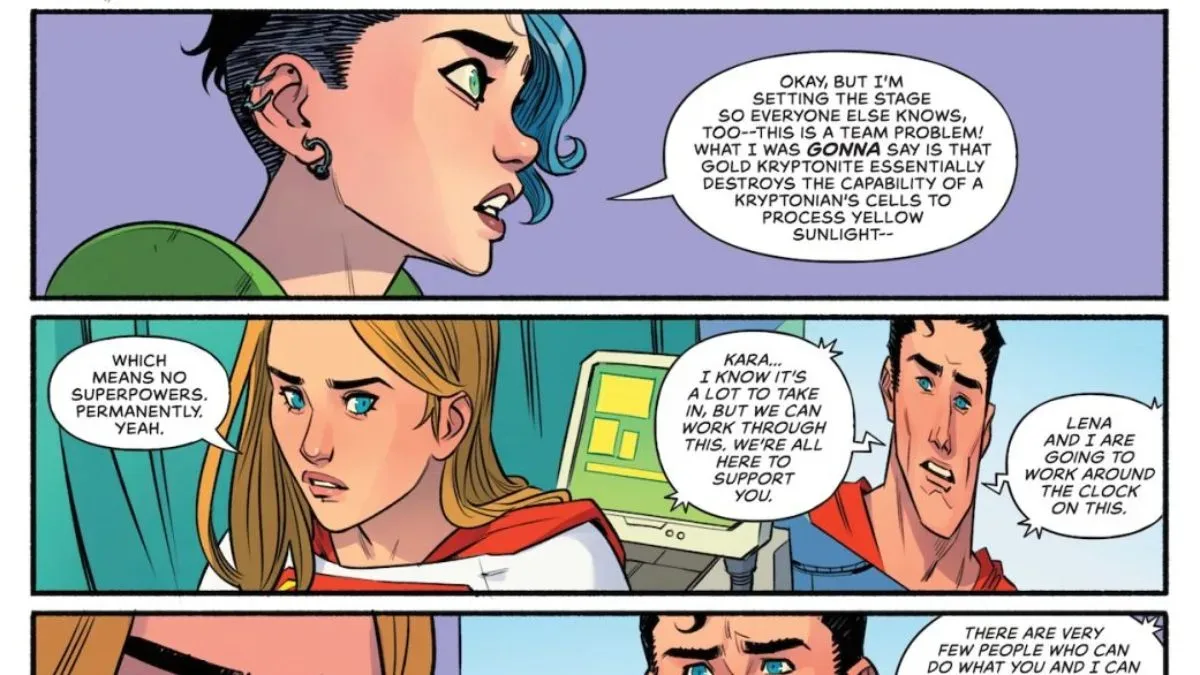
The broader pop-culture landscape is full of adaptations that must balance recognizable iconography with a distinct identity. That issue is relevant well beyond one Spider-related project; comic storytelling regularly asks audiences to accept new creative takes on characters and mantles. For another current example of how legacy and identity can drive a superhero narrative, see the conflict over Supergirl’s mantle in Supergirl #19.
Cage’s reasoning favors specificity over expansion. If the particular version of Ben Reilly works because of its unusual balance of noir mood and tightly controlled performance choices, then a short run can become a feature rather than a failure. The actor is effectively arguing for the value of leaving an audience with a sharp impression instead of testing how long that impression can be reproduced.
Cage moves to another one-season role
Cage said the limited nature of his forthcoming work on the fifth season of HBO’s True Detective is part of its appeal. He is set to star alongside Antonio Banderas in the season, and he noted that it is only one season. The comparison explains why the end of Spider-Noir is not simply a vacancy in his schedule: Cage appears drawn to roles that have a defined duration rather than an open-ended return cycle.
He also appears in Madden, a biopic about John Madden. The film follows Madden’s path from his Super Bowl-winning partnership with Al Davis and the Raiders through the creation of Madden NFL and his status as one of football’s best-known voices. It is scheduled for a limited theatrical release on November 11, followed by a global Prime Video streaming release on November 18.
That project gives Cage a connection to gaming culture through the history of Madden NFL, while remaining a story about a real person rather than a continuation of the fictional Ben Reilly. It also reinforces the range of work ahead of him: a single-season crime anthology role and a biographical film are structurally very different from returning to an ongoing noir superhero series.
What fans can take from Cage’s response
For viewers who wanted more Spider-Noir, the cancellation remains an ending, not a promise of a later revival. Cage has offered no indication that he is seeking another season. Instead, he has repeatedly emphasized that he would rather protect the season’s uniqueness than return for the sake of returning.
- The series ends after one season. Cage believes that run is complete and best left intact.
- The performance was intentionally specific. He sees its unusual qualities as something that could lose force through repetition.
- Its reception was substantial. The show accumulated 2.6 billion viewing minutes in six weeks, alongside 11 Emmy nominations and five wins.
- Renewal and recognition are separate issues. The available information does not state why the series was cancelled.
- Cage’s AI criticism is distinct from his creative stance. He says he declined an alleged AI waiver and is not AI-friendly, but he also independently welcomes the one-season conclusion.
In an entertainment business often organized around extensions, franchises and repeatable formats, Cage’s reaction is a pointed defense of finality. He is not presenting the lack of a second season as an unfortunate interruption. He is presenting it as the condition that allows this take on Ben Reilly to remain singular.