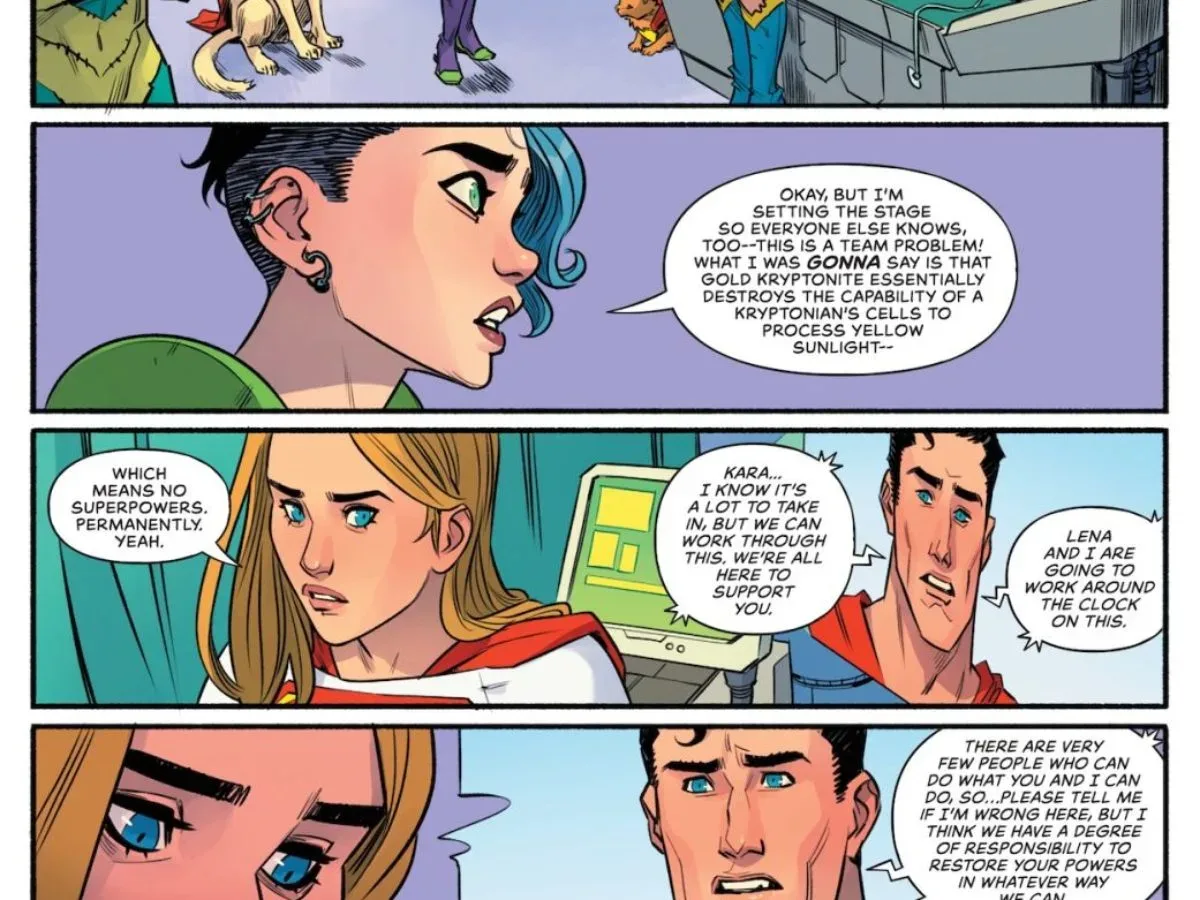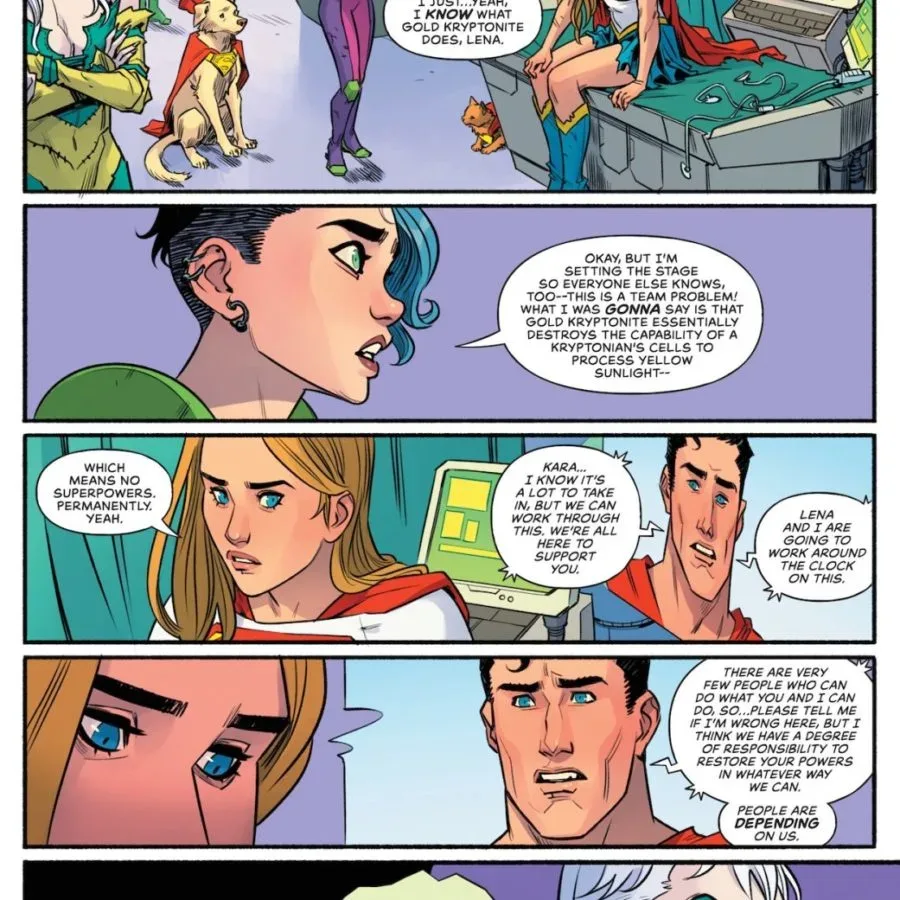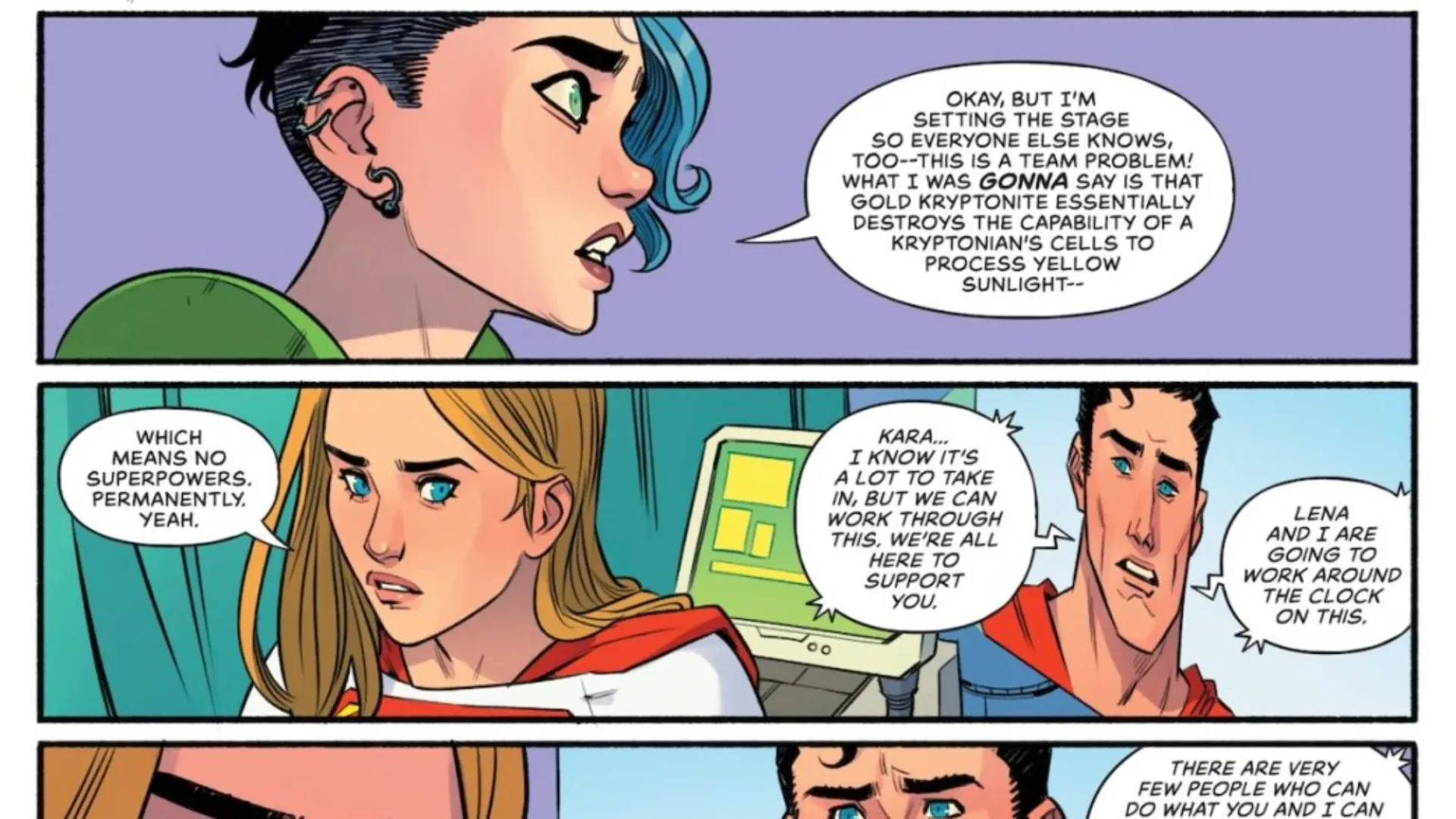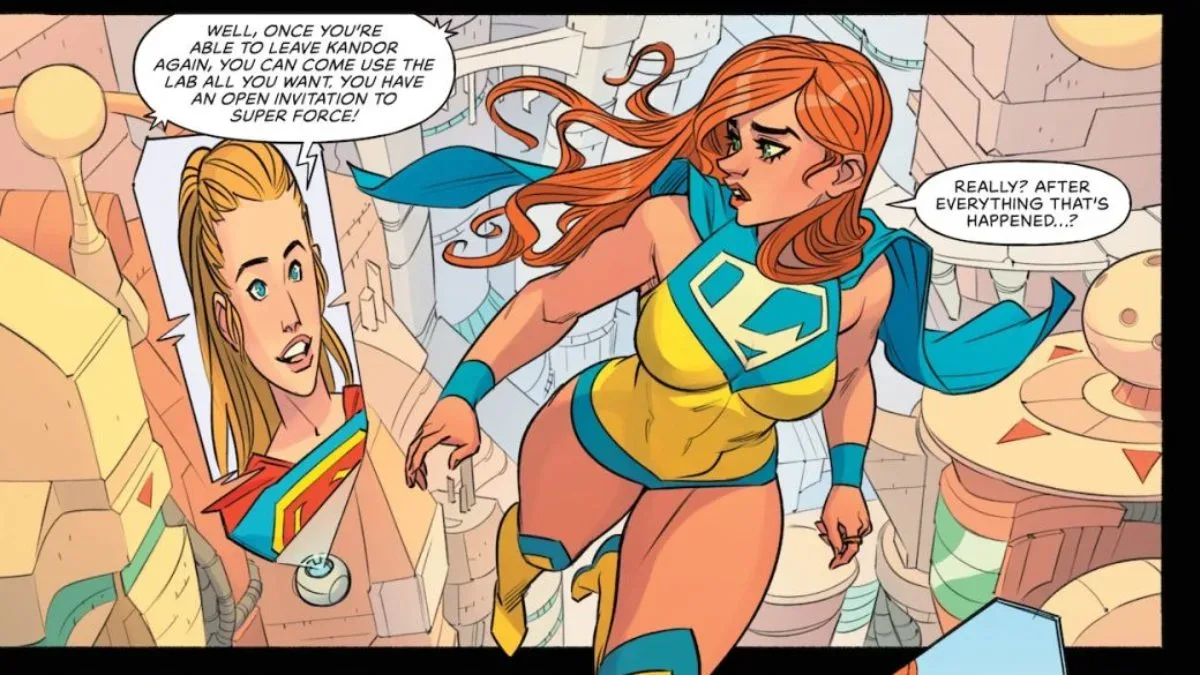
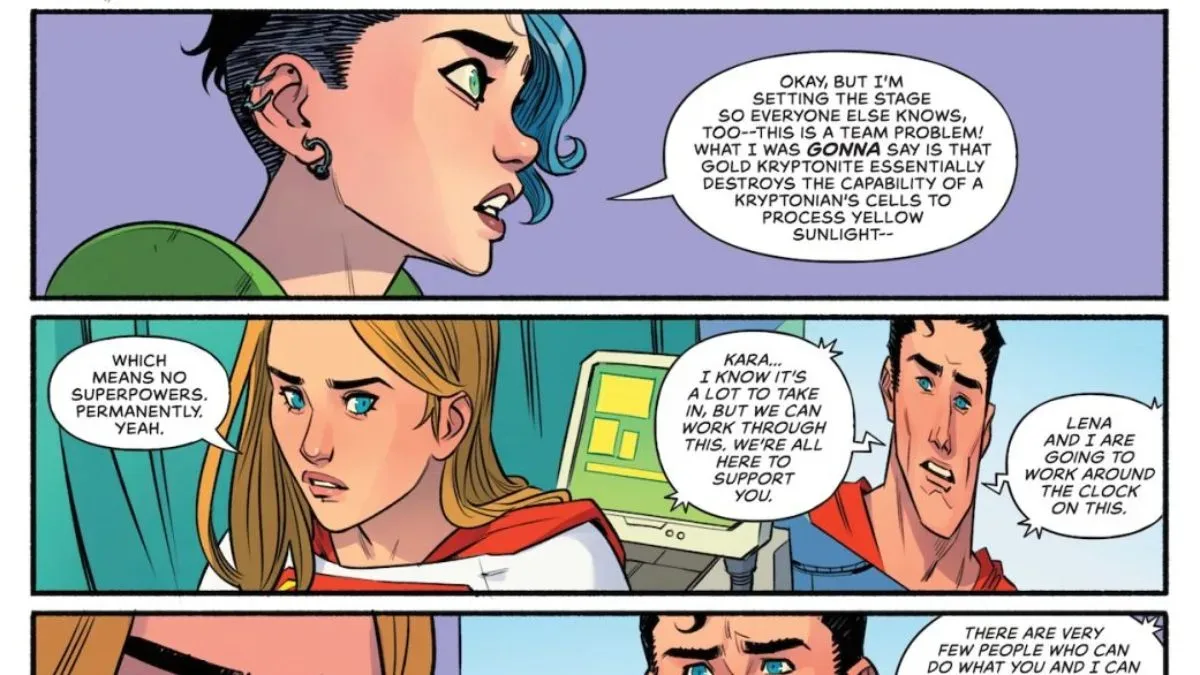
Supergirl #19 is set to put Kara Zor-El’s identity under pressure from two directions at once. Gold Kryptonite has left Kara without her superpowers, but the issue’s setup makes clear that she is not choosing a quiet retreat. Instead, Kara is reenrolling at Stanhope, where even a routine orientation becomes a potentially dangerous prospect while Reactron remains at large.
The issue, due in comic shops on November 11, 2026, also turns the loss of Kara’s abilities into a question for the people around her. Matrix, described as recently reborn, and Nightflame will fight to demonstrate who is worthy of the Supergirl mantle. That makes the story more than a temporary depowering plot: it is also a test of what the name “Supergirl” represents when Kara herself cannot wield the powers normally associated with it.
Kara’s powers are gone, but her story is still moving
In superhero comics, a character losing their powers can be a simple obstacle: remove the familiar tools, introduce an enemy, then restore the status quo. The setup for Supergirl #19 suggests a broader conflict. Kara is powerless following exposure to gold Kryptonite, yet she actively returns to Stanhope rather than sitting out the action while others decide her future.
That distinction matters. The premise frames Kara’s return to school as an intentional move, not merely a disguise or a detour. The immediate obstacle is orientation, an everyday institutional milestone that becomes perilous because Reactron is loose. The contrast is especially sharp: a character accustomed to extraordinary stakes has to navigate a setting built around schedules, introductions, and new routines—without the safety net of superhuman strength or flight.
The solicit does not reveal exactly what Reactron intends to do at Stanhope, nor does it establish the extent or duration of Kara’s power loss. Those remain open questions for the issue itself. What is confirmed is enough to create a concrete tension: Kara will be in a vulnerable position while an active threat is nearby.
What the fight for the Supergirl mantle means
The central conflict around Matrix and Nightflame is framed as a competition to prove themselves worthy of being Supergirl. A mantle is the heroic identity, title, and symbolic role attached to a name; it is not simply a costume or a list of powers. Here, the mantle has become available for debate because Kara’s capabilities have been removed, at least for now.
That setup creates an important separation between the role and the person. Kara remains Kara Zor-El even without her abilities, while Matrix and Nightflame apparently see an opportunity—or obligation—to step into the Supergirl position. Their fight may settle who is strongest or most determined, but the premise leaves room for a more difficult question: whether worthiness can be decided through a fight at all.
Matrix and Nightflame are not the only possible factors in that dispute. The issue description specifically teases a surprise involving another member of Kara’s “Super Force.” No identity or role is named, so readers should treat that as a deliberate tease rather than confirmation that either current contender will emerge as the answer.
Gold Kryptonite is the story’s practical pressure point
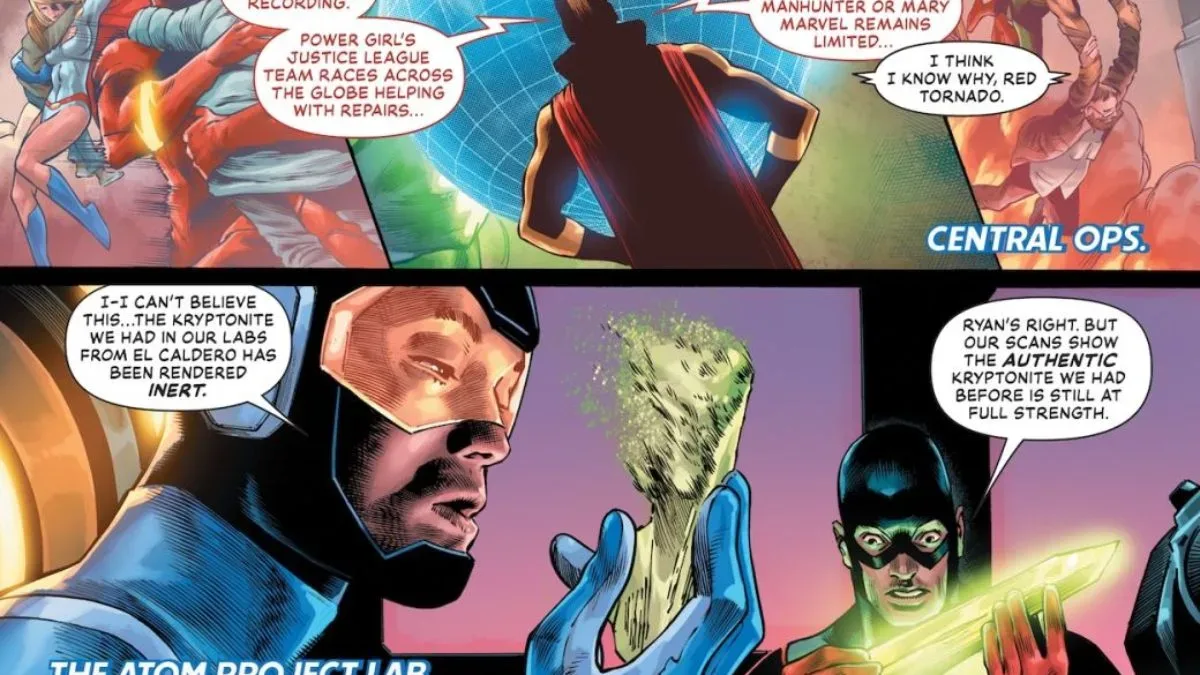
The available details identify gold Kryptonite as the cause of Kara’s condition. In the context of this issue, its narrative function is direct: Kara has been stripped of her superpowers. That premise changes the balance of every other thread in the story.
Without powers, school enrollment is not simply a chance to reconnect with ordinary life. It is an environment in which Kara cannot assume she can instantly escape danger, protect bystanders, or confront Reactron on equal terms. Likewise, the disagreement among her allies is not happening in the background. Their argument over the mantle takes on sharper meaning precisely because Kara’s absence from the super-powered front line is real.
The phrase “Supergirl no more?” also carries an intentional question mark. It signals uncertainty, not a final verdict on Kara’s future. Readers should not infer from the premise alone that a permanent successor has been selected, that Kara has abandoned the identity, or that her powers cannot return. The issue is positioned around the uncertainty itself.
Stanhope turns orientation into a suspense setting
Orientation ordinarily establishes the basics of a school experience: introductions, expectations, routes through campus, and the social uncertainty of meeting new people. In Supergirl #19, it also provides a tightly defined setting for a threat involving Reactron. Kara must try to make it through that process while a dangerous figure remains uncontained.
That is a useful dramatic framework because it gives the issue a clear, immediate objective. Kara does not merely need to stop a vague menace. She needs to get through a specific first-stage school experience, likely while managing the complications of reenrollment and the loss of her abilities. The narrower goal can make the wider stakes feel more personal: orientation is supposed to mark a beginning, but here it may become a test of whether Kara can still act decisively when she is no longer physically invulnerable.
The campus thread also prevents the mantle conflict from becoming detached from Kara’s own perspective. Matrix and Nightflame may be fighting over who can represent Supergirl, but Kara is taking action in a place where the consequences of being powerless are immediate.
Creative team, covers and purchase details
Sophie Campbell is credited as writer, artist and cover artist for Supergirl #19. The issue has a stated suggested retail price of $3.99. Additional listed cover editions are credited to Miguel Mercado, Karen S. Darboe, Chuma Hill and Gerald Parel, each listed at $4.99.
For readers following comic-book stories built around legacy identities and dangerous weapons, Joking Joystick has also covered Din Djarin’s Darksaber challenge in Star Wars: The Book of Boba Fett #5.
Supergirl #19 arrives with three connected pressures: a powerless Kara, an unresolved battle over her heroic identity, and Reactron’s continued presence around Stanhope. The strongest part of that arrangement is that none of those problems cleanly replaces the others. Even if Matrix or Nightflame appears ready to take on the Supergirl role, that does not solve Kara’s immediate predicament. And even if Kara successfully reaches Stanhope, orientation will not settle the larger question of who gets to define the mantle in her absence.
For this issue, the title’s big premise is not just that Supergirl has no powers. It is that Kara must keep making choices while others argue over what her name should mean.